When it comes to choosing the perfect crossbody bag, design and color often take center stage. But beneath aesthetics lies a more critical factor: construction. The debate between woven and quilted materials isn’t just about visual appeal—it impacts durability, comfort, maintenance, and long-term value. For frequent travelers, urban commuters, or fashion-conscious shoppers, understanding these differences can mean the difference between a bag that lasts years and one that fades after a season.
While both styles have earned loyal followings, they serve distinct purposes and suit different lifestyles. Woven bags, often associated with artisanal craftsmanship, bring texture and breathability. Quilted bags, rooted in luxury tradition, offer structure and softness. But which is better? And does the material truly affect your daily experience?
Understanding Woven Crossbody Bags
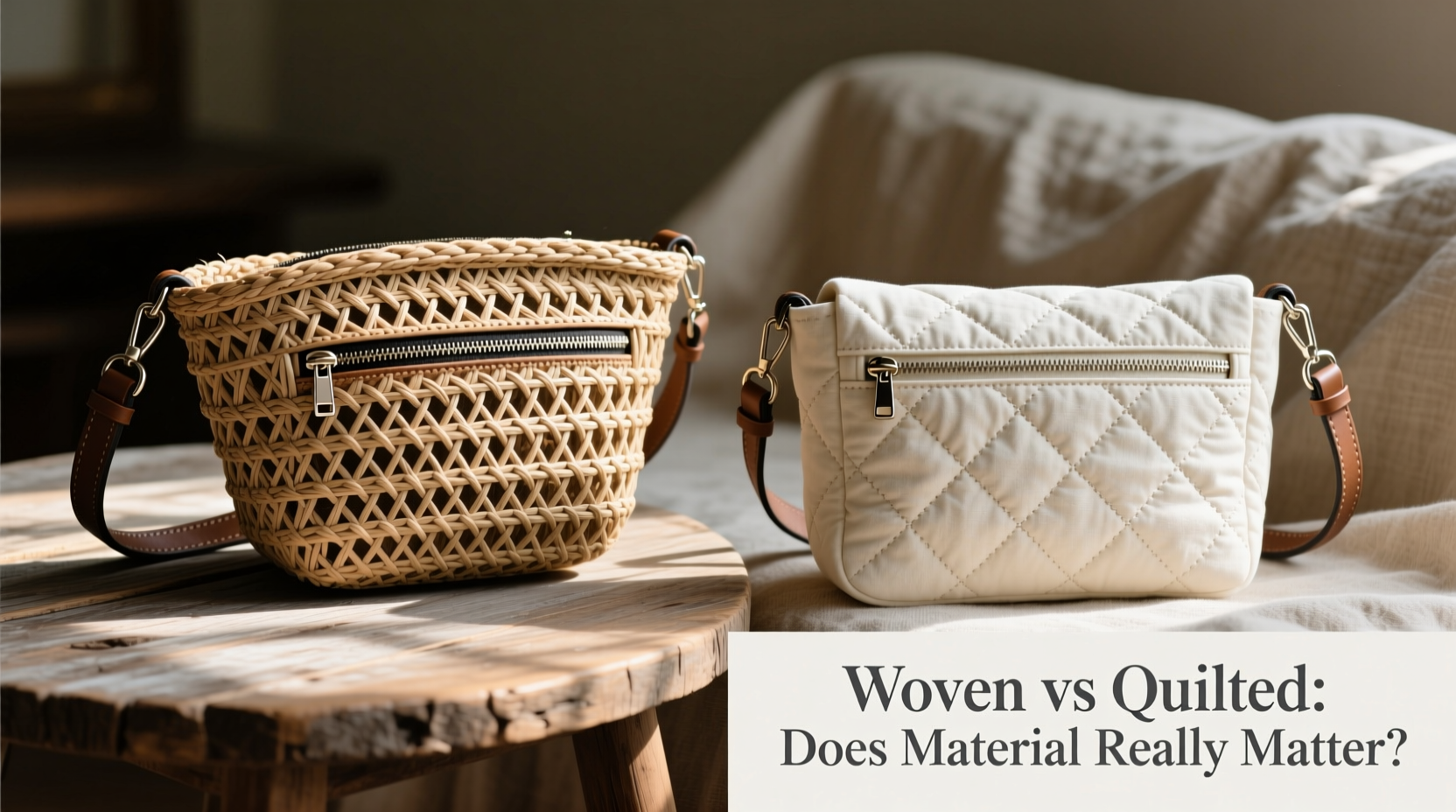
Woven crossbody bags are typically constructed from interlaced fibers—ranging from cotton and jute to synthetic threads or even metallic strands. The weaving technique creates a tightly knit surface that’s both flexible and breathable. These bags often feature open weaves for a bohemian look or dense patterns for added strength.
Popular in resort wear and casual ensembles, woven designs excel in warm climates. Their natural ventilation helps prevent moisture buildup, making them ideal for beach outings or summer festivals. Many are handcrafted, lending uniqueness and ethical appeal. However, their open structures can be vulnerable to snagging, especially when brushed against rough surfaces.
Tip: Avoid placing sharp objects like keys directly into loosely woven compartments—they can catch and unravel the fabric over time.The Anatomy of Quilted Crossbody Bags
Quilted crossbody bags derive their name from the stitching pattern that \"quilts\" multiple layers of fabric together—typically an outer shell, inner padding, and lining. This method, famously popularized by brands like Chanel, adds volume, softness, and resilience. The signature diamond or geometric stitching not only enhances visual interest but also prevents internal padding from shifting.
Most quilted bags use synthetic or leather exteriors with polyester or cotton linings. The padding provides light cushioning, offering modest protection for small electronics or sunglasses. Because of their layered build, quilted bags tend to hold their shape better than woven alternatives, even when partially empty.
“Quilting isn’t just decorative—it’s functional engineering. It distributes stress across the surface, reducing strain on any single point.” — Lena Torres, Handbag Design Consultant
Material Comparison: Durability, Comfort, and Care
The choice between woven and quilted isn’t merely stylistic; it affects how the bag performs under daily use. Below is a detailed comparison highlighting key factors:
| Feature | Woven Bags | Quilted Bags |
|---|---|---|
| Durability | Moderate. Susceptible to fraying if threads snag. Natural fibers may degrade faster with sun exposure. | High. Multiple layers resist tearing. Stitching reinforces structure and longevity. |
| Weather Resistance | Poor to moderate. Absorbs moisture unless coated. Not ideal for rain. | Good. Synthetic or treated fabrics repel light water. Padding stays dry longer. |
| Weight | Light. Ideal for all-day carry without fatigue. | Slightly heavier due to padding, but still manageable. |
| Cleaning & Maintenance | Delicate. Spot clean only. Avoid submersion. Prone to mold if stored damp. | Easier. Wipeable surfaces. Most synthetic quilts tolerate gentle cleaners. |
| Style Longevity | Trend-dependent. Boho styles may fade in popularity. | Timeless. Quilted patterns remain classic across decades. |
Real-World Use: A Mini Case Study
Sophia, a freelance photographer based in Barcelona, uses her crossbody bag daily—carrying a mirrorless camera, lenses, phone, and notebook. Last year, she rotated between a raffia woven bag and a nylon quilted crossbody. Within three months, the raffia bag showed signs of wear: loose threads at the strap attachment and discoloration from occasional drizzle. In contrast, the quilted bag maintained its shape and finish despite being tossed into train overhead bins and exposed to coastal humidity.
She switched permanently to the quilted option, citing reliability as her top priority. “I love the look of woven bags,” she says, “but I need something that won’t fall apart when I’m sprinting to catch a tram with gear in tow.” Her experience underscores a broader truth: lifestyle demands should guide material choice more than fleeting trends.
Choosing Based on Lifestyle: A Step-by-Step Guide
Selecting the right crossbody shouldn’t be guesswork. Follow this practical decision-making process:
- Assess Your Daily Routine: Do you walk long distances, commute via public transit, or travel frequently? High-mobility lifestyles favor durable, structured options—quilted wins here.
- Evaluate Climate Conditions: If you live in a rainy or humid region, avoid untreated woven materials. Opt for coated canvas or quilted synthetics.
- Consider Contents: Carrying hard items like cameras or tablets? Quilted padding offers mild shock absorption. For lightweight essentials (wallet, phone, keys), woven bags are sufficient.
- Review Cleaning Habits: Are you diligent about maintenance? Woven bags require more careful handling. If you prefer low-effort care, quilted is easier to manage.
- Align with Style Goals: Going for a relaxed, earthy aesthetic? Woven fits perfectly. Aim for polished, elevated minimalism? Quilted delivers sophistication.
Expert Insight: What Designers Know That You Don’t
Fashion designers prioritize function as much as form. According to Marco Lin, a accessories developer with over 15 years in luxury goods manufacturing, “The quilted construction was originally designed for armor lining—its purpose was impact dispersion. That same principle protects your belongings today.”
He adds, “Woven bags, while beautiful, are often misused. People treat them like everyday work bags when they’re better suited for seasonal or decorative roles.” His advice? Treat woven bags like delicate jewelry—rotate them seasonally and reserve for low-stress occasions.
FAQ: Common Questions About Woven vs Quilted Crossbodies
Can woven bags be waterproof?
Some are treated with water-resistant coatings, but true waterproofing is rare. Even then, prolonged exposure to moisture can weaken fibers. Always check product specifications and avoid using in heavy rain.
Do quilted bags lose their shape over time?
High-quality quilted bags maintain structure for years. Lower-end versions may flatten if the padding compresses. To preserve shape, avoid overstuffing and store with light stuffing (like tissue paper) when not in use.
Are woven bags eco-friendlier than quilted ones?
Often, yes—many woven bags use natural, biodegradable fibers like cotton, hemp, or raffia. However, some mass-produced versions use plastic-based weaves. Conversely, many quilted bags rely on synthetic foams and laminates. Look for brands using recycled or organic materials regardless of style.
Final Checklist Before You Buy
- ✅ Determine primary use: daily carry, travel, or occasional wear?
- ✅ Check material composition and stitching quality
- ✅ Test strap comfort with a full load
- ✅ Verify cleaning instructions match your habits
- ✅ Consider climate and storage conditions at home
- ✅ Evaluate long-term style compatibility with your wardrobe
Conclusion: Material Matters More Than You Think
The difference between woven and quilted crossbody bags goes far beyond appearance. It influences how the bag ages, withstands elements, supports your belongings, and integrates into your routine. Woven styles offer charm and breathability but demand careful handling. Quilted designs deliver resilience and timeless elegance, making them ideal for high-use scenarios.
Ultimately, the best choice aligns with your lifestyle—not just your current outfit. Whether you lean toward artisanal textures or structured sophistication, understanding the material’s role empowers smarter, more satisfying purchases. Invest in what serves you, not just what catches your eye.
💬 Which do you prefer—woven or quilted? Share your experience or ask questions in the comments below!