It’s a small detail, but one that speaks volumes: the tissue box cover in your bathroom. For many, it's an afterthought—something functional tucked beside the sink or on the back of the toilet. But in truth, this unassuming accessory can quietly define the entire aesthetic of your space. A flimsy, mass-produced plastic or cheap metal cover might do the job, but it also whispers “temporary living” or “college dorm.” On the other hand, a well-chosen cover—crafted with intention and material integrity—can signal thoughtfulness, permanence, and personal style.
The debate between woven and metal tissue box covers isn’t just about durability or price; it’s about design language. One leans toward warmth and texture, the other toward sleekness and structure. So which choice actually helps you escape the dorm-room vibe and create a bathroom that feels intentional, curated, and grown-up?
The Dorm Aesthetic: What Makes a Bathroom Feel Temporary?
Before diving into materials, it’s important to understand what gives a bathroom that “college dorm” feel. It’s not just clutter or lack of decor—it’s a combination of impermanence, low-cost materials, and utilitarian design. Think: plastic organizers, disposable accessories, mismatched towels, and anything that looks like it was bought in bulk from a big-box store. These items serve their purpose, but they don’t invite comfort or continuity.
A tissue box cover is often overlooked, yet it sits at eye level in a high-traffic zone. If it’s shiny, hollow-sounding metal or a stiff, synthetic weave that resembles a laundry basket, it contributes to that impersonal, transitional atmosphere. The goal isn’t luxury for luxury’s sake—it’s creating a space that reflects care, stability, and personal taste.
Tip: When choosing bathroom accessories, ask: “Does this look like something I’d keep for years?” If the answer is no, it may be contributing to a temporary vibe.Woven Tissue Box Covers: Texture, Warmth, and Craftsmanship
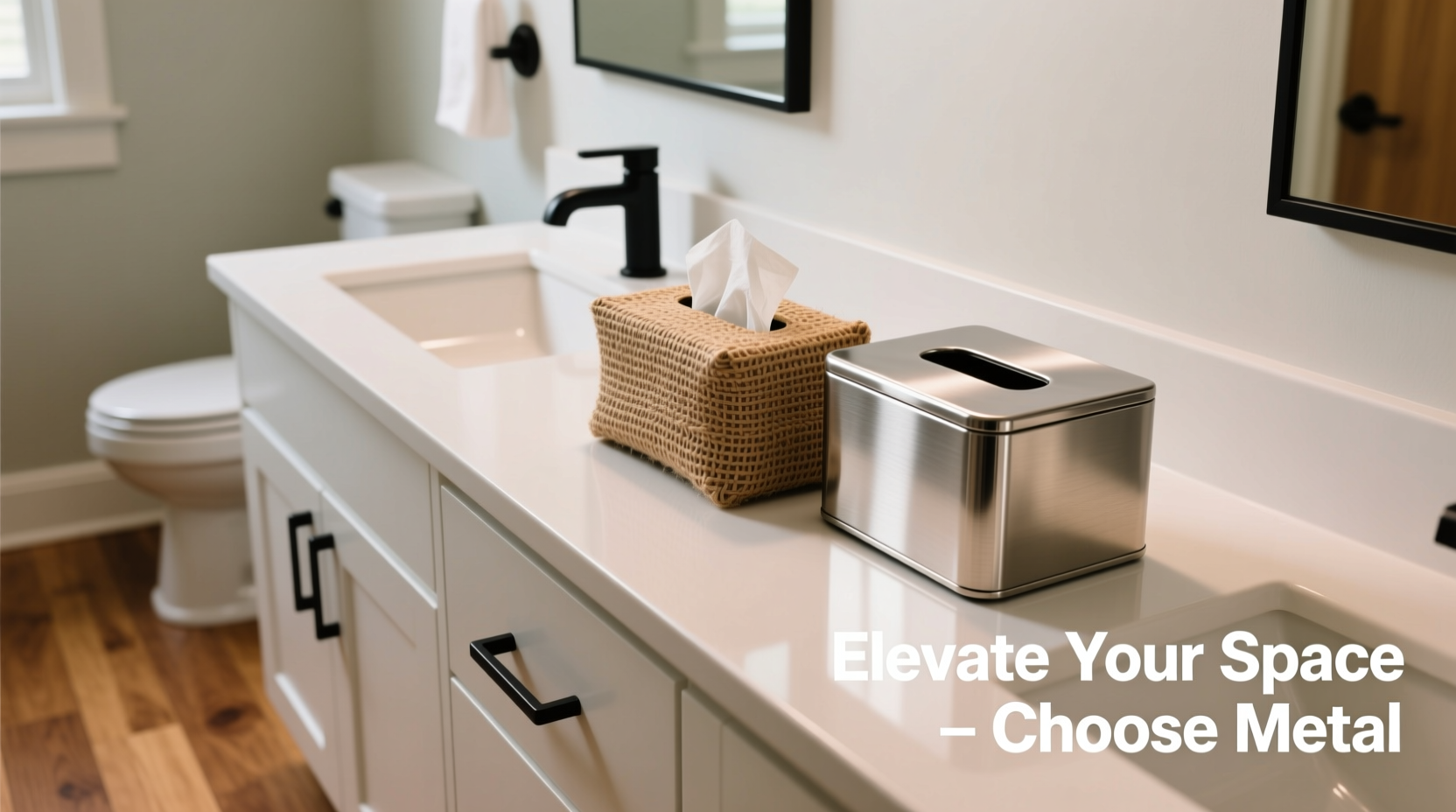
Woven covers—typically made from seagrass, rattan, jute, cotton rope, or linen blends—bring natural texture into the bathroom. Their organic imperfections, soft edges, and earthy tones immediately soften a space. Unlike rigid materials, woven designs suggest craftsmanship and attention to detail. They pair beautifully with ceramic sinks, wooden vanities, and matte finishes.
These covers excel in bathrooms aiming for a spa-like, minimalist, or coastal aesthetic. Because they’re often handmade or semi-handmade, no two are exactly alike, adding subtle individuality. They absorb light rather than reflect it, reducing visual noise and contributing to a calm environment.
However, not all woven options are created equal. Low-quality versions made with synthetic fibers or glued paper strands can look cheap and degrade quickly in humid environments. High-end woven covers use tightly braided, sealed natural fibers that resist moisture and mildew when properly maintained.
“Texture is one of the most underrated tools in bathroom design. A well-made woven piece grounds a room and adds quiet sophistication.” — Lena Tran, Interior Stylist & Sustainable Design Advocate
Metal Tissue Box Covers: Sleek, Modern, but Risking Coldness
Metal covers—usually crafted from stainless steel, brushed nickel, or powder-coated iron—offer a clean, modern silhouette. They appeal to those who favor minimalist, industrial, or contemporary styles. Their strength and resistance to moisture make them durable, and their smooth surfaces are easy to wipe down.
But here’s the catch: metal, especially when polished or chrome-finished, can amplify coldness in a bathroom already dominated by tile, glass, and porcelain. Without balancing elements—like warm lighting, wood accents, or plush textiles—a metal tissue box cover can feel clinical or institutional. In smaller bathrooms, it may even create a cramped, metallic echo effect.
That said, when integrated thoughtfully, metal can elevate a space. A matte black or brushed brass cover in a well-lit, richly layered bathroom adds contrast and refinement. The key is pairing it with softer textures and avoiding multiple competing metallic finishes.
Material Comparison: Woven vs Metal at a Glance
| Feature | Woven Covers | Metal Covers |
|---|---|---|
| Visual Warmth | High – adds texture and organic softness | Low to Medium – can feel cold or sterile |
| Durability in Humidity | Varies – high-quality natural weaves last with care | High – resistant to moisture and warping |
| Style Flexibility | Bright, rustic, minimalist, boho | Modern, industrial, contemporary |
| Lifespan | 3–7 years (depends on material and maintenance) | 5+ years (resists dents and corrosion if coated) |
| Price Range | $15–$50 (handmade versions higher) | $20–$60 (designer metals cost more) |
| Eco-Friendliness | Generally high – biodegradable, renewable materials | Medium – recyclable but energy-intensive to produce |
How to Choose the Right Cover for a Grown-Up Bathroom
Selecting between woven and metal isn’t just about preference—it’s about alignment with your bathroom’s overall narrative. Here’s a step-by-step guide to help you decide:
- Assess Your Current Style: Take a photo of your bathroom. Does it lean warm and textured, or cool and streamlined? Woven complements warmth; metal enhances crispness.
- Consider the Dominant Materials: If your bathroom has wood, stone, or matte finishes, woven will harmonize. If you have chrome fixtures and glass showers, metal may integrate better.
- Test for Balance: If your space already has several hard surfaces, introduce a woven cover to add softness. If it feels too cluttered or rustic, a simple metal cover can bring order.
- Think Long-Term: Will this cover still look appropriate in three years? Avoid trendy finishes (like rose gold or neon weaves) unless they’re part of a deliberate, short-term theme.
- Touch and Sound Test: If possible, handle the cover. Does it feel substantial? Does it make a hollow plastic sound when tapped? Quality matters more than material.
Real-Life Example: From Dorm-Like to Designed
Sarah, a 29-year-old graphic designer, moved into her first standalone apartment after five years of shared housing. Her bathroom had basic white tile, a mirrored cabinet, and a plastic tissue box she’d used since college. “It felt like a hotel room,” she said. “Functional, but forgettable.”
She replaced the plastic cover with a handwoven seagrass box in a neutral oat color. She paired it with a matching soap dispenser and added a folded linen towel in a warm gray. “Suddenly, the room felt intentional,” she recalled. “I didn’t change the layout or spend much money. But that little woven box made everything else feel more cohesive.”
The shift wasn’t about luxury—it was about signaling permanence. The woven texture invited touch and attention, subtly telling visitors (and herself) that this was a space worth caring for.
Checklist: Upgrade Your Tissue Box Game
- ☐ Remove any plastic or novelty tissue covers
- ☐ Identify your bathroom’s dominant style (warm/cool, rustic/modern)
- ☐ Choose a cover made from natural or high-quality engineered materials
- ☐ Ensure proportions fit your tissue size without gaps
- ☐ Match finish or tone to at least one other bathroom element (towel, mat, hardware)
- ☐ Clean gently—wipe metal with microfiber, air out woven monthly
Frequently Asked Questions
Can woven tissue box covers handle bathroom humidity?
Yes, if they’re made from sealed natural fibers like treated seagrass or water-resistant cotton. Avoid untreated paper or loosely woven synthetics. Wipe spills promptly and allow airflow to prevent mildew.
Is metal more hygienic than woven?
Metal is easier to disinfect due to its non-porous surface, making it ideal for high-traffic or shared bathrooms. However, a well-maintained woven cover with a removable liner can be equally sanitary with regular wiping and airing.
Will a nicer tissue box cover really change how my bathroom looks?
Yes—especially when combined with other considered details. Accessories act as punctuation in a room’s design language. A thoughtful cover signals that you pay attention to the whole picture, not just the major fixtures.
Make the Small Things Speak Volumes
Escaping the college dorm aesthetic isn’t about expensive renovations or chasing trends. It’s about replacing temporary solutions with lasting choices. A tissue box cover may seem trivial, but it’s a daily-use object that occupies visual real estate. Choosing one that reflects care, quality, and cohesion transforms it from an eyesore into an understated statement.
In most cases, woven covers have the edge when it comes to warmth and maturity. They soften hard surfaces and align with timeless, inviting design. Metal can work—but only when balanced within a carefully composed space. For most people seeking a bathroom that feels lived-in and intentional, the woven option offers a quieter, more enduring elegance.
💬 Ready to ditch the dorm look? Start with one upgrade: swap out your current tissue cover for a thoughtfully made woven or premium metal version. Notice how it changes the room’s tone—and share your before-and-after thoughts in the comments.








