Succulents are prized for their tight rosettes, plump leaves, and architectural forms. When a once-dense plant begins to elongate, with sparse foliage and weak stems, it’s a clear sign something is wrong. This phenomenon—commonly called “stretching” or etiolation—is one of the most frequent issues faced by indoor succulent growers. While not immediately fatal, prolonged stretching compromises a plant’s structure, appearance, and long-term vitality. The primary culprit? Inadequate light. Understanding the biological mechanisms behind etiolation and implementing targeted lighting solutions can reverse the damage and restore your succulent to its compact, healthy form.
The Science Behind Succulent Stretching
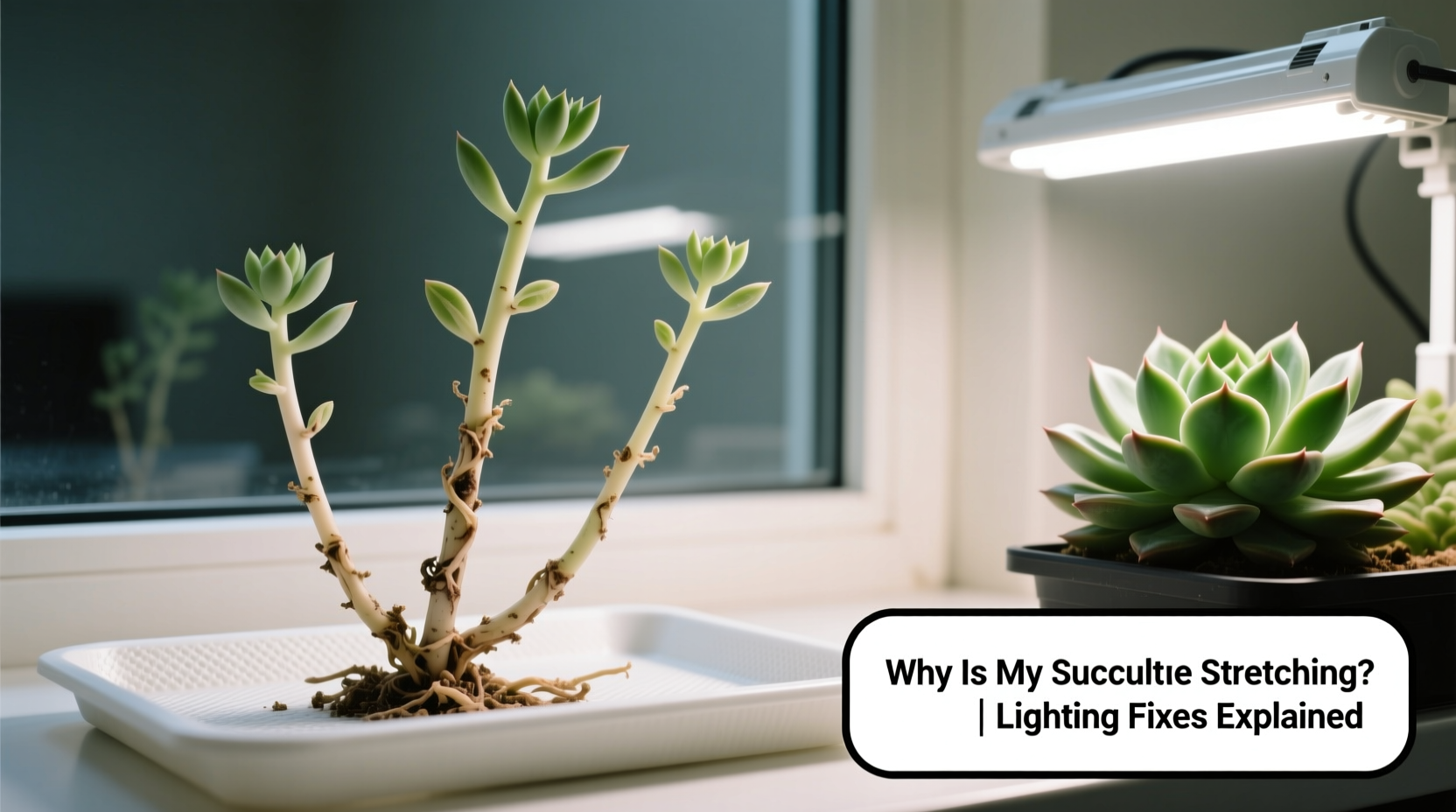
Etiolation is a survival response triggered when a plant doesn’t receive enough photosynthetically active radiation (PAR). In low-light conditions, succulents activate hormonal pathways that promote rapid stem elongation in an attempt to reach brighter environments. This process is governed primarily by auxins—plant hormones that stimulate cell expansion along the stem. As cells stretch upward, internodal spacing increases, leaves become smaller and spaced farther apart, and overall growth becomes weak and pale.
This adaptation makes evolutionary sense in nature. A young succulent growing under shade from taller plants will stretch toward any available sunlight to maximize energy capture. However, in indoor settings where light sources are limited or improperly positioned, this natural mechanism works against the plant’s aesthetic and structural integrity.
Chlorophyll production also decreases in low light, leading to a loss of deep green or red pigmentation. Stretched succulents often appear washed out, with yellowish or translucent leaves—a condition known as chlorosis. Over time, the weakened stem may buckle under the weight of the rosette, increasing susceptibility to rot and pests.
“Etiolation isn’t just cosmetic—it reflects a fundamental imbalance in a plant’s energy economy. Without sufficient light, succulents can’t store the carbohydrates needed for resilience.” — Dr. Lena Torres, Botanist & Horticultural Researcher, University of California Desert Garden
Key Signs of Etiolation in Succulents
Recognizing early signs of stretching allows for timely intervention. Look for these visual and structural indicators:
- Increased internode distance: Gaps between leaves grow longer than normal.
- Leaning or bending: The plant tilts toward the nearest light source.
- Smaller, paler leaves: New growth is less vibrant and undersized.
- Upward-pointing leaves: Instead of radiating outward, leaves orient vertically to minimize shading.
- Thin, weak stems: The central stalk loses rigidity and may develop a zigzag pattern.
- Loss of symmetry: Rosette-forming species like Echeveria lose their circular shape.
These symptoms often progress gradually, making them easy to overlook. A succulent that looked balanced three months ago may now show subtle stretching if lighting conditions have changed seasonally or due to rearranged room furniture.
Tip: Take monthly photos of your succulents from the same angle to detect subtle changes in growth patterns over time.Lighting Requirements for Healthy Succulents
Succulents evolved in arid, sun-drenched regions such as Mexico, South Africa, and Madagascar. Most require between 4 to 6 hours of direct sunlight daily to maintain compact growth. Indoors, meeting this demand is challenging but achievable with strategic placement and supplemental lighting.
Natural sunlight through a window varies significantly based on orientation, season, and geographic location. A south-facing window in the Northern Hemisphere typically provides the strongest light, while east- and west-facing windows offer moderate exposure. North-facing windows usually lack sufficient intensity for most succulents.
Even in ideal window locations, seasonal shifts reduce daylight duration and intensity. During winter months, daylight may drop below 10 hours, and solar angles result in weaker illumination—conditions that accelerate etiolation without intervention.
Supplemental Lighting Solutions
When natural light falls short, full-spectrum LED grow lights provide a reliable alternative. Unlike standard household bulbs, grow lights emit wavelengths optimized for photosynthesis (typically 400–700 nm), including blue light (400–500 nm) for vegetative growth and red light (600–700 nm) for flowering and energy storage.
For best results:
- Use LEDs with a color temperature of 5000K–6500K to mimic midday sun.
- Position lights 6–12 inches above the canopy.
- Run lights for 12–14 hours per day using a timer for consistency.
- Choose fixtures with adjustable height to accommodate growth.
Fluorescent T5 tubes are another effective option, especially for larger collections. They run cooler than older HID systems and provide even coverage across multiple plants.
| Light Source | Daily Duration | Distance from Plant | Best For |
|---|---|---|---|
| South-facing window | 4–6 hrs direct | 6–12 in | Mature plants, summer months |
| East/west window | 3–5 hrs direct | 6–10 in | Low-light tolerant species |
| LED grow light | 12–14 hrs | 6–12 in | All succulents, year-round |
| T5 fluorescent | 10–12 hrs | 8–15 in | Bench setups, propagation |
Corrective Steps for Stretched Succulents
Once etiolation occurs, the stretched stem will not revert to its original compact form. However, corrective pruning and improved lighting can produce new, healthy growth and even propagate additional plants from the parent.
Step-by-Step Recovery Process
- Assess the extent of stretching: Determine whether the plant can be reshaped or requires cutting back entirely.
- Upgrade lighting: Move the plant to a brighter location or install a grow light before proceeding.
- Cut the top rosette: Using sterilized scissors, remove the head of the plant just above the last set of healthy leaves.
- Allow the cutting to callus: Let it dry for 3–5 days in a shaded area to prevent rot.
- Plant the cutting in well-draining soil: Use a cactus/succulent mix with perlite or pumice.
- Water sparingly: Wait 7–10 days before the first watering to encourage root development.
- Place the mother stem in bright light: Dormant buds may activate and produce new offsets along the remaining stalk.
This method effectively resets the plant’s growth trajectory. The propagated top will develop a shorter stem under proper lighting, while the base may branch into multiple new heads over time.
“I’ve seen severely etiolated Graptopetalum recover into a bushy specimen within six months using top-cutting and consistent light management.” — Rafael Mendez, Specialty Succulent Grower & Educator
Prevention Through Proactive Care
Preventing etiolation is far more efficient than correcting it. Establishing a routine that prioritizes light monitoring and seasonal adjustments ensures long-term success.
Monthly Maintenance Checklist
Checklist:- Rotate plants 90° weekly for even light exposure.
- Clean window glass to maximize light transmission.
- Inspect for new stretching or leaf discoloration.
- Adjust grow light height as plants grow taller.
- Wipe dust off leaves to improve photosynthetic efficiency.
- Reposition plants seasonally (e.g., move closer to windows in winter).
Avoid overcrowding succulents, as taller specimens can shade shorter ones. Group plants with similar light needs together and use reflective surfaces—such as white walls or aluminum foil—to bounce light onto lower foliage.
Real-World Example: Reviving a Stretched Echeveria
Sarah, an apartment dweller in Seattle, noticed her pink Echeveria ‘Perle von Nürnberg’ beginning to lean toward the east-facing window in late autumn. Over two months, the stem elongated by nearly 3 inches, and the lower leaves dried and fell off. Recognizing the signs, she purchased a slim LED grow light bar and mounted it above her plant shelf.
She cut the rosette from the stretched stem, allowed it to callus, and replanted it in fresh succulent mix. Within four weeks, roots formed, and new leaves emerged. The remaining stem produced two side shoots after eight weeks. After five months under consistent light, Sarah had two compact, symmetrical Echeverias where one stretched plant once stood.
Frequently Asked Questions
Can a stretched succulent return to normal without cutting?
No. The elongated stem will not shorten or thicken on its own. However, placing it in strong light can halt further stretching and may encourage lateral buds to grow, eventually masking the leggy stem with new foliage.
Is some stretching normal during winter?
Minor stretching can occur during low-light seasons, especially in regions with short days. However, significant elongation indicates insufficient light. Using grow lights during winter prevents this decline.
How long does it take to see improvement after fixing the light?
New growth should appear more compact within 4–6 weeks of corrected lighting. Full recovery, including denser foliage and restored color, typically takes 2–4 months depending on species and conditions.
Conclusion: Reclaim Compact Growth with Confident Care
Etiolation is not a death sentence—it’s a signal. Your succulent is communicating its need for more light, and responding appropriately transforms a problem into an opportunity for deeper understanding and better care. By diagnosing the cause, upgrading lighting, and applying simple corrective techniques, you can restore your plant’s form and prevent future issues.
Healthy succulents thrive on consistency: steady light, infrequent watering, and attentive observation. Whether you’re nurturing a single desktop Jade or a sprawling collection, mastering light management is the cornerstone of success. Start today by evaluating your current setup, adjusting placements, or investing in a quality grow light. Your succulents will respond with tighter rosettes, vivid colors, and resilient growth.
💬 Have a succulent that’s made a comeback from stretching? Share your story in the comments—your experience could inspire others to revive their leggy plants!








