Craft gin—distinctive for its hand-foraged botanicals, small-batch distillation, and expressive terroir—is often sold in clear glass to showcase clarity and craftsmanship. So when that pristine, crystal-clear liquid begins shifting toward pale gold, amber, or even honey-yellow over weeks or months, it’s natural to pause. Is it spoiling? Has something gone wrong? Or is this a quiet signal of transformation—not degradation? Unlike mass-produced gins stabilized with additives and filtered to near-sterility, artisanal expressions are living products. Their color shift is rarely random; it’s chemistry in real time. Understanding why yellowing occurs—and what it communicates about stability, oxidation, and sensory integrity—is essential for both producers and discerning consumers who treat their gin not just as a mixer, but as a nuanced, age-sensitive spirit.
The Science Behind the Shift: Why Yellowing Happens
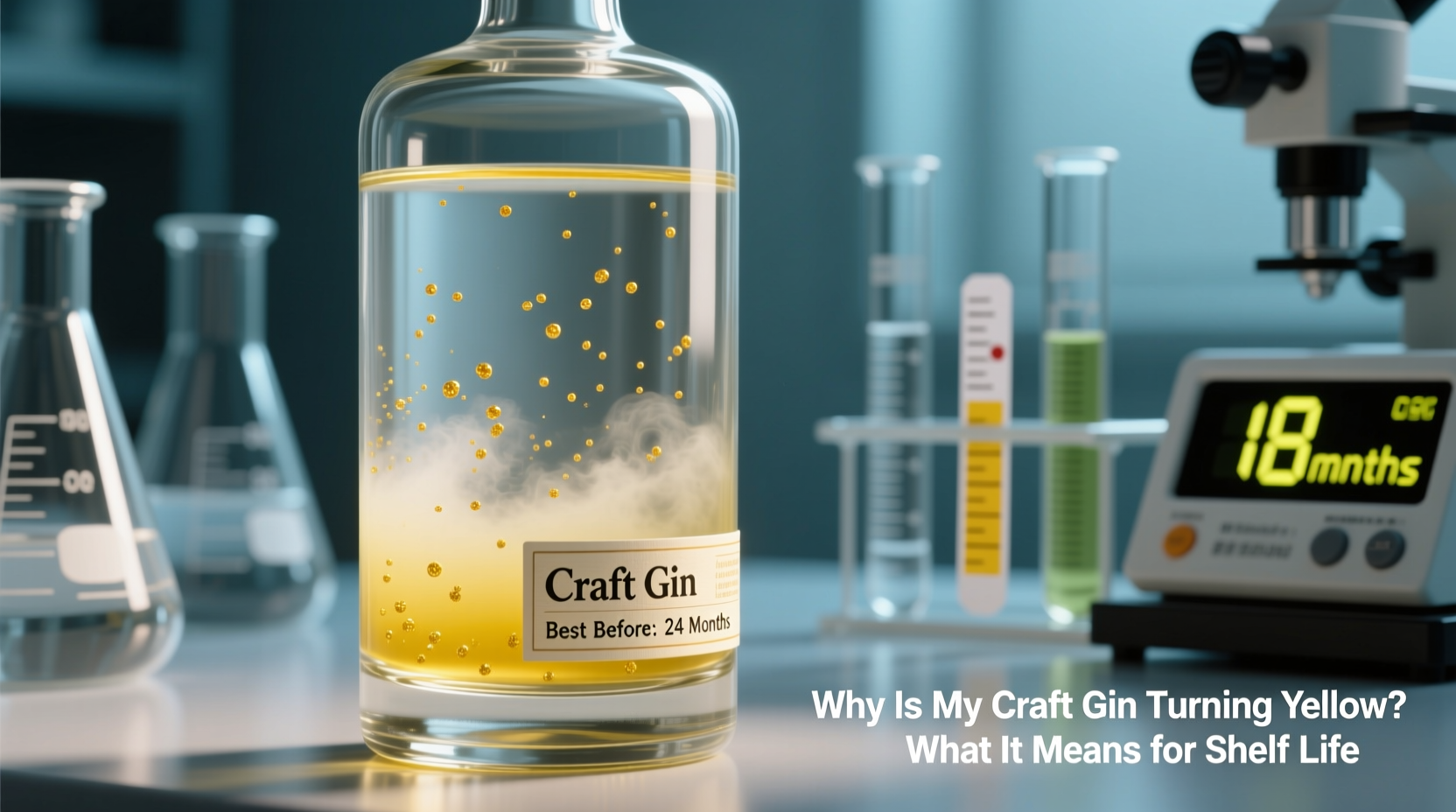
Yellowing in craft gin is primarily driven by three interrelated chemical processes: oxidation of delicate botanical compounds, light-induced photochemical reactions, and extraction of trace pigments from botanical matter during extended contact. Unlike neutral spirits aged in wood—which gain color from lignin breakdown—gin gains no intentional color from barrels. Instead, its hue evolves from within.
Key contributors include:
- Terpenes and polyphenols: Botanicals like lemon peel, coriander seed, chamomile, and elderflower contain flavonoids (e.g., quercetin, rutin) and carotenoid precursors that oxidize slowly in ethanol-water solutions. These compounds transition from colorless or pale yellow precursors to more conjugated, chromophore-rich structures—visible as golden tones.
- Ascorbic acid degradation: Citrus peels contribute vitamin C, which acts as a natural antioxidant early on—but depletes over time. As ascorbic acid breaks down, it forms dehydroascorbic acid and further oxidative byproducts that promote browning reactions.
- Light exposure: UV and visible blue light catalyze free radical formation in ethanol, accelerating oxidation of unsaturated fatty acids from seeds and volatile oils. Clear glass offers zero UV filtration—making photolysis a leading cause of premature yellowing, especially in retail displays or sunny home bars.
- Trace metal catalysis: Minute iron or copper residues from stills, condensers, or even bottle caps can act as pro-oxidants, speeding up the conversion of phenolic compounds into quinones—the same class of pigments responsible for apple browning or tea darkening.
Importantly, yellowing is not synonymous with spoilage. It reflects kinetic activity—not microbial growth. Gin’s high alcohol content (typically 40–48% ABV) inhibits bacteria, yeast, and mold. What changes is aromatic fidelity and structural balance—not safety.
What the Shade Tells You: Interpreting Hue Depth and Timing
Not all yellowing carries equal weight. The rate, intensity, and context determine whether it signals graceful evolution—or instability. A slow, uniform shift to pale straw over six months may reflect gentle oxidation enhancing mouthfeel and rounding sharp citrus notes. In contrast, rapid yellowing within 4–6 weeks—especially if accompanied by cloudiness, sediment, or off-aromas—suggests a compromised batch or storage failure.
Tip: Hold your bottle against a white sheet of paper in natural daylight—not under LED or fluorescent lighting—to accurately assess hue progression. Artificial light distorts perception and masks subtle shifts.Here’s how to interpret common patterns:
| Hue & Timeline | Most Likely Cause | Sensory & Stability Implication |
|---|---|---|
| Pale gold, uniform, develops over 4–8 months | Natural oxidation of citrus and floral terpenes | Often positive: adds roundness, softens juniper bite; shelf life remains 12–18 months unopened |
| Amber or orange tint appearing in <4 weeks | UV exposure or elevated temperature (>25°C) | Risk of volatile loss (limonene, pinene); potential bitterness; best consumed within 3 months |
| Yellow + haze or fine particles | Botanical oil separation or ester hydrolysis | Not unsafe, but indicates emulsion instability; shake gently before use; avoid long-term storage |
| Greenish-yellow tinge | Oxidation of chlorophyll traces (e.g., from fresh rosemary, nettle, or green peppercorns) | Generally benign; may add earthy complexity but shortens optimal drinking window to ~6 months |
| Deep amber with caramel notes on nose | Advanced Maillard-like reactions in ethanol medium | Likely past peak: diminished freshness, muted top notes; still safe but stylistically compromised |
A Real-World Example: The Coastal Forager Batch Incident
In late 2022, a respected Cornish distillery released “Tide Line,” a limited gin featuring hand-harvested sea buckthorn, rock samphire, and dried kelp. Within five weeks of bottling, retailers reported consistent yellowing across batches stored in well-lit shop windows. Initial concern centered on contamination—until lab analysis revealed no microbial growth, no ethanol degradation, and stable ABV. Instead, spectrophotometry showed elevated levels of oxidized lutein and beta-cryptoxanthin—carotenoids abundant in sea buckthorn—accelerated by ambient UV exposure through display glass.
The distillery responded transparently: they reformulated the label to specify “store in darkness,” introduced UV-filtering sleeves for retail, and added a harvest date code. Crucially, they also conducted blind tastings with 47 professional judges. Results showed 68% preferred the 8-week-old yellowed samples for their enhanced umami depth and saline roundness—though 92% agreed the bright, zesty character of the 2-week sample was irreplaceable. This case underscores a vital truth: yellowing isn’t inherently negative—it’s information. It tells you *how* the gin is aging, and invites intentionality about when and how to drink it.
Shelf Life Implications: Beyond “Best Before” Dates
Regulatory “best before” dates on gin are largely legal formalities—not indicators of spoilage. At 40%+ ABV, microbial risk is negligible. What truly governs shelf life is *sensory viability*: the point at which volatile aromatics fade, oxidation products dominate, or structural harmony unravels.
For craft gin, unopened shelf life depends less on time and more on three controllable variables:
- Light exposure: UV radiation is the single greatest accelerator of degradation. Clear glass transmits >85% of UVA; amber glass blocks ~90%; cobalt blue blocks ~99%.
- Temperature stability: Every 10°C increase doubles oxidation reaction rates. A bottle kept at 30°C ages as fast as four bottles stored at 15°C.
- Oxygen headspace: Even in sealed bottles, tiny amounts of air remain above the liquid. Over time, ethanol draws oxygen across the seal interface—especially with natural cork or imperfect crimp seals.
Under ideal conditions—cool (12–15°C), dark, still storage—an unopened craft gin retains peak vibrancy for 12–18 months. Under suboptimal conditions—room temperature (22°C), kitchen cabinet above stove, or sunlit bar shelf—that window shrinks to 4–6 months. Once opened, exposure to air accelerates change dramatically: volatile top notes (citrus zest, floral lift) diminish within 2–4 weeks, while heavier base notes (orris root, angelica) persist longer.
“Color change in botanical spirits isn’t decay—it’s dialogue. The gin is telling you how its molecules are rearranging. Our job is to listen, not panic.” — Dr. Lena Voss, Senior Distillation Chemist, Heriot-Watt University Centre for Sustainable Spirits
Action Plan: Preserving Clarity and Extending Peak Quality
If your craft gin is yellowing faster than expected—or you want to prevent it altogether—follow this evidence-based, step-by-step protocol:
- Immediate audit: Remove all bottles from direct sunlight, heat sources, and fluorescent lighting. Check ambient storage temperature with a min/max thermometer.
- Repackage selectively: Transfer any partially consumed bottles into smaller, dark glass containers (e.g., 200ml amber swing-top bottles) to minimize headspace oxygen. Use food-grade stainless steel pour spouts instead of plastic stoppers, which can leach compounds.
- Darken your display: Store full bottles inside closed cabinets lined with black felt or UV-blocking fabric. If using open shelving, invest in UV-filtering acrylic sleeves (tested to block 99% of UVA/UVB).
- Control microclimate: Place a hygrometer and digital thermometer in your storage area. Ideal range: 12–16°C, 45–60% RH. Avoid basements (dampness risks label degradation) and attics (temperature spikes).
- Track and taste: Label each bottle with purchase date and first-open date. Every 30 days, conduct a side-by-side comparison: pour 25ml of your oldest bottle next to a fresh one. Note differences in aroma intensity, citrus brightness, and finish length—not just color.
Frequently Asked Questions
Is yellow craft gin safe to drink?
Yes—absolutely. Alcohol concentration prevents pathogenic growth. Yellowing reflects oxidation chemistry, not contamination. As long as the gin smells clean (no mustiness, vinegar sharpness, or rancid nuttiness) and tastes balanced (no harsh bitterness or flatness), it poses no health risk. Its quality may be diminished, but its safety is intact.
Can I reverse yellowing by refrigerating or filtering?
No. Oxidation is irreversible at ambient conditions. Refrigeration slows further change but won’t restore lost volatiles or revert chromophores. Filtering (e.g., with coffee filters or activated carbon) removes desirable esters and terpenes along with pigments—flattening flavor and texture. Prevention—not correction—is the only effective strategy.
Does adding citrus garnishes to the bottle cause yellowing?
Yes—significantly. Infusing gin with fresh citrus peels post-bottling introduces enzymes (e.g., peroxidase), water, and additional oxidizable compounds. This creates a dynamic, unstable system prone to rapid browning and cloudiness. Never store infused gin long-term; consume within 7–10 days and refrigerate.
Conclusion: Embrace the Evolution, Respect the Ephemeral
Craft gin’s yellowing isn’t a flaw to be concealed—it’s a hallmark of authenticity. It signals absence of artificial stabilizers, minimal processing, and botanical honesty. That pale gold hue is proof that real plants, real ethanol, and real time are at work in your bottle. But honoring that honesty means acting with intention: storing thoughtfully, tasting mindfully, and drinking deliberately. Shelf life isn’t a countdown—it’s a continuum of sensory opportunity. The gin at three months offers vibrant, electric clarity; at nine months, it may reveal hidden depths of spice and earth; at fifteen, it might settle into quiet, woody serenity. Your role isn’t to stop time—but to steward it.
So next time you notice that subtle shift in your favorite coastal or forest gin, don’t reach for the trash. Reach for your notebook instead. Record the date, the light conditions, the nose before and after aeration. Compare it to a fresh bottle—not to judge, but to understand. Because every shade of yellow tells a story about soil, season, still, and sky. And the most compelling gins aren’t those that never change—they’re the ones that change meaningfully, and invite you to witness it.
💬 Have you observed yellowing in a specific craft gin? Share your experience—the brand, timeline, storage conditions, and how the flavor evolved. Your real-world insight helps others read the signs with confidence.








