Air purifiers are designed to operate quietly while cleaning the air in your home. When you start hearing unusual sounds—like grinding, rattling, or high-pitched whining—it’s natural to worry. These noises often signal underlying issues, many of which are preventable with proper maintenance. One of the most common culprits? A clogged or failing filter. Understanding what different noises mean and knowing when to replace your filter can extend your unit’s lifespan, improve air quality, and restore peace to your space.
Common Causes of Weird Noises in Air Purifiers
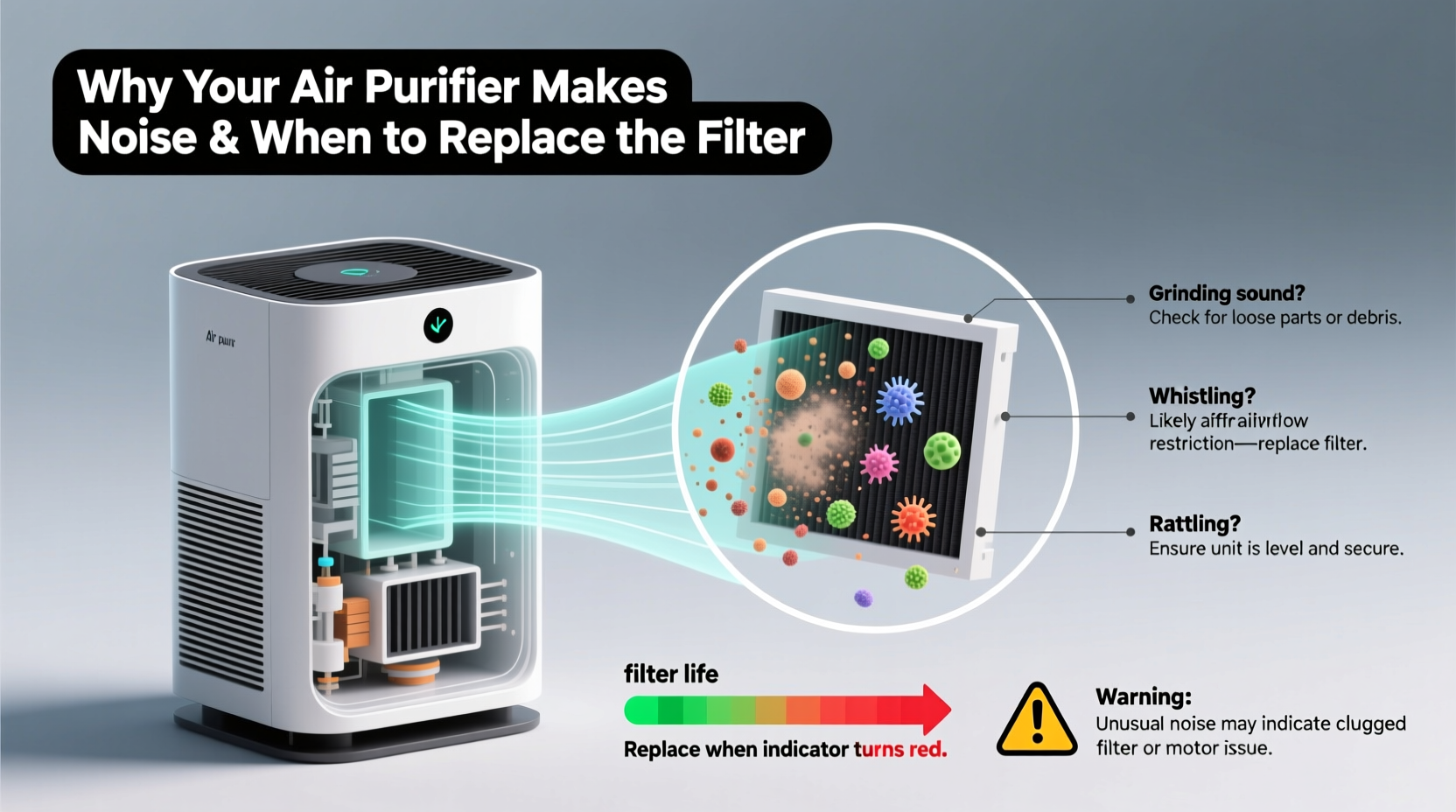
Not all strange sounds point to the same problem. Identifying the type of noise helps pinpoint the issue faster.
- Rattling or vibrating: Often caused by loose internal components, unbalanced placement, or debris caught in the fan blades.
- Grinding or scraping: Suggests mechanical friction—possibly worn bearings, misaligned fans, or foreign objects obstructing rotation.
- High-pitched whine or squeal: Typically linked to motor strain, especially when airflow is restricted due to a dirty filter.
- Humming that increases over time: Could indicate an aging motor or power supply issues.
- Buzzing from control panel: May be electrical, related to the display or circuitry, not necessarily the fan system.
While some noises are harmless and stem from design limitations (especially in budget models), persistent or worsening sounds usually demand attention.
Tip: Always unplug your air purifier before inspecting internal components—even a quick visual check should never be done while powered.How a Dirty Filter Contributes to Noise and Performance Loss
Your air purifier relies on consistent airflow to function efficiently. As filters collect dust, pet dander, pollen, and other particles, they become progressively clogged. This forces the fan motor to work harder to pull air through the restricted media. The added strain leads to several side effects:
- Increased operational noise due to motor stress
- Reduced air output and purification effectiveness
- Higher energy consumption
- Premature wear on the motor and fan assembly
A HEPA filter, for example, can lose up to 50% of its airflow capacity when heavily loaded. This doesn’t just make the unit louder—it compromises its core purpose. Over time, this constant overwork may lead to irreversible motor damage.
“Neglecting filter replacement is the number one reason customers bring in malfunctioning air purifiers. It’s not always the motor that fails—it’s the motor being forced to compensate.” — Carlos Mendez, HVAC Technician & Appliance Repair Specialist
When to Replace Your Air Purifier Filter: A Practical Guide
Manufacturers typically recommend replacing filters every 6 to 12 months, but real-world conditions vary widely. Household size, pet ownership, smoking, local pollution levels, and usage frequency all affect filter lifespan.
Here’s a step-by-step timeline to help you determine when it’s time for a change:
- Check the indicator light (if available): Many modern units have built-in sensors that alert you when filter efficiency drops. Reset the counter after replacement.
- Inspect the filter visually: Remove the filter and hold it up to a bright light. If you can’t see light passing through, it’s time to replace it.
- Smell test: A lingering musty or stale odor—even when the unit is running—can indicate microbial growth on a saturated carbon filter.
- Assess performance: Notice reduced airflow or longer times to clear smoke or odors? That’s a sign of diminished filtration.
- Track runtime: If you run your purifier 24/7, expect to replace filters closer to 6–8 months. Occasional use may stretch life to 12+ months.
Never assume “set it and forget it” applies to air purifiers. Filters degrade silently, and by the time noise becomes obvious, significant strain has already occurred.
Do’s and Don’ts of Air Purifier Maintenance
| Do’s | Don’ts |
|---|---|
| Replace filters according to usage, not just calendar time | Wait for complete failure before acting |
| Clean pre-filters monthly (if washable) | Use harsh chemicals or submerge non-washable filters |
| Vacuum intake and exhaust grilles regularly | Operate the unit without any filter installed |
| Place the unit on a stable, level surface away from walls | Install in humid areas like bathrooms without ventilation |
| Keep usage logs for multiple units in large homes | Reuse disposable filters in hopes of saving money |
Maintenance isn’t just about filters. Dust buildup around fan blades or inside housing can create imbalance and vibration. A quick monthly wipe-down of accessible surfaces prevents long-term issues.
Troubleshooting Noise Step by Step
If your air purifier starts making odd sounds, follow this checklist before assuming it’s beyond repair:
- Turn off and unplug the unit. Safety first—never probe moving parts while powered.
- Remove and inspect the filter. Look for visible clogs, tears, or moisture. Replace if questionable.
- Clean the pre-filter and housing. Use a soft brush or vacuum attachment to remove surface dust.
- Check for obstructions. Ensure nothing—a paper clip, pet hair clump, or toy part—has entered the intake.
- Reassemble carefully. Misaligned panels or improperly seated filters can cause rattling.
- Test on lowest setting. Gradually increase speed to see if noise returns at higher RPMs.
- Relocate the unit. Place it on a hard, flat surface away from furniture to reduce vibration transfer.
If the noise persists after these steps, especially grinding or screeching, internal mechanical failure is likely. At that point, professional service or replacement may be more cost-effective than repair.
Tip: Keep spare filters on hand. Running out at the wrong time leads to delayed changes and increased wear. Subscribe to auto-ship programs if available.Real-World Example: How One Family Fixed Their Noisy Purifier
The Thompson family in Portland, Oregon, noticed their bedroom air purifier had developed a rhythmic thumping sound over two weeks. Initially quiet, the noise grew louder each night, disrupting sleep. They assumed the unit was failing and searched for replacements online.
Before buying new, they decided to troubleshoot. Upon removing the HEPA filter, they found it packed with fine dust and tangled pet hair from their two cats. The pre-filter hadn’t been cleaned in over four months. After replacing the main filter and washing the pre-filter, the thumping stopped completely. The unit returned to near-silent operation.
They realized they’d been running the purifier on high 24/7 due to wildfire season, accelerating filter saturation. Since then, they’ve adjusted their routine: weekly pre-filter checks during heavy use and scheduled filter replacements every six months regardless of visible condition.
This case highlights how simple neglect—not hardware failure—causes most noise problems. Awareness and routine care saved them $200 and extended their device’s life.
Signs Beyond Noise: When Replacement Is Inevitable
Sometimes, even diligent maintenance can’t overcome age or design flaws. Watch for these red flags:
- The motor runs but no air comes out
- Burning smell or visible smoke (unplug immediately)
- Unit shuts off randomly due to overheating
- Noise continues after filter replacement and cleaning
- Error codes that won’t reset
If your air purifier is over five years old, repairs may not be worth the investment. Newer models offer better energy efficiency, quieter operation, and advanced features like smart sensors and app integration.
Frequently Asked Questions
Can I clean and reuse a HEPA filter?
No. True HEPA filters are not designed to be washed or vacuumed. Doing so damages the delicate fiber mesh and reduces filtration efficiency. Only reusable pre-filters or washable electrostatic filters should be cleaned. Always check the manufacturer’s instructions.
Why does my air purifier hum louder at night?
Many people notice noise more in quiet environments. However, if the sound level actually increases, it could be due to voltage fluctuations, thermal expansion of components, or a dirty filter straining under continuous load. Try running it on a lower setting at night or repositioning it farther from the bed.
Is it safe to run an air purifier with a slightly dirty filter?
Short-term use is generally safe, but prolonged operation with a clogged filter increases motor stress and reduces air quality. If you can’t replace the filter immediately, reduce the fan speed to minimize strain until a new one arrives.
Conclusion: Silence Starts with Smart Care
An air purifier shouldn’t become a source of irritation. Strange noises are early warnings—not inevitable outcomes. Most issues stem from overlooked maintenance, particularly delayed filter changes. By staying proactive, you protect both your investment and your indoor air quality.
Set calendar reminders. Inspect filters monthly. Clean housings regularly. And don’t wait for loud grinding to act—address subtle changes early. With consistent care, your air purifier can deliver years of quiet, effective service.
💬 Have a noisy purifier story or a maintenance hack? Share your experience in the comments—your insight could help another homeowner avoid a costly mistake.








