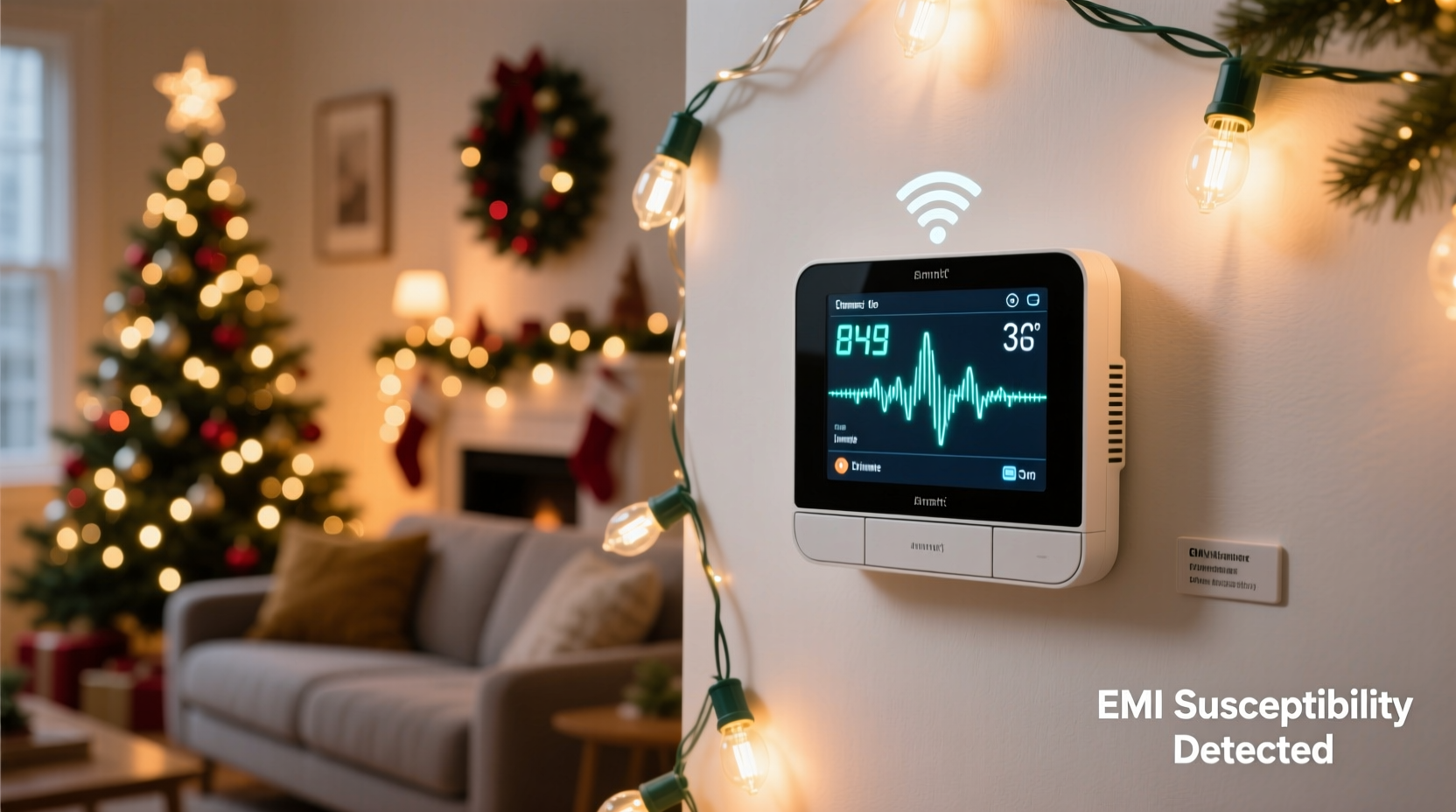
As holiday season rolls around, homes light up with festive cheer—twinkling strings of Christmas lights draped across trees, windows, and rooftops. But for some homeowners, this seasonal sparkle comes with an unexpected side effect: erratic behavior from their smart thermostats. Devices that normally maintain a steady, comfortable temperature suddenly start fluctuating, turning the heat on and off unpredictably or failing to respond at all. The culprit? Often, it's not a defect in the thermostat itself—but rather the subtle electrical interference introduced by holiday lighting systems.
This phenomenon is more common than many realize, especially in older homes or those using lower-quality LED or incandescent light strings. While smart thermostats are designed to be energy-efficient and responsive, they rely on stable power and clean electrical signals. When Christmas lights—particularly those with built-in timers or cycling circuits—turn on or off, they can create voltage fluctuations or electromagnetic noise that disrupts the thermostat’s operation. Understanding this interaction is key to maintaining comfort without sacrificing holiday spirit.
How Smart Thermostats Use Electrical Signals
Smart thermostats operate differently from traditional models. They don’t just read room temperature—they communicate with your HVAC system using low-voltage electrical signals (typically 24V AC) sent through control wires. These signals tell the furnace, air conditioner, or heat pump when to turn on or off based on programmed schedules, occupancy detection, or remote commands via smartphone apps.
Beyond basic switching, modern thermostats often include Wi-Fi radios, touchscreens, motion sensors, and real-time monitoring—all of which require consistent, clean power. Most draw power continuously from the HVAC system’s common wire (C-wire), but in installations where a C-wire isn’t available, they use \"power stealing\" techniques. This means they briefly draw extra current during system operation to charge internal capacitors, allowing them to stay powered between cycles.
This delicate balance makes them sensitive to electrical anomalies. Any sudden drop or surge in voltage—even minor ones—can cause temporary resets, communication errors, or incorrect sensor readings. And while these disturbances might go unnoticed by other appliances, smart thermostats are finely tuned enough to react.
The Hidden Impact of Cycling Christmas Lights
Many decorative light sets—especially older incandescent strands or budget LED strings with built-in flasher circuits—don’t provide a smooth electrical load. Instead, they rapidly switch on and off to create twinkling effects. This cycling introduces what’s known as “electrical noise” or “transients” into the home’s circuitry.
These transients are brief spikes or dips in voltage caused by inductive loads switching. Even if the lights are on a separate circuit from the thermostat, shared neutral lines or proximity in the electrical panel can allow interference to propagate. In some cases, the thermostat may interpret these fluctuations as changes in demand or faults in the HVAC system.
“Intermittent heating issues during the holidays are rarely about the thermostat hardware. More often, it’s parasitic voltage or line noise from seasonal decorations disrupting low-voltage controls.” — Carlos Mendez, Residential HVAC Systems Engineer
Common Symptoms of Interference
When Christmas lights affect your smart thermostat, the signs can vary depending on the model and severity of interference. Common symptoms include:
- Sudden drops or spikes in displayed temperature unrelated to actual room conditions
- HVAC system turning on or off unexpectedly
- Wi-Fi disconnections or delayed app responses
- Thermostat rebooting or entering setup mode mid-cycle
- Error codes related to power loss or communication failure
In extreme cases, users report their thermostat showing sub-zero temperatures or refusing to activate heating despite being set well above ambient levels. These behaviors often correlate precisely with the timing of light cycles—such as every 5 or 10 seconds—pointing directly to synchronization with the light controller.
Tip: If your thermostat glitches at regular intervals (e.g., every 8 seconds), check whether your Christmas lights have a matching blink pattern—it could be the source.Diagnosing the Source: A Step-by-Step Guide
Before making any changes, confirm that the issue is indeed tied to your holiday lights. Follow this logical troubleshooting process:
- Observe the timing: Note when the thermostat acts up. Does it coincide with the blinking pattern of your lights?
- Turn off all holiday lighting: Switch off every strand, indoor and outdoor, either at the outlet or breaker.
- Monitor for stability: Let the thermostat run for at least one full HVAC cycle (15–30 minutes). Check if behavior normalizes.
- Reintroduce lights incrementally: Turn on one section at a time and watch for recurrence.
- Test different circuits: Plug suspect light strings into outlets on different breakers to isolate shared wiring issues.
- Use a multimeter (optional): Measure voltage at the thermostat terminals while lights cycle. Fluctuations beyond ±2V may indicate problematic noise.
If symptoms return only when specific light sets are active, you’ve identified the source. The next step is mitigation.
Electrical Pathways: How Noise Travels in Your Home
Even if your thermostat and Christmas lights are on separate circuits, they may still share components in your electrical panel. For example:
- Shared neutral bus bars can carry induced currents from one circuit to another.
- Nearby wiring in walls or junction boxes can couple electrically through capacitance or induction.
- Low-quality transformers or dimmer circuits in light controllers emit electromagnetic interference (EMI) that radiates into nearby wires.
This cross-talk is particularly problematic when thermostat wires run parallel to lighting cables for long stretches—common in attics or basements. Shielded thermostat wire helps reduce this risk, but most standard installations use unshielded 18-gauge cable.
Solutions to Prevent Thermostat Disruption
Once confirmed, the interference from Christmas lights can be resolved through several practical fixes. Not all solutions require rewiring or professional help—some are simple adjustments.
1. Upgrade to High-Quality LED Light Strings
Cheap LED or incandescent light sets often use rudimentary rectifier circuits that produce jagged current draw. Premium LED strings use smoother drivers and filtering to minimize electrical noise. Look for products labeled “constant-on” or “no flicker,” and avoid multi-function sets with built-in chase or fade modes unless they specify EMI shielding.
2. Use a Dedicated Power Strip with Filtering
Plug your light displays into a surge protector or power strip designed for audio/video equipment. These often include EMI/RFI filters that suppress high-frequency noise before it enters your home’s wiring. Avoid daisy-chaining multiple strips, as this can overload circuits and worsen instability.
3. Install a Thermostat Isolation Relay
An isolation relay acts as a buffer between your thermostat and HVAC system. It uses opto-isolators or transformers to prevent electrical noise from traveling back up the control wires. While typically used in commercial settings, compact versions are available for residential use and can be installed by a qualified technician.
4. Add a C-Wire if Missing
If your thermostat relies on power-stealing, it’s inherently more vulnerable to voltage swings. Installing a common (C) wire provides continuous, stable power and eliminates the need for energy harvesting. Many thermostat manufacturers offer compatibility guides and DIY kits for adding a C-wire using existing spare conductors in your HVAC cable.
| Solution | Effectiveness | Cost | DIY-Friendly? |
|---|---|---|---|
| Switch to filtered LED lights | High | $$ | Yes |
| Use EMI-filtering power strip | Medium-High | $ | Yes |
| Add a C-wire | Very High | $-$$ | Intermediate |
| Install isolation relay | Very High | $$$ | No (Professional) |
| Relocate light circuits | High | $$$ | No |
Real Example: A Home in Denver Battles Holiday Glitches
Consider the case of Sarah L., a homeowner in Denver who upgraded to a Nest Learning Thermostat in October. By early December, she noticed her furnace would randomly shut down every 7 seconds—exactly matching the blink interval of her front-yard light display. The house would cool rapidly, then spike in temperature once the system restarted.
After ruling out Wi-Fi issues and HVAC faults, she followed the diagnostic steps above. Turning off the outdoor lights immediately stabilized the thermostat. Further testing revealed that a $12 Amazon-bought LED string with a “twinkle” mode was generating significant line noise. Replacing it with a higher-end, constant-on LED set from a specialty lighting store resolved the issue completely. She also added a filtered power strip for future displays.
Sarah’s experience highlights how inexpensive holiday decor can inadvertently impact sophisticated home automation systems—even when seemingly unrelated.
Preventative Checklist for Future Seasons
To avoid repeating this scenario every year, follow this checklist before installing holiday lights:
- ✅ Audit all light strings for flicker modes or outdated transformers
- ✅ Replace or retire old incandescent or low-quality LED sets
- ✅ Use only EMI-filtered power strips for outdoor and indoor displays
- ✅ Ensure your thermostat has a C-wire or stable power source
- ✅ Test thermostat behavior after connecting each new light section
- ✅ Label noisy devices if identified—store separately for future use
Frequently Asked Questions
Can Christmas lights really affect a device on a different circuit?
Yes. Even on separate circuits, shared neutrals, grounding paths, or electromagnetic radiation can transmit interference. Voltage transients often travel through the main panel and affect sensitive electronics like smart thermostats.
Will turning off the lights solve the problem immediately?
In most cases, yes. Once the source of electrical noise is disconnected, the thermostat should stabilize within one or two HVAC cycles. If problems persist, there may be residual damage or an independent issue requiring inspection.
Are newer thermostats more resistant to electrical interference?
Generally, yes. Manufacturers like Ecobee and Nest have improved filtering and power management in recent models. However, no consumer-grade thermostat is fully immune to severe electrical noise, especially from poorly regulated third-party lighting products.
Conclusion: Enjoy the Holidays Without Sacrificing Comfort
Your smart thermostat should make life easier—not add frustration during the most wonderful time of the year. With a better understanding of how electrical systems interact, you can enjoy festive lighting displays without compromising climate control. Simple upgrades—like choosing cleaner LED strings, using filtered power strips, or ensuring proper thermostat wiring—go a long way toward preventing avoidable disruptions.
Don’t let flickering lights cause freezing nights. Take a few preventive steps now, and your home will stay warm, efficient, and merry all season long.
💬 Experiencing thermostat issues this holiday season? Share your story in the comments—your solution might help another homeowner keep their cool (or warmth) intact!