It’s a familiar scene in countless homes: you step toward the bathroom, and like clockwork, your dog or cat is right behind you, tailing your steps with quiet determination. You close the door—only to hear scratching or plaintive meows on the other side. This common behavior might seem quirky or even inconvenient, but it’s deeply rooted in your pet’s instincts, emotional needs, and social perception of you. Understanding why your pet insists on accompanying you—even during private moments—can deepen your bond and help you respond with empathy rather than frustration.
The Psychology Behind the Follow
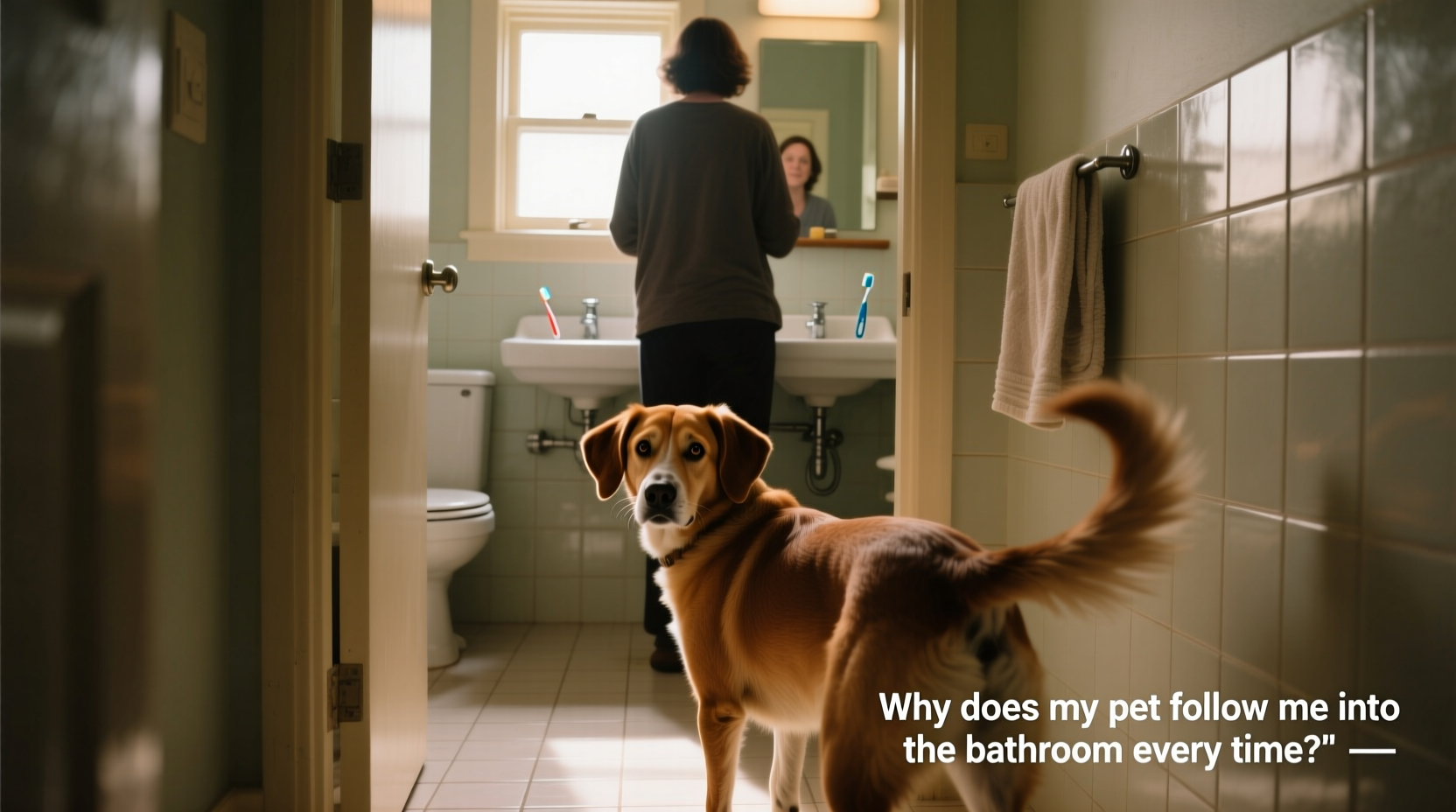
Pets, especially dogs and cats, are highly attuned to human behavior. They rely on routine, body language, and proximity to feel secure. When you move from room to room, your pet often interprets this as part of a shared activity. To them, separation—even brief—can trigger mild anxiety. The bathroom, being a small, enclosed space where you disappear behind a closed door, amplifies this unease.
Dogs, descendants of pack animals, view their human family as their social group. Staying close ensures safety and reinforces social bonds. A 2020 study published in *Animal Cognition* found that dogs exhibit increased stress markers when separated from their owners, even for short durations. Following you into the bathroom may be their way of maintaining connection and reducing uncertainty.
Cats, though more independent, also form strong attachments. Research from Oregon State University revealed that over 60% of cats display secure attachment to their caregivers—similar to human infants. Your bathroom trips may interrupt this sense of security, prompting them to follow and reestablish proximity.
“Pets don’t distinguish between meaningful and mundane activities. To them, your presence is the anchor. When you vanish into a room with a closing door, it disrupts their sense of continuity.” — Dr. Angela Hughes, Veterinary Behaviorist
Instinctual Drivers: Pack Mentality and Territory Monitoring
For dogs, following you into the bathroom isn’t just about affection—it’s also instinctual. In the wild, canids stay close to their pack leaders for protection and guidance. By trailing you, your dog may be fulfilling an evolutionary role: monitoring the leader’s movements and ensuring group cohesion.
Likewise, pets are territorial by nature. Your bathroom, while personal to you, is still part of their domain. When you enter, they may feel compelled to inspect the space, especially if it contains novel scents (toothpaste, soap, running water) or unusual sounds (flushing, brushing). Their presence isn’t necessarily about you—it could be about environmental surveillance.
Moreover, bathrooms often have cool tile floors, residual warmth from showers, or interesting textures underfoot—sensory attractions that draw pets in independently of your presence. But because you initiated the movement, they associate the trip with you.
Tip: If your pet seems anxious when left outside the bathroom, try leaving the door ajar. This allows visual contact and reduces feelings of isolation.Signs of Over-Attachment vs. Normal Behavior
While occasional following is typical, some pets develop compulsive attachment behaviors. These can signal underlying anxiety or inadequate stimulation. Key signs of over-dependence include:
- Panting, pacing, or vocalizing when you’re out of sight
- Refusing to eat or drink when alone
- Following you so closely they risk tripping you
- Destructive behavior when confined separately
These behaviors may point to separation anxiety, which affects up to 20% of dogs and a growing number of indoor cats, according to the American Kennel Club. It’s not simply “being clingy”—it’s a stress response that can erode quality of life for both pet and owner.
On the other hand, normal following is relaxed and non-intrusive. The pet may sit nearby, glance at you occasionally, and disengage when called. They don’t panic if briefly shut out and resume normal activity after you exit.
Separation Anxiety Checklist
Does your pet show three or more of these?
- Whines or howls when you prepare to leave
- Attempts to escape when alone
- Excessive salivation or trembling
- Urinating or defecating indoors only when unsupervised
- Shadowing you constantly, including into bathrooms and closets
If yes, consult a veterinarian or certified animal behaviorist.
Environmental and Routine Factors
Your daily habits shape your pet’s expectations. If you consistently reward bathroom visits with attention—like letting your dog in, talking to your cat, or giving treats—you inadvertently reinforce the behavior. Pets learn quickly: presence = interaction.
Routine also plays a role. Many people use the bathroom at predictable times (morning, bedtime), making it part of a larger behavioral chain. Your pet learns that after you brush your teeth, you’ll likely go to bed—or leave for work. Their presence during this ritual may be an attempt to delay separation or confirm what comes next.
Indoor-only pets, especially those without sufficient mental stimulation, are more prone to shadowing behavior. With limited outlets for exploration, they focus intensely on human activity as their primary source of engagement.
| Factor | Encourages Following? | Solutions |
|---|---|---|
| High owner attention | Yes | Balance interaction with independent play |
| Inconsistent routines | Yes | Establish predictable schedules |
| Limited enrichment | Yes | Add puzzle feeders, window perches, toys |
| Secure attachment | Mildly | Normalize brief separations |
| Medical issues | Possibly | Vet check for pain or cognitive decline |
Species-Specific Motivations: Dogs vs. Cats
Dogs and cats follow for overlapping but distinct reasons. Recognizing these differences helps tailor your response.
Dogs: Loyalty, Curiosity, and Reinforcement
Dogs are social learners. They observe your actions and mimic them, partly out of curiosity, partly out of loyalty. A Labrador might follow you to the bathroom because he associates the room with morning walks (you brush your teeth, then grab the leash). A terrier might bark at the toilet flush, treating it as a mysterious event requiring investigation.
Additionally, dogs pick up on subtle cues. If you usually pet them after washing your hands, they’ve learned the bathroom equals potential affection. This operant conditioning strengthens the habit.
Cats: Security, Warmth, and Control
Cats follow for different reasons. While less pack-oriented, they value control over their environment. Your bathroom may contain warm spots (radiator, sunlit floor), fresh water (from dripping taps), or intriguing scents (perfume, lotions).
Some cats guard their humans, especially if they perceive vulnerability. Watching you sit on the toilet—a low, immobile position—might trigger protective instincts. Others simply dislike closed doors; in multi-pet households, a cat may follow to ensure no rival gains access to you first.
“Cats aren’t being needy—they’re being strategic. They want to monitor their territory and maintain access to resources, including you.” — Dr. Mikel Delgado, Feline Behavior Scientist
When to Be Concerned: Behavioral Red Flags
Most bathroom-following is harmless. However, sudden changes in behavior warrant attention. If a previously independent pet begins shadowing you obsessively, consider:
- Age-related changes: Older pets may develop cognitive dysfunction, leading to confusion and clinginess.
- Pain or discomfort: Arthritis or gastrointestinal issues might make them seek reassurance.
- Environmental stress: New pets, construction, or schedule shifts can heighten dependency.
A veterinary exam can rule out medical causes. Blood work, neurological checks, and behavioral assessments help differentiate normal attachment from pathology.
Practical Strategies to Manage the Behavior
You don’t need to eliminate the behavior entirely—especially if it doesn’t bother you. But if it disrupts your privacy or signals anxiety, gentle modification works best. Avoid punishment, which increases fear and damages trust.
Step-by-Step: Reducing Bathroom Dependence
- Start with open-door practice: Leave the bathroom door open during short visits. Let your pet see you, then calmly exit together.
- Introduce a cue: Say “I’ll be back” in a calm tone before closing the door briefly.
- Gradually increase separation: Close the door for 10 seconds, then 30, then 1 minute. Reward calm behavior on the other side.
- Create a distraction: Offer a stuffed Kong (dog) or treat ball (cat) just before entering the bathroom.
- Reinforce independence: Praise your pet when they choose to stay in another room voluntarily.
Frequently Asked Questions
Is it normal for my dog to wait outside the bathroom for 10 minutes?
Yes, especially if your dog is highly bonded. As long as they remain calm and don’t exhibit destructive behaviors, this is typically within the range of normal attachment. However, if waiting escalates to pacing or vocalizing, it may indicate separation distress.
Why does my cat sit on the sink while I brush my teeth?
Cats are drawn to sinks for multiple reasons: the sound of running water, reflective surfaces, elevated vantage points, and residual moisture. Your toothbrushing routine may coincide with feeding time or attention, reinforcing the association. Some cats also enjoy the minty scent of toothpaste.
Can I train my pet not to follow me into the bathroom?
You can modify the behavior through positive reinforcement and gradual desensitization. Focus on rewarding independent behavior and creating alternative routines. Complete elimination isn’t always necessary or desirable—moderation is key.
Real-Life Example: Managing a Clingy Rescue Dog
Sarah adopted Max, a 3-year-old mixed breed, from a shelter. Within weeks, she noticed he followed her everywhere—even into the bathroom, where he’d whine if the door closed. Concerned, she consulted a trainer. After ruling out medical issues, they implemented a plan: Sarah began leaving the door cracked and gave Max a frozen peanut butter-stuffed toy before entering. Over two weeks, his anxiety decreased. She gradually increased door-closing duration, always rewarding calmness. Within a month, Max would lie down in the hallway instead of pressing against the door. The change didn’t break their bond—it strengthened it by building trust through predictability.
Final Thoughts: Embracing the Connection
Your pet’s insistence on following you into the bathroom isn’t a nuisance to endure—it’s a testament to the bond you’ve built. In a world where pets rely on us for food, safety, and love, your presence is their compass. While excessive attachment may require intervention, most bathroom followers are simply expressing devotion in their own quiet way.
Instead of viewing it as intrusive, consider it a privilege. Few relationships offer such unconditional attention. With patience, understanding, and a few practical adjustments, you can honor your pet’s needs while preserving your personal space. The goal isn’t to stop the follow—it’s to ensure it stems from security, not anxiety.
💬 Does your pet follow you into the bathroom? Share your story or tips in the comments—your experience could help another pet parent feel less alone!








