
Pet birds are intelligent, sensitive creatures with acute senses that make them highly reactive to changes in their environment. One of the most common but puzzling behaviors owners report during the holiday season is sudden screaming when Christmas lights blink on or flicker nearby. While it may seem like a simple overreaction, this behavior stems from deep-rooted instincts, sensory perception, and emotional responses unique to birds. Understanding the science behind this reaction allows caregivers to respond compassionately and effectively.
Birds perceive light differently than humans. Their visual systems are adapted for survival in the wild—detecting rapid movement, subtle shifts in brightness, and ultraviolet signals invisible to us. Blinking or strobing lights can trigger alarm because they mimic erratic motion, such as a predator lunging or environmental instability. When your parakeet shrieks at a twinkling garland or your cockatiel panics near a string of flashing LEDs, it's not misbehaving—it’s responding to what feels like a threat.
The Science Behind Avian Vision and Light Sensitivity
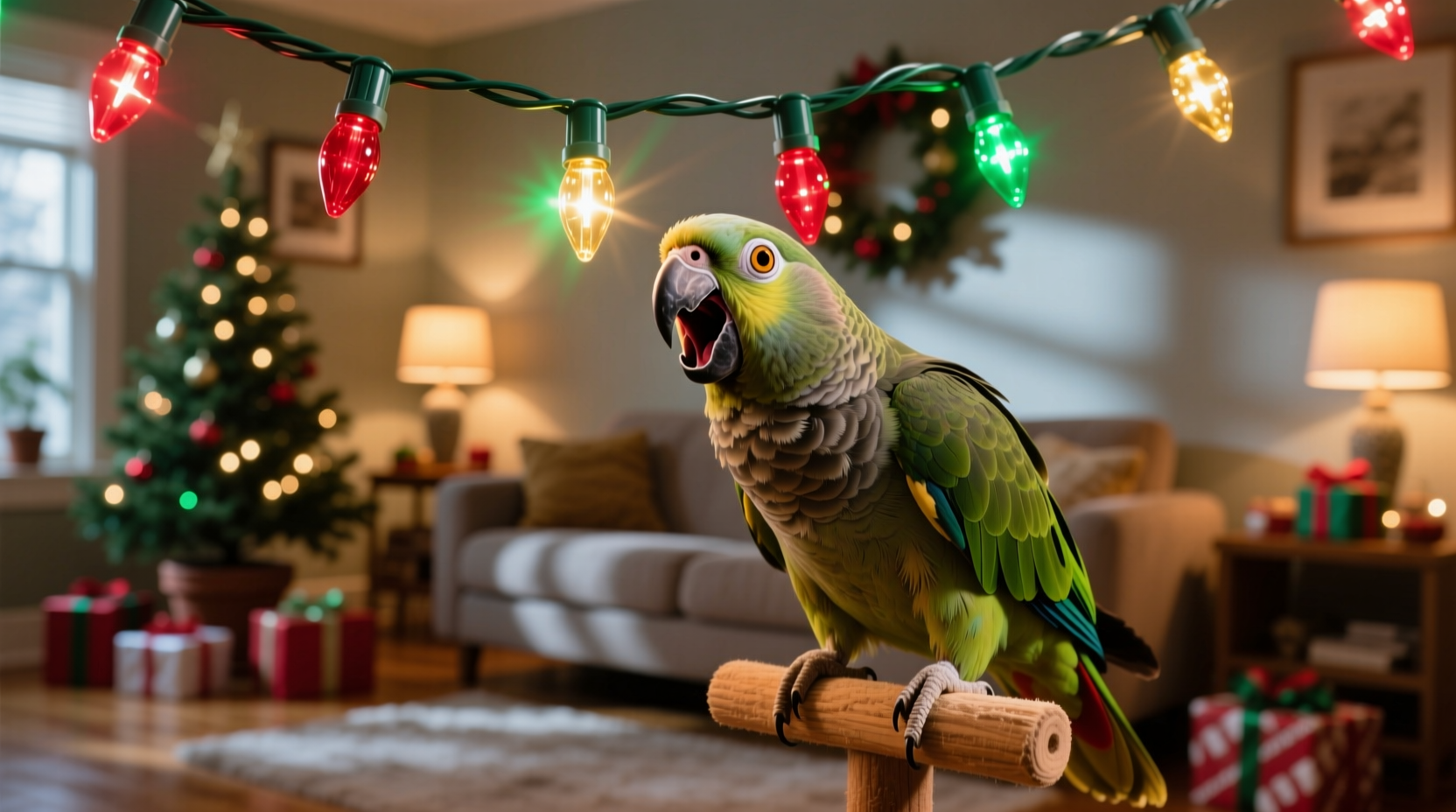
Birds have one of the most advanced visual systems in the animal kingdom. Unlike humans, who rely heavily on hearing and touch, birds process much of their world through sight. This includes detecting flicker rates far beyond human capability. Most household lighting—including LED Christmas lights—operates on alternating current, causing imperceptible flickering at frequencies between 50–120 Hz. Humans don’t notice this, but many birds do.
Studies show that birds possess higher critical flicker fusion thresholds (CFF), meaning they can detect flickering light up to 100–140 Hz, compared to humans’ average of 60 Hz. To a bird, blinking Christmas lights may appear as rapid, jarring flashes rather than smooth transitions. This creates a disorienting effect similar to being exposed to a strobe light.
“Birds evolved to detect minute visual changes in their surroundings—any flicker could signal danger, like a shadow from a diving hawk.” — Dr. Laura Simmons, Avian Behavior Researcher, University of California Davis
This hyper-awareness served birds well in nature, where spotting movement meant escaping predators. But in captivity, artificial lighting introduces stimuli that conflict with natural expectations. A blinking light doesn’t just catch attention—it disrupts neural processing, potentially leading to anxiety, agitation, and vocal outbursts like screaming.
Instinctual Fear Responses to Sudden Stimuli
In the wild, birds live in environments where sudden movements often precede attacks. A flash of light in darkness may resemble lightning, fire, or reflective surfaces signaling danger. Even domesticated species retain these primal instincts. When blinking lights activate unexpectedly, especially in dim rooms, birds interpret them as unpredictable threats.
Screaming is a primary defense mechanism. In flock settings, loud calls alert others to danger. Your lone pet uses the same strategy: vocalizing intensely to warn unseen companions—or to drive away the perceived intruder. Over time, if the light consistently appears without harm, some birds habituate. Others develop conditioned fear, associating the lights with stress and escalating their response each time.
Tip: Introduce new lights gradually during daylight hours so your bird can see the source and context clearly.Environmental Triggers That Amplify Stress
It’s not just the blinking itself—context plays a major role. Holiday decorations often come with additional stressors: unfamiliar objects, altered room layouts, increased noise, and visitor traffic. These combine to elevate baseline stress levels, making birds more reactive to individual triggers like lights.
Consider the typical setup:
- Lights placed near cages or perches increase exposure intensity.
- Darkened rooms enhance contrast, making flashes more dramatic.
- Musical ornaments or timers create unpredictable sound-and-light sequences.
- Candles or flame effects add heat and odor variables.
All of these factors contribute to sensory overload. A bird already on edge due to routine disruption will be far more likely to scream when lights blink—even if they previously tolerated them.
Case Study: Luna the Senegal Parrot
Luna, a 7-year-old Senegal parrot, lived in a quiet suburban home with a consistent daily schedule. Each December, her owners decorated the living room with multicolored blinking lights across the mantle—just 6 feet from her cage. The first night the lights turned on after sunset, Luna screamed continuously for 45 minutes, flapping against the bars until she drew blood.
Concerned, the owners consulted an avian behaviorist. Video analysis revealed that the strobing pattern created shifting shadows across the ceiling—patterns that moved erratically, mimicking aerial predators. The solution wasn’t removing all lights, but relocating Luna’s cage to a quieter back room during the holiday season and using steady-glow white lights instead of colorful blinkers in shared spaces.
Within three days, Luna’s screaming ceased. She eventually observed the decorations calmly from a distance during supervised visits. Her case illustrates how small environmental adjustments can resolve intense behavioral reactions rooted in perception, not defiance.
How to Reduce Fear and Prevent Screaming Episodes
Preventing screaming at blinking lights involves both immediate intervention and long-term management. The goal isn’t to eliminate holiday cheer, but to balance celebration with your bird’s psychological comfort.
Step-by-Step Guide to Introducing Holiday Lights Safely
- Assess proximity: Ensure lights are at least 8–10 feet from your bird’s cage or favorite perch.
- Choose safer options: Use steady-glow LEDs instead of twinkling or chasing patterns.
- Introduce gradually: Turn on lights during full daylight so your bird sees the source and associates it with safety.
- Monitor reactions: Watch for signs of distress—dilated pupils, raised feathers, head bobbing, or screaming.
- Desensitize slowly: Start with 10-minute sessions, increasing duration only if no fear is shown.
- Provide escape: Allow access to another room where lights aren’t visible, giving control over exposure.
- Pair with positive experiences: Offer treats or play calming music when lights are on to build positive associations.
Do’s and Don’ts of Holiday Lighting Around Birds
| Do | Don't |
|---|---|
| Use warm-white, non-flickering LED strings | Use strobe, disco, or rapidly flashing modes |
| Place lights high or behind barriers to reduce direct view | Drape lights directly around or above the cage |
| Keep lighting schedules predictable | Turn lights on/off unpredictably, especially at night |
| Offer enrichment during light exposure (toys, music) | Leave bird unattended during initial exposure |
| Observe body language closely | Force acclimation despite clear signs of fear |
Recognizing Signs of Chronic Stress in Pet Birds
Occasional screaming at novel stimuli is normal. But repeated or prolonged exposure to fear-inducing lights can lead to chronic stress, which compromises immune function, sleep quality, and overall well-being. Watch for these warning signs:
- Feather plucking or self-mutilation
- Loss of appetite or weight
- Excessive vocalization even when lights are off
- Aggression toward people or other pets
- Stereotypic behaviors (repetitive pacing, head swinging)
- Changes in droppings or breathing patterns
If your bird shows multiple symptoms, consult an avian veterinarian. Chronic stress can manifest physically, increasing susceptibility to respiratory infections, fatty liver disease, and hormonal imbalances.
Alternative Decorations That Are Bird-Safe and Calming
You don’t need to skip holiday decor altogether. Many visually appealing alternatives exist that provide festive ambiance without triggering fear:
- Natural wreaths: Made from pine, eucalyptus, or dried citrus slices—safe if untreated and monitored.
- Wooden ornaments: Hand-carved or painted pieces hung away from cages.
- Fabric garlands: Popcorn (unsalted/unbuttered) or paper chains offer texture and color safely.
- Indoor plants: Poinsettias are toxic; opt for bird-safe greenery like Norfolk pines or spider plants.
- Ambient lighting: Salt lamps, fairy lights with diffusers, or indirect floor lighting create warmth without flicker.
The key is maintaining predictability and minimizing sensory chaos. A calm, stable environment supports emotional resilience—even during festive seasons.
Frequently Asked Questions
Can blinking lights cause seizures in birds?
While rare, photosensitive epilepsy has been documented in some bird species, particularly under intense strobe lighting. Rapidly flashing lights (especially below 30 Hz) may trigger neurological episodes in susceptible individuals. If your bird collapses, twitches, or loses coordination near blinking lights, seek veterinary care immediately and discontinue use of such lighting.
Will my bird ever get used to Christmas lights?
Some birds do habituate over time, especially if introduced slowly and paired with positive reinforcement. However, others remain sensitive regardless of exposure. Respect your bird’s limits—habituation should never come at the cost of ongoing distress. For persistent fear, switch to static lighting or limit display areas to bird-free zones.
Are certain bird species more sensitive to lights?
Yes. Smaller species like budgies, cockatiels, and lovebirds tend to be more reactive due to higher metabolic rates and vigilance. Larger parrots like macaws or African greys may also react strongly depending on temperament. Hand-raised birds often adapt better than those with limited human contact. Individual personality plays a significant role—some birds are naturally bolder, while others are inherently cautious.
Action Plan Checklist: Protecting Your Bird This Holiday Season
- ✅ Audit your current lighting setup—distance from cage, flicker type, brightness.
- ✅ Replace blinking or strobing lights with steady-glow alternatives.
- ✅ Introduce any new lights during daytime with supervision.
- ✅ Create a safe retreat space free from decorations and noise.
- ✅ Monitor your bird’s behavior for signs of stress over several days.
- ✅ Consult an avian vet if screaming persists or physical symptoms arise.
- ✅ Prioritize well-being over aesthetics—your bird’s comfort comes first.
Conclusion: Celebrate Thoughtfully, Care Deeply
The holidays are a time of joy, connection, and tradition—but they shouldn’t come at the expense of your pet’s peace. When your bird screams at blinking Christmas lights, it’s communicating discomfort in the only way it can. Responding with empathy, knowledge, and practical change transforms a confusing behavior into an opportunity for deeper understanding.
By adjusting lighting choices, respecting instinctual fears, and creating a sanctuary within your home, you honor both the spirit of the season and the needs of your feathered companion. Small changes today ensure a calmer, healthier bird tomorrow—one who feels safe, seen, and loved throughout the year.
💬 Have a story about your bird reacting to holiday lights? Share your experience or tips in the comments—your insight could help another caregiver navigate the season with confidence.








