Hamsters are naturally nocturnal creatures, evolved to be most active during the night and rest during daylight hours. When blinking Christmas lights flicker in a dark room, they create an environment that can be confusing, stressful, or even frightening for a small pet like a hamster. These reactions—such as freezing, darting into hiding spots, increased grooming, or vocalizing—are not just quirks; they’re meaningful responses to stimuli that humans may overlook. Understanding the root causes behind your hamster’s behavior around holiday lighting is essential for ensuring their comfort, health, and long-term well-being.
The Nocturnal Nature of Hamsters
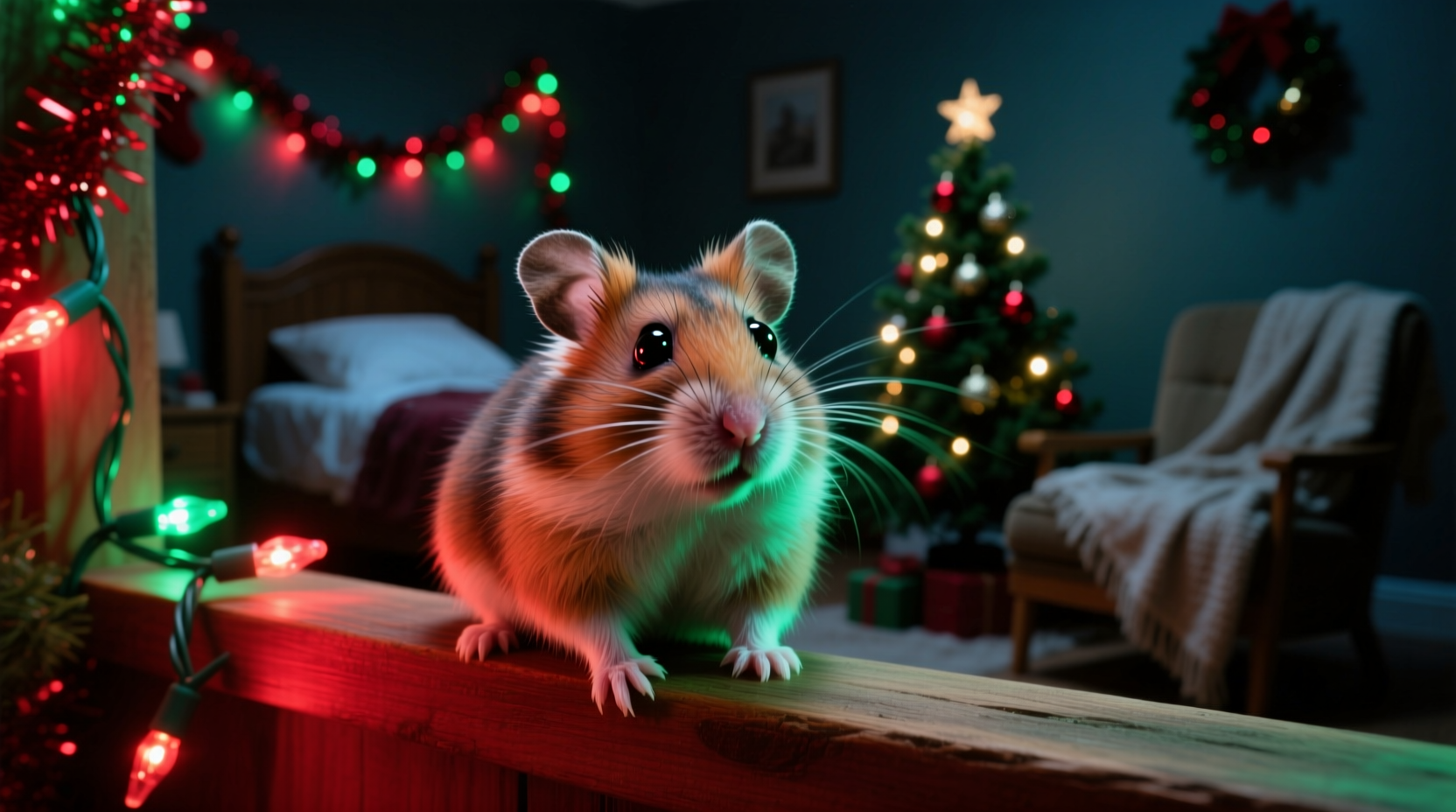
Hamsters originate from arid regions such as Syria and parts of China, where they adapted to avoid daytime heat by remaining underground during daylight and emerging at dusk to forage. This evolutionary trait means their circadian rhythm is deeply tuned to darkness. Their eyes have developed to function optimally in low-light conditions, making them highly sensitive to sudden changes in brightness or movement.
Blinking lights, especially those with rapid on-off cycles common in older-style Christmas strings, mimic erratic motion. To a prey animal like a hamster, unpredictable visual stimuli can signal danger—perhaps a predator moving through shadows or lightning in the wild. Even if the light source is across the room, the intermittent flashes disrupt the stable darkness they rely on for a sense of safety.
Additionally, hamsters do not experience “sleep” the way humans do. They enter short cycles of deep and light sleep throughout the night, often waking every few hours. A sudden flash of light—even brief—can interrupt these micro-sleep phases, leading to chronic sleep disruption over time. This kind of environmental stress can weaken immune function and increase anxiety-related behaviors.
Tip: Keep your hamster’s habitat in a quiet, dimly lit room away from decorative lighting, especially during nighttime hours.How Light Affects Hamster Vision and Behavior
While hamsters aren’t blind, their vision is limited compared to humans. They see best in low light and are particularly sensitive to contrast and motion rather than fine detail. Their retinas contain a high number of rod cells, which detect light and movement but offer poor color discrimination. This makes them exceptionally reactive to flashing or strobing lights, which appear more intense and jarring than steady illumination.
Research published in the Journal of Experimental Biology indicates that rodents exposed to irregular light patterns exhibit elevated cortisol levels—a key stress hormone. In hamsters, this can manifest as bar-gnawing, excessive digging, reduced appetite, or aggression toward handling. Blinking lights may also interfere with melatonin production, a hormone critical for regulating sleep-wake cycles. Disrupted melatonin synthesis has been linked to mood disturbances and weakened immunity in small mammals.
Moreover, many modern LED Christmas lights operate at frequencies imperceptible to humans but within the detection range of some animals. While we perceive the light as continuously blinking, hamsters may experience it as a rapid stroboscopic effect, similar to a flickering film reel. This can cause disorientation or discomfort akin to what humans feel under fluorescent lighting with visible flicker.
“Hamsters don’t just ‘see’ light—they interpret it as part of their survival environment. Unnatural lighting patterns can trigger primal fear responses.” — Dr. Lena Torres, Veterinary Ethologist
Common Reactions to Blinking Lights (And What They Mean)
When exposed to blinking Christmas lights, hamsters may display several observable behaviors. Recognizing these signs helps owners respond appropriately:
- Freezing in place: Indicates acute alertness or fear. The hamster is assessing whether the stimulus poses a threat.
- Rapid retreat to nest or hideout: A defensive behavior showing desire for security and darkness.
- Increased grooming: Often a displacement activity when stressed—similar to nail-biting in anxious humans.
- Vocalizations (squeaking or teeth chattering): Signs of distress or irritation.
- Bar-gnawing or cage climbing: Repetitive actions suggesting environmental frustration or attempt to escape perceived danger.
- Reduced activity or lethargy: May indicate withdrawal due to chronic stress.
It's important not to dismiss these behaviors as mere \"personality quirks.\" Persistent exposure to disturbing stimuli can lead to long-term behavioral issues, including hypersensitivity to noise and light, avoidance of interaction, and even self-injurious habits in extreme cases.
Step-by-Step Guide to Creating a Calm Environment
If you want to enjoy holiday decorations without compromising your hamster’s peace, follow this practical timeline to adjust their surroundings safely:
- Week 1: Assess Current Setup
Observe your hamster after dark. Note any reactions when lights turn on. Is there immediate movement? Do they avoid certain areas? - Week 2: Relocate the Habitat (if needed)
Move the cage to a quieter room without decorative lighting. Ideal locations include bedrooms (not under beds), studies, or spare rooms—away from foot traffic and flickering sources. - Week 3: Modify Lighting Exposure
If relocation isn't possible, use blackout curtains or opaque barriers between the cage and light source. Ensure at least one side of the enclosure remains ventilated. - Week 4: Switch to Steady or Warm-Tone Lights
Replace blinking strings with non-flashing, warm-white LEDs. Avoid blue or white tones, which suppress melatonin more than red or amber hues. - Ongoing: Monitor Behavior Weekly
Keep a simple log: date, lighting condition, observed behavior. Over time, trends will reveal what works best.
Do’s and Don’ts: Holiday Lighting Around Small Pets
| Do’s | Don’ts |
|---|---|
| Use solid-color, non-blinking LED lights near pet zones | Install strobe or multi-flash modes near cages |
| Place lights above eye level or outside viewing range | Run lights all night long |
| Choose warm-toned (amber/yellow) bulbs instead of cool white | Use damaged or frayed light strings (risk of fire or shock) |
| Provide multiple hiding spots inside the cage | Assume silence means no stress—hamsters rarely vocalize distress loudly |
| Turn off nearby electronics that emit humming or buzzing | Handle your hamster immediately after turning on bright lights |
Mini Case Study: Luna the Dwarf Hamster
Luna, a 10-month-old Roborovski dwarf hamster, lived in a family living room where holiday lights were traditionally strung along the wall adjacent to her glass tank. Her owner noticed she stopped using her exercise wheel at night and began sleeping exclusively under shredded paper bedding, only emerging briefly to eat.
After consulting a small animal veterinarian, the owner learned that the multicolor blinking lights—though charming to humans—were likely disrupting Luna’s ability to relax. The vet suggested relocating the tank to a guest bedroom and replacing the flashy display with a single strand of steady warm-white LEDs placed far from her line of sight.
Within two weeks, Luna resumed normal nocturnal activity, used her wheel regularly, and became more responsive during supervised out-of-cage playtime. The change wasn’t due to diet or age—it was purely environmental. This case underscores how subtle sensory inputs can profoundly affect tiny animals whose instincts remain closely tied to survival in the wild.
FAQ
Can hamsters see colors?
Hamsters have very limited color vision. They primarily perceive shades of green and blue, but their world is mostly seen in grayscale. Bright or flashing colors still register as intense light changes, which can be overwhelming regardless of hue.
Is it safe to leave Christmas lights on overnight if my hamster seems calm?
No. Even if your hamster appears inactive, blinking lights can disrupt sleep cycles and elevate stress hormones silently. Chronic exposure may lead to health decline over time. It’s best to keep their environment dark and quiet during nighttime hours.
What kind of lighting is safest around hamsters?
Warm-toned, non-flickering LED lights are safest. Red or amber lights are less disruptive because they don’t interfere with melatonin production. If decorating near their space, ensure lights are turned off when the room darkens and avoid placing them directly in front of or above the cage.
Expert Recommendations for Pet-Safe Celebrations
Veterinary experts agree that seasonal decor should never come at the cost of animal welfare. According to the American Association of Human-Animal Bond Veterinarians (AAHABV), household pets—including small mammals—should have consistent access to a predictable, low-stimulus resting area year-round.
Dr. Elena Ruiz, a specialist in exotic pet medicine, advises: “We often anthropomorphize our pets, assuming they enjoy festive environments because we do. But hamsters don’t understand holidays. They only respond to sensory input—and blinking lights scream 'danger' to their nervous system.”
She recommends designating a “pet sanctuary” zone in the home—one free from loud music, sudden movements, and erratic lighting—especially during high-decor seasons like December. This space should remain unchanged throughout the year to provide continuity and reduce anxiety.
Conclusion
Your hamster’s reaction to blinking Christmas lights isn’t whimsical or random—it’s a biologically rooted response to an unnatural and potentially threatening stimulus. By recognizing their unique sensory needs, you can maintain festive cheer in your home while protecting your pet’s mental and physical health. Simple changes like relocating their cage, adjusting light types, or setting automatic shutoffs make a significant difference.
💬 Have you noticed changes in your hamster’s behavior during the holidays? Share your experience or ask questions in the comments—your insight could help another pet owner create a safer, calmer home for their little companion.








