
Every holiday season brings joy, warmth, and festive decorations—especially for those who love decking the halls with shimmering lights, glittering ornaments, and strands of colorful tinsel. But while you’re admiring your holiday masterpiece, your dog may be eyeing that same tinsel as a tempting toy or snack. It’s not uncommon for dogs to chew on or swallow pieces of tinsel, often leading to serious health concerns. Understanding why this behavior occurs and knowing exactly what to do if your dog ingests tinsel can mean the difference between a minor scare and a life-threatening emergency.
Why Dogs Are Drawn to Tinsel
Dogs don’t see tinsel the way humans do. To them, a strand of shiny, dangling material isn’t part of holiday decor—it’s potential prey. The movement, texture, and reflectivity of tinsel mimic elements that naturally attract a dog’s attention. When tinsel hangs from a tree or drapes over a mantle, even the slightest breeze causes it to sway, triggering a dog’s predatory instincts. This visual stimulation can make tinsel appear like a snake, ribbon, or other moving object worth chasing and biting.
Beyond visual appeal, many dogs are tactile learners—they explore the world through their mouths. Puppies and younger dogs, in particular, use chewing as a way to investigate unfamiliar objects. The crinkly sound and slippery texture of tinsel only increase its allure. Even adult dogs with established habits may find themselves tempted by something new and unusual in their environment.
In some cases, tinsel consumption is linked to behavioral issues such as boredom, anxiety, or attention-seeking. If a dog spends long periods alone during the holidays or feels stressed by changes in routine (like guests arriving or loud music), destructive chewing—including eating non-food items—can become a coping mechanism.
Tip: Avoid hanging tinsel at a dog’s eye level or within reach. Use static-free alternatives that are less likely to attract curious paws.The Dangers of Swallowed Tinsel
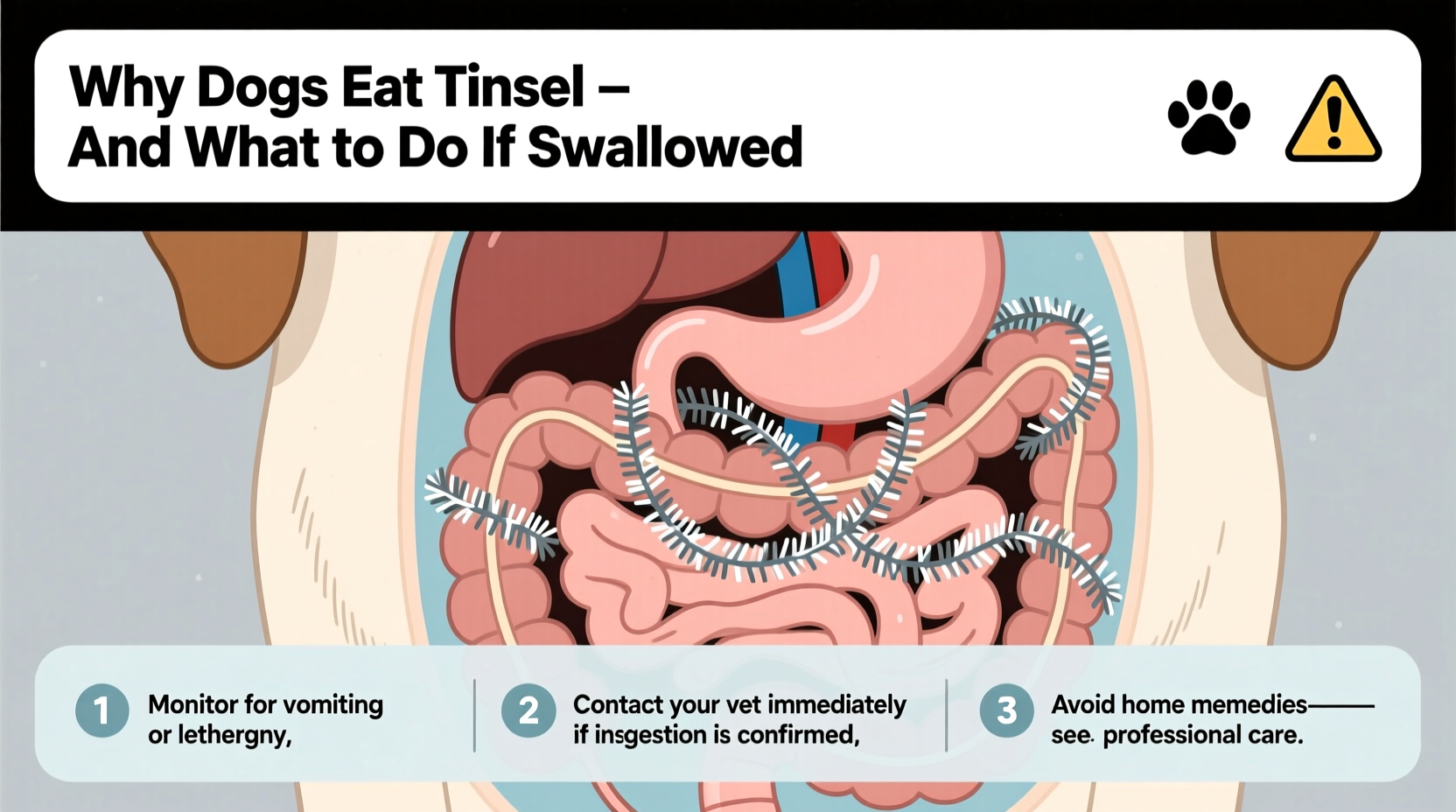
Unlike paper or fabric, tinsel—especially older metallic varieties—is not digestible. Once swallowed, it doesn’t break down in the gastrointestinal tract. Instead, it can clump together or snag along the intestinal lining, creating a condition known as a linear foreign body obstruction. This is particularly dangerous because tinsel can “accordion” through the intestines as they contract, causing the material to saw through tissue, leading to perforations, internal bleeding, and peritonitis—a potentially fatal infection of the abdominal cavity.
Symptoms of tinsel ingestion may not appear immediately. In fact, signs can take 1–3 days to manifest, which delays diagnosis and increases risk. Early indicators include:
- Vomiting (especially repeated episodes)
- Lethargy or decreased activity
- Loss of appetite
- Abdominal pain (your dog may whine, arch their back, or resist being touched around the belly)
- Diarrhea or constipation
- Excessive drooling
If left untreated, complications escalate quickly. A partial blockage might allow some food to pass initially, giving a false sense of improvement before worsening into a complete obstruction. At that point, emergency surgery is often the only solution.
“Linear foreign bodies like tinsel are among the most dangerous ingestions we see during the holidays. They can cause irreversible damage within hours.” — Dr. Laura Simmons, Board-Certified Veterinary Surgeon
What to Do If Your Dog Swallows Tinsel
If you catch your dog chewing on tinsel or suspect they’ve swallowed it—even without symptoms—act immediately. Time is critical when dealing with potential obstructions.
Step-by-Step Response Plan
- Stay calm but act fast. Panicking won’t help your dog. Assess the situation: Did they swallow a small piece or an entire strand? Was it metallic or plastic-based?
- Remove remaining tinsel. Clear all accessible tinsel from the area to prevent further ingestion.
- Contact your veterinarian immediately. Even if your dog seems fine, call your vet or an emergency animal hospital. Provide details about the amount ingested, timing, and your dog’s size and health history.
- Do not induce vomiting unless instructed. Unlike some toxins, inducing vomiting with tinsel can worsen injury if the material has already moved into the intestines.
- Follow veterinary guidance. Your vet may recommend bringing your dog in for X-rays or ultrasound imaging. While tinsel isn’t always visible on standard X-rays, certain types (especially metallic) may show up, and ultrasounds can detect intestinal thickening or blockages.
- Prepare for possible intervention. Depending on the severity, treatment options range from monitoring and supportive care to endoscopic retrieval or surgical removal.
In cases where only a very small piece was ingested and your dog remains asymptomatic, your vet may advise close observation for 48–72 hours. You’ll be asked to monitor bowel movements carefully, looking for any sign of the tinsel passing naturally. However, this approach is only safe under direct veterinary supervision.
Preventing Tinsel Ingestion: A Proactive Approach
The best way to protect your dog is to eliminate the risk before it arises. While it may feel like sacrificing tradition, your pet’s safety should come first—especially during high-risk times like the holidays.
Tip: Replace traditional tinsel with pet-safe alternatives like felt garlands, paper chains, or wooden bead strands that pose no internal hazard if chewed.Pet-Proofing Your Holiday Decor
Start by evaluating your current decorations through a dog’s eyes. Ask yourself: What looks like a toy? What dangles within reach? Then take action:
- Keep the Christmas tree securely fenced off using baby gates or playpens.
- Avoid placing tinsel, ribbons, or lightweight ornaments on lower branches.
- Use artificial snow sprays sparingly—they can be toxic if licked.
- Secure electrical cords with cord covers to prevent chewing (and electrocution).
- Store gifts containing noisy toys, chocolates, or small parts out of reach.
Consider switching to LED candles instead of real flames, and keep holiday plants like poinsettias, holly, and mistletoe well away from pets—they’re toxic if ingested.
Behavioral Enrichment During the Holidays
Boredom and stress contribute significantly to destructive behaviors. Ensure your dog gets enough physical exercise and mental stimulation, especially when routines are disrupted by travel or visitors.
- Provide puzzle toys filled with treats or kibble.
- Offer long-lasting chews (like bully sticks or rubber toys stuffed with peanut butter).
- Practice basic obedience training daily to reinforce focus and calmness.
- Create a quiet retreat space where your dog can relax away from noise and activity.
| Holiday Hazard | Risk Level | Safe Alternative |
|---|---|---|
| Metallic tinsel | High – causes intestinal obstruction | Felt or fabric garland |
| Chocolate gifts | High – toxic theobromine content | Dog-safe holiday treats |
| Christmas lights | Medium – shock or burn risk | LED string lights (cooler, battery-powered) |
| Poinsettia plants | Low to moderate – mild GI upset | Peppermint-scented candles (pet-safe fragrance) |
Real-Life Scenario: Max the Curious Terrier
Max, a three-year-old Jack Russell Terrier, lived in a home filled with holiday cheer. His family loved decorating with vintage flair, including long strands of silver tinsel draped across the tree and mantel. One evening, while the family watched a movie, Max managed to jump onto the sofa and grab a loose end of tinsel. He pulled down nearly two feet of it before being caught.
At first, Max seemed fine—no vomiting, still playful. But by the next morning, he refused breakfast and began retching. Concerned, his owners rushed him to the vet. An ultrasound revealed a linear foreign body partially obstructing his small intestine. Surgery was performed that afternoon, successfully removing the tangled mass of tinsel before it caused perforation.
Max recovered fully, but the experience cost over $3,000 in emergency care and served as a wake-up call. The following year, the family switched to fabric garlands and installed a mesh barrier around the tree. “We thought he’d just spit it out,” said Max’s owner. “Now we know how fast things can go wrong.”
Frequently Asked Questions
Can a dog pass tinsel naturally?
It’s extremely unlikely. Due to its length and non-digestible nature, tinsel rarely passes through the digestive system intact. Even if a small fragment exits in feces, longer strands almost always require medical intervention. Never assume natural passage will occur.
Is plastic tinsel safer than metallic?
No. While plastic tinsel may not contain heavy metals, it still poses the same mechanical risk of intestinal obstruction. Both types can cause linear foreign body injuries and should be kept away from pets.
How soon after ingestion do symptoms appear?
Symptoms can develop within hours or be delayed up to 72 hours. Early signs like lethargy or reduced appetite may be subtle. Vomiting and abdominal pain typically indicate advanced progression. Immediate veterinary consultation is essential regardless of symptom presence.
Final Steps: Protecting Your Dog This Holiday Season
Your dog doesn’t understand the symbolism behind tinsel—but they do respond to instinct, curiosity, and environmental cues. By recognizing what makes tinsel appealing and taking proactive steps to remove or replace it, you create a safer, more joyful holiday for everyone.
Start today: walk through your home from your dog’s perspective. Identify hazards, secure decorations, and invest in pet-friendly alternatives. Talk to your vet about creating a holiday safety plan, especially if your dog has a history of chewing or scavenging.
Most importantly, stay vigilant. Accidents happen fast, but preparedness makes all the difference. With thoughtful planning and informed action, you can enjoy the sparkle of the season without putting your furry family member at risk.
💬 Have a story or tip about pet-safe holiday decorating? Share your experience in the comments—your insight could help another pet owner avoid a crisis this Christmas.








