Betta fish are among the most expressive and visually striking freshwater aquarium inhabitants. Their vibrant fins and bold colors captivate hobbyists, but their behaviors can sometimes puzzle even experienced keepers. One of the most common—and often misunderstood—behaviors is gill flaring when placed in front of a mirror. While it may look aggressive or alarming, this reaction is deeply rooted in natural instinct. Understanding why your betta flares its gills at the mirror provides valuable insight into its psychology, environment, and well-being.
Gill flaring is not simply a reflex; it’s a complex display tied to survival, communication, and dominance. In the wild, Siamese fighting fish (Betta splendens) evolved in shallow, slow-moving waters across Southeast Asia, where encounters with rivals were frequent and space was limited. As a result, they developed highly ritualized ways of asserting territory and avoiding physical conflict. The mirror test—where a betta sees its own reflection—mimics these real-world confrontations, triggering an instinctive response that reveals much about the fish’s mental and physical state.
The Science Behind Gill Flaring
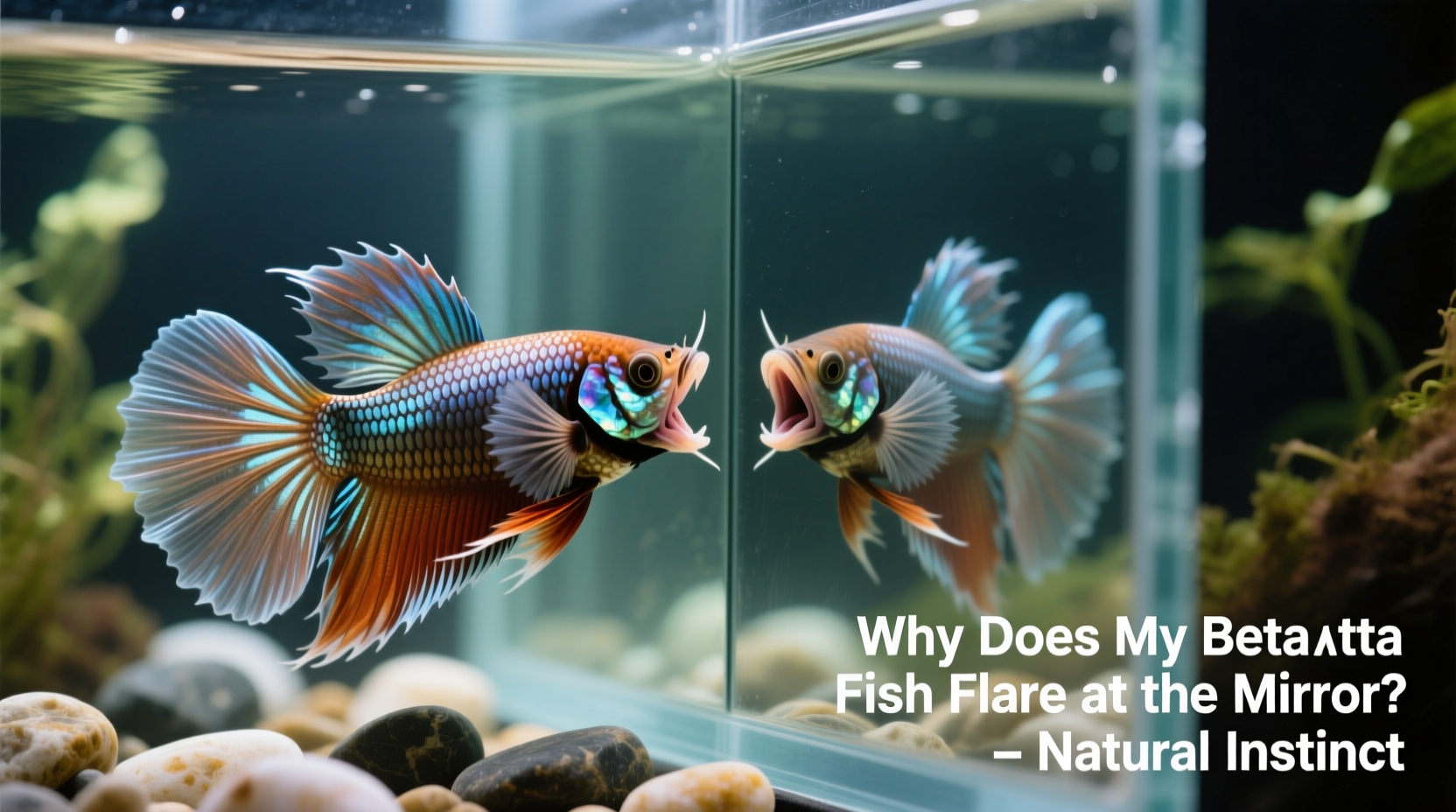
Flaring involves the rapid expansion of the operculum—the bony flap covering the gills—making the betta appear larger and more intimidating. This behavior is often accompanied by fin spreading, body stiffening, and lateral positioning toward the perceived threat. It’s a visual signal designed to deter competition without engaging in dangerous combat.
In biological terms, flaring serves two primary functions: defense and courtship. When another male betta enters a territory, the resident fish uses flaring as a warning. If both individuals flare simultaneously, it becomes a “staring contest” of sorts, with the less dominant fish eventually retreating. Interestingly, female bettas also flare, though less dramatically, primarily during spawning readiness or mild aggression.
Neurologically, this response is governed by the fish’s limbic system, which regulates emotional and instinctual behaviors. Studies on teleost fish have shown that visual stimuli—especially movement and color patterns resembling other bettas—activate regions associated with aggression and vigilance. A 2020 study published in *Animal Behaviour* found that mirror exposure increased cortisol levels in male bettas within minutes, confirming the physiological stress component of flaring.
“Mirror-induced flaring isn’t play—it’s a genuine stress response rooted in evolutionary survival mechanisms.” — Dr. Lena Torres, Aquatic Ethologist, University of Florida
Why the Mirror Triggers Flaring: A Behavioral Breakdown
A mirror presents a perfect illusion of another male betta: same size, same colors, same movements. To the betta, there is no distinction between reflection and reality. Each time it moves, the “other fish” mirrors it, creating an endless loop of confrontation. Unlike a real opponent, the reflection never backs down, intensifying the response over time.
This phenomenon has been used for decades in scientific research to assess aggression levels in bettas. Researchers measure flaring duration, frequency, and latency (time to first flare) as indicators of temperament. However, what starts as a useful behavioral tool in controlled settings can become problematic in home aquariums if overused.
The persistence of the mirrored image prevents de-escalation. In nature, rival males typically disengage after a few displays. But with a mirror, the “rival” remains, leading to prolonged stress. Chronic exposure can suppress immune function, reduce appetite, and shorten lifespan.
Tip: Limit mirror exposure to no more than 2–3 minutes once or twice a week if used for stimulation or fin exercise.Is Flaring Harmful? Assessing Risks and Benefits
Occasional flaring is normal and even healthy—it allows bettas to express natural behaviors and can strengthen fin muscles. However, repeated or extended sessions can lead to negative consequences. The key lies in moderation and observation.
Benefits of short-term flaring include:
- Improved muscle tone in fins and gill covers
- Mental stimulation in otherwise static environments
- Assessment of vitality and responsiveness in aging fish
Risks of excessive flaring include:
- Elevated stress hormones affecting long-term health
- Energy depletion, especially in underfed or sick fish
- Aggression transfer to tank mates if housed communally
- Sleep disruption due to heightened alertness
It's crucial to recognize signs of distress beyond flaring: rapid breathing, loss of color, hiding, or refusal to eat. These indicate that the stimulus has crossed from natural expression into harmful overstimulation.
Do’s and Don’ts of Using Mirrors with Betta Fish
| Do’s | Don’ts |
|---|---|
| Use a small mirror briefly (1–3 minutes) | Leave the mirror in the tank permanently |
| Observe your betta’s reaction closely | Force flaring if the fish shows fear or fatigue |
| Use flaring as occasional enrichment | Use mirrors with already aggressive or stressed fish |
| Remove immediately after flaring ends | Allow flaring before bedtime or feeding |
| Pair with environmental enrichment like plants | Expect flaring from all bettas—some are naturally calm |
Real Example: Observing Flaring in a Home Aquarium
Jamie, a beginner aquarist in Portland, noticed her betta “Zazu” flaring whenever she walked past the tank. Curious, she held a small makeup mirror against the glass. Zazu immediately turned sideways, spread his fins, and began flaring vigorously. Excited, Jamie repeated the experiment daily for five minutes each time.
After two weeks, she observed changes: Zazu stopped swimming actively, lost some of his red pigmentation, and ignored his food. Concerned, she consulted a local aquarium specialist who explained that the daily mirror sessions had caused chronic stress. Jamie discontinued the practice, added floating plants for cover, and improved water quality. Within ten days, Zazu regained his color and resumed normal activity.
This case illustrates how easily well-intentioned interactions can become harmful without proper understanding. Enrichment should enhance welfare—not compromise it.
Step-by-Step Guide to Safely Engage Your Betta’s Natural Instincts
If you wish to observe flaring responsibly, follow this timeline to ensure your betta remains healthy and stimulated without undue stress:
- Week 1: Baseline Observation – Watch your betta’s natural behavior for several days. Note activity level, appetite, and any signs of stress. Ensure water parameters (temperature, pH, ammonia) are optimal.
- Week 2: First Mirror Test – Use a small hand mirror. Hold it outside the tank for 60 seconds. Do not repeat if the fish ignores it or appears frightened.
- Observe Response – Look for confident flaring, quick initiation, and prompt return to normal behavior after removal. Avoid continuing if flaring lasts beyond 2–3 minutes or is followed by lethargy.
- Limited Frequency – If the betta responds well, use the mirror no more than once every 5–7 days. Never exceed 2 minutes per session.
- Alternative Stimulation – Introduce live plants, gentle water flow, or safe tank decorations to provide mental engagement without aggression triggers.
- Ongoing Monitoring – Track changes in color, appetite, and swimming patterns. Discontinue mirror use immediately if any decline occurs.
FAQ: Common Questions About Betta Flaring
Does flaring hurt my betta fish?
No, brief flaring is a natural behavior and does not cause physical harm. However, repeated or prolonged flaring can lead to stress-related health issues, including weakened immunity and reduced lifespan. Moderation is essential.
My betta doesn’t flare at the mirror—does that mean he’s unhealthy?
Not necessarily. Some bettas are naturally less aggressive or more timid. Age, health, and individual personality influence flaring tendency. As long as your betta eats well, swims normally, and shows bright coloration, lack of flaring is not a concern.
Can I use a mirror to exercise my betta’s fins?
While flaring can strengthen fin muscles, it should not be used as a regular exercise method. Better alternatives include maintaining clean water with gentle circulation, providing vertical space for swimming, and ensuring a balanced diet. Overuse of mirrors for “exercise” risks psychological strain.
Expert Insight: What Flaring Reveals About Fish Intelligence
Far from being simple creatures, bettas demonstrate remarkable cognitive abilities. They can recognize their owners, learn routines, and respond differently to various stimuli. Flaring at a mirror suggests not only instinct but also perception and decision-making.
“Bettas don’t just react—they assess. The way they modulate flaring intensity based on the ‘opponent’s’ persistence shows a level of environmental awareness we’re only beginning to understand.” — Dr. Rajiv Mehta, Cognitive Biologist, Marine Life Institute
This capacity for assessment means bettas experience their world meaningfully. Repeatedly exposing them to inescapable threats—even artificial ones—undermines their sense of control and security. Responsible care involves respecting both their instincts and their limits.
Conclusion: Respecting Natural Instincts Without Exploitation
The sight of a betta flaring at its reflection is undeniably dramatic—a flash of color, a sudden expansion of gills, a poised challenge to an unseen rival. It’s easy to interpret this as entertainment or a sign of strength. But beneath the spectacle lies a sophisticated survival mechanism shaped by evolution. When we hold a mirror to our betta, we’re not just showing it its reflection—we’re triggering a cascade of biological and emotional responses.
Understanding this behavior empowers us to be better caretakers. We can appreciate flaring as a window into the betta’s mind while avoiding practices that turn instinct into stress. By limiting mirror exposure, observing responses carefully, and prioritizing overall well-being, we honor the animal’s nature without compromising its health.
💬 Have you observed your betta flaring? What did you learn from the experience? Share your story in the comments and help build a community of informed, compassionate fish keepers.








