Each December, social media feeds bloom with festive photos: bearded dragons perched on pine boughs wearing red velvet caps, corn snakes coiled beneath miniature wreaths with felt antlers, leopard geckos blinking placidly under tinsel-trimmed headbands. These images spark delight, shares, and sometimes sharp debate. The trend of dressing reptiles in tiny Santa hats isn’t just whimsy—it’s a cultural artifact revealing how digital visibility, emotional projection, and evolving pet ownership intersect. Yet behind the charm lies a layered reality involving animal physiology, welfare ethics, and the quiet labor of responsible keepers who choose not to participate. Understanding this phenomenon requires moving beyond “aww” reactions to examine motivations, risks, and meaningful alternatives.
The Social Media Engine: Virality Meets Anthropomorphism
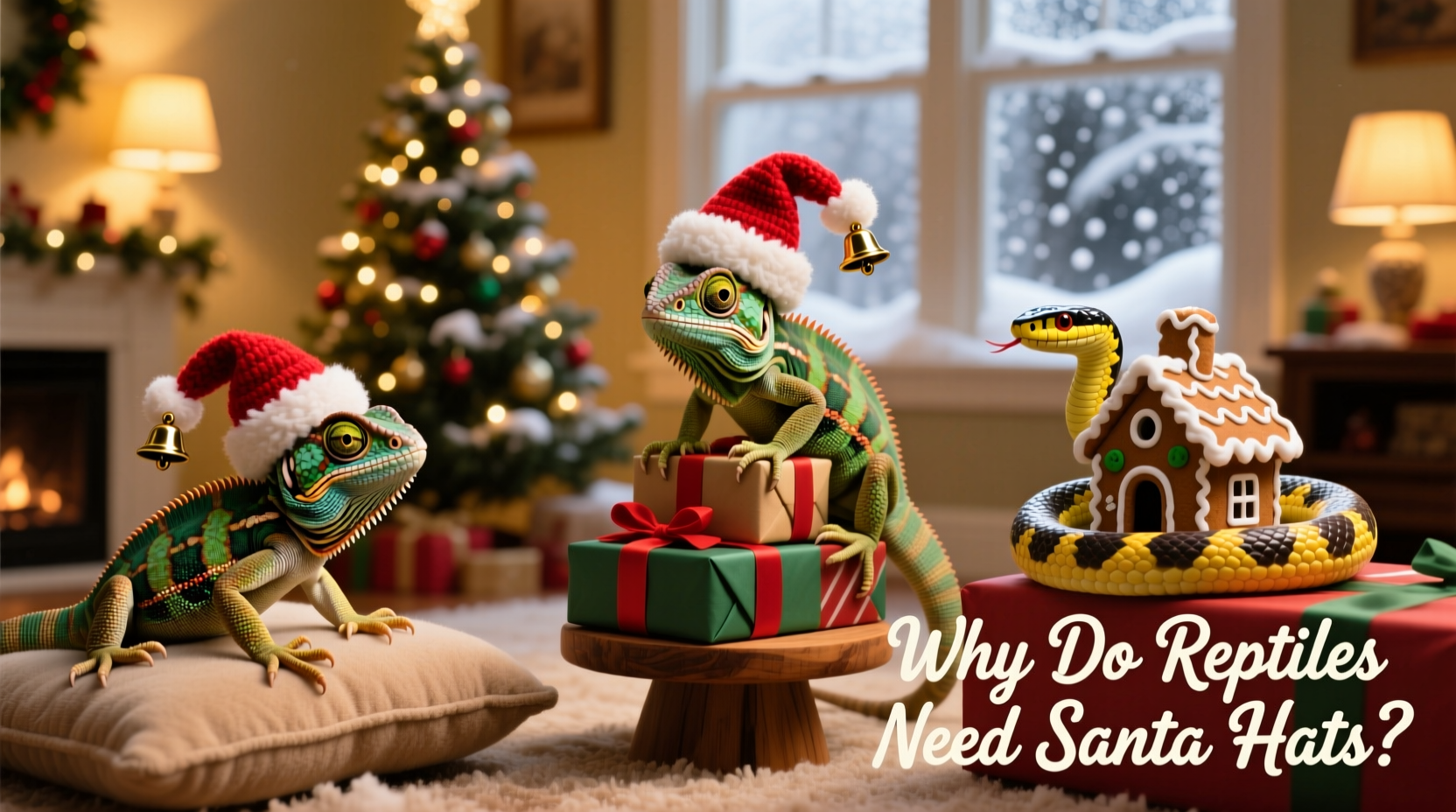
Reptile-themed holiday content surged between 2019 and 2023, fueled by platforms where visual novelty drives engagement. Instagram and TikTok reward concise, emotionally resonant clips—especially those that blend surprise (a cold-blooded creature in festive garb) with warmth (the implied “family inclusion”). Unlike dogs or cats, reptiles lack expressive facial muscles or vocalizations associated with joy or discomfort, making their stillness easily misread as contentment. This ambiguity becomes fertile ground for anthropomorphism: assigning human emotions and intentions to non-human animals. When a bearded dragon sits motionless beneath a plush Santa hat, viewers often interpret stillness as participation—not thermoregulatory necessity or stress-induced freeze response.
A 2022 analysis by the Digital Pet Culture Lab found that reptile holiday posts received 42% more shares than non-festive reptile content, with captions frequently using phrases like “my little elf,” “Santa’s newest helper,” or “officially part of the family.” These linguistic choices reinforce relational framing—positioning reptiles not as species-specific beings with distinct biological needs, but as decorative extensions of human celebration. The trend isn’t isolated; it mirrors broader patterns like “doggy Halloween costumes” or “bunny Easter baskets,” yet carries unique physiological stakes due to reptiles’ ectothermic biology and sensitivity to environmental disruption.
Tip: Before photographing your reptile in any accessory, observe baseline behavior for 48 hours: note basking duration, feeding responsiveness, and shedding cycles. Any deviation may signal stress—even if the animal appears “calm.”Physiology vs. Pageantry: Why Reptiles Are Especially Vulnerable
Reptiles regulate body temperature exclusively through external sources—sunlight, heated rocks, ambient air. Their skin lacks sweat glands; they cannot shiver or pant effectively to shed heat. A fabric hat—even lightweight cotton—can trap heat around the head and eyes, interfering with critical thermoregulation. For species like ball pythons or crested geckos, whose optimal ambient temperatures range narrowly between 72–85°F (22–29°C), localized overheating can elevate core temperature beyond safe thresholds in under 90 seconds.
Equally concerning is sensory impact. Reptiles rely heavily on lateral line-like systems (in aquatic species) or highly sensitive integumentary nerve endings (in terrestrial species) to detect vibration, air movement, and pressure changes. A hat introduces constant tactile stimulation—fabric brushing against scales, elastic tension near the jawline, or weight distribution altering head posture. In captivity, where escape options are limited, this persistent stimulus can trigger chronic low-grade stress, suppressing immune function and increasing susceptibility to respiratory infections—a leading cause of mortality in pet reptiles.
“Putting accessories on reptiles isn’t inherently cruel—but it’s almost always unnecessary. Their welfare hinges on stable environments, not symbolic inclusion. If you want your reptile in your holiday photos, let them be present *as themselves*: on a naturalistic branch beside your tree, not under a prop that compromises their ability to thermoregulate or rest.” — Dr. Lena Torres, DVM, Board-Certified Herpetological Medicine, Chicago Exotic Animal Hospital
Responsible Alternatives: Celebration Without Compromise
Choosing not to dress a reptile doesn’t mean excluding them from seasonal joy. Thoughtful, species-appropriate alternatives foster connection while honoring biological integrity. Many experienced keepers report deeper satisfaction from observing natural behaviors enhanced by seasonal cues—like extended daylight simulating longer summer days for breeding readiness, or introducing novel food items shaped like pinecones or holly berries (e.g., finely chopped bell pepper “berries” for herbivorous species).
Below is a practical comparison of common festive actions versus safer, enriching substitutes:
| Common Holiday Action | Welfare Risk | Responsible Alternative |
|---|---|---|
| Placing a fabric Santa hat on a bearded dragon | Heat retention, restricted vision, tactile stress | Arrange a naturalistic basking branch draped with non-toxic dried eucalyptus (reptile-safe) beside the enclosure |
| Using glittery “snow” substrate in a snake’s tank | Ingestion hazard, impaction risk, dust inhalation | Offer frozen-thawed prey items dusted lightly with calcium + D3—creating “sparkling” visual interest without toxicity |
| Forcing photo sessions with props | Elevated corticosterone levels, suppressed appetite for 24–48 hrs | Set up a camera on timer outside the enclosure during natural activity windows (e.g., dawn for diurnal species) |
| Hanging ornaments inside glass enclosures | Chemical leaching, reflection-induced pacing, entanglement | Decorate the *outside* of the enclosure with removable, non-reflective paper cutouts (e.g., silhouettes of reindeer or stars) |
A Real Example: How One Keeper Shifted Her Approach
Maya R., a herpetoculturist in Portland, Oregon, purchased her first leopard gecko—“Ginger”—in 2020. That December, she joined the trend: ordering a $12 “Reptile-Sized Santa Hat Set” online. Ginger tolerated the hat for 72 seconds before flattening her body, closing her eyes tightly, and refusing food for two days. Concerned, Maya consulted a herp vet and learned about neuroendocrine stress markers in geckos. She stopped using accessories entirely—and instead redesigned Ginger’s habitat seasonally. She introduced a cork-bark “Yule log” (sterilized, untreated), swapped white sand for warm-toned clay substrate, and played soft instrumental carols at low volume during cleaning. Within three weeks, Ginger’s feeding frequency increased by 30%, and she began exploring new climbing structures Maya added. “I thought I was including her,” Maya shared in a 2023 HerpKeepers Forum post. “But real inclusion meant prioritizing her biological language over my desire for shared symbolism.”
Ethical Checklist: Before You Consider Any Accessory
Use this actionable checklist before purchasing or applying *any* festive item to a reptile enclosure or animal:
- ✅ Temperature Check: Use an infrared thermometer to confirm surface temperature under the accessory stays within the species’ preferred optimal temperature zone (POTZ)—never exceeding it by more than 2°F (1.1°C).
- ✅ Duration Limit: Never leave accessories on longer than 90 seconds—and only during active, alert periods (not during brumation, shedding, or post-feeding).
- ✅ Vision & Ventilation Test: Ensure no part obstructs eye movement or nasal flares. Hold the item near the reptile’s head without contact—if they turn away or gape, it signals aversion.
- ✅ Material Audit: Verify zero synthetic dyes, adhesives, loose threads, or metallic elements. Wash fabric items in fragrance-free, dye-free detergent before use.
- ✅ Behavior Baseline: Confirm the reptile has eaten normally, defecated regularly, and engaged in species-typical activity for 72 hours prior.
Frequently Asked Questions
Is it ever safe to put a hat on a reptile—even briefly?
“Safe” implies negligible risk, which doesn’t exist. Brief exposure (<60 seconds) may not cause acute harm in a healthy, acclimated individual—but it provides no benefit and introduces variables (heat, texture, restraint) that compromise welfare principles. Ethical husbandry prioritizes prevention over risk management.
Don’t reptiles enjoy enrichment like other pets?
Yes—but enrichment must be species-appropriate. For reptiles, this means opportunities to dig, climb, thermoregulate, hunt (via live or moving prey simulations), and explore complex substrates. A hat offers none of these; it’s sensory deprivation disguised as novelty. True enrichment aligns with evolutionary behavior, not human aesthetics.
What if my reptile seems “fine” wearing accessories?
Reptiles are masters of masking distress. Absence of overt panic (hissing, fleeing, biting) does not equal comfort. Chronic stress manifests subtly: reduced appetite, slower wound healing, increased parasite load, or abnormal shedding. Veterinary diagnostics—including fecal cortisol metabolite testing—are required to assess true welfare status.
Conclusion: Redefining Inclusion Through Respect
The tiny Santa hat trend reflects a genuine, heartfelt desire—to share joy, to express love, to make our companions feel “part of it all.” But love, in responsible pet keeping, requires humility: the willingness to center another being’s needs over our own symbolic impulses. Reptiles don’t experience holidays. They experience temperature gradients, UVB intensity, humidity shifts, and the security of predictable routines. Honoring that reality isn’t less festive—it’s more profound. It transforms celebration from performance into presence: watching a chameleon adjust its hue against winter light, hearing the soft rustle of a tortoise navigating fallen leaves in an outdoor pen, or simply appreciating the quiet resilience of a creature thriving on its own terms. This holiday season, choose inclusion that breathes, that thermoregulates, that sheds and hunts and rests without interruption. Choose wonder rooted in respect—not whimsy built on risk.
💬 Your observations matter. Have you witnessed positive, low-stress ways reptiles engage with seasonal changes? Share your respectful practices in the comments—your insight could help another keeper celebrate safely.








