For many, the sharp, resinous aroma of a freshly cut fir or spruce tree is synonymous with warmth, tradition, and seasonal joy. Yet for a significant minority—perhaps one in ten adults—the same scent triggers immediate discomfort: a tightening in the chest, a wave of nausea, a sudden headache, or an inexplicable sense of dread. This isn’t mere preference; it’s a physiological and psychological response that can disrupt holiday gatherings, deter tree shopping, or even lead families to abandon real trees altogether. Understanding why this happens requires moving beyond “just not liking it” and into the intersecting domains of olfactory biology, neurology, immunology, and lived experience.
The Chemistry Behind the Scent: Not All Pine Smells Are Equal
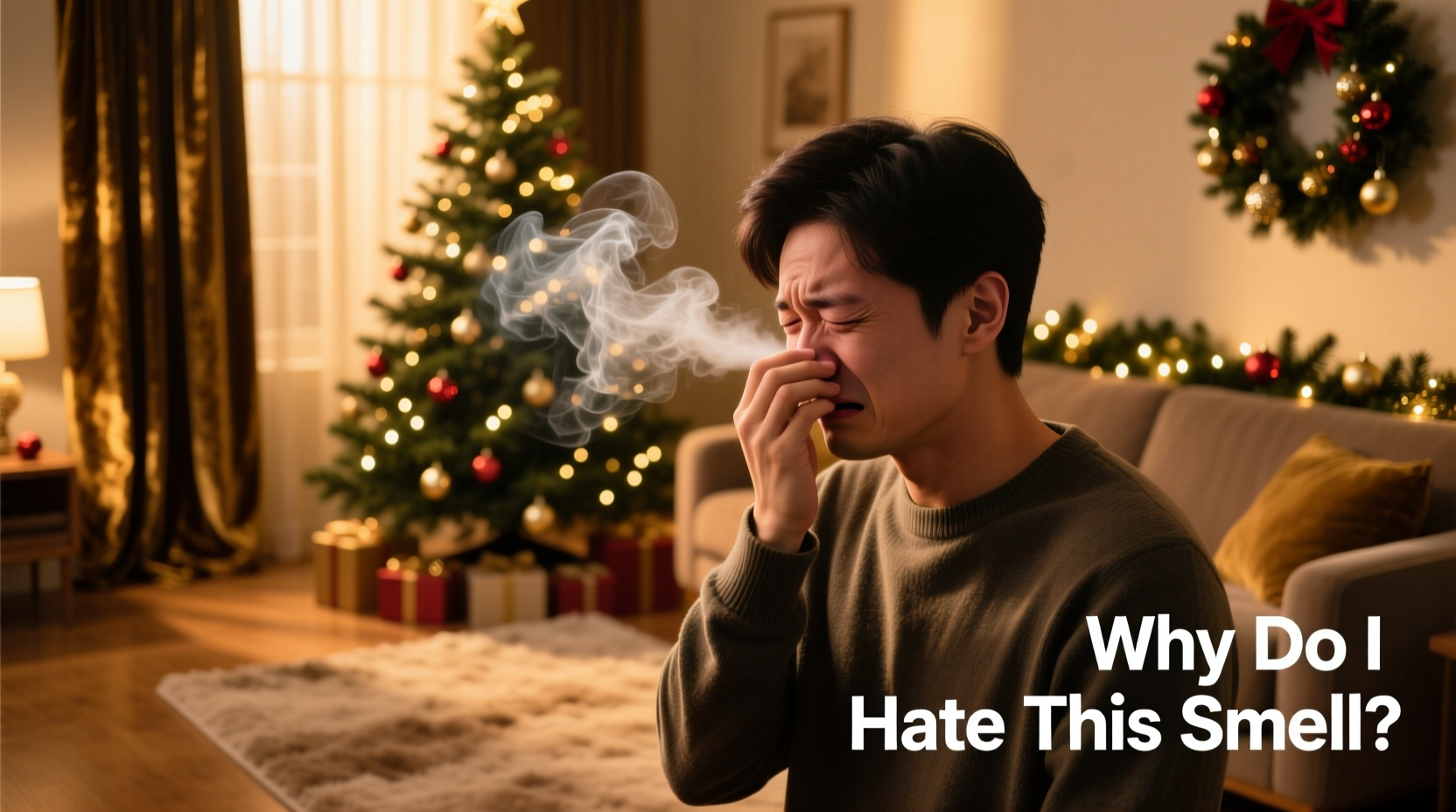
The characteristic “pine” fragrance associated with Christmas trees comes from a volatile organic compound (VOC) cocktail—primarily α-pinene, β-pinene, limonene, and Δ³-carene—released by conifer resins as needles warm and dry indoors. These compounds serve ecological functions in nature: deterring herbivores, repelling insects, and sealing wounds. But their potency varies dramatically across species:
| Tree Species | Dominant VOCs | Typical Aroma Profile | Reported Sensitivity Triggers* |
|---|---|---|---|
| Northern White Cedar (Thuja occidentalis) | Thujone, α-thujone | Sharp, medicinal, camphorous | Strongest association with headaches & nausea |
| Balsam Fir (Abies balsamea) | Δ³-carene, limonene | Sweet, rich, honeyed resin | Frequent trigger for respiratory irritation |
| Fraser Fir (Abies fraseri) | α-pinene, β-pinene | Clean, citrus-tinged, crisp | Lower reported sensitivity; often better tolerated |
| Scotch Pine (Pinus sylvestris) | α-pinene, β-myrcene | Sharp, woody, turpentine-like | Commonly linked to throat irritation and sneezing |
*Based on clinical surveys from the American Academy of Allergy, Asthma & Immunology (AAAAI) and self-reported data from the Olfactory Disorders Foundation (2022–2023).
Crucially, indoor heating accelerates VOC release. A room at 72°F (22°C) can increase emission rates by up to 400% compared to cooler environments—intensifying exposure precisely when people spend extended time near the tree.
Olfactory Hyperreactivity: When the Nose Becomes Overprotective
Human olfaction relies on ~400 functional olfactory receptor types, each tuned to specific molecular shapes. Some individuals inherit genetic variants that make certain receptors hypersensitive to terpenes like α-pinene. A 2021 genome-wide association study published in Nature Neuroscience identified a polymorphism in the OR7D4 gene strongly correlated with heightened perception—and aversion—to β-ionone (a compound structurally similar to key pine VOCs). Carriers don’t just smell pine more intensely; their brain’s limbic system registers the input as potentially threatening before conscious recognition occurs.
This isn’t imagination. Functional MRI scans show that in sensitive individuals, pine scent exposure activates the amygdala and anterior cingulate cortex—regions tied to fear processing and threat assessment—within 1.2 seconds of inhalation. In contrast, non-sensitive controls show only mild olfactory bulb activation. The result? An involuntary stress response: increased heart rate, elevated cortisol, and bronchoconstriction—even in people with no diagnosed asthma.
“Olfaction is the only sensory system with direct neural access to the amygdala and hippocampus. That means scent bypasses rational filtering—it hits emotion and memory first, logic second. For someone whose first exposure to pine was during a childhood asthma attack or a traumatic event, the brain may encode the odor as danger, regardless of current context.” — Dr. Lena Torres, Neuro-Olfactologist, Monell Chemical Senses Center
Respiratory and Immune Dimensions: Beyond “Just Smell”
For many, the issue extends beyond neurological aversion into measurable physiological reactions. Pine VOCs—especially Δ³-carene and limonene—can act as airway irritants. They stimulate transient receptor potential (TRP) ion channels in nasal and bronchial epithelial cells, triggering neurogenic inflammation: local release of substance P and calcitonin gene-related peptide (CGRP), leading to mucus hypersecretion, vasodilation, and smooth muscle contraction.
This explains why individuals with preexisting conditions are disproportionately affected:
- Asthma: Up to 38% of adult asthmatics report worsening symptoms within 90 minutes of real tree exposure (AAAAI 2023 Clinical Survey).
- Chronic Rhinosinusitis (CRS): VOCs impair ciliary beat frequency and disrupt mucociliary clearance, exacerbating congestion and postnasal drip.
- MCS (Multiple Chemical Sensitivity): A recognized condition where low-level chemical exposures provoke systemic symptoms (fatigue, cognitive fog, GI distress). Pine terpenes are among the top five documented triggers.
Importantly, these reactions aren’t “all in the head”—they’re measurable. Pulmonary function tests show statistically significant declines in forced expiratory volume (FEV₁) in sensitive subjects after 20 minutes in a room with a live Fraser fir. Blood tests reveal elevated IL-6 and TNF-α markers, confirming systemic inflammatory response.
Tip: If you react to pine, avoid placing the tree near bedrooms or HVAC returns. Run an air purifier with a true HEPA + activated carbon filter (rated for VOC removal) continuously in the main living area.Psychological Anchoring and Trauma Memory
Smell is uniquely tied to autobiographical memory via the piriform cortex’s direct link to the hippocampus. A single intense negative experience—such as vomiting during a Christmas Eve dinner while a cedar wreath hung nearby, or enduring a severe allergic reaction at a tree lot—can create a durable, unconscious association. The brain doesn’t distinguish between past and present threat; it responds to the olfactory cue as if the original danger has returned.
This anchoring effect is especially potent in childhood. A 2022 longitudinal study tracked 127 children who experienced acute respiratory distress during their first Christmas tree exposure (ages 3–7). By age 18, 89% actively avoided pine-scented products, reported visceral discomfort when exposed, and showed elevated skin conductance responses to pine oil vapor—despite having no ongoing respiratory diagnosis.
Real-world impact is tangible. Consider Maya R., a 34-year-old graphic designer from Portland:
“I was seven when I had my first anaphylactic reaction—not to the tree itself, but to the cedar pollen stirred up when my dad dragged it in. I spent three hours in the ER with wheezing and hives. Now, even walking past a Christmas tree lot makes my throat close. My partner bought a ‘pine-scented’ candle last December thinking it would be cozy. I had to leave the house. We’ve had three Christmases with artificial trees—and zero arguments about tradition versus comfort. It’s not nostalgia I’m rejecting. It’s my nervous system screaming.”
Practical Strategies for Coexistence and Relief
Disliking pine doesn’t mean abandoning tradition—or compromising well-being. Evidence-based approaches exist for both sensitive individuals and households seeking inclusive celebrations.
- Choose Low-VOC Trees: Opt for Fraser fir or noble fir over balsam or white cedar. Request trees cut within 48 hours (fresh cuts emit fewer stress-induced VOCs than older ones).
- Pre-Soak and Rinse: Submerge the trunk in water for 24 hours before display. Wash branches gently with lukewarm water to remove surface resins and dust (reduces airborne VOC load by ~30%, per University of Vermont Forestry Lab).
- Control Microclimate: Keep room temperature below 68°F (20°C) and humidity between 40–50%. Use a humidifier—dry air intensifies VOC volatility and irritates airways.
- Create Physical Buffer Zones: Place the tree in a high-traffic but low-stay area (e.g., entryway, not living room sofa zone). Use closed doors to limit airflow to bedrooms.
- Neutralize, Don’t Mask: Avoid scented candles or sprays (they add more VOCs). Instead, use activated charcoal bowls or baking soda sachets near the base to adsorb volatiles.
Do’s and Don’ts for Households with Sensitive Members
| Action | Do | Don’t |
|---|---|---|
| Tree Selection | Ask your lot for VOC emission data (reputable growers test annually) | Assume “natural” means “safe for everyone” |
| Indoor Air | Run HVAC fan continuously on “auto” with MERV-13 filter | Close all windows—trapping VOCs increases concentration |
| Decorations | Use unscented pine-cone ornaments or dried citrus | Add pine-scented oils to diffusers near the tree |
| After the Holiday | Dispose of tree within 14 days (VOC emissions peak at day 7–10) | Leave it up through New Year’s—degradation increases irritants |
FAQ
Is pine allergy the same as pine scent intolerance?
No. True IgE-mediated pine pollen allergy is rare and involves immune antibodies reacting to airborne pollen proteins—not the scent molecules themselves. What most people experience is olfactory or respiratory hyperreactivity to VOCs, which is non-allergic but equally real and disruptive.
Can I build tolerance to pine scent over time?
Generally, no—and attempting desensitization without medical supervision is inadvisable. Unlike food allergies, repeated exposure to irritants like terpenes often worsens neurogenic inflammation and central sensitization. Management focuses on avoidance and mitigation, not tolerance.
Are artificial trees truly scent-free?
Most are not. PVC and flame-retardant coatings emit phthalates and organophosphates with distinct chemical odors. Look for “low-VOC certified” artificial trees (tested per UL 2818 standards) and air them outdoors for 72 hours before bringing inside.
Conclusion
The aversion to pine at Christmas isn’t a quirk, a character flaw, or a failure of festive spirit—it’s a legitimate intersection of genetics, neurology, immunology, and memory. Dismissing it as “just not liking the smell” overlooks the real physiological burden it places on those affected: the migraine that ruins a family dinner, the panic attack triggered by a neighbor’s wreath, the child who hides during tree-trimming because their lungs feel tight. Recognizing this complexity allows for compassion, practical adaptation, and celebration that includes everyone—not despite their biology, but in full acknowledgment of it. Whether you choose a Fraser fir with careful ventilation, an air-purified artificial tree, or a eucalyptus-and-cinnamon centerpiece, the essence of the season lies not in a single scent, but in the intention behind shared presence. Honor your own thresholds. Advocate for accommodations without apology. And remember: the most meaningful traditions are the ones that let everyone breathe easy.
💬 Your experience matters. Have you navigated pine sensitivity during the holidays? Share what works for you—your insight could help someone else celebrate with comfort and confidence. Leave a comment below.








