Inflatable Santas have become a common sight during the holiday season—towering red-suited figures waving from front lawns, floating above rooftops, or spinning gently in suburban breezes. While many see them as festive and fun, others view them as garish, over-the-top eyesores that symbolize everything wrong with modern holiday commercialism. This division isn't just about taste; it reflects deeper cultural tensions around tradition, class, aesthetics, and even neighborhood identity.
The backlash against inflatable decorations, particularly large-scale Santa figures, reveals more than personal preference. It taps into longstanding debates about what the holidays should represent, who gets to define that representation, and how public spaces—especially residential ones—should be used during festive seasons. Understanding this divide offers insight not only into seasonal decor but also into broader social dynamics in contemporary Western societies.
The Rise of Inflatable Holiday Decorations
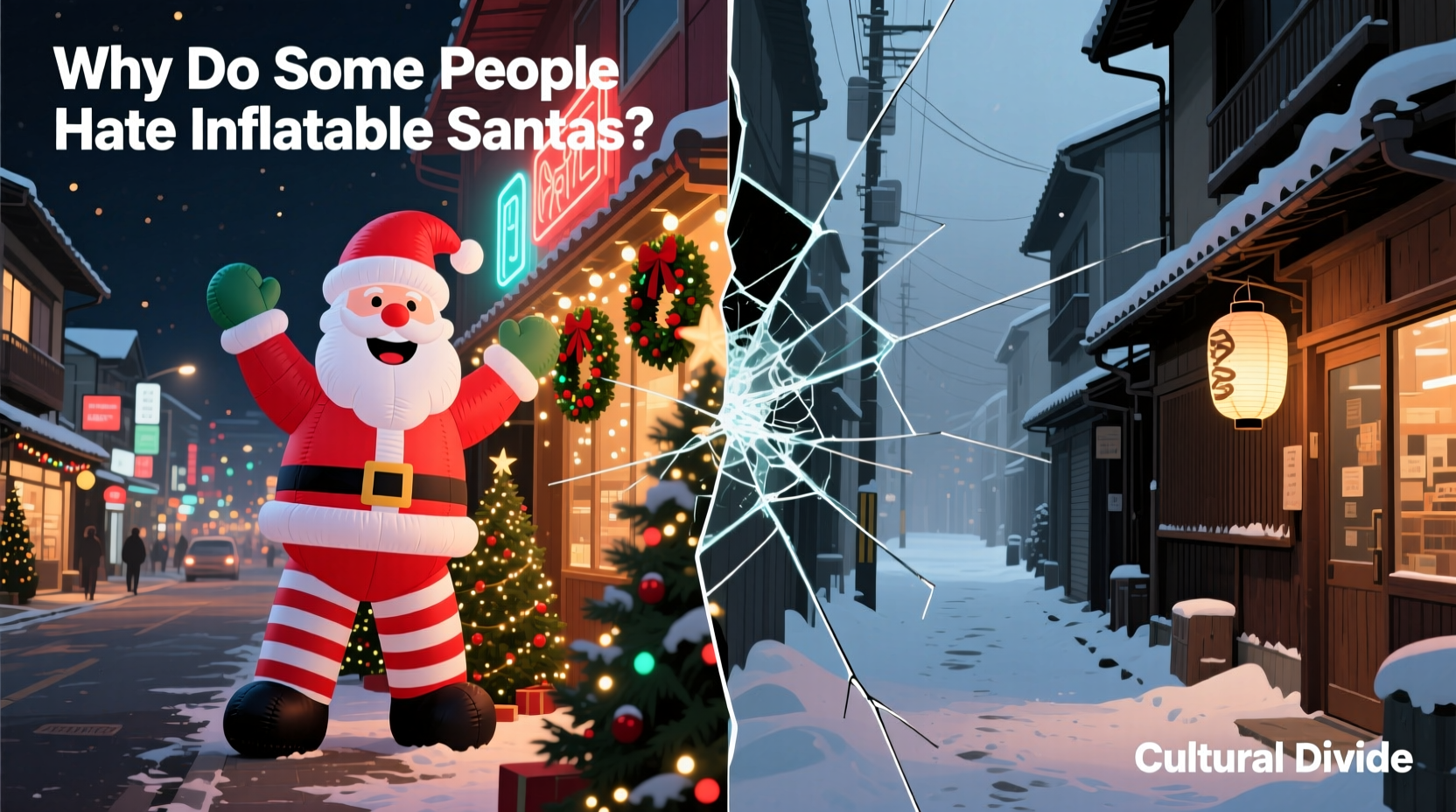
Inflatable yard decorations emerged in the early 2000s, popularized by companies like Noma and later amplified by retailers such as Target and Amazon. What began as novelty items quickly evolved into mainstream holiday staples. Their appeal lies in ease of use: they require no assembly beyond plugging in, deflate for compact storage, and offer high visual impact at relatively low cost.
By the mid-2010s, inflatable Santas, snowmen, reindeer, and nativity scenes could be found on lawns across North America. Some homeowners treat them as part of an elaborate light show synced to music, while others simply enjoy the whimsy of a giant Santa bobbing in the wind. For many, especially families with children, these inflatables add excitement and magic to the season.
Yet their popularity has been met with resistance. Critics argue that oversized inflatables disrupt neighborhood aesthetics, contribute to consumerist excess, and reflect a decline in tasteful holiday expression. This friction is not new—similar debates surrounded Christmas light displays in the 1950s—but the scale and visibility of today’s inflatables intensify the conflict.
Cultural Values Behind the Backlash
The opposition to inflatable Santas often stems from deeply held cultural values related to restraint, tradition, and community harmony. Many critics associate these decorations with what sociologists call “tacky exuberance”—a style of celebration perceived as loud, unrefined, or lacking in subtlety.
For some, traditional holiday symbols—wooden carvings, handmade ornaments, candlelit windows—carry emotional weight rooted in family heritage and religious observance. In contrast, mass-produced inflatables may feel impersonal, corporate, or even mocking of sacred traditions. A 2022 Pew Research study noted that 43% of Americans believe holiday celebrations have become “too commercial,” a sentiment strongly correlated with disapproval of large, flashy yard displays.
“Holiday decor used to be intimate—a wreath on the door, lights in the window. Now it's performative. The inflatable Santa isn’t for the family; it’s for the neighbors’ judgment.” — Dr. Lisa Tran, Cultural Anthropologist, University of Oregon
This shift from private ritual to public spectacle lies at the heart of the cultural divide. Those who dislike inflatable Santas often interpret them as status symbols—an assertion of disposable income or a desire for attention—rather than genuine expressions of joy.
Class, Taste, and the Politics of Aesthetics
Sociologist Pierre Bourdieu long argued that taste is not neutral—it reflects education, class background, and social positioning. The debate over inflatable Santas follows this pattern: approval or disdain often correlates with socioeconomic factors.
Higher-income neighborhoods frequently enforce strict homeowner association (HOA) rules limiting outdoor decorations. These policies are sometimes framed as preserving property values or architectural integrity, but they can also serve as tools of social gatekeeping. In contrast, middle- and working-class suburbs often embrace bolder, more visible forms of celebration, including inflatables, as accessible ways to participate in holiday culture.
Tip: If you're considering an inflatable Santa, check local HOA guidelines or municipal ordinances—some communities restrict size, timing, or placement.A case in point: In 2021, a suburban Ohio neighborhood made national news when a resident installed a 14-foot inflatable Santa without permission. Neighbors split sharply—some praised the cheer it brought to kids; others filed formal complaints citing \"visual blight.\" The incident escalated to a town council meeting, where one resident stated, “We moved here for quiet streets and trees, not a carnival.” Another shot back, “My kids look forward to this all year. It’s not hurting anyone.”
This clash illustrates how aesthetic preferences become moral judgments. Dismissing inflatable Santas as “tacky” can subtly reinforce class hierarchies, implying that certain forms of joy are less legitimate than others.
Generational and Regional Differences
Attitudes toward inflatable Santas also vary significantly by age and geography. Younger generations, particularly Millennials and Gen Z, tend to view them with irony or affectionate humor. Social media has played a role in normalizing—and even celebrating—over-the-top holiday displays through viral videos of malfunctioning inflatables or coordinated light shows.
Conversely, older adults, especially those over 60, are more likely to express concern about noise, light pollution, and energy consumption. A 2023 survey by the National Retail Federation found that only 28% of seniors considered inflatables “a good addition” to holiday decor, compared to 61% of parents under 40.
Regionally, the South and Midwest show higher adoption rates of inflatable yard art, where expansive lawns and car-centric culture support outdoor displays. Urban dwellers, especially in apartments or historic districts, often lack space or permission for such installations, leading to different traditions centered on indoor trees or public events.
| Factor | More Likely to Like Inflatable Santas | More Likely to Dislike Them |
|---|---|---|
| Age Group | Under 45 | Over 60 |
| Household Income | $50K–$100K | $100K+ |
| Homeownership | Suburban homeowners | Urban renters |
| Region | Middle America, South | Northeast, West Coast cities |
| Family Status | Families with young children | Couples without kids |
Environmental and Practical Concerns
Beyond cultural symbolism, legitimate practical concerns fuel opposition to inflatable Santas. Most models run on electricity 24/7, drawing between 150 and 300 watts per hour. Over a six-week season, a single large inflatable can consume as much energy as a refrigerator.
- Increased electricity usage contributes to carbon emissions, especially in regions reliant on fossil fuels.
- Many inflatables are made from PVC-based vinyl, a material difficult to recycle and prone to cracking after one or two seasons.
- Outdoor placement exposes them to weather damage, leading to frequent replacement and waste.
Some municipalities have responded with regulations. Aspen, Colorado, for example, limits holiday lighting to 300 watts per residence. Others, like Portland, Oregon, promote “green holidays” campaigns encouraging LED lights and reusable decor.
Step-by-Step Guide to Responsible Inflatable Use
- Choose energy-efficient models: Look for inflatables labeled ENERGY STAR or those with built-in timers.
- Use a timer: Set your inflatable to operate only during evening hours (e.g., 5 PM to 11 PM).
- Inspect annually: Check for tears, frayed cords, or mold before setup.
- Store properly: Clean, dry, and fold the unit carefully; keep in a breathable bag away from moisture.
- Consider alternatives: Opt for solar-powered inflatables or smaller, non-inflatable versions made from recycled materials.
Mini Case Study: The Battle of Maple Street
In the town of Crestview, Illinois, a quiet cul-de-sac known as Maple Street became ground zero for the inflatable Santa debate. For five years, the Thompson family had erected a 12-foot inflatable Santa, complete with rotating spotlight and jingle bells. Children from neighboring homes would stop by to take pictures, and the display was featured in a local newspaper’s “Best Holiday Lights” list.
Then new residents moved in next door. Within weeks, they filed a complaint with the HOA, citing excessive brightness and noise. They argued that the constant hum of the fan motor disrupted sleep and that the flashing lights created glare on their bedroom wall. The HOA board, evenly split, delayed action for months.
The situation turned tense. One anonymous note was left on the Thompsons’ door: “Tasteless doesn’t mean festive.” In response, supporters placed small pro-Santa signs in their yards. Local news picked up the story, framing it as “holiday spirit vs. neighborhood peace.”
Eventually, a compromise was reached: the Thompsons agreed to reduce operating hours to sunset to 9 PM and install a shield to minimize light spill. The neighbor acknowledged the gesture, saying, “I’m not anti-holiday. I just wanted consideration.”
The case underscores how even seemingly trivial disputes over decorations can expose deeper needs: respect, inclusion, and shared standards of living.
Checklist: Hosting Festive Decor Without Sparking Conflict
- ✅ Review HOA rules or local ordinances before purchasing
- ✅ Position inflatables away from bedroom windows of adjacent homes
- ✅ Use timers to limit runtime and save energy
- ✅ Keep sound levels low (avoid music-synced displays unless permitted)
- ✅ Engage neighbors early—offer a heads-up or invite them to preview the setup
- ✅ Remove decorations promptly after the holidays (ideally within two weeks of January 1)
FAQ
Are inflatable Santas really that bad for the environment?
While not catastrophic individually, widespread use adds up. A typical inflatable uses 150–300 watts continuously. Over six weeks, that’s 63–126 kWh—equivalent to running a dishwasher daily for a month. Combined with short lifespans and non-recyclable materials, they contribute to energy waste and landfill burden.
Can homeowners associations legally ban inflatable Santas?
Yes, if the HOA’s covenants include language about exterior modifications, signage, or holiday displays. However, enforcement must be consistent and non-discriminatory. Some states, like California, have laws protecting reasonable holiday decorations, so bans may face legal challenges.
Why do some people find inflatable Santas funny instead of offensive?
Humor often arises from exaggeration and absurdity. A 15-foot Santa swaying in the wind defies realism, making it inherently comical to many. Pop culture references—such as Clark Griswold’s overdone Christmas lights in *National Lampoon’s Christmas Vacation*—have normalized and even celebrated excess as part of holiday charm.
Conclusion: Bridging the Divide
The tension surrounding inflatable Santas is not merely about plastic and fans. It reflects broader societal shifts—the democratization of holiday expression, the erosion of consensus around tradition, and the struggle to balance individual freedom with community harmony.
Rather than dismissing either side as “joyless” or “garish,” there’s value in recognizing both perspectives. Joy matters, especially in hard times. So does respect—for neighbors, for the environment, and for differing views on what makes the season meaningful.
Ultimately, the inflatable Santa debate invites reflection: How can we celebrate in ways that uplift without overwhelming? How do we honor diversity—not just of belief, but of expression—within our communities?
💬 What’s your take on inflatable Santas? Love them, hate them, or tolerate them? Share your experience and help foster a more thoughtful conversation about how we celebrate together.