For many, tinsel, carols, and twinkling lights signal warmth and tradition. For others, they provoke anxiety, exhaustion, or even visceral discomfort. This isn’t mere grumpiness—it’s a layered psychological response rooted in neurobiology, lived experience, and sociocultural context. While holiday cheer is widely celebrated, the emotional toll of forced festivity remains under-discussed. Understanding why certain people recoil from Christmas decorations isn’t about pathologizing dislike; it’s about recognizing legitimate neurodivergent, traumatic, and existential responses to an environment that often prioritizes uniformity over individuality.
Sensory Overload: When Lights and Sounds Become Assaultive
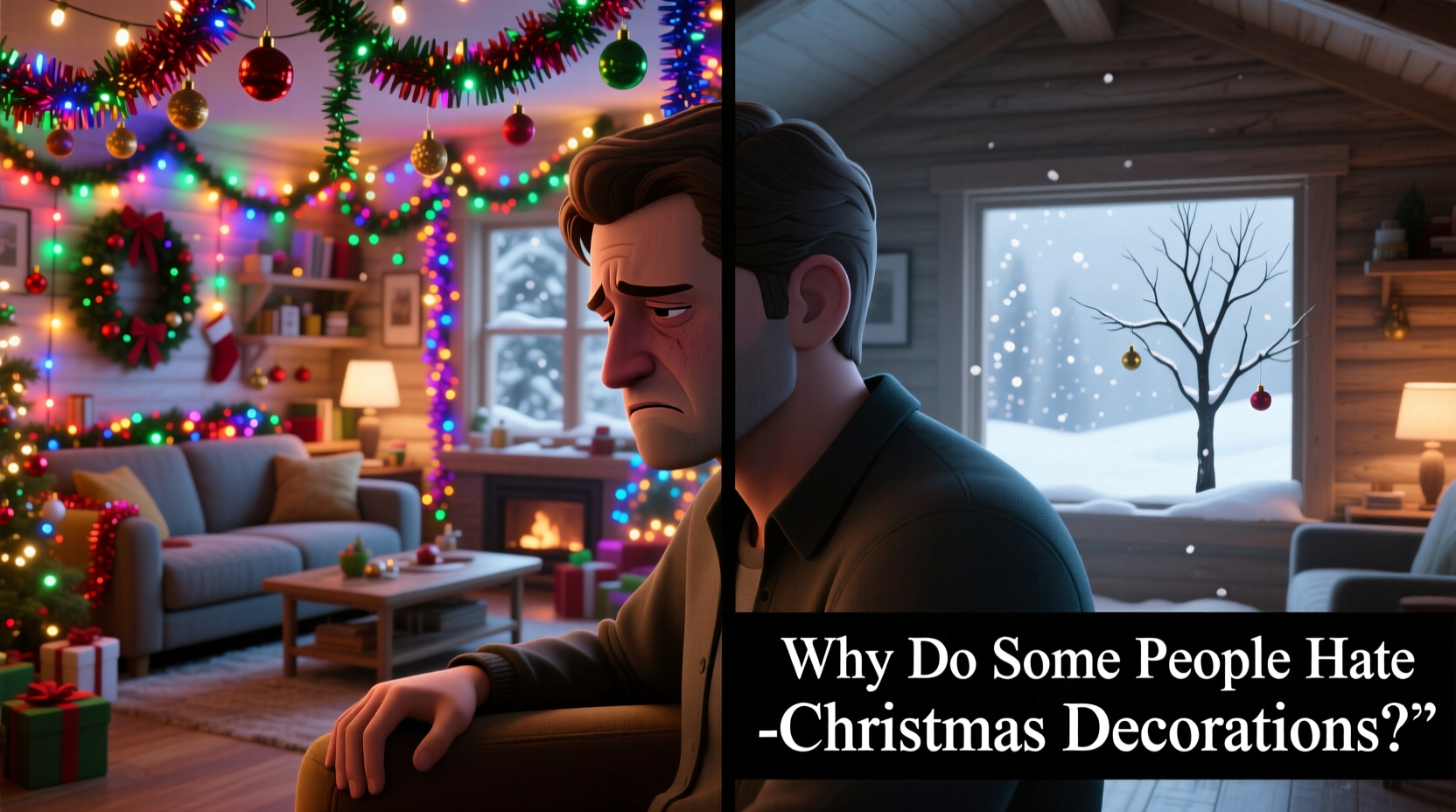
For neurodivergent individuals—particularly those with autism spectrum condition (ASC), ADHD, or sensory processing disorder—the visual and auditory bombardment of the holiday season can be physiologically overwhelming. Decorations are rarely subtle: strobing LED strings, high-contrast red-and-green palettes, reflective ornaments, and unpredictable chimes activate multiple sensory channels simultaneously. The brain’s thalamus, which filters incoming stimuli, may struggle to prioritize or dampen input—leading to what occupational therapists call “sensory flooding.” This isn’t preference; it’s neurological saturation.
A 2022 study published in Frontiers in Psychology found that 68% of autistic adults reported heightened stress during December, with decorative lighting cited as the top environmental trigger—more than crowded malls or family gatherings. The issue isn’t the aesthetics themselves but their intensity, unpredictability, and ubiquity. Unlike a single blinking traffic light—which the brain learns to ignore—holiday lights appear everywhere: storefronts, sidewalks, office lobbies, and even elevator banks—offering no sensory respite.
Tip: If you’re sensitive to visual stimulation, use blue-light-blocking glasses indoors during peak decoration season—and advocate for “low-sensory zones” at work or community events where festive decor is minimized or absent.Unresolved Trauma: When Tinsel Triggers Memory
Decorations function as powerful contextual cues—anchoring memories to specific sensory details. For individuals with unresolved trauma tied to childhood holidays—such as parental conflict, grief, neglect, or abuse—the sight of a wreath or sound of sleigh bells can reactivate the amygdala before conscious awareness occurs. This is not nostalgia; it’s implicit memory in action. A 2023 clinical review in Journal of Traumatic Stress noted that seasonal cues accounted for 41% of reported trauma reactivations among adult survivors of familial dysfunction, with Christmas trees and nativity scenes emerging as frequent anchors.
This phenomenon explains why someone might feel sudden dread walking past a decorated window—not because of the object itself, but because their nervous system recognizes the pattern associated with past danger. The brain doesn’t distinguish between past threat and present safety when survival circuits dominate.
“Holiday decor acts like a time capsule for the nervous system. For trauma survivors, it doesn’t evoke joy—it signals vigilance. That’s not resistance to celebration; it’s the body remembering what it needed to survive.” — Dr. Lena Torres, Clinical Psychologist & Trauma Specialist
Cultural and Religious Dissonance: Belonging Outside the Narrative
Christmas decorations carry embedded cultural assumptions: Christian symbolism (nativity scenes, crosses on stars), consumerist values (oversized gift displays), and normative family ideals (perfectly posed photos beneath the tree). For people who identify as secular, atheist, agnostic, or members of non-Christian faiths—including Muslims, Jews, Hindus, Sikhs, and Indigenous spiritual practitioners—these symbols can generate alienation, not inclusion.
This isn’t merely about religious exclusion. It’s about the erasure of alternative worldviews in public space. A decorated municipal building, a school hallway draped in red-and-green bunting, or workplace parties centered around Santa imagery implicitly position non-Christmas traditions as secondary—or invisible. In workplaces and schools, this can trigger microaggressions: being asked “What do you celebrate instead?” or told “It’s just fun!” when expressing discomfort.
The psychological impact is cumulative: chronic low-grade stress, hypervigilance around social cues, and diminished sense of belonging. Research from the University of Manchester’s Cultural Inclusion Lab (2021) found that 73% of non-Christian respondents reported feeling “psychologically excluded” in December-dominated environments—even when no overt hostility occurred.
Cognitive Fatigue and Decision Exhaustion
Modern holiday preparation demands relentless micro-decisions: Which lights to buy? How many ornaments per branch? Should the tree go in the corner or center? Do I need battery-operated candles *and* real ones? For people managing depression, anxiety, chronic illness, or executive dysfunction, these seemingly trivial choices deplete finite cognitive resources. Decoration becomes less about aesthetics and more about navigating an unrelenting series of evaluations—each requiring attention, planning, and emotional labor.
This aligns with Roy Baumeister’s theory of ego depletion: willpower and decision-making draw from a shared mental reservoir. When that reservoir is already drained by caregiving, financial strain, or health management, choosing between “snowflake” and “icicle” string lights feels less like joy and more like another tax on depleted energy. What looks like “not caring” is often profound mental exhaustion masked as indifference.
| Psychological Trigger | Common Physical Manifestations | Underlying Mechanism |
|---|---|---|
| Sensory Overload | Headaches, nausea, rapid heartbeat, irritability, withdrawal | Hyperactivation of the sympathetic nervous system due to unfiltered sensory input |
| Trauma Reactivation | Shallow breathing, dissociation, muscle tension, flashbacks | Implicit memory retrieval via limbic system bypassing prefrontal cortex regulation |
| Cultural Dissonance | Chronic fatigue, social avoidance, suppressed anger, identity fragmentation | Repeated exposure to dominant cultural narratives that invalidate one’s worldview |
| Cognitive Fatigue | Mental fog, procrastination, tearfulness, decision paralysis | Depletion of executive function resources required for sustained choice-making |
| Existential Conflict | Restlessness, cynicism, moral discomfort, spiritual unease | Dissonance between personal ethics (e.g., sustainability, anti-consumerism) and decorative norms |
Identity and Values Clash: When Decorations Feel Like Complicity
For ethically motivated individuals—environmental activists, minimalists, anti-consumerists, or those practicing radical simplicity—Christmas decorations represent systemic contradictions. Tinsel is plastic. Light strands consume electricity. Ornaments are mass-produced, often overseas under exploitative labor conditions. Trees are cut and discarded within weeks. The sheer volume of temporary, resource-intensive objects clashes with deeply held values.
This isn’t aesthetic disagreement—it’s moral distress. Psychologist Dr. Sarah Kim notes: “When external expectations demand participation in practices that violate one’s core ethics, the resulting tension manifests as resentment, shame, or numbness. People aren’t hating tinsel—they’re grieving the gap between who they are and who the season asks them to perform.”
A real-world example illustrates this: Maya, 34, a zero-waste educator and climate justice organizer, described her annual December experience: “I love my neighbors. I want to be kind. But every time I walk past the inflatable snowman plugged into a wall socket, I feel complicit. My body tightens. I start calculating its carbon footprint mid-stride. It’s exhausting to hold care for people *and* rage at the systems we’re all participating in—even passively.” Her reaction isn’t misanthropy; it’s ethical attunement in a context that rewards disengagement.
Practical Strategies for Self-Protection and Mutual Respect
Understanding the roots of decoration aversion doesn’t require dismantling tradition—but it does demand nuance, agency, and compassion. Below is a step-by-step guide for individuals navigating this season—and for communities seeking inclusivity.
- Self-Assessment (Weeks 1–2 of November): Reflect honestly: Is my discomfort rooted in sensory sensitivity? Trauma? Values conflict? Cultural mismatch? Naming the source reduces self-judgment.
- Boundary Mapping (Mid-November): Identify non-negotiables: e.g., “I won’t attend events with flashing lights,” “I’ll decline decorating my workspace,” “I’ll explain to family that I opt out of gift exchanges.”
- Environmental Control (Ongoing): Use noise-canceling headphones in decorated spaces, install blue-light filters on devices, keep a “calm corner” at home with neutral colors and soft textures.
- Reframing Language (Daily): Replace self-critical thoughts (“Why can’t I just enjoy this?”) with validating ones (“This is hard because it conflicts with my nervous system/values/history—and that’s valid.”)
- Community Advocacy (Post-Holiday): Suggest inclusive alternatives for next year: “low-sensory” office hours, interfaith winter celebrations, donation-based gift swaps, or “decoration-free” community zones.
FAQ
Is disliking Christmas decorations a sign of depression or anxiety?
No—not inherently. While seasonal affective disorder (SAD) and anxiety disorders can intensify discomfort, aversion to decorations alone isn’t diagnostic. It becomes clinically relevant only if it significantly impairs functioning (e.g., avoiding necessary errands, withdrawing from relationships) or co-occurs with persistent low mood, panic attacks, or insomnia. Context matters more than the symptom.
Can therapy help reduce the distress caused by holiday decor?
Yes—especially trauma-informed, somatic, or acceptance-and-commitment therapy (ACT). Therapists don’t aim to “fix” your reaction to tinsel. Instead, they help build nervous system regulation tools, process underlying memories, and strengthen boundary-setting skills so your response feels manageable—not overwhelming.
How do I explain my discomfort to family without sounding dismissive of their joy?
Use “I” statements grounded in experience: “I get physically overwhelmed by bright lights, so I need to limit time in highly decorated spaces,” or “My spiritual practice centers quiet reflection, so festive noise makes it hard for me to connect with what matters most to me right now.” Focus on your needs—not their choices.
Conclusion
Hating Christmas decorations isn’t a character flaw, a failure of spirit, or evidence of Scrooge-like miserliness. It’s often the quiet signature of a nervous system protecting itself, a mind honoring its history, or a conscience holding fast to integrity. In a culture that equates festivity with virtue and dissent with selfishness, granting ourselves permission to opt out—without apology—is an act of profound self-respect. And for those who love the season, extending grace to those who don’t isn’t tolerance—it’s humanity in motion.
Start small this year. Notice one decoration that unsettles you—and ask yourself, gently: *What is my body or heart trying to tell me?* Then honor that message, whether it means dimming the lights, skipping the party, or simply sitting quietly while the world sparkles on without you. Your peace isn’t negotiable. Your boundaries aren’t barriers—they’re architecture for a life that fits.
💬 Your experience matters. Have you navigated holiday discomfort with intention? Share your strategy, insight, or story in the comments—your words might help someone feel seen this season.