
For many, the moment a fresh-cut fir or spruce enters the home—its sharp, resinous aroma filling the air—it’s as if time folds. A childhood living room materializes: twinkling lights reflected in polished ornaments, the low hum of a record player playing Bing Crosby, the warmth of wool socks against cool hardwood floors. This isn’t mere association—it’s a neurological event. The scent of a Christmas tree doesn’t just remind us of the holidays; it often transports us, viscerally and involuntarily, to emotionally saturated moments from our past. That immediacy, that emotional weight, is rooted in how our brain processes smell—not as a distant sense, but as one wired directly into memory and emotion centers. Understanding this phenomenon reveals far more than holiday sentimentality; it illuminates a fundamental truth about human cognition, identity, and the quiet power of olfaction in shaping who we are.
The Olfactory Shortcut: Why Smell Bypasses Rational Thought
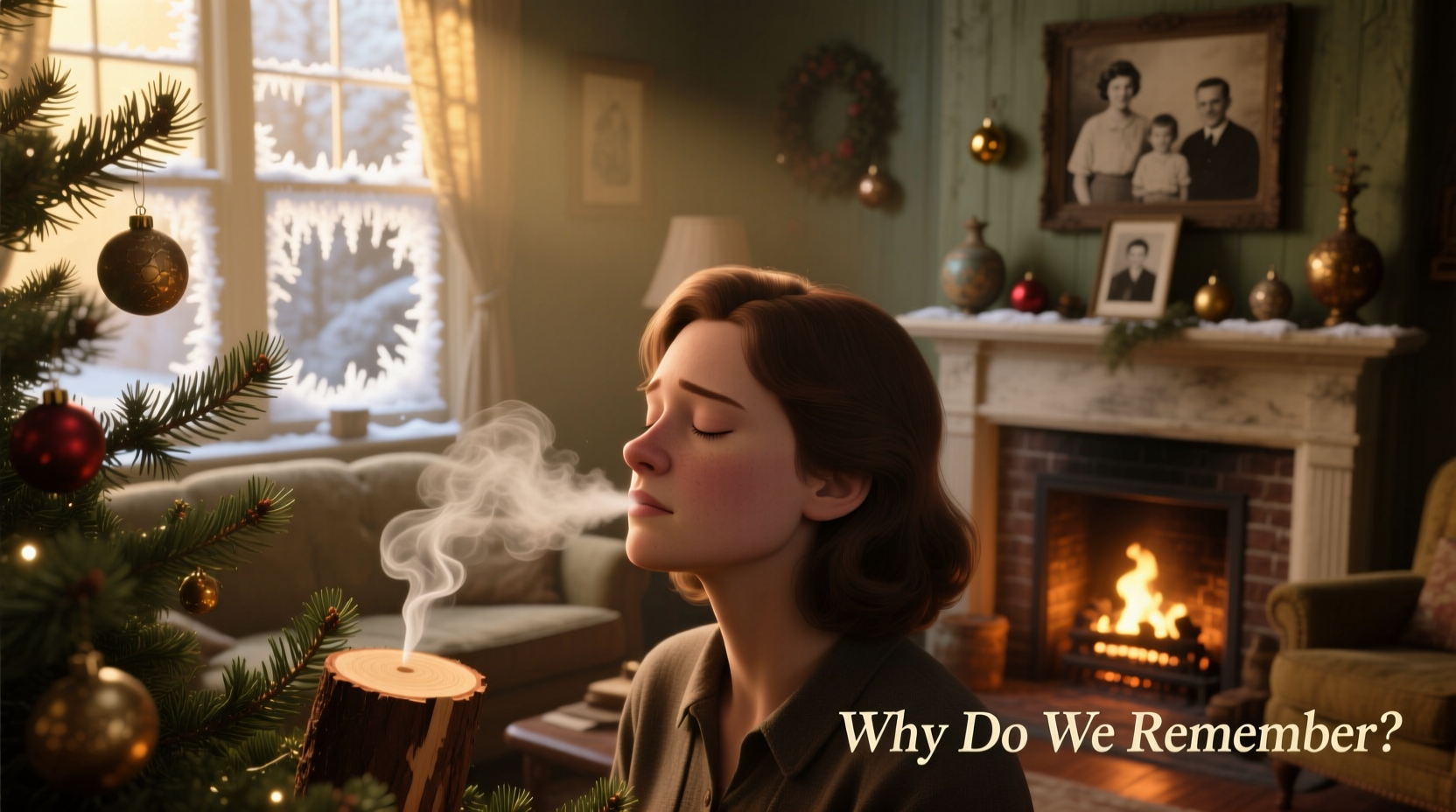
Unlike sight, sound, or touch—which route first through the thalamus (the brain’s sensory relay station)—olfactory signals travel directly from the nose to the limbic system. This ancient neural network includes the amygdala (central to emotional processing) and the hippocampus (essential for forming and retrieving autobiographical memories). This direct line means scent can trigger emotional responses before the conscious mind has time to label them. A 2013 study published in Frontiers in Psychology confirmed that odor-evoked memories are consistently rated as more emotional and vivid than those triggered by words or images—even when the memories themselves are decades old.
This anatomical privilege explains why the scent of pine needles, balsam, or Douglas fir doesn’t simply register as “pleasant” or “woody.” It lands like a key turning in a long-unused lock—releasing not just a memory, but the full sensory and affective context: the tactile sensation of sticky sap on small fingers, the sound of parents laughing while untangling lights, the taste of gingerbread cooling on a wire rack. No other sense offers this kind of unmediated access to the past.
Tip: If you want to intentionally strengthen positive scent-memory links, pair a specific holiday fragrance (e.g., balsam fir oil) with a calm, joyful activity—like wrapping gifts with music playing—during multiple seasons. Repetition builds stronger neural pathways.Developmental Windows: When Holiday Scents Took Root
Nostalgia isn’t evenly distributed across the lifespan. Research in developmental psychology shows that autobiographical memories formed between ages 5 and 15 are disproportionately represented in adult nostalgia—what scientists call the “reminiscence bump.” This period coincides precisely with when most children first experience Christmas traditions with heightened sensory awareness: the novelty of decorating a tree, the ritual of placing the star, the anticipation of gift-giving. During these years, the brain is exceptionally plastic, encoding experiences with rich contextual detail.
Crucially, this era also overlaps with peak olfactory sensitivity. Children aged 7–12 have been shown to detect certain terpenes (the volatile organic compounds responsible for conifer scents) at concentrations up to 10 times lower than adults. So the scent wasn’t just present during formative Christmases—it was *intensified*, making its imprint deeper and more durable. Later in life, encountering that same chemical signature—whether from a live tree, an essential oil diffuser, or even a scented candle—doesn’t just recall the event; it reactivates the neurochemical state of safety, belonging, and wonder that defined those early Decembers.
Cultural Rituals and Scent Anchoring
A Christmas tree is never just a plant. It’s a ritual object—one that arrives annually with precise timing, handled with particular care, and surrounded by consistent behaviors. These repeated actions create what psychologists call “contextual anchors”: stable environmental cues that stabilize memory formation. Each year, the act of selecting the tree, dragging it indoors, sawing the base, adding water, and finally inhaling that first deep breath of green resin becomes part of a predictable sequence. Over time, the scent stops being merely a background note and evolves into the central cue—the olfactory signature—of the entire ritual constellation.
This anchoring effect is amplified by cultural consistency. Across generations and geographies, the dominant species used—Balsam fir, Fraser fir, Noble fir, Douglas fir—share similar terpene profiles (notably α-pinene, β-pinene, and limonene). Though regional variations exist (e.g., Scotch pine’s sharper, more medicinal note), the core aromatic fingerprint remains recognizable. As a result, even individuals raised in different countries or faith traditions often report similar nostalgic responses—not because their Christmases were identical, but because their brains learned to associate that molecular pattern with warmth, family, and pause.
Neurochemistry of Comfort: How Pine Resin Calms the Nervous System
Beyond memory, the physical chemistry of conifer scents contributes meaningfully to the nostalgic response. Terpenes like α-pinene have demonstrated measurable physiological effects in clinical studies. A 2021 randomized controlled trial in the International Journal of Environmental Research and Public Health found that participants exposed to α-pinene vapor for 20 minutes showed statistically significant reductions in salivary cortisol and self-reported anxiety compared to controls. Limonene, another dominant compound in fir oils, has been linked to increased serotonin activity in rodent models—suggesting a potential mood-modulating role.
This means the nostalgia isn’t purely psychological. The scent actively shifts the body’s baseline state: lowering heart rate, softening muscle tension, slowing respiration. For many, especially those who experienced childhood Christmases as periods of rare emotional safety—or for adults who now associate the season with respite from chronic stress—the physiological relief becomes inseparable from the emotional memory. The scent doesn’t just recall comfort; it *recreates* it, biochemically, in real time.
“The limbic system doesn’t distinguish between ‘remembering’ safety and ‘experiencing’ safety—especially when a potent olfactory cue is involved. That’s why a whiff of pine can drop your blood pressure before you’ve consciously thought, ‘Ah, Christmas.’ It’s evolution’s shortcut to home.” — Dr. Lena Torres, Cognitive Neuroscientist and Author of Scent & Self: How Odor Shapes Identity
Real-Life Resonance: A Mini Case Study
Maya, 42, grew up in rural Vermont. Her family cut their own tree each December from land owned by her grandfather—a ritual involving hot cider, snowshoes, and careful selection of a young balsam fir. She recalls the exact sensation of crushing a needle between her thumb and forefinger, releasing that piercing, clean greenness. After moving to Manhattan for graduate school, Maya rarely encountered live trees—apartments were too small, building rules too strict. For over a decade, she celebrated with artificial trees and synthetic sprays, which never evoked anything beyond vague seasonal cheer.
Then, in 2022, she adopted a rescue dog who loved sniffing pine-scented grooming wipes. One evening, while cleaning his paws after a snowy walk, Maya caught the unmistakable tang of balsam. Instantly, she was eight years old again—standing beside her grandfather’s pickup truck, steam rising from mugs, her mittened hand gripping his flannel sleeve. She wept—not from sadness, but from the sheer visceral return of a feeling she hadn’t accessed in years: uncomplicated belonging. She bought a live tree the next day. Not for tradition’s sake, but because her nervous system recognized its language.
Do’s and Don’ts: Honoring the Scent-Memory Connection
Understanding the science behind this response invites intentional engagement—not just passive reaction. Below is a practical guide grounded in both neuroscience and lived experience.
| Action | Why It Works | What to Avoid |
|---|---|---|
| Use real evergreen branches (not synthetic oils alone) | Fresh foliage releases a broader, more complex terpene profile—including trace compounds lost in distillation—that better matches childhood sensory input. | Over-relying on single-note fragrance oils, which lack the nuanced volatility of living plants. |
| Pair scent with embodied ritual (e.g., trimming branches while listening to a specific album) | Engaging multiple senses simultaneously strengthens memory encoding and makes future recall more robust. | Passively diffusing scent while multitasking—this dilutes the contextual anchor. |
| Label the memory explicitly (e.g., “This is the smell of Grandma’s attic where we stored ornaments”) | Verbalizing the link activates the prefrontal cortex, helping integrate emotional memory with narrative coherence—making it more accessible and less overwhelming. | Letting the nostalgia wash over you without reflection, which can sometimes trigger unresolved grief or loneliness. |
| Share the scent intentionally with younger family members during low-pressure moments | Creating new, positive associations in others’ developing limbic systems ensures the tradition carries forward neurologically—not just culturally. | Forcing the experience (“Smell this! This is Christmas!”), which disrupts organic emotional connection. |
Step-by-Step: Building Your Own Scent-Based Memory Practice
You don’t need to wait for December to cultivate this connection. Here’s how to deepen your relationship with scent and memory year-round:
- Identify your strongest holiday scent memory. Was it the tree? Baking cookies? Fireplace smoke? Write down the specific sensory details—not just “pine,” but “sticky sap on pine needles crushed under boots in snow.”
- Source authentic materials. Visit a local tree farm in late fall, or order fresh boughs online. Avoid heavily processed fragrances; seek out cold-pressed conifer oils or dried botanicals.
- Create a low-stakes ritual. Once monthly, spend 10 minutes with the scent: hold a branch, inhale slowly, close your eyes, and invite—not force—the memory to surface. Keep a journal nearby to note what arises.
- Expand the sensory field. Add one complementary element: a piece of red flannel fabric, a recording of carols, a warm drink. Do this for three consecutive months.
- Reflect and integrate. At month’s end, review your journal. Notice patterns: Which emotions recur? What bodily sensations accompany them? This builds metacognitive awareness—turning nostalgia from a reflex into a resource.
FAQ
Why don’t all people feel nostalgic when smelling Christmas trees?
Nostalgia requires both exposure and emotional resonance. Individuals who grew up in homes without trees, experienced trauma during holidays, or associate the season with stress or loss may have neutral or aversive neural pathways linked to those scents. Additionally, anosmia (loss of smell), genetic variations in olfactory receptor genes, or chronic conditions like depression—which dampens limbic reactivity—can reduce or eliminate the response. Absence of nostalgia isn’t deficiency; it’s neurobiological diversity.
Can artificial trees or scented candles produce the same effect?
They can—but less reliably. Most commercial “Christmas tree” fragrances isolate 2–3 dominant terpenes, missing the 40+ volatile compounds in live foliage that create olfactory depth and authenticity. However, high-fidelity blends using fractionated conifer extracts (not synthetic aldehydes) combined with mindful, ritualized use can activate similar pathways—especially if they match a person’s specific childhood exposure.
Is this type of nostalgia healthy—or can it become emotionally limiting?
When balanced, nostalgic scent recall enhances well-being: studies correlate it with increased social connectedness, optimism, and self-continuity. But if it consistently triggers longing for an idealized past that overshadows present joy—or prevents engagement with current relationships—it may signal unresolved grief or avoidance. Healthy nostalgia honors the past while grounding you more firmly in the present.
Conclusion
The nostalgia evoked by a Christmas tree is neither sentimental indulgence nor neurological accident. It is the quiet convergence of evolutionary wiring, developmental timing, cultural repetition, and biochemical resonance—a testament to how deeply our bodies remember what our minds try to forget. That sharp, green, slightly sweet scent carries within it decades of human experience: the awe of childhood, the tenderness of caregiving, the resilience of returning home, year after year, to something that smells like safety. Recognizing this doesn’t diminish the magic—it deepens it. You’re not just smelling a tree. You’re holding a living archive, encoded in molecules and memory, whispering back across time.
So this season, pause before you reach for the lights or the tinsel. Take a slow, deliberate breath. Let the scent arrive—not as background, but as presence. Notice what surfaces—not just the image, but the temperature, the sound, the unspoken feeling beneath it. In that attention, you honor not only your own story, but the profound, ancient intelligence of a brain that still knows how to find home in a single breath.
💬 Your scent memories matter. Share one in the comments—what does Christmas smell like to you, and what door does it open?








