Every holiday season, millions of homes light up with strings of colorful Christmas lights. Behind the festive glow, however, lies a small but critical safety component: the fuse. Many people overlook these tiny parts until one blows—often right before guests arrive or during a winter storm. When half the strand goes dark, confusion sets in. Understanding why Christmas lights have fuses and knowing how to respond when they fail isn’t just about convenience; it’s about electrical safety, longevity of your decorations, and preventing fire hazards.
Fuses are not arbitrary additions. They serve a precise engineering purpose in low-voltage lighting systems like Christmas lights. While modern LED strands may seem harmless, older incandescent strings and even some LED setups draw enough current to pose risks if damaged or overloaded. The fuse acts as a built-in circuit breaker, cutting power before wires overheat or insulation melts. Without this safeguard, a simple short could lead to smoke, fire, or damage to your home’s electrical system.
The Role of Fuses in Christmas Lights
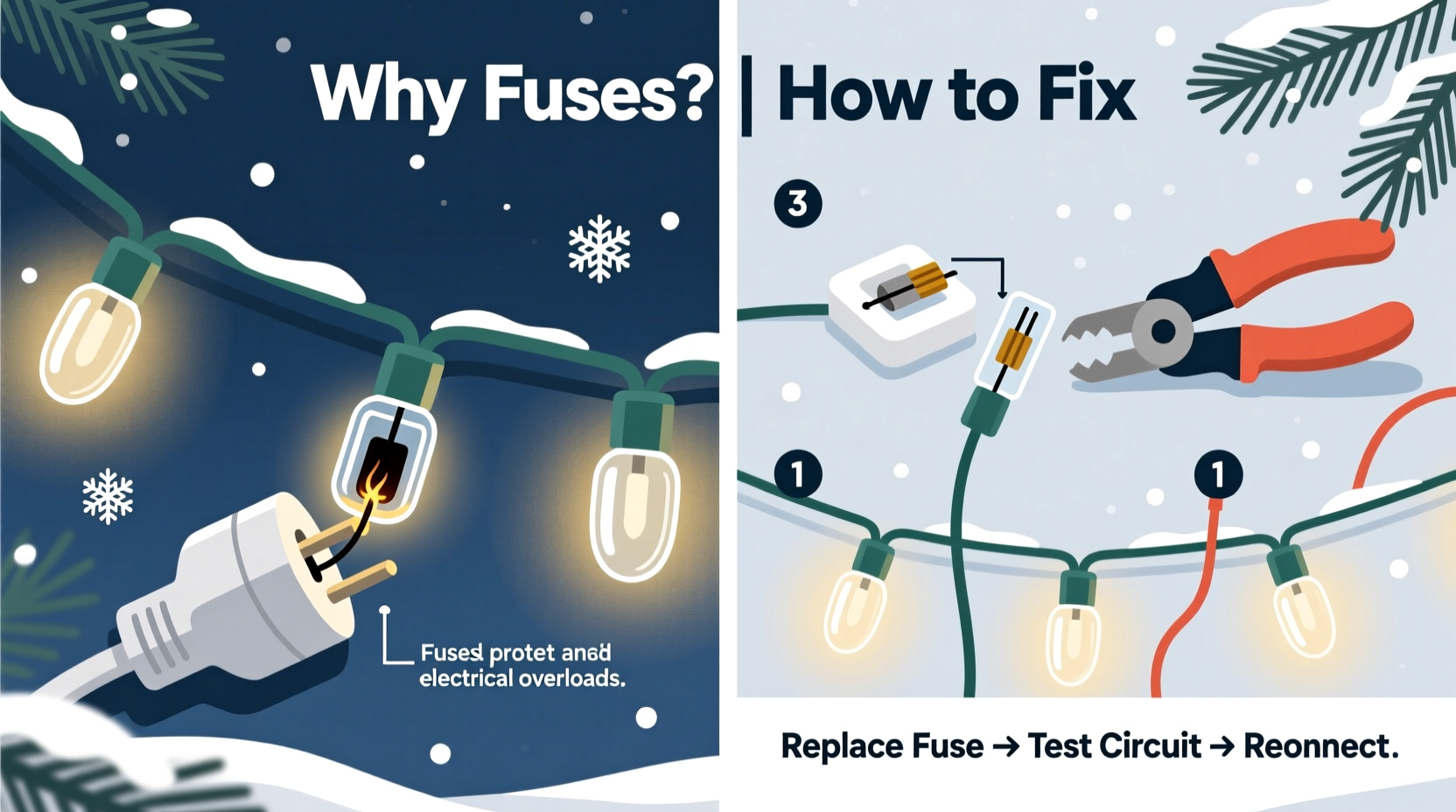
Christmas light fuses are typically housed inside the plug, often hidden under a removable panel on the male end of the strand. Most standard mini-light sets come with two small glass or ceramic fuses rated at 3 or 5 amps, depending on voltage and bulb count. These fuses protect against overcurrent conditions—situations where more electricity flows through the circuit than it's designed to handle.
Overcurrent can result from several causes:
- Short circuits: A frayed wire or pinched cord allows live wires to touch, creating a surge.
- Daisy-chaining too many strands: Connecting more than the manufacturer recommends increases load beyond safe limits.
- Moisture exposure: Outdoor lights exposed to rain or snow can develop internal shorts.
- Manufacturing defects: Rarely, a flaw in wiring or bulb socket leads to early failure.
When any of these issues occur, the fuse heats up and breaks the circuit internally, stopping the flow of electricity. This is known as \"blowing\" the fuse. It’s a deliberate design feature—not a flaw—and prevents downstream damage.
“Fuses in decorative lighting are essential for consumer safety. They’re the first line of defense against thermal runaway in densely packed circuits.” — Dr. Alan Reeves, Electrical Safety Engineer, UL Solutions
How to Tell If a Fuse Has Blown
Symptoms of a blown fuse vary slightly between incandescent and LED lights, but common signs include:
- Only part of the strand lights up (typically the first few bulbs work, then darkness).
- No lights illuminate at all, despite being plugged in.
- A visible discoloration or break inside the glass fuse body.
- A rattling sound when you shake the fuse (indicating internal breakage).
To confirm a blown fuse, unplug the strand and use a small screwdriver or coin to gently pry open the fuse compartment on the plug. Inside, you’ll usually find two fuses stacked side by side. Carefully remove one and inspect it visually. Look for a broken filament or darkened metal inside the tube. Repeat for the second fuse.
Tip: Use a flashlight to get a clear view of the fuse filament. If you're unsure, test continuity with a multimeter set to ohms—if the reading shows “OL” or infinite resistance, the fuse is dead.Step-by-Step Guide to Replacing a Blown Fuse
Replacing a fuse in Christmas lights is straightforward if done carefully. Follow this sequence to restore function without risking further damage.
- Unplug the lights immediately. Never attempt repairs while connected to power.
- Locate the fuse compartment. On most strands, it’s on the back or side of the male plug. Slide or pop open the cover.
- Remove both fuses. Even if only one appears damaged, manufacturers recommend replacing both simultaneously to ensure balanced protection.
- Match the replacement specs. Check the amperage printed on the old fuse (e.g., 3A, 5A) and voltage rating. Use only identical replacements—never substitute higher-rated fuses.
- Insert new fuses. Place them securely into the holder, ensuring good contact.
- Reassemble the plug. Snap the compartment shut firmly.
- Test the lights. Plug them into an outlet away from flammable materials. Observe for flickering, overheating, or uneven brightness.
If the new fuses blow immediately upon plugging in, there’s likely an underlying issue such as a short circuit or water damage. Do not continue attempting repairs—retire the strand safely.
Common Mistakes When Handling Fuses
Even experienced decorators make errors when dealing with fuses. Avoiding these pitfalls ensures both safety and functionality.
| Mistake | Why It’s Risky | Correct Approach |
|---|---|---|
| Using a higher-amp fuse | Bypasses safety threshold; risks overheating wires | Always match original amperage exactly |
| Forcing open the fuse box | Can crack insulation or dislodge internal contacts | Use gentle pressure with flat tool |
| Leaving blown fuses in place | May cause partial current flow or arcing | Replace both fuses, even if only one looks bad |
| Skipping visual inspection | Misses signs of moisture, corrosion, or melting | Check entire cord and sockets before reuse |
Mini Case Study: The Overloaded Porch Display
In suburban Ohio, homeowner Maria Thompson decorated her front porch annually with over 20 strands of vintage incandescent lights. One December evening, half her display went dark. After checking outlets and breakers, she opened the plug of the main string and found a charred fuse. She replaced it with a spare—but within minutes, the new fuse blew again.
Upon closer inspection, an electrician discovered she had linked 12 strands together—far exceeding the manufacturer’s limit of three per circuit. The cumulative draw exceeded 7 amps, overwhelming the 5-amp fuse. Rewiring the setup into smaller groups across multiple outlets solved the problem. Since then, Maria uses smart timers and fused extension cords to manage loads safely.
This case illustrates how seemingly minor oversights—like ignoring connection limits—can trigger repeated fuse failures and potential fire risks.
Tips for Preventing Future Fuse Blows
Prevention is always better than repair when it comes to electrical holiday decor. Implement these practices to reduce stress on fuses and extend the life of your lights.
Tip: Label each strand with its maximum daisy-chain limit and amperage draw to avoid accidental overloading.- Follow manufacturer guidelines: Never exceed the recommended number of connected strands.
- Inspect before installation: Look for cracked sockets, exposed wires, or bent prongs.
- Use GFCI outlets outdoors: Ground Fault Circuit Interrupters add another layer of protection against shocks and shorts.
- Store properly off-season: Coil lights loosely around a cardboard spool; store in dry, temperature-stable areas.
- Upgrade to LED: LEDs consume less power, generate less heat, and often include redundant circuits that stay lit even if one bulb fails.
Fuse Types and Compatibility Chart
Not all fuses are interchangeable. Below is a quick reference guide for common types used in Christmas lights.
| Fuse Type | Typical Rating | Used In | Replacement Part # |
|---|---|---|---|
| AGU Glass Tube | 3A, 125V | Mini incandescent strands | AGU-3 |
| Ceramic Cartridge | 5A, 250V | Heavy-duty or commercial strings | CC-5 |
| Resettable PTC | Self-resetting (~2A) | Some modern LED sets | Not user-replaceable |
Note: Resettable fuses (PTC thermistors) don’t require replacement—they cool down and reset after tripping. However, frequent cycling indicates a persistent fault needing investigation.
FAQ
Can I use a car fuse to replace a Christmas light fuse?
No. Automotive fuses are designed for different voltages and response curves. Using one can bypass safety protections and create fire hazards. Always use fuses rated specifically for decorative lighting.
Why did my fuse blow after months of use?
Fuses can degrade over time due to thermal cycling (heating/cooling), especially in outdoor settings. Additionally, environmental factors like moisture ingress or rodent damage to cords can create delayed shorts. Regular inspection helps catch issues early.
Are LED Christmas lights safer than incandescent?
Generally, yes. LEDs operate at lower temperatures and draw significantly less current—often reducing fuse trips by 80% or more. Many also include shunt resistors so that individual bulb failures don’t interrupt the whole circuit. However, cheaply made LED strings may still use undersized fuses or poor insulation, so quality matters.
Checklist: What to Do When Christmas Light Fuses Blow
- Unplug the strand immediately.
- Inspect the plug, cord, and bulbs for visible damage.
- Open the fuse compartment and remove both fuses.
- Visually examine each fuse for breaks or darkening.
- Test with a multimeter if uncertain.
- Replace both fuses with correct amperage and type.
- Plug in briefly to test—monitor for sparks or overheating.
- If fuses blow again, retire the strand.
- Consider upgrading to LED or professionally rated displays.
Conclusion
Christmas lights bring warmth and joy, but their operation depends on careful engineering—including the humble fuse. These small components play a vital role in protecting your home and family from electrical faults. Knowing why they exist, how to identify when they fail, and how to replace them correctly empowers you to enjoy the holidays safely and without last-minute surprises.
Don’t wait until the night before a party to discover a dead strand. Inspect your lights before decorating, keep spare fuses on hand, and respect manufacturer limits. By treating your holiday lighting with the same care as other household electronics, you ensure not only a brighter display but a safer season for everyone.
💬 Have a fuse-saving tip or a close call story? Share your experience in the comments—your insight might help another decorator avoid a dark December night!








