It’s the holiday season again, and you’ve pulled out your trusted pre-lit Christmas tree—only to find that not a single light turns on. You remember it worked perfectly last year. What went wrong? Pre-lit trees are convenient, but their built-in lighting systems can fail due to a range of issues, from simple bulb burnouts to deeper electrical faults. Understanding why your tree stopped working is the first step toward fixing it—or making smarter choices next time.
This guide walks you through common causes, diagnostic steps, and practical solutions to get your tree glowing again. Whether you’re dealing with flickering lights, partial sections failing, or a completely dead tree, this comprehensive approach will help you troubleshoot efficiently and safely.
Understanding How Pre-Lit Trees Work
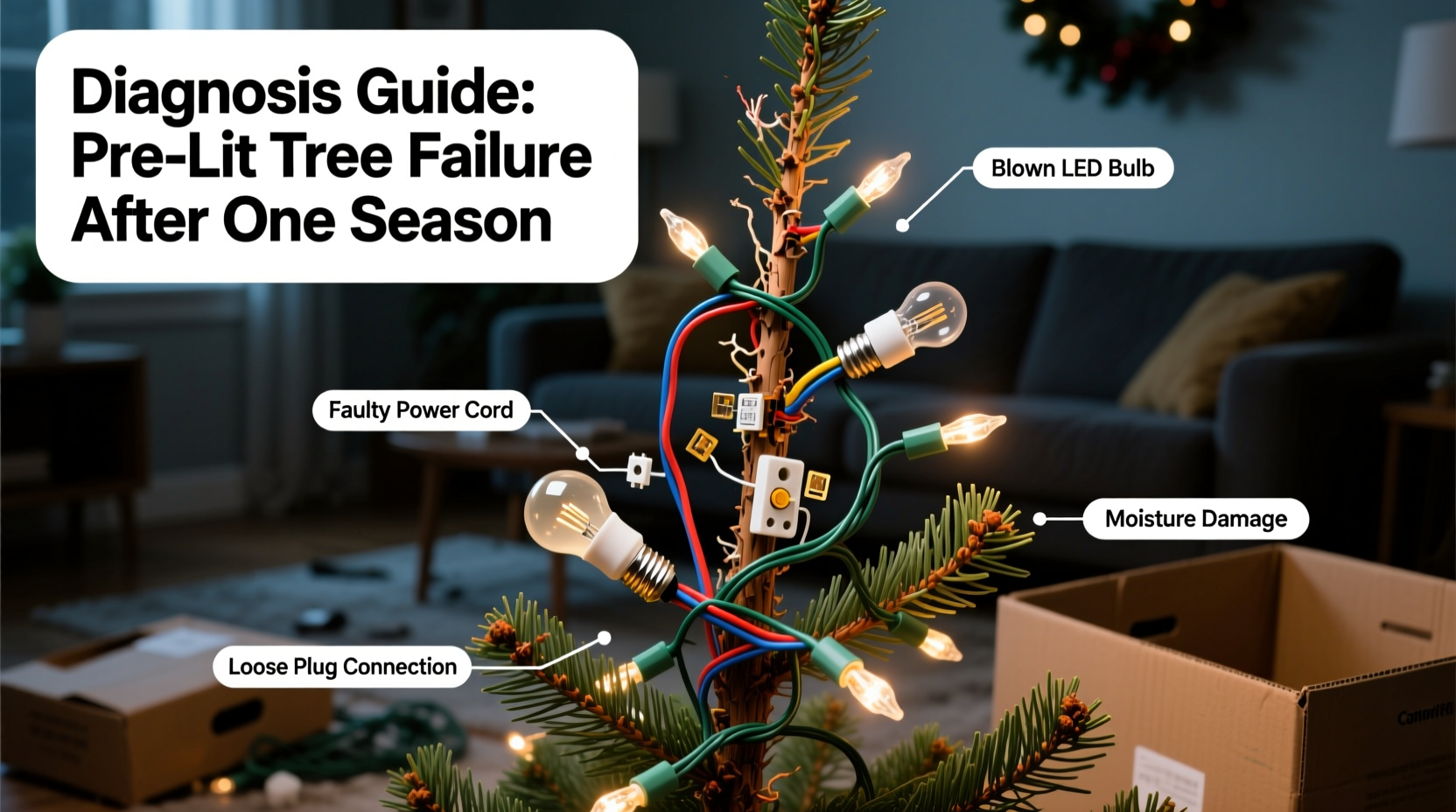
Pre-lit artificial trees come with hundreds or even thousands of LED or incandescent bulbs permanently wired into the branches. These lights are typically arranged in series circuits, meaning electricity flows from one bulb to the next. If one component fails, it can interrupt the entire circuit.
Most modern pre-lit trees use low-voltage LEDs powered by a central adapter or plug-in transformer. Older models may use incandescent bulbs wired directly into household current. The design prioritizes aesthetics and convenience but sacrifices some repairability. Unlike string lights you can replace, faulty wiring in a pre-lit tree often requires careful inspection and targeted fixes.
“Many people assume pre-lit trees are maintenance-free, but like any electrical product, they degrade over time—especially if stored improperly.” — David Lang, Holiday Lighting Technician with 15+ years of experience
Common Causes of Failure After One Season
Several factors can cause a pre-lit tree to stop working between seasons. While wear and tear is expected over years, failure after just one use points to specific vulnerabilities:
- Bulb burnout or dislodgement: A single burnt-out or loose bulb in a series circuit can break continuity.
- Frayed or pinched wires: Improper storage can crush or kink internal wiring, especially at branch joints.
- Power supply issues: Faulty plugs, damaged transformers, or tripped fuses in the cord end can cut power entirely.
- Moisture damage: Storing the tree in damp areas (like basements or garages) can corrode contacts and connections.
- Overheating: Incandescent models generate heat; poor ventilation during use can degrade insulation.
- Manufacturing defects: Some trees have substandard soldering or thin-gauge wiring prone to early failure.
Step-by-Step Diagnosis Guide
Follow this logical sequence to identify and resolve the issue:
- Verify power source: Plug another device into the same outlet to confirm it’s functional. Try a different outlet with the tree to rule out circuit issues.
- Inspect the power cord and plug: Check for fraying, kinks, or melted areas near the plug. Wiggle the cord near the base while plugged in—if lights flicker, there’s internal wire damage.
- Check the fuse compartment: Many pre-lit trees have small fuses inside the male plug. Use a screwdriver to open the compartment and examine the fuses. Replace with identical-rated fuses (usually 3A or 5A).
- Test individual sections: If your tree has multiple plugs or segmented lighting, test each section separately. This isolates the problem area.
- Look for loose or darkened bulbs: Remove bulbs one by one and check for blackening (sign of burnout) or looseness. Reseat each bulb firmly.
- Use a voltage tester or multimeter: Set to continuity mode. Test from the plug end back through the first few bulbs. No continuity means a break in the circuit.
- Trace wiring paths: Gently follow wires along major trunks. Listen for buzzing or smell for burning—indicators of short circuits.
- Examine connectors between sections: On multi-piece trees, the pole-to-section connectors can become misaligned or corroded. Clean metal contacts with isopropyl alcohol.
When to Suspect Internal Wiring Damage
If all bulbs are intact, fuses are good, and the plug works—but there's still no power—the fault likely lies in internal wiring. This commonly occurs at stress points: where branches bend, near the trunk hub, or at connection sleeves. Wires can snap internally without visible external damage.
In such cases, repair becomes complex. You may need to splice new wire segments or bypass damaged runs—a task best suited for those with electrical experience.
Tips for Extending Your Tree’s Lifespan
Prevention starts long after the holidays end. How you store and handle your tree determines its longevity far more than brand or price point.
Tip: Wrap branches in breathable cloth bags—not plastic—to reduce moisture buildup and allow air circulation during storage.- Disassemble carefully, avoiding sharp bends in lit branches.
- Store in a climate-controlled space above freezing and below 80°F (27°C).
- Keep away from rodents—use sealed containers or cedar-lined bins.
- Label cords and connectors for easier setup next year.
- Consider using a rotating tree stand with a skirt cover to minimize dust accumulation.
Do’s and Don’ts of Pre-Lit Tree Care
| Do’s | Don’ts |
|---|---|
| Unpack and test lights before decorating | Force branches into tight positions that pinch wires |
| Replace only manufacturer-recommended bulbs | Mix LED and incandescent bulbs on the same strand |
| Store in upright position when possible | Stack heavy items on top of packed tree boxes |
| Clean bulb sockets with dry cotton swabs annually | Use water or liquid cleaners near electrical components |
| Use surge protectors during display | Leave tree plugged in unattended for extended periods |
Mini Case Study: Sarah’s Silent Spruce
Sarah bought a 7.5-foot pre-lit fir tree in November 2022. It lit up beautifully throughout the holidays. She stored it in her garage, wrapped in a plastic tarp. When she retrieved it in December 2023, nothing worked.
She followed basic checks: tried different outlets, checked fuses (both were intact), and confirmed the extension cord was functional. Still no lights. Then she noticed a faint smell of mildew near the base. Upon closer inspection, corrosion had formed on the main connector ring where the bottom tier attached to the pole.
Using a cotton swab dipped in rubbing alcohol, she cleaned the metal contacts thoroughly. After reassembling and plugging in, the lower half lit up—but the top remained dark. Further testing revealed a broken wire inside the central pole conduit. Since replacement parts weren’t available, she contacted the manufacturer. Fortunately, her model was under a two-year warranty, and she received a free replacement tree.
Sarah now stores her new tree in a closet using breathable fabric storage bags and performs an annual visual inspection before setup.
Repair vs. Replace: Making the Decision
Not every failed pre-lit tree can—or should—be repaired. Consider these factors:
- Age of the tree: Trees older than 3–5 years may not justify extensive repairs.
- Extent of damage: One bad bulb? Fixable. Multiple broken circuits? Likely not worth the effort.
- Cost of replacement bulbs or kits: Some specialty bulbs cost $5–$10 each. If dozens are needed, replacement makes more sense.
- Warranty status: Register your tree immediately. Many brands offer 1–2 year coverage on lights.
- Emotional value: Heirloom or themed trees may be worth extra repair effort.
If you're technically inclined, consider retrofitting LED strip lights along key branches as a workaround. However, this alters the original design and may void any remaining warranty.
Frequently Asked Questions
Can I replace the entire light string on a pre-lit tree?
Technically yes, but it’s extremely labor-intensive. The wires are woven into the branches, so removing them usually damages foliage. Most owners opt for spot repairs or full replacement instead.
Why do only some sections of my tree light up?
This usually indicates a localized circuit break—often a loose bulb, damaged connector, or internal wire cut in that segment. Focus troubleshooting on the non-working section, checking bulbs and junction points.
Are LED pre-lit trees more reliable than incandescent ones?
Generally, yes. LEDs consume less power, produce minimal heat, and last significantly longer (often 25,000–50,000 hours). They’re also less prone to filament breakage from vibration during transport.
Final Checklist Before Next Storage Season
- Confirm all lights are functioning properly.
- Remove any ornaments or tinsel that could scratch wires.
- Allow tree to air-dry fully if cleaned.
- Pack branches loosely to avoid wire compression.
- Place silica gel packs inside storage containers to absorb moisture.
- Store in a labeled, upright container away from pests and temperature extremes.
- Take photos of connector types and cord lengths for future reference.
Conclusion: Keep the Light Alive
A pre-lit tree that fails after one season isn't necessarily defective—it may simply be a victim of improper handling or storage. With systematic diagnosis and preventive care, many issues can be resolved or avoided altogether. From checking fuses to protecting against moisture, small actions make a big difference in longevity.
Whether you choose to repair, replace, or upgrade to a more durable model, let this experience inform your next holiday setup. A little attention today ensures years of effortless sparkle tomorrow.
💬 Have a story about reviving your own pre-lit tree? Share your solution in the comments and help others troubleshoot their holiday hiccups!








