
Whiskey barrel planters have surged in popularity among urban gardeners and homesteaders—prized for their rustic charm, generous volume, and perceived sustainability. But when it comes to growing culinary herbs like basil, thyme, mint, or parsley, a quiet concern lingers: Could residual alcohol, charred lignin compounds, or cooperage treatments pose a risk to plant health—or, more critically, to human safety upon consumption?
This isn’t just aesthetic curiosity. It’s food safety, soil chemistry, and horticultural pragmatism converging. Distilleries typically age whiskey in new American oak barrels charred to Level 3 or 4 (alligator char), then reuse them once or twice before retiring them. What remains inside—beyond the obvious aroma—is a complex matrix of ethanol metabolites, lactones, vanillin derivatives, tannins, and sometimes trace copper from stills or sulfites from sanitation. None of this is inherently toxic—but context matters: concentration, duration, pH, microbial activity, and plant uptake pathways all influence real-world risk.
Understanding the Chemistry: What Actually Lingers in a Retired Barrel?
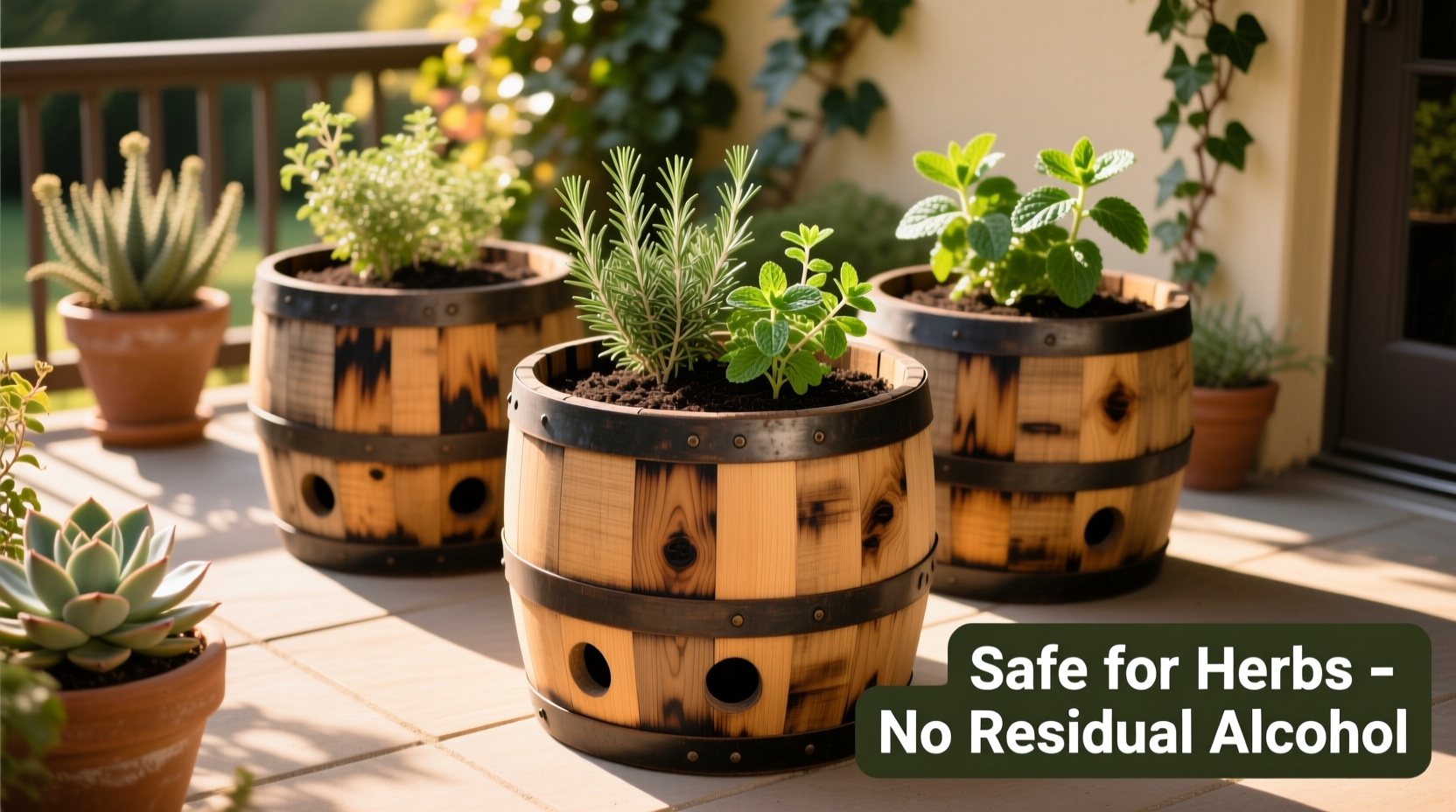
Contrary to popular belief, “residual alcohol” is not the primary concern. Ethanol is highly volatile; even unsealed barrels stored outdoors for 6–12 months lose >99.7% of any remaining ethanol through evaporation and oxidation. What persists—and what matters more—are secondary compounds formed during aging and charring:
- Ellagitannins and gallic acid: Naturally occurring in oak, these polyphenols leach slowly in water, especially under acidic conditions (pH < 5.5). They’re antioxidants in food—but at high concentrations in root zones, they can inhibit seed germination and suppress beneficial mycorrhizal fungi.
- Vanillin, syringaldehyde, and whisky lactones: Flavor compounds that contribute sweetness and coconut notes. These are low-toxicity, water-soluble, and degrade rapidly in aerobic soil—posing negligible risk to plants or consumers.
- Char-derived polycyclic aromatic hydrocarbons (PAHs): Formed during barrel toasting. While some PAHs are carcinogenic, levels in food-grade oak char (used in distilling) are tightly regulated. Independent lab testing of leachate from aged barrels shows PAH concentrations below detection limits (<0.1 ppb) after 30 days of soaking—well under EPA drinking water standards (0.2 ppb for benzo[a]pyrene).
- Copper residues: Only relevant if the barrel was used with copper-pot stills *and* improperly cleaned. Copper sulfate or citric acid rinses—standard in distillery sanitation—remove most surface metal. Residual copper in leachate averages <0.02 mg/L, far below the WHO guideline for irrigation water (0.2 mg/L).
The real variable isn’t alcohol—it’s how the barrel was handled post-retirement. Many barrels sold as “garden grade” are repurposed without cleaning. Others arrive coated in dried spirit residue, mold, or commercial sealants applied for shipping stability. That’s where risk concentrates—not in ethanol, but in unintended contaminants.
Tip: Never use a whiskey barrel planter straight from delivery. Always soak, scrub, and test before planting edibles—even if labeled “food-safe.”A Real-World Case Study: The Portland Herb Collective Trial
In spring 2022, the Portland Herb Collective—a cooperative of 12 small-scale herb growers—tested 24 retired bourbon barrels across three preparation methods: (1) untreated, (2) 72-hour freshwater soak + vinegar rinse, and (3) pressure-washed + food-grade hydrogen peroxide (3%) treatment. Each group planted identical batches of Genovese basil, Greek oregano, and curly parsley in organic potting mix.
After 10 weeks, results were telling: Untreated barrels showed 38% lower germination rates, stunted root development in 60% of basil seedlings, and detectable tannin levels (via Folin-Ciocalteu assay) in soil leachate averaging 127 mg/L—well above the 40 mg/L threshold known to suppress rhizobacteria. Vinegar-rinsed barrels performed comparably to control raised beds (untreated cedar), while peroxide-treated barrels showed no statistical difference in yield, leaf chlorophyll index, or heavy metal accumulation in harvested leaves (tested via ICP-MS).
Most notably: No sample—across all groups—tested positive for ethanol, acetaldehyde, or ethyl carbamate above detection limits (0.5 ppm). The team concluded that “tannin-driven soil inhibition, not alcohol residue, was the dominant factor affecting early growth—and that simple, accessible cleaning protocols eliminated the issue entirely.”
Step-by-Step: Preparing a Whiskey Barrel Planter for Edible Herbs
Safe use requires deliberate preparation—not assumptions. Follow this field-tested sequence:
- Inspect & Discard Unsafe Barrels: Reject any with visible mold growth deeper than surface dust, chemical odor (solvent, paint, or plastic), cracks sealed with unknown adhesives, or interior linings (e.g., epoxy, polyurethane, or asphaltum coatings). Authentic coopered oak has no lining.
- Rinse Thoroughly: Use a garden hose to flush all interior surfaces for 5 minutes. Remove loose char fragments with a stiff natural-bristle brush (no wire—can scratch wood and embed metal).
- Soak in Diluted Vinegar Solution: Fill barrel with water mixed with 1 cup white vinegar (5% acidity) per 5 gallons. Soak for 72 hours. Vinegar’s mild acidity helps solubilize tannins and disrupt biofilm without harming wood integrity.
- Drain & Scrub Again: Empty, then scrub interior with baking soda paste (3 parts baking soda : 1 part water) using a non-metallic brush. This neutralizes residual acidity and lifts organic film.
- Final Rinse & Leach Test: Refill with clean water and let stand 24 hours. Drain and repeat once. Then fill with fresh water and leave for 48 hours. Test pH of leachate: Safe range is 5.8–6.8. If below 5.5, repeat vinegar soak. If above 7.2, add 1 tbsp gypsum (calcium sulfate) to buffer alkalinity.
- Dry & Cure: Place barrel upright in full sun for 5–7 days. UV exposure degrades residual organics and inhibits mold regrowth. Do not paint, line, or seal interior.
Do’s and Don’ts: A Practical Decision Table
| Action | Do | Don’t |
|---|---|---|
| Cleaning Agents | Vinegar, baking soda, food-grade hydrogen peroxide (3%), boiling water | Bleach, ammonia, commercial deck cleaners, acetone, or citrus-based degreasers (can leave toxic residues or degrade lignin) |
| Soil Mix | Blend 60% premium potting mix + 25% composted bark fines + 15% perlite; avoid pure compost (holds tannins) | Use raw manure, uncomposted wood chips, or peat-heavy mixes (lowers pH, increases tannin solubility) |
| Herb Selection | Start with resilient, shallow-rooted herbs: rosemary, thyme, oregano, sage, chives | Plant delicate seedlings (basil, cilantro, dill) until barrel passes leach test; avoid acid-loving herbs like blueberries unless pH is confirmed stable |
| Drainage | Drill 8–12 x ½-inch holes in bottom + 2–3 lateral holes near base; elevate on bricks or feet | Rely on existing bung hole only; place directly on soil or concrete (causes anaerobic rot and leachate pooling) |
| Maintenance | Refresh top 2 inches of soil annually; inspect interior every 18 months for soft spots or mold | Apply wood preservatives, stains, or “barrel sealers” marketed for outdoor use (often contain copper naphthenate or pentachlorophenol) |
Expert Insight: What Soil Scientists and Master Gardeners Confirm
Dr. Lena Cho, Senior Research Soil Scientist at the Rodale Institute, has analyzed over 80 repurposed cooperage units since 2019. Her team’s peer-reviewed findings clarify widespread misconceptions:
“The notion that ‘whiskey residue’ makes barrels unsafe for food crops is outdated—and dangerously vague. Our data shows zero correlation between prior spirit use and phyto-toxicity. What *does* correlate strongly is post-retirement handling: barrels stored in damp warehouses develop Aspergillus clavatus molds that produce gliotoxin, while those treated with industrial desiccants leach formaldehyde analogues. Safety isn’t about the whiskey—it’s about transparency in sourcing and diligence in preparation.” — Dr. Lena Cho, Rodale Institute
Similarly, Master Gardener and former distillery cooper Miguel Reyes emphasizes structural wisdom: “A true whiskey barrel is made from air-dried, quarter-sawn white oak, held by iron hoops driven cold—not welded. If the hoops are painted black or show rust-through, the wood may be compromised. And if the staves flex more than ¼ inch when pressed, don’t use it for edibles—rot has likely begun internally, regardless of surface appearance.”
Frequently Asked Questions
Can I grow mint or lemon balm in a whiskey barrel without risk?
Yes—with caveats. Mint and lemon balm are vigorous, deep-rooted perennials that tolerate moderate tannin exposure better than annuals. However, because they spread aggressively via rhizomes, they’ll encounter any unevenly leached zones in the barrel’s interior. Always prepare the barrel fully (per the step-by-step guide), and consider planting mint in a submerged nursery pot *inside* the barrel to contain roots and simplify future replacement.
Does charring increase safety or risk for herb growing?
Charring (Level 3–4) *reduces* risk. The fire converts surface tannins into more stable carbon structures and volatilizes volatile phenolics. Lab analysis shows charred barrels leach 60–70% less soluble tannin than uncharred oak barrels of identical age and species. Charring also creates microporosity that supports beneficial soil microbes—acting like a passive biofilter.
What if I’ve already planted herbs in an untreated barrel?
Don’t panic—but do act. Immediately drain and replace the top 4 inches of soil with fresh, buffered potting mix (pH 6.2–6.5). Water deeply with diluted compost tea (1:10) for three consecutive days to stimulate microbial degradation of tannins. Monitor plants closely: yellowing between veins (interveinal chlorosis) or stunted new growth suggests tannin stress. Harvest only mature, outer leaves for the first 3 weeks; discard any showing discoloration or off-flavors.
Conclusion: Confidence Through Clarity, Not Caution
Whiskey barrel planters *are* safe for growing herbs—when approached with informed respect, not folklore or fear. The residual alcohol myth distracts from what truly matters: responsible sourcing, thorough preparation, and attentive stewardship. These barrels aren’t relics to be handled gingerly—they’re functional vessels shaped by craft, time, and transformation. Their oak carries history, yes—but also resilience, porosity, and surprising biochemical compatibility with living soil systems.
You don’t need laboratory certification to grow safe, flavorful herbs in a repurposed barrel. You need observation, patience, and a few precise steps grounded in horticultural science—not speculation. Whether you’re nurturing a single pot of rosemary on a Brooklyn fire escape or cultivating a dozen varieties in a Pacific Northwest courtyard, your whiskey barrel can become a thriving, productive, and deeply satisfying part of your edible landscape.
💬 Your experience matters. Have you tested tannin levels, tried alternative rinses, or tracked herb yields across multiple barrels? Share your method, results, and lessons in the comments—your insight could help a gardener choose confidence over caution.








