As the holidays approach, homes across the world begin transforming into festive wonderlands. At the heart of this seasonal shift lies the Christmas tree—a centerpiece adorned with ornaments that carry memories, traditions, and emotions. While modern designs offer sleek aesthetics and durability, vintage ornaments evoke a sense of timelessness and personal history. The question isn’t just about appearance; it’s about emotional resonance. Which type—vintage or modern—truly brings more nostalgia to holiday decor? The answer depends on memory, craftsmanship, family legacy, and sensory experience.
The Emotional Weight of Vintage Ornaments
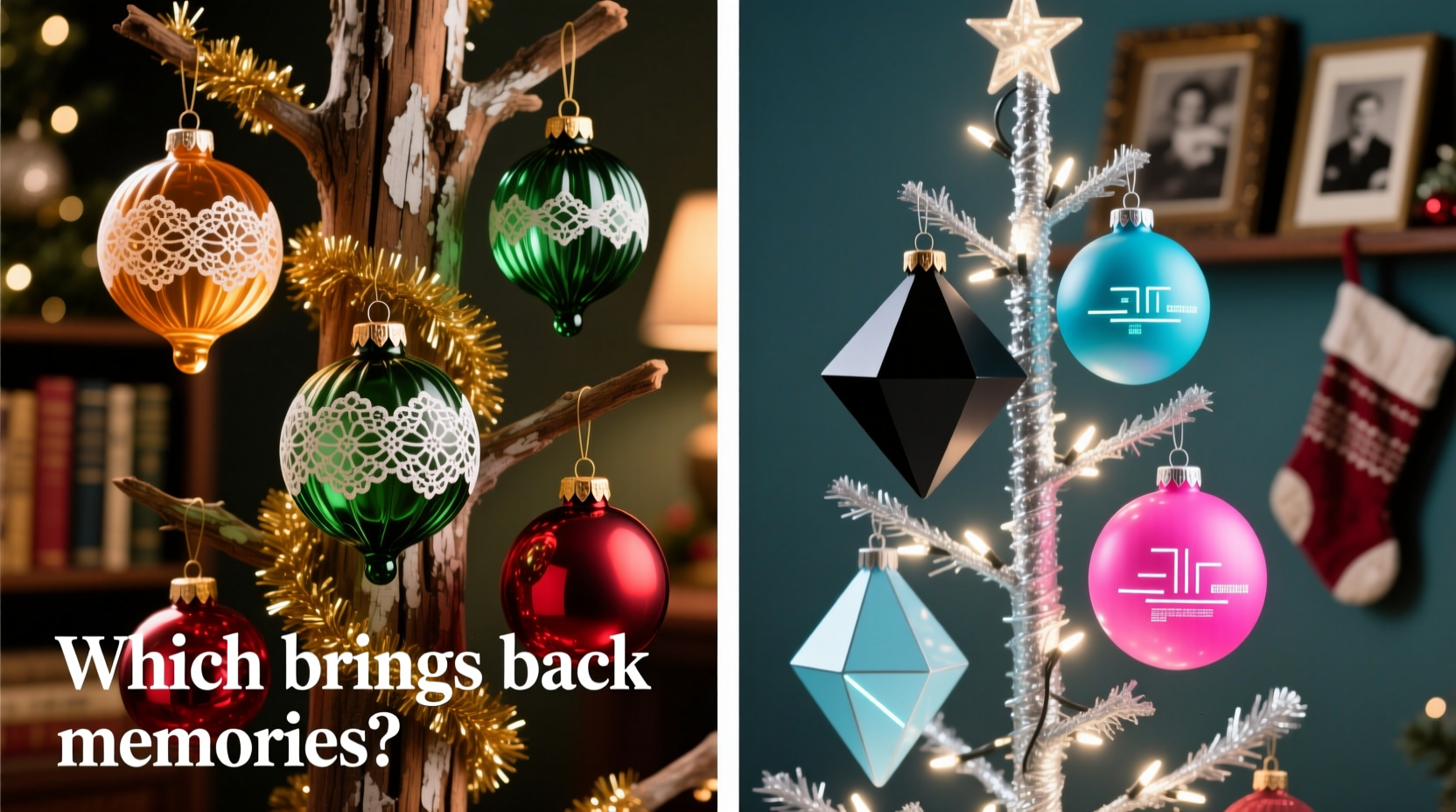
Vintage Christmas ornaments are often more than decorative items—they’re heirlooms. Passed down through generations, these pieces come with stories: a glass ball from Grandma’s first tree in 1952, hand-painted wooden angels crafted by a great-uncle during wartime, or delicate tinsel garlands that shimmered under candlelight before electric lights existed. These objects connect us to the past not just visually, but emotionally.
Many vintage ornaments were made using techniques no longer common today. Hand-blown glass from Germany’s Lauscha region, intricate paper filigree, and hand-stitched fabric stars reflect a level of artistry that mass production has largely replaced. Their imperfections—the slight asymmetry of a painted snowman, the faint crackle in aged lacquer—are not flaws, but marks of authenticity and age.
“Ornaments are emotional artifacts. A chipped glass bell isn’t broken—it’s lived.” — Dr. Helen Prescott, Cultural Historian & Author of *Decorating Memory: The Psychology of Holiday Tradition*
This sentiment resonates deeply during the holidays, when people seek comfort in continuity. Unpacking vintage ornaments each year becomes a ritual—carefully unwrapping tissue paper, identifying each piece by touch and sight, recalling who gave it and when. This tactile, deliberate process enhances nostalgia far beyond what modern convenience can replicate.
Tip: Store vintage ornaments in individual padded boxes or egg cartons to prevent breakage and preserve their condition for future generations.The Allure of Modern Ornaments
Modern Christmas ornaments bring innovation, variety, and accessibility. Available in materials like shatterproof plastic, silicone, and sustainable resins, they cater to families with children or pets, where safety and durability are priorities. Design trends now include minimalist metallic spheres, LED-lit figures, personalized photo baubles, and even smart ornaments synced to music or voice assistants.
These contemporary options allow for thematic consistency—think all-white Nordic trees, rustic farmhouse styles, or bold maximalist displays. Unlike vintage collections that evolve over decades, modern ornaments let homeowners curate a cohesive look in a single shopping trip. Customization is another major draw: names, dates, and inside jokes make today’s ornaments instantly meaningful, albeit in a different way than heirlooms.
Yet, despite their aesthetic appeal and functionality, modern ornaments often lack the patina of time. They may feel “new” in a way that distances them from deep emotional roots. A 3D-printed replica of a child’s handprint is touching in the moment, but will it carry the same weight in 30 years as a faded ceramic reindeer from the 1970s?
Comparing Nostalgic Impact: A Side-by-Side Analysis
| Feature | Vintage Ornaments | Modern Ornaments |
|---|---|---|
| Emotional Connection | High – tied to family history, memory, and tradition | Moderate – often momentary or event-based (e.g., \"Baby's First Christmas\") |
| Longevity | Variable – fragile but can last generations with care | Generally high – designed for durability and reuse |
| Uniqueness | Often one-of-a-kind or limited production | Mass-produced, though customization adds personal flair |
| Sensory Experience | Rich – texture, scent of old boxes, sound of glass chiming | Clean and consistent – uniform shapes, synthetic finishes |
| Nostalgia Factor | Strong – evokes personal and cultural memories | Emerging – may become nostalgic with time |
The table reveals a key insight: while modern ornaments excel in practicality, vintage ones dominate in emotional depth. Nostalgia isn’t just about looking old—it’s about feeling remembered. And vintage ornaments, by virtue of their history, naturally facilitate that.
A Real Family Tradition: The Miller Tree
The Millers of Portland, Oregon, have maintained the same Christmas tree tradition since 1963. Every December, they unpack a cedar tree from the attic—not the tree itself, but a handmade model constructed by the patriarch before he passed. The ornaments, however, are real: over 80 pieces collected or inherited across six decades.
Each ornament has a story. A slightly lopsided clay star was made by their eldest daughter in kindergarten. A silver dove with a bent wing survived a house fire in 1987. A German-made glass pickle, hidden each year, sparked playful competition among grandchildren.
When asked why they don’t upgrade to newer, safer decorations, matriarch Eleanor Miller responded, “The scratches tell our story better than anything store-bought ever could.” For the Millers, the tree isn’t just decorated—it’s narrated. The vintage ornaments serve as chapter headings in a living family memoir.
This example illustrates how nostalgia isn’t passive; it’s activated through interaction. Touching a fragile bell, retelling its origin, placing it just so—these actions deepen emotional engagement in ways that placing a new glitter ball simply cannot match.
Blending Eras: Creating a Balanced, Nostalgic Display
It doesn’t have to be an either/or choice. Many decorators find that combining vintage and modern ornaments yields the richest nostalgic effect. The key is intentionality.
Use vintage pieces as focal points—on lower branches where they’re easily seen, near lights to enhance their glow, or grouped by era or theme (e.g., all 1950s ornaments together). Surround them with simpler modern accents that don’t compete but complement: matte gold spheres, natural wood slices, or frosted white picks that echo mid-century palettes without overwhelming.
This hybrid approach honors the past while embracing the present. It also allows newer additions—like a custom ornament marking a wedding or birth—to gradually earn their place in the emotional hierarchy. Given time, today’s modern keepsakes may one day be cherished as vintage treasures.
Tip: Label the year and origin of new ornaments on small tags. Future generations will appreciate knowing which ones marked milestones.How to Build Nostalgia with Modern Ornaments
Even if you start with a fully modern collection, you can cultivate nostalgia deliberately. Time is the greatest ingredient, but ritual and storytelling accelerate the process.
- Create annual ornament traditions – Buy or make one special ornament each year as a family. Let each member choose or craft one that represents that year’s biggest joy.
- Document the stories – Keep a small journal or digital album noting when and why each ornament was added.
- Incorporate personal materials – Use fabric from baby clothes, pressed flowers from vacations, or printed quotes from loved ones.
- Repeat meaningful placements – Hang certain ornaments in the same spot every year to build familiarity.
- Tell the stories aloud – During tree-trimming, share the history behind key pieces with younger family members.
These practices transform modern ornaments from disposable decor into legacy objects. Over time, the plastic shell fades less in importance than the memory it represents.
Frequently Asked Questions
Can modern ornaments ever feel as nostalgic as vintage ones?
Yes—but only with time and emotional investment. A modern ornament gains nostalgia not from age alone, but from repeated association with love, loss, celebration, and belonging. A “First Christmas Together” ball may seem generic today, but in 20 years, it could be the most treasured piece on the tree.
Are vintage ornaments safe to use on modern trees?
Most are, with care. Use padded hooks instead of metal clips to avoid scratching glass. Avoid placing heavy or sharp-edged pieces near lights or on lower branches accessible to children or pets. Consider rotating fragile ornaments annually to reduce wear.
How do I start a vintage-style collection if I don’t have heirlooms?
Begin by sourcing authentic vintage ornaments from estate sales, antique shops, or reputable online sellers. Focus on eras or themes meaningful to your family history (e.g., your grandparents’ decade). Pair them with simple modern fillers to stretch the collection while maintaining a nostalgic tone.
Final Thoughts: Nostalgia Lives in the Details
When it comes to adding nostalgia to Christmas decor, vintage ornaments hold a clear advantage. Their age, imperfections, and embedded histories create an emotional gravity that modern designs struggle to match—at least initially. They are not merely decorations; they are relics of lived experience.
Yet modern ornaments aren’t devoid of sentimental potential. With mindful curation, storytelling, and repetition, today’s new baubles can evolve into tomorrow’s cherished heirlooms. The difference lies in patience and practice.
The most nostalgic trees aren’t defined solely by their ornaments’ age, but by the love invested in them. Whether hanging a 1940s Czechoslovakian glass bird or a 3D-printed model of your dog, what matters is the moment of pause—the breath before placement, the memory recalled, the whisper of “Remember when…?” That’s where nostalgia truly lives.
💬 What’s the most nostalgic ornament on your tree? Share its story in the comments and inspire others to cherish their own holiday memories.








