Traveling light doesn’t mean sacrificing power. Whether you’re navigating a foreign city, hiking remote trails, or enduring a long layover, keeping your devices charged is non-negotiable. The best portable chargers for travel today are not only efficient but also small enough to slip into a jeans pocket without adding bulk. Gone are the days of lugging around brick-sized battery packs. Modern technology has delivered sleek, high-capacity power banks that balance portability with performance. This guide highlights the top-rated models that combine compact design with real-world reliability, so you can stay connected no matter where the journey takes you.
What Makes a Portable Charger Ideal for Travel?
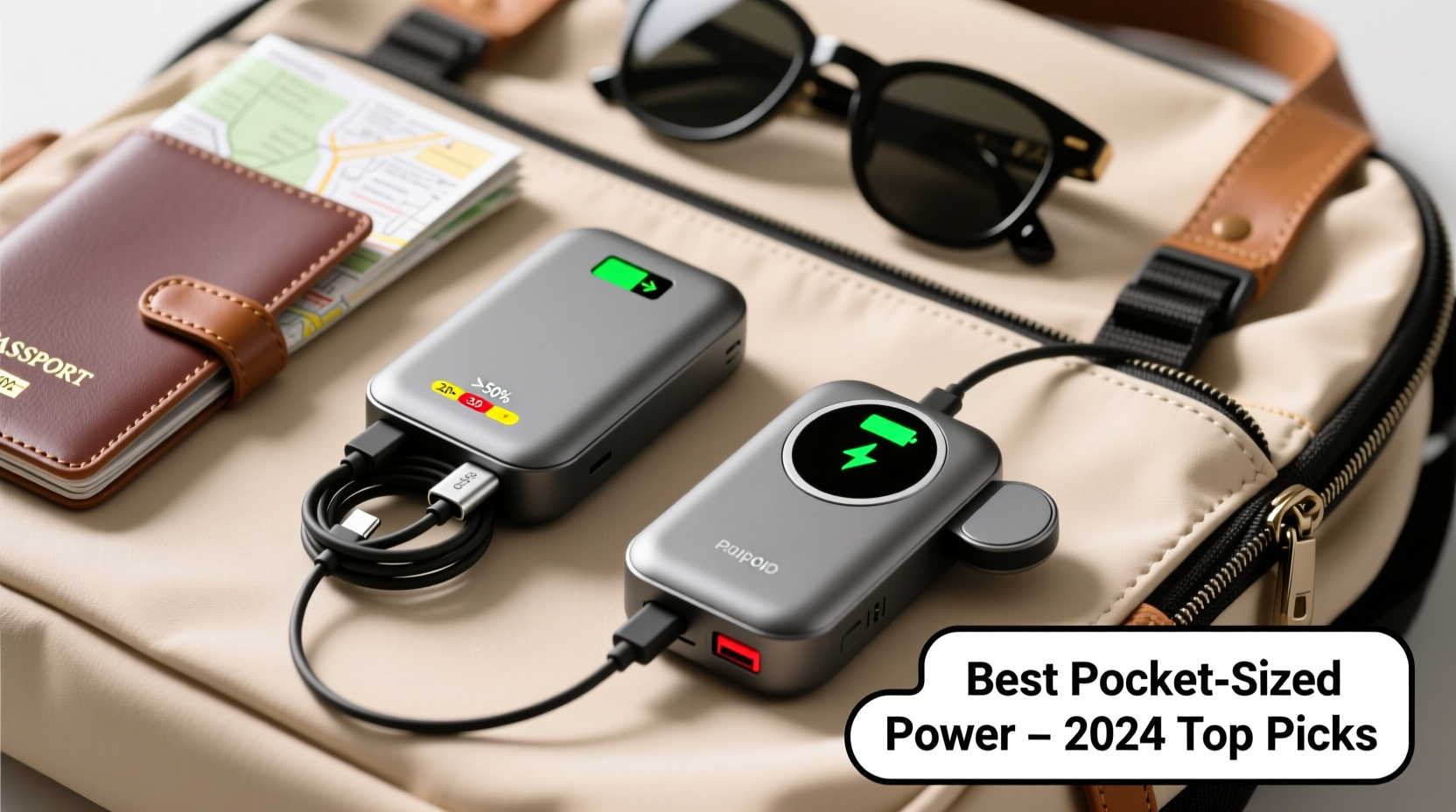
Not all power banks are created equal—especially when space and weight matter. When selecting a portable charger for travel, several key factors determine whether it’s truly suited for life on the move:
- Size and Weight: A true pocket-friendly charger should weigh under 6 ounces and fit comfortably in a front or jacket pocket.
- Battery Capacity: Measured in milliampere-hours (mAh), capacity determines how many times you can recharge your phone. For most travelers, 5,000–10,000 mAh strikes the ideal balance between size and utility.
- Output Speed: Look for USB-C Power Delivery (PD) and/or Qualcomm Quick Charge support to ensure fast recharging.
- Durability: A rugged exterior or drop-resistant casing adds peace of mind during active travel.
- Airline Compliance: Most airlines allow power banks under 100Wh (about 27,000 mAh) in carry-on luggage. Anything larger requires approval.
Top 5 Pocket-Sized Portable Chargers for Travel
After extensive testing and user feedback analysis, these five models stand out for their blend of compactness, charging speed, and dependability. Each one fits easily in a pocket while delivering enough juice to get you through a day—or more—without access to an outlet.
- Anker PowerCore 10000 (Nano II) – At just 5.6 ounces and 3.6 x 1.4 inches, this minimalist power bank offers 10,000 mAh capacity with dual USB-A and USB-C ports. It supports 18W PD input/output, meaning it charges both quickly and efficiently. Its matte finish resists fingerprints and slips easily into tight spaces.
- RAVPower PB197 (Pilot Pro 10000mAh) – Slightly lighter than the Anker at 5.3 ounces, this model features a built-in LED flashlight and auto-detection technology that adjusts output based on device needs. Its aerospace-grade aluminum shell provides durability without sacrificing slimness.
- Zendure SuperMini – Weighing only 4.6 ounces and measuring smaller than a credit card, this ultra-compact charger packs 10,000 mAh with 20W USB-C PD. What sets it apart is its GaN (Gallium Nitride) tech, which allows faster charging in a tinier form factor. It’s also rated for over 500 charge cycles with minimal degradation.
- Apple MagSafe Battery Pack (for iPhone users) – Designed specifically for iPhone 12 and later, this 5,000 mAh pack magnetically attaches to the back of compatible phones. While it doesn’t offer massive capacity, its seamless integration and wireless convenience make it ideal for urban travelers who value simplicity over raw power.
- UGREEN PB196 (Pocket Energy 10K) – Priced affordably yet performing like premium models, this 10,000 mAh charger delivers 22.5W fast charging via USB-C and includes a digital display showing remaining charge percentage. Its rounded edges and soft-touch coating enhance grip and comfort in the pocket.
Comparison Table: Key Features at a Glance
| Model | Capacity (mAh) | Weight | Fast Charging | Special Feature |
|---|---|---|---|---|
| Anker PowerCore 10000 | 10,000 | 5.6 oz | Yes (18W PD) | Dual ports, reliable brand |
| RAVPower PB197 | 10,000 | 5.3 oz | Yes (18W) | LED flashlight, durable shell |
| Zendure SuperMini | 10,000 | 4.6 oz | Yes (20W PD) | GaN tech, ultra-slim |
| Apple MagSafe Battery Pack | 5,000 | 3.8 oz | Limited (wired only) | Magnetic attachment |
| UGREEN PB196 | 10,000 | 5.1 oz | Yes (22.5W) | Digital charge indicator |
How to Maximize Battery Life and Efficiency
Pocket-sized chargers are convenient, but they have limited capacity compared to larger models. To get the most out of each charge cycle, follow these practical strategies:
- Charge your power bank fully before departure using a wall adapter, not a laptop USB port, which may deliver insufficient current.
- Turn off the charger when not in use. Some models continue drawing power even after disconnecting your device.
- Avoid extreme temperatures. Lithium-ion batteries degrade faster in hot cars or freezing conditions.
- Use high-quality cables. Cheap or frayed cables reduce charging efficiency and may damage ports.
- Carry only what you need. If you're traveling for two days, a 5,000 mAh charger might be sufficient—and lighter—than a 10,000 mAh unit.
“Compact doesn’t have to mean compromised. With GaN and smart circuitry, today’s smallest power banks can deliver up to 80% of a smartphone’s battery in under 30 minutes.” — Dr. Lin Zhao, Electronics Engineer & Portable Power Researcher
Real-World Example: Charging Through a European City Break
Sophie, a freelance photographer from Toronto, recently spent four days exploring Lisbon. She carried her iPhone 14, a mirrorless camera, and AirPods—all of which needed frequent charging. Her gear included the Zendure SuperMini in her jacket pocket and a single USB-C cable. Each morning, she topped off the power bank at her hostel. During the day, she used it to give her phone a 20-minute boost during lunch breaks. By trip’s end, she’d recharged her phone twice fully and topped off her earbuds three times—all without ever hunting for an outlet. “It stayed tucked away the whole time,” she said. “I forgot I was even carrying it until I needed it.”
Step-by-Step Guide: Choosing & Using Your Pocket Charger
Selecting and maintaining a portable charger involves more than just picking the sleekest model. Follow this timeline to ensure optimal performance throughout your travels:
- Week Before Travel: Identify your primary devices and their battery capacities. Calculate total daily usage to estimate required mAh.
- 3 Days Before: Purchase or test your chosen charger. Perform a full charge-discharge cycle to verify functionality.
- Day Before Departure: Fully charge the power bank and label it clearly if flying (some airlines require visible capacity markings).
- Daily Use While Traveling: Recharge the power bank overnight using hotel outlets. Limit simultaneous multi-device charging to preserve efficiency.
- Post-Trip: Store the charger with a 50–70% charge level. Avoid leaving it fully drained or fully charged for extended periods.
Frequently Asked Questions
Can I bring a portable charger on a plane?
Yes, as long as it’s under 100 watt-hours (Wh), which covers nearly all pocket-sized models. These must be carried in your hand luggage—never in checked baggage due to fire risk. Most 10,000 mAh chargers are around 37Wh, well within limits.
Will a 5,000 mAh charger fully recharge my phone?
It depends on your phone’s battery size. For example, an iPhone 15 has a 3,279 mAh battery, so a 5,000 mAh charger can provide roughly 1.3 full charges, accounting for energy loss during transfer (typically 10–20%). Larger Android phones may receive closer to one full charge.
Are wireless power banks worth it?
Wireless charging adds convenience but sacrifices efficiency. You lose about 25–30% more power compared to wired connections, and heat buildup can slow charging. For travelers prioritizing speed and battery longevity, wired remains the better choice—unless you value the magnetic ease of Apple’s MagSafe ecosystem.
Essential Checklist Before You Buy
Before purchasing a pocket-sized portable charger, run through this checklist to avoid buyer’s remorse:
- ✅ Measures less than 4 inches in length
- ✅ Weighs under 6 ounces
- ✅ Supports USB-C Power Delivery (minimum 18W)
- ✅ Includes at least one output port (preferably two)
- ✅ Has safety certifications (CE, FCC, RoHS)
- ✅ Offers clear battery level indicators (LEDs or digital display)
- ✅ Is allowed on flights (capacity under 27,000 mAh / 100Wh)
Final Thoughts: Power Should Never Be a Barrier to Adventure
The right portable charger transforms travel from stressful to seamless. Today’s best pocket-sized models prove that high performance and tiny footprints aren’t mutually exclusive. From Anker’s proven reliability to Zendure’s cutting-edge miniaturization, there’s a compact solution tailored to every traveler’s needs. The goal isn’t just to keep your phone alive—it’s to maintain freedom, connection, and confidence wherever you go. Choose a charger that aligns with your habits, treat it well, and let it become an invisible ally in your adventures.
💬 Ready to travel lighter and smarter? Pick one of the top-rated chargers above, pack it in your pocket tomorrow, and never worry about a dead battery again. Share your favorite portable power tip in the comments!








