Tiki mugs are more than ceramic vessels for rum cocktails—they’re cultural artifacts, miniature sculptures, and tangible fragments of mid-century American escapism. Born from the postwar tiki bar boom of the 1940s–1970s, these hand-painted, often whimsical ceramics evolved from novelty souvenirs into serious collectibles. Today, a single mint-condition 1950s Don the Beachcomber “Tiki God” mug can command over $3,500 at auction, while rare 1960s Trader Vic’s “Bali Hai” variants routinely sell for $1,200–$2,800. Yet value isn’t purely about price: it’s rooted in scarcity, provenance, craftsmanship, and historical resonance. Understanding what drives collectibility—and knowing where and how to search—separates casual admirers from discerning collectors.
What Makes a Tiki Mug Collectible?
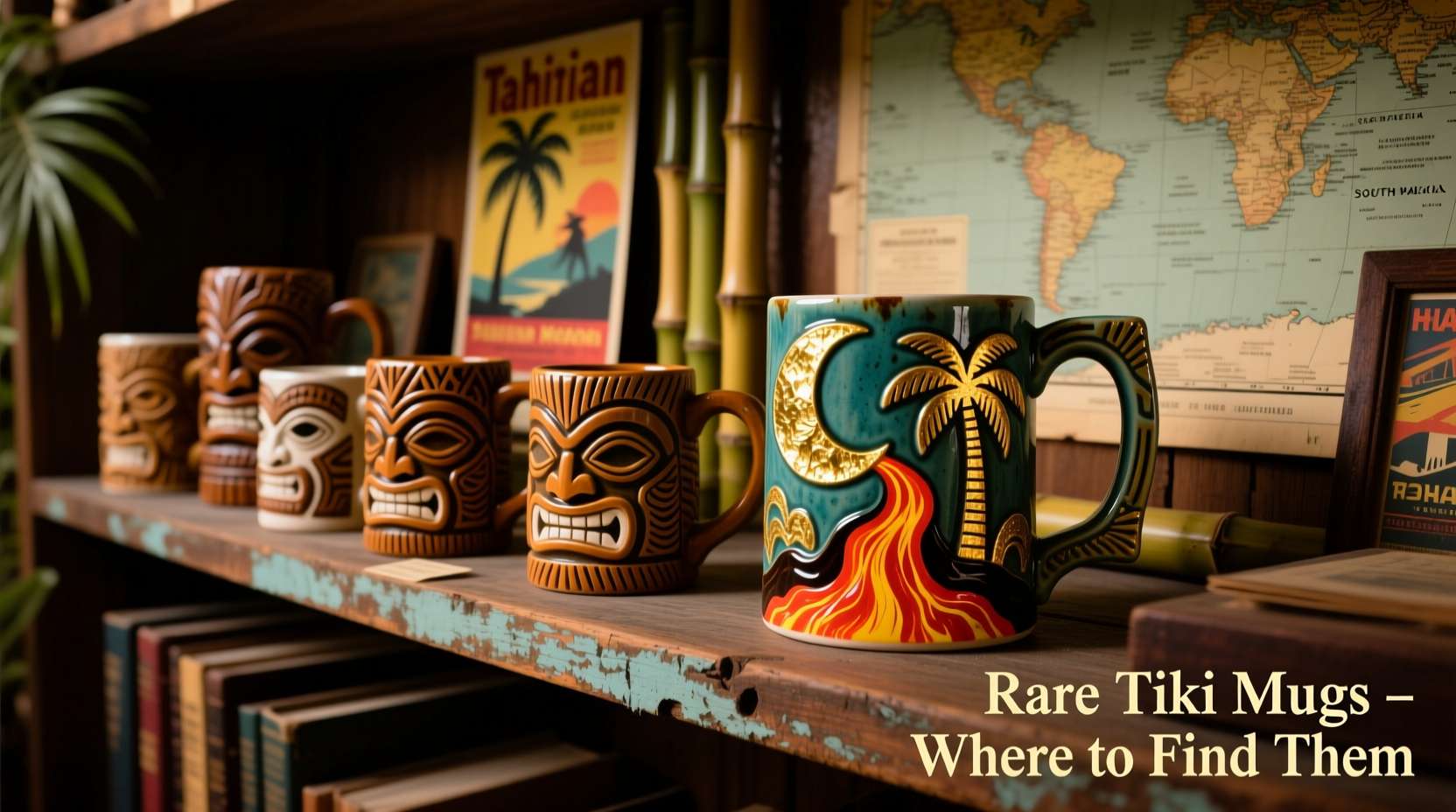
Collectibility emerges from the intersection of four interlocking criteria: rarity, condition, origin, and cultural significance. Rarity is not simply low production volume—it’s the confluence of short production runs, regional exclusivity, and attrition over time. Many early mugs were made by small California potteries like Otagiri Ceramics or Gladding, McBean & Co., with no inventory records kept. A mug produced exclusively for a single bar (e.g., the 1959 “Kon-Tiki” mug for the now-defunct Kon-Tiki Lounge in San Diego) may have had fewer than 200 units made—and only a handful survive today.
Condition is non-negotiable. Unlike vintage glassware, tiki mugs rarely survive decades without chips, hairline cracks, or glaze wear—especially on high-contact areas like rims and bases. Collectors prioritize “Mint+” condition: no visible flaws under natural light, original glaze intact, and no restoration. Even a 1mm chip on the rim can reduce value by 40–60%. Provenance adds another layer: mugs with documented ownership history (e.g., part of a known dealer’s estate collection or accompanied by original bar signage) carry premium authenticity weight.
Cultural significance anchors value in narrative. Mugs tied to iconic establishments—Don the Beachcomber, Trader Vic’s, or the Mai-Kai—hold outsized appeal. The 1957 “Kava Bowl” mug, designed for Trader Vic’s New York location and featuring a carved wooden base, is revered not just for its scarcity (fewer than 50 known examples), but for symbolizing the height of tiki’s mainstream legitimacy.
Rare Designs You Should Know (and Why They Matter)
While thousands of tiki mug designs exist, fewer than 120 are widely recognized as “blue-chip” collectibles by experts at the Tiki Central Collectors Guild and the Museum of Tiki Arts. These fall into three tiers:
- Tier I (Ultra-Rare): Less than 50 known surviving examples. Includes the 1948 “Papa Hooey” mug (Don the Beachcomber’s first signature mug, hand-thrown by founder Ernest Gantt), the 1955 “Sailor Jerry” mug (designed by Norman Collins before his tattoo fame, never commercially released), and the 1962 “Polynesian Village” mug (produced exclusively for Walt Disney World’s abandoned Polynesian Village Resort concept).
- Tier II (Highly Scarce): 50–300 known survivors. Examples include the 1959 “Bali Hai” mug with gold-leaf trim (only issued to VIP guests at Trader Vic’s Chicago), the 1964 “Mai-Kai Scorpion Bowl” (a 12-inch communal mug with hand-painted coral motifs), and the 1971 “Tiki Ranch” mug (featuring a cartoonish cowboy-tiki hybrid, sold only at a single Las Vegas lounge that closed after 11 months).
- Tier III (Emerging Rarities): 300–1,000 known survivors. These gain traction through design innovation or unexpected resurgence—like the 1968 “Atomic Tiki” series (glazed with uranium oxide, now highly regulated and difficult to verify), or the 1973 “Hawaiian Punch” line (mass-produced but largely destroyed due to lead-glaze recalls).
Where to Find Authentic Rare Mugs: A Strategic Guide
Authenticity is the greatest risk in tiki collecting. Counterfeits—especially of Tier I mugs—have flooded online marketplaces since 2018. Reproductions often mimic glaze textures using modern kilns, but lack the subtle imperfections of vintage hand-dipping: uneven thickness, slight warping, or mineral speckling in the clay body. To source reliably, follow this prioritized pathway:
- Specialized Collector Conventions: The annual Tiki Oasis convention in San Diego and The Hukilau in Fort Lauderdale host vetted dealer rooms. Every vendor must submit provenance documentation and undergo pre-show authentication by the Tiki Collectors Association (TCA). This remains the safest environment for high-value purchases.
- Reputable Auction Houses with Tiki Specialists: Skinner Inc. (Boston), Rago Arts (Lambertville, NJ), and Leslie Hindman (Chicago) employ ceramics appraisers trained in mid-century pottery identification. Their catalogs include X-ray fluorescence (XRF) reports verifying glaze composition and clay sourcing—critical for detecting uranium-based or lead-free reproductions.
- Legacy Dealer Networks: Established dealers like “The Tiki Tank” (operating since 1992) and “Island Glass & Pottery” (founded 1987) maintain private client lists and rarely list Tier I pieces publicly. Building relationships through convention attendance or newsletter signups is essential.
- Regional Estate Sales (with Due Diligence): Southern California, Hawaii, and Florida yield the highest concentration of original tiki collections. Use platforms like Estatesales.net and filter for “bar memorabilia,” “vintage ceramics,” or “tropical decor.” Always request photos of the mug’s base stamp, interior glaze, and any markings before bidding.
- Online Marketplaces (Use with Extreme Caution): eBay and Etsy require forensic scrutiny. Demand high-resolution macro photos of the base stamp, glaze pooling in crevices, and underside texture. Avoid listings with stock images, vague descriptions (“vintage tiki mug”), or sellers with no tiki-specific feedback history.
Authentication Essentials: A Practical Checklist
Before acquiring any mug priced above $250, complete this verification checklist. Skipping even one step increases fraud risk exponentially.
- ✅ Base Stamp Analysis: Vintage mugs bear manufacturer stamps (e.g., “Gladding McBean,” “Otagiri,” “Made in USA” in script). Reproductions often misalign text or use laser-etched fonts.
- ✅ Clay Body Inspection: Hold the mug under bright light. Original pieces show subtle porosity and iron flecks in unglazed areas; reproductions appear uniformly dense and smooth.
- ✅ Glaze Depth Test: Examine the interior rim. Authentic glazes pool slightly and show subtle color variation; fakes display uniform, overly glossy coverage.
- ✅ Weight & Balance: A genuine 1950s “Tiki God” weighs 1.2–1.4 lbs. Replicas often weigh 0.8–1.0 lbs due to thinner walls and lighter clay.
- ✅ Provenance Paper Trail: Request original sales receipts, dealer invoices, or exhibition records—even photocopies add credibility.
| Red Flag | What It Likely Indicates | Action Required |
|---|---|---|
| “Hand-painted” listed without specifying artist or era | Generic description masking reproduction | Request macro photo of brushstroke direction and pigment texture|
| No visible base stamp or “Made in USA” marking | Post-1980 import or unmarked replica | Reject unless accompanied by lab-tested XRF report|
| Price significantly below market average (e.g., $400 for a documented “Bali Hai”) | High probability of counterfeit or damaged piece | Walk away—true rarities rarely discount|
| Seller refuses video call inspection | Intentional obfuscation of flaws | Disqualify immediately
Real-World Example: The “Kon-Tiki Lounge” Rediscovery
In early 2022, San Diego collector Marta Lin discovered a box of ceramics while clearing her late uncle’s garage. Among garden pots and chipped dinnerware sat six mugs stamped “Kon-Tiki Lounge • San Diego • Est. 1959” on the base, each with unique hand-painted surfboards and palm fronds. Unsure of their worth, she posted low-res photos to the Tiki Central forum. Within hours, veteran collector and author Sven Kirsten identified them as the legendary “Kon-Tiki Six”—a set commissioned for the lounge’s opening and thought lost after its 1963 closure.
Kirsten advised Lin to contact the Tiki Collectors Association for formal authentication. Using archival photos from the San Diego History Center and comparing glaze chemistry with samples from the TCA’s reference library, experts confirmed the mugs’ authenticity. Each sold at Skinner Auctions’ December 2022 “Tiki & Tropicalia” sale for between $1,850 and $2,300. Crucially, Lin’s decision to consult specialists—not jump to eBay—preserved their full value. As Kirsten notes: “A mug isn’t rare until it’s verified. Documentation transforms curiosity into legacy.”
“The most valuable tiki mug isn’t the one you paid the most for—it’s the one whose story you can tell with confidence. Provenance is the currency of trust.” — Sven Kirsten, author of *Tiki: Modern Tropical Design* and founding curator of the Museum of Tiki Arts
Frequently Asked Questions
How do I know if my mug is a reproduction or original?
Start with the base stamp: authentic mugs from major producers (Gladding McBean, Otagiri, Vernon Kilns) used distinct serif fonts and consistent placement. Reproductions often feature generic sans-serif stamps or omit country-of-origin markings entirely. Next, examine the glaze under magnification: originals show micro-bubbling and subtle color gradation; fakes appear unnaturally uniform. When in doubt, consult the Tiki Collectors Association’s free authentication service—they maintain a database of 3,200 verified base stamps.
Are newer “limited edition” mugs worth collecting?
Yes—but with caveats. Contemporary releases from artists like Jeff “Swank” Loomis or the Tiki Farm collective hold value only if they meet three conditions: (1) production capped at ≤200 units, (2) accompanied by numbered certificates signed by the artist, and (3) distributed exclusively through official channels (not mass retailers). Most “limited” mugs sold on Amazon or Big Lots lack these attributes and depreciate rapidly.
Can I restore a chipped mug without destroying its value?
No. Restoration—whether epoxy fill, paint touch-up, or re-firing—immediately classifies a mug as “repaired” in collector terminology, reducing value by 70–90%. Even professional ceramic restoration (used by museums) renders a piece ineligible for top-tier auctions. Preservation is always superior to repair: store upright in padded boxes, avoid stacking, and never use abrasive cleaners.
Conclusion: Build Your Collection With Intention
Collecting tiki mugs is not about amassing objects—it’s about stewarding stories. Each mug embodies a moment when Americans sought refuge in imagined Pacific paradises, expressed through bold color, tactile clay, and irreverent humor. The rarest pieces aren’t merely scarce; they’re emissaries from vanished worlds: shuttered lounges, discontinued cocktail menus, and designers whose names faded from history. When you acquire a verified “Tiki God” or trace a “Kon-Tiki Six” mug back to its 1959 debut, you’re not buying ceramic—you’re inheriting custodianship.
Begin with education, not acquisition. Study manufacturer marks. Attend a Tiki Oasis dealer room—not to buy, but to observe. Join the Tiki Collectors Association and read their quarterly journal, *The Tiki Review*. Handle mugs with cotton gloves, document every piece in a digital archive, and prioritize condition over quantity. The most respected collections aren’t the largest; they’re the most rigorously sourced, ethically preserved, and deeply contextualized.
💬 Your story matters. Have you uncovered a rare mug in an attic or inherited a family collection? Share your experience—and your questions—in the comments. Let’s grow this community with knowledge, not speculation.








