Marie, the charming lavender-furred kitten from Disney’s *The Aristocats*, has become one of the most beloved characters in the Disney plush lineup. Her signature bow, delicate features, and sweet expression make her a favorite among collectors and gift-givers alike. However, as demand for the Marie plush rises, so does the number of counterfeit versions flooding online marketplaces. Distinguishing an authentic Disney Marie cat plush from a fake can be difficult—especially when product photos look convincing at first glance. This guide equips you with the knowledge, tools, and checklists needed to confidently identify genuine Disney merchandise and protect your purchase.
Why Authenticity Matters
An authentic Disney plush is more than just a toy—it’s a piece of licensed merchandise crafted to meet strict quality and safety standards. Counterfeit plush toys may use subpar materials, lack proper stitching, or even contain harmful substances not suitable for children. Beyond safety concerns, authenticity affects value, especially for collectors. A genuine Disney item retains its worth over time, while knockoffs lose appeal quickly.
Disney invests heavily in character design and licensing control. As such, official plush toys are manufactured under rigorous supervision. When you buy authentic, you support ethical production and ensure consistency in quality.
“Licensed Disney products undergo multiple rounds of quality assurance—from fabric safety to seam durability. Fakes often skip these steps entirely.” — Lydia Tran, Toy Safety Analyst at Consumer PlayWatch
Key Features of an Authentic Disney Marie Plush
To spot a real Marie cat plush, focus on specific physical and branding details. These characteristics are consistent across all officially licensed Disney plush toys.
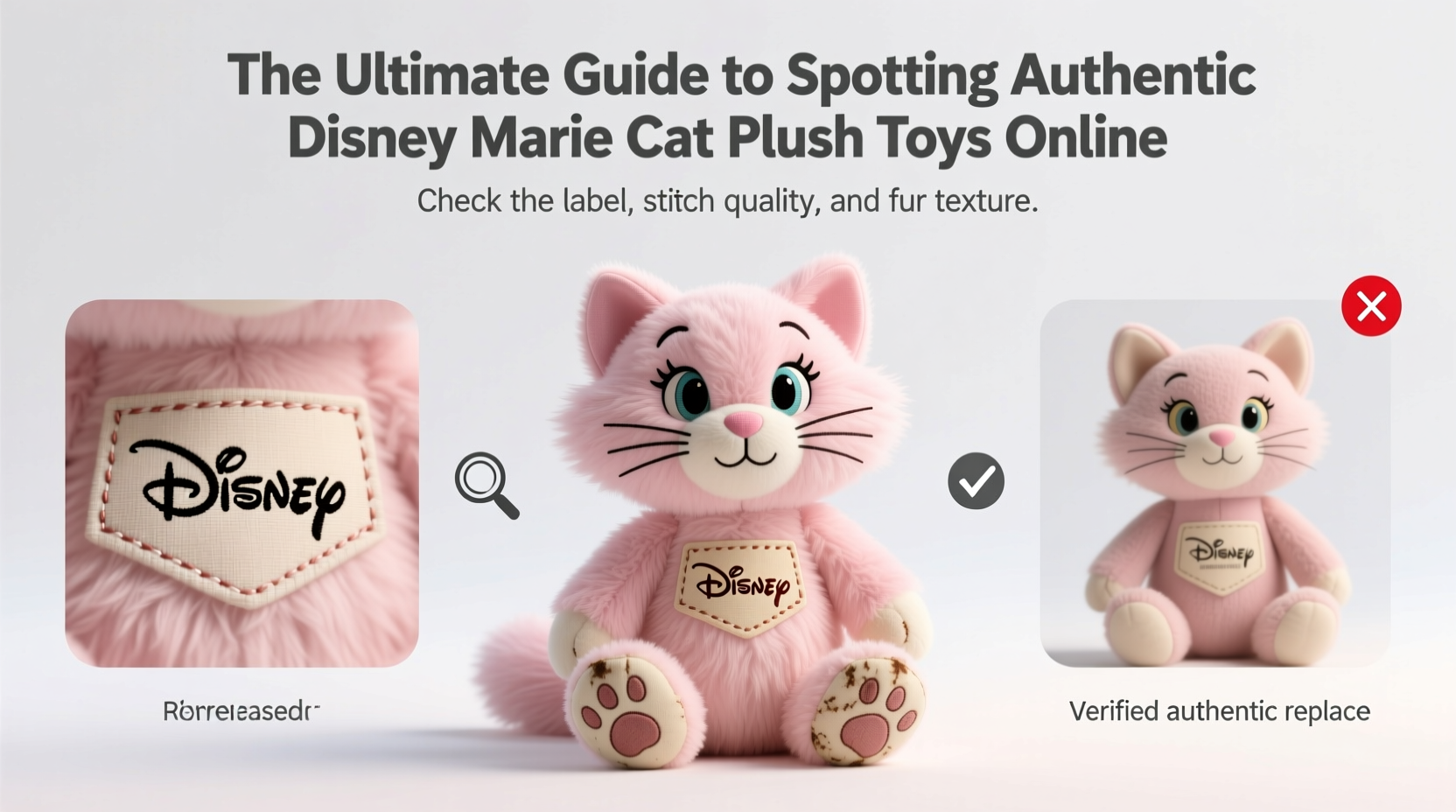
- Official Disney Label: Every authentic plush includes a sewn-in label with “Disney” or “Made Under Authorization by The Walt Disney Company,” along with a country of origin and care instructions.
- Holographic Security Tag: Many newer releases include a holographic tag or barcode that can be verified through Disney’s authenticity portal (if available).
- Fur Quality: Genuine Marie plushes use soft, evenly trimmed plush fur. Counterfeits often use coarser, uneven, or overly shiny fabric.
- Facial Details: The eyes are precisely placed, embroidered (not glued), and symmetrical. The nose and mouth stitching is neat and consistent.
- Bow Design: The iconic pink bow has a satin-like finish, secure stitching, and often includes subtle embossed Disney logos on the ribbon backing.
- Proportions: Official Marie plushes maintain accurate body proportions—large head, petite paws, and a fluffy tail. Fakes may appear misshapen or bloated.
Where to Buy—and Where to Be Cautious
Purchase location plays a major role in determining authenticity. Even if a listing looks legitimate, third-party sellers on large marketplaces can slip counterfeit items through the cracks.
| Seller Type | Authenticity Risk | Recommended? |
|---|---|---|
| ShopDisney (official site) | Very Low | Yes – highest confidence |
| Authorized retailers (e.g., Target, Amazon – sold by Disney) | Low | Yes – verify seller name |
| Third-party sellers (eBay, Etsy, Wish) | High | Only with strong reviews and return policies |
| Unbranded websites with deep discounts | Extremely High | No – likely counterfeit |
Always check who the actual seller is—not just the platform. On Amazon, for example, look for “Ships from and sold by Amazon.com” or “Sold by The Walt Disney Company.” Avoid listings labeled “Fulfilled by Amazon” but sold by unknown third parties.
Step-by-Step Verification Process
Follow this sequence when evaluating a potential purchase:
- Inspect Product Images: Zoom in on photos. Look for crisp embroidery, clean seams, and clear Disney labels. If no close-ups are provided, request them.
- Check Seller Credentials: Research the seller’s history, ratings, and return policy. Avoid those with vague profiles or limited feedback.
- Review Product Title and Description: Authentic listings will mention “genuine,” “licensed,” or “official Disney product.” Vague terms like “inspired by” or “style of” are red flags.
- Compare Pricing: If the price is significantly below retail (e.g., $15 instead of $30+), it’s likely fake. Disney rarely offers deep discounts on new plushes.
- Examine Packaging: Upon delivery, check for branded boxes, polybags with security seals, and instruction tags. Counterfeits often arrive in plain plastic or wrinkled packaging.
- Feel and Inspect: Touch the fur, check stitching tightness, and locate the Disney label. Flip the plush and examine the back seams—they should be tight and uniform.
Real Example: A Collector’s Close Call
Jamie, a Disney memorabilia collector from Portland, once purchased a “limited edition” Marie plush from a popular auction site. The photos looked flawless, and the seller had a 4.8-star rating. But when the package arrived, she noticed several inconsistencies: the bow was slightly off-center, the fur felt stiff, and the label only said “Disney Collection” without the official authorization line. She contacted Disney Customer Service with the item number and received confirmation that it was not a licensed product. Jamie returned the plush and now uses a checklist before every purchase—saving her hundreds in potential losses.
Tip: Save copies of your order details and photos of the unopened package. This helps if you need to file a dispute.Do’s and Don’ts at a Glance
| Do | Don't |
|---|---|
| Buy from ShopDisney or authorized retailers | Trust listings with stock photos only |
| Look for the official Disney sewn label | Assume “new in box” means authentic |
| Compare your plush to verified images online | Ignore mismatched colors or sloppy stitching |
| Contact Disney customer service to verify if unsure | Keep counterfeit items—report them instead |
Frequently Asked Questions
How can I verify a Disney plush if there's no hologram?
Not all Disney plushes include holograms, especially older or smaller models. Focus on the sewn-in label, fabric quality, and facial details. You can also call Disney Consumer Products at 1-800-821-8200 and provide the item number for verification.
Are vintage Marie plushes harder to authenticate?
Yes. Older plushes may have faded labels or different tag designs. Compare your item to archived images from trusted collector forums or databases like DisneyStuffGuide.com. Look for consistent trademarks and manufacturing codes.
What should I do if I receive a fake?
Immediately contact the seller and platform (e.g., eBay, Amazon) to report the item. Request a full refund and file a complaint with Disney’s anti-piracy team via Disney Permissions. Providing evidence helps prevent others from being scammed.
Final Checklist Before Buying
- ✅ Is the seller officially authorized by Disney?
- ✅ Does the product description mention “licensed” or “genuine”?
- ✅ Are high-resolution images showing labels and stitching included?
- ✅ Is the price consistent with retail value?
- ✅ Does the plush match known authentic features upon arrival?
Stay Informed, Stay Protected
The world of Disney collectibles is joyful and nostalgic—but it’s also targeted by counterfeiters. By learning the details that define authenticity, you protect not only your investment but also the integrity of your collection. Whether you're buying for a child, a fan, or yourself, taking a few extra minutes to verify a plush can save disappointment later.
💬 Have you spotted a fake Marie plush? Share your experience in the comments to help others stay alert.