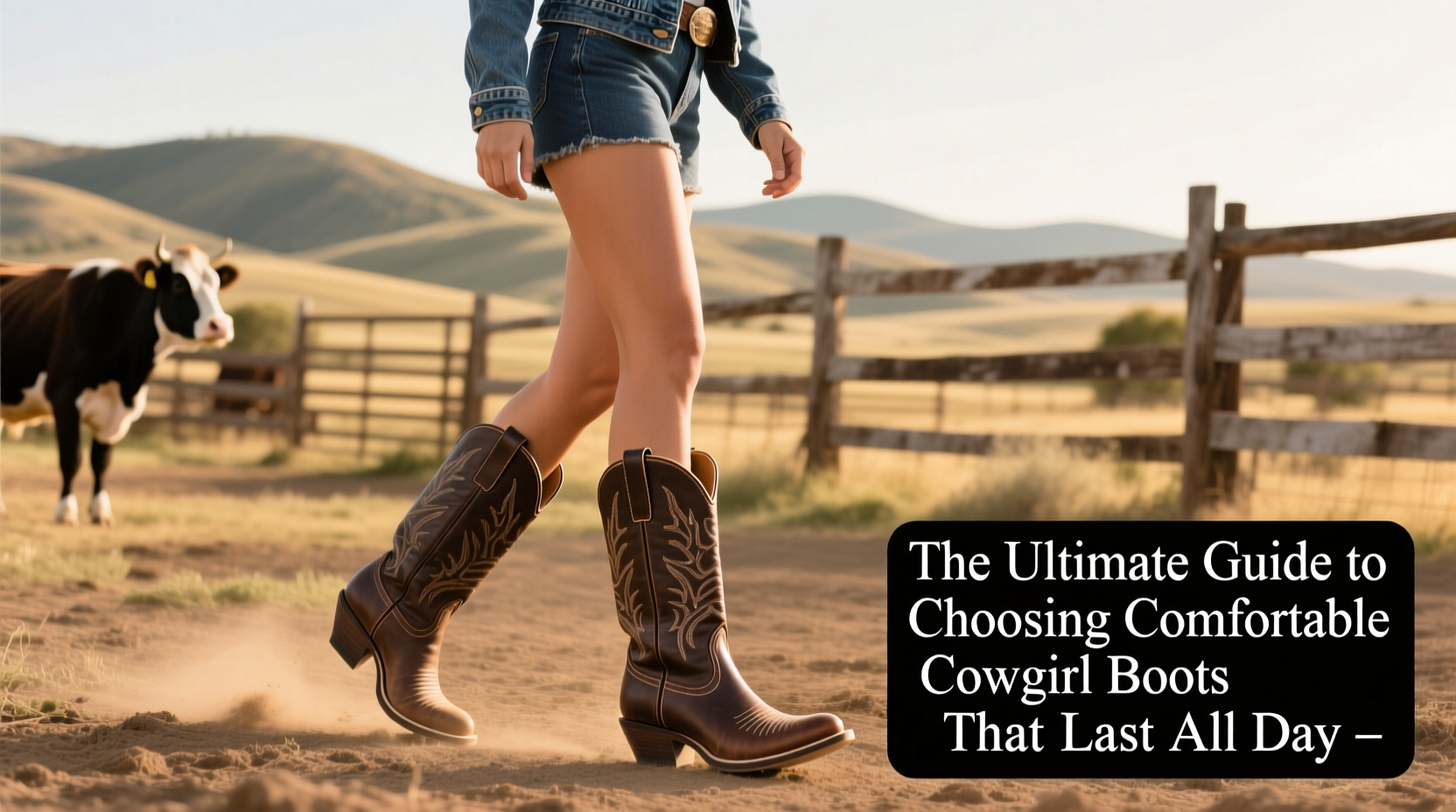
Cowgirl boots are more than just a fashion statement—they're a functional staple for ranchers, equestrians, and style-conscious women who value durability and comfort. But too often, beautiful boots come at the cost of foot fatigue, blisters, or premature wear. The truth is, with the right knowledge, you can find a pair that supports your feet from sunrise to sunset without sacrificing longevity or style. This guide breaks down what really matters when selecting cowgirl boots built for comfort and endurance.
Understand the Anatomy of a Comfortable Boot
The foundation of long-wearing comfort lies in the boot’s construction. Not all cowgirl boots are made equal—especially when it comes to internal structure and support. Key components include:
- Outsole: Should provide grip and shock absorption. Rubber soles offer better traction and cushioning than leather soles, especially on concrete.
- Midsole: A cushioned midsole (often made of EVA or polyurethane) reduces impact during extended standing or walking.
- Insole: Look for removable, contoured insoles with arch support. Some premium brands offer orthotic-friendly designs.
- Heel height and pitch: A moderate heel (1.5” to 2”) with a slight forward pitch encourages natural posture and reduces calf strain.
- Vamp and shaft fit: The shaft should hug the calf snugly without pinching, while the vamp (toe box area) allows room for toe movement.
Material Matters: Leather vs. Exotics vs. Synthetics
The material of your cowgirl boots directly affects breathability, flexibility, and lifespan. While aesthetics play a role, performance should take priority for all-day wear.
| Material | Pros | Cons | Best For |
|---|---|---|---|
| Full-Grain Leather | Durable, molds to foot over time, breathable | Stiff initially, higher price point | All-day workwear, frequent riders |
| Exotic (Snake, Alligator) | Luxurious look, lightweight | Less flexible, requires specialized care | Occasional wear, dressy events |
| Synthetic (PU/Vinyl) | Affordable, easy to clean | Poor breathability, prone to cracking | Budget buyers, short-term use |
| Oil-Tanned Leather | Soft out of the box, water-resistant | Requires conditioning to prevent drying | Ranch work, wet environments |
Leather remains the gold standard. Over time, quality leather conforms to your foot shape, reducing pressure points and increasing comfort. Avoid bonded leather or vinyl if you plan to wear your boots daily.
“Boots aren’t meant to be broken in like torture devices. If it hurts on day one, it’s not going to get better—it’s a sign of poor fit or construction.” — Dana Reeves, Western Footwear Specialist & Ranch Owner
Fit Like a Pro: How to Size Cowgirl Boots Correctly
Finding the right fit is where most buyers go wrong. Unlike athletic shoes, cowgirl boots follow different sizing conventions and require attention to multiple dimensions.
Key Fit Considerations
- Length: Your toes should rest at the end of the boot without pressing against the front. There should be minimal slippage at the heel (no more than ¼ inch).
- Width: Standard widths vary by brand. If your foot feels squeezed across the ball, consider wide-calf or wide-toe options.
- Calf circumference: Measure your calf at its widest point. Many manufacturers offer narrow, regular, and wide calf options.
- Arch support: Flat-footed individuals benefit from boots with built-in arches or removable insoles for custom orthotics.
Brands like Tony Llama, Ariat, and Corral have expanded their size ranges, including half-sizes and wide widths, making it easier to find a true fit.
Tip: Always try boots on with the socks you plan to wear. Thick wool socks change fit significantly compared to thin liners.Step-by-Step Guide to Choosing Durable, All-Day Boots
Selecting the perfect pair doesn’t have to be overwhelming. Follow this five-step process to ensure lasting comfort and value.
- Define your primary use: Are you riding horses, working outdoors, or attending events? Purpose determines sole type, shaft height, and material.
- Measure your feet and calves: Use a tape measure and ruler to record length, width, and calf girth. Refer to brand-specific sizing charts.
- Test for flexibility: Bend the boot at the ball of the foot. It should flex naturally—not stiffly or excessively.
- Check the heel counter: Press on the back of the heel. A firm counter provides ankle stability and prevents wobbling.
- Walk in them: Take slow steps, then quick turns. Listen for squeaks, feel for pinch points, and assess overall balance.
Real-World Example: Sarah’s Search for Ranch-Ready Boots
Sarah, a third-generation rancher from central Texas, spent years enduring sore feet in stylish but impractical boots. She needed something she could wear during 12-hour days feeding livestock, mending fences, and checking pastures. After trying several budget pairs that cracked within months, she invested in a pair of Ariat Heritage Ropers with Duratread outsoles and a cushioned EVA midsole.
“The difference was immediate,” she says. “I didn’t need to ‘break them in’—they were supportive from the first day. Three years later, they’re still my go-to, just resoled once.” Her experience underscores the value of prioritizing function without sacrificing authenticity.
Maintain Longevity with Proper Care
No matter how high-quality your boots are, neglect will shorten their life. Regular maintenance preserves appearance, structural integrity, and comfort.
Monthly Care Checklist
- Wipe down with a damp cloth after each use.
- Condition leather every 4–6 weeks to prevent drying and cracking.
- Use a boot tree or rolled towel to maintain shape during storage.
- Store in a cool, dry place away from direct sunlight.
- Rotate between two pairs if worn daily to allow ventilation.
Frequently Asked Questions
Can I wear cowgirl boots every day?
Absolutely—if they’re designed for daily wear. Look for features like cushioned insoles, flexible soles, and breathable linings. Rotate pairs to extend lifespan.
How do I know if my boots are too tight?
If you experience numbness, tingling, or deep indentations on your skin after removal, the fit is too tight. Persistent heel slippage or toe jamming are also red flags.
Do expensive boots last longer?
Not always—but higher-priced boots often use superior materials and construction methods like Goodyear welted soles, which allow resoling. Invest in craftsmanship, not just branding.
Final Thoughts: Comfort and Longevity Go Hand in Hand
Choosing cowgirl boots that last all day isn’t about luck—it’s about informed decisions. From understanding leather types to testing fit and committing to care, every step contributes to a pair that supports your lifestyle for years. Whether you're chasing calves at dawn or dancing under string lights at dusk, your boots should keep up without costing you in pain or replacements.
💬 Found your perfect pair? Share your go-to brand or fit tip in the comments below—help fellow cowgirls walk comfortably through every season!








