When it comes to keeping children and adults meaningfully occupied, few activities rival the appeal of hands-on crafting and construction. Two popular choices—Stitch building blocks and general DIY craft kits—offer distinct experiences that cater to different interests, age groups, and attention spans. While both promote creativity and cognitive development, they differ significantly in structure, replayability, and long-term engagement. Understanding these differences helps parents, educators, and gift-givers choose the option that will hold interest the longest.
The Nature of Engagement: Open-Ended vs. Project-Based Play
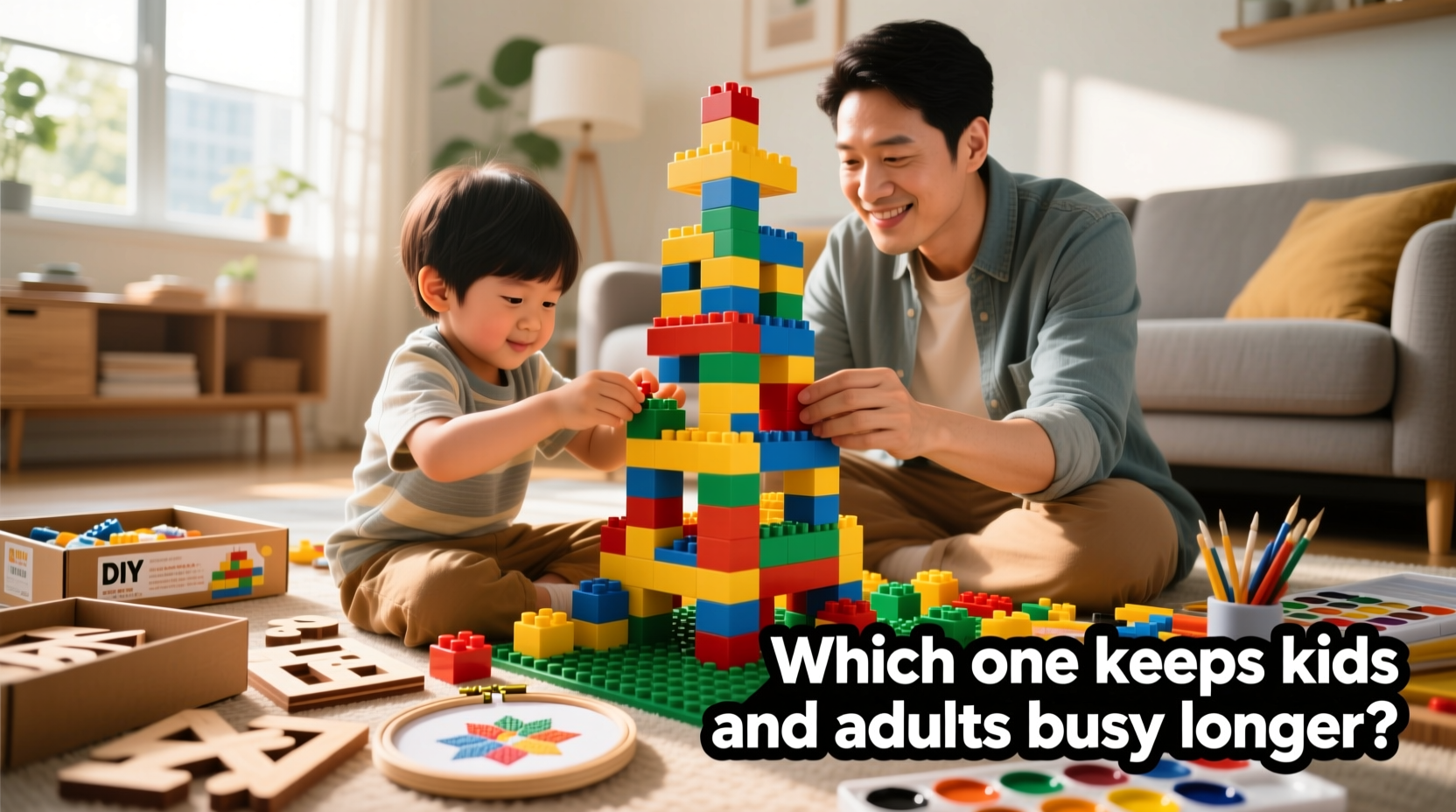
At the core of the comparison lies a fundamental distinction in how each activity sustains attention. Stitch building blocks, inspired by modular construction systems, emphasize open-ended play. They allow users to build freely, deconstruct, and rebuild without predefined goals. This flexibility encourages experimentation, spatial reasoning, and sustained creative thinking over time.
In contrast, most DIY craft kits follow a project-based model. These kits typically include step-by-step instructions for making specific items—beaded jewelry, embroidered patches, or paper models. The satisfaction comes from completing a tangible product. However, once the project is finished, the activity ends unless the user chooses to start another kit.
Tip: For maximum longevity, pair structured craft kits with open-ended materials like extra beads or fabric scraps to encourage post-project creativity.Duration of Use: Replayability and Long-Term Value
Replayability is a key factor in determining how long an activity holds attention. Stitch building blocks score highly here. Because they are not tied to a single outcome, users can return to them repeatedly with new ideas. A child might build a spaceship one day and a castle the next. Adults may use them for prototyping designs or as stress-relief tools during breaks.
DIY craft kits, while enjoyable, often have a finite lifespan per unit. Once the included materials are used up and the project completed, the kit no longer serves its original purpose. Refill packs or additional kits must be purchased to continue, which increases cost and reduces accessibility over time.
“Open-ended toys like building blocks support deeper cognitive engagement because they evolve with the user’s imagination.” — Dr. Lena Torres, Child Development Researcher, University of Michigan
Comparative Analysis: Key Factors at a Glance
| Factor | Stitch Building Blocks | DIY Craft Kits |
|---|---|---|
| Play Duration | Indefinite (reusable components) | Limited (single-use materials) |
| Creativity Level | High (open-ended design) | Moderate (guided creation) |
| Skill Development | Fine motor, spatial reasoning, problem-solving | Fine motor, following instructions, pattern recognition |
| Average Cost Over Time | Lower (expandable system) | Higher (requires new kits) |
| Suitability for Mixed Ages | High (scalable complexity) | Moderate (often age-specific) |
| Storage & Portability | Requires organized storage | Compact, self-contained |
Real-World Example: The Weekend Project That Lasted Months
In suburban Chicago, the Miller family introduced both Stitch building blocks and a series of themed craft kits to their two children, ages 7 and 10. Initially, the craft kits were a hit—the glow-in-the-dark bracelet set was completed in under two hours, followed by a painted wooden puzzle. Excitement faded quickly after completion.
The Stitch blocks, however, became part of daily life. What began as simple towers evolved into a modular cityscape spanning the living room floor. Over six weeks, the children added moving parts, labeled buildings, and even created storylines for miniature figures. The parents noticed increased collaboration, verbal planning, and persistence when structures collapsed. Unlike the craft kits, which gathered dust after use, the blocks remained in active rotation for months.
This case illustrates a broader trend: structured crafts deliver short bursts of focused activity, while open-ended systems foster sustained engagement through evolving challenges.
Step-by-Step Guide to Maximizing Engagement
To get the most out of either option—or both—consider this practical approach:
- Assess the user’s interests: Does the individual prefer following instructions or exploring freely? This determines whether a craft kit or building system is a better starting point.
- Start with a foundational set: Choose a mid-sized Stitch block collection or a versatile craft kit (e.g., embroidery + fabric pieces) to avoid overwhelm.
- Encourage documentation: Take photos of builds or finished crafts. This reinforces accomplishment and inspires future projects.
- Introduce challenges: Pose questions like “Can you build a bridge that holds five blocks?” or “Make a wearable item using only recycled materials?”
- Rotate and combine: Alternate between building and crafting weekly. Combine elements—use crafted decorations on block-built structures.
- Expand thoughtfully: Add expansion packs only when interest persists, ensuring continued motivation rather than clutter.
Expert Insight: Why Open-Ended Play Endures
Child psychologists emphasize that unstructured, imaginative play is critical for emotional regulation and executive function. Building systems like Stitch blocks naturally facilitate this kind of play. Unlike craft kits, which conclude with a finished product, blocks invite iterative thinking—failure is part of the process, not the end of it.
“The moment a child rebuilds a collapsed tower, they’re learning resilience, physics, and planning—all disguised as fun.” — Dr. Alan Prescott, Developmental Psychologist
This intrinsic feedback loop—build, test, adjust—keeps users mentally invested far longer than linear instruction-following allows.
When DIY Craft Kits Shine
It would be unfair to dismiss craft kits entirely. They excel in specific contexts:
- Skill-specific learning: Sewing, knitting, or circuitry kits teach precise techniques that building blocks cannot replicate.
- Short-duration settings: Ideal for travel, waiting rooms, or classroom filler activities lasting 30–60 minutes.
- Tangible takeaways: Completed crafts make meaningful gifts or decorations, reinforcing pride in work.
- Sensory variety: Textiles, glue, scents, and textures provide tactile richness absent in plastic blocks.
For individuals who thrive on completion and visible results, craft kits offer immediate gratification that supports confidence and focus.
FAQ
Can Stitch building blocks be used alongside craft kits?
Absolutely. Many families combine both by using crafted accessories—like felt flags or paper signs—to enhance block-built environments. This hybrid approach boosts creativity and extends engagement.
Are DIY craft kits suitable for adults?
Yes, especially advanced kits involving embroidery, model-making, or electronics. Adult-oriented craft subscriptions have surged in popularity as mindful, screen-free hobbies. However, their completion-based nature means ongoing investment is required to maintain interest.
Which option is better for group activities?
Stitch building blocks are superior for collaborative play. Multiple users can contribute simultaneously to a shared structure. Craft kits are typically individual projects, though team challenges (e.g., “build the tallest tower”) can introduce cooperation.
Final Recommendation: Choose Based on Longevity Goals
If the goal is to keep kids and adults occupied for extended periods with minimal repetition, Stitch building blocks are the clear winner. Their reusable, open-ended design supports evolving play patterns, repeated use, and intergenerational interaction. They grow with the user, adapting to changing skill levels and interests.
DIY craft kits serve best as supplements—excellent for teaching specific skills, providing quick wins, or offering variety. But as standalone options, they lack the enduring appeal of systems that invite continuous reinvention.
💬 Have you tried both Stitch blocks and craft kits at home? Share your experience—what held your family’s attention the longest? Your insights could help others make smarter, more engaging choices.








