After an intense workout, your body craves restoration. Muscles ache, inflammation rises, and fatigue sets in. Recovery isn’t just about rest—it’s about active support. Two popular tools stand out: the steam shower and the traditional sauna. Both have loyal followings, but which one truly supports faster, deeper recovery after exercise? The answer depends on physiology, personal tolerance, and specific training goals.
This article breaks down the mechanisms, benefits, and drawbacks of each method. We’ll examine temperature, humidity, circulation, muscle repair, and long-term use—backed by research and real-world application. Whether you're a weekend warrior or a competitive athlete, understanding these differences can help you optimize your recovery strategy.
How Heat Therapy Aids Post-Workout Recovery
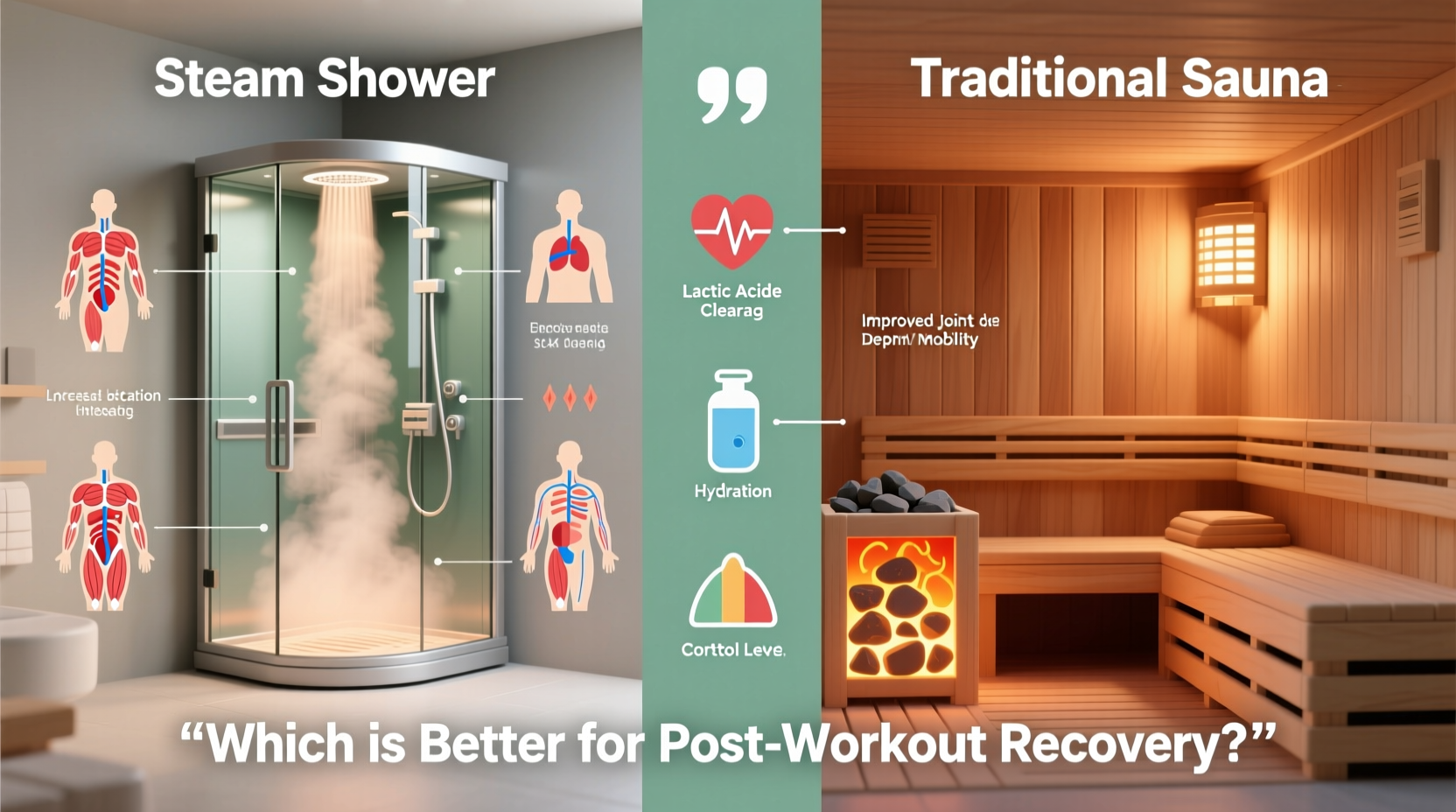
Heat therapy has been used for centuries to promote healing. After physical exertion, applying heat helps dilate blood vessels, increasing circulation to fatigued muscles. This enhanced blood flow delivers oxygen and nutrients while flushing out metabolic waste like lactic acid. Additionally, heat reduces muscle stiffness and joint pain, easing soreness and accelerating tissue repair.
The two primary forms of heat therapy in modern wellness are moist heat (steam) and dry heat (sauna). While both elevate core temperature and stimulate similar physiological responses, their delivery methods produce different effects on the body.
“Passive heat exposure post-exercise can significantly reduce delayed onset muscle soreness (DOMS) and improve perceived recovery.” — Dr. Lena Torres, Sports Physiologist at Nordic Institute of Human Performance
Understanding Steam Showers: Moist Heat in Action
A steam shower uses a generator to produce 100% humid, warm air—typically between 110°F and 115°F (43°C–46°C). Unlike a regular hot shower, it fills an enclosed space with dense vapor, creating a tropical microclimate. The high humidity allows heat to penetrate the skin more gently than dry environments.
Because moisture conducts heat efficiently, steam showers induce sweating at lower temperatures. This makes them accessible to individuals who may not tolerate extreme dry heat. The moist environment also soothes respiratory passages, potentially benefiting those with mild congestion or exercise-induced bronchoconstriction.
From a recovery standpoint, steam promotes relaxation of soft tissues. Warm, damp air loosens tight connective tissue and eases muscle spasms. It may be particularly effective after strength training or high-resistance workouts that cause localized tension.
Tip: Limit steam sessions to 15–20 minutes post-workout to avoid overhydration of the skin and excessive fluid loss.Traditional Saunas: Dry Heat and Deep Penetration
Traditional saunas—especially Finnish-style models—operate at much higher temperatures, typically between 160°F and 200°F (70°C–95°C), with low humidity (10–20%). Heated rocks radiate dry warmth, often intensified by pouring water to create bursts of steam (known as \"löyly\").
Dry heat penetrates deeper into muscle tissue due to reduced resistance from ambient moisture. This leads to a more pronounced increase in core body temperature, triggering a stronger cardiovascular response. Heart rate can rise by 50–75%, mimicking light aerobic activity and boosting circulation without movement.
Studies show that repeated sauna use increases heat shock proteins (HSPs), which play a role in cellular repair and protection against oxidative stress. One study published in the *Journal of Science and Medicine in Sport* found that athletes using saunas after endurance training experienced faster clearance of creatine kinase—a marker of muscle damage—compared to controls.
Saunas also stimulate the parasympathetic nervous system after initial stress, promoting deep relaxation and improved sleep quality—both critical for recovery.
Comparative Analysis: Steam Shower vs Traditional Sauna
To determine which modality suits post-workout recovery best, consider key variables: temperature, humidity, physiological impact, accessibility, and individual health factors. Below is a detailed comparison.
| Feature | Steam Shower | Traditional Sauna |
|---|---|---|
| Temperature Range | 110–115°F (43–46°C) | 160–200°F (70–95°C) |
| Humidity Level | Near 100% | 10–20% |
| Primary Sensation | Moist, enveloping warmth | Dry, intense heat |
| Cardiovascular Response | Moderate heart rate increase | Significant heart rate elevation |
| Sweating Onset | Rapid, due to humidity | Slower, but profuse |
| Muscle Relaxation | Good for surface tension | Deep tissue penetration |
| Respiratory Effect | Opens airways; soothing | May irritate sensitive lungs |
| Recovery Time Impact | Mild reduction in DOMS | Stronger evidence for faster recovery |
| Accessibility | Easier for heat-sensitive users | Requires acclimatization |
While both options offer benefits, the traditional sauna appears to have a slight edge in scientific literature regarding measurable recovery outcomes. However, individual preference and health conditions heavily influence effectiveness.
Real-World Application: A Runner’s Recovery Routine
Consider Marcus, a 34-year-old marathon runner preparing for a major race. His weekly routine includes four hard runs, two interval sessions, and consistent strength work. For years, he relied solely on ice baths for recovery—but found them increasingly stressful on his joints and mood.
At his coach’s suggestion, Marcus began alternating between steam showers and traditional saunas. On days with heavy leg work, he used the sauna for 15 minutes post-run, followed by light stretching. He noticed reduced hamstring tightness and better sleep. On upper-body strength days, he switched to steam, appreciating how the moist heat eased shoulder tension from weight training.
Over three months, Marcus reported fewer instances of DOMS and quicker readiness for back-to-back long runs. Blood tests showed consistently lower inflammatory markers compared to previous training cycles. While not a controlled experiment, his experience reflects broader trends among endurance athletes adopting heat therapy strategically.
Step-by-Step Guide to Using Heat Therapy Post-Workout
To maximize recovery benefits safely, follow this structured approach regardless of which method you choose:
- Cool Down First: Spend 5–10 minutes walking or doing gentle mobility work to normalize heart rate and prevent blood pooling.
- Hydrate: Drink 16–20 oz of water before entering any heat environment to offset fluid loss.
- Start Low and Slow: Begin with 8–10 minute sessions, especially if new to heat therapy. Gradually increase duration up to 20 minutes.
- Choose Based on Workout Type:
- Use sauna after endurance or full-body strength workouts for systemic circulation boost.
- Use steam after localized resistance training or when dealing with stiff joints.
- Monitor Your Body: Exit immediately if you feel dizzy, nauseous, or excessively fatigued.
- Cool Gradually: After exiting, sit quietly for 5 minutes. Avoid cold plunges immediately after sauna unless part of a contrast therapy protocol.
- Rehydrate and Refuel: Consume electrolyte-rich fluids and protein within 30 minutes post-session.
Expert Recommendations and Common Misconceptions
Despite growing popularity, several myths persist about heat-based recovery. One common belief is that sweating “detoxifies” the body. In reality, detoxification is primarily handled by the liver and kidneys. Sweat contains minimal toxins—mostly water, salt, and trace minerals.
Another misconception is that longer sessions equal better results. Overexposure can lead to dehydration, dizziness, or even heat exhaustion. Quality matters more than duration.
“The goal isn’t to endure the most heat possible, but to induce a mild thermal stress that activates repair pathways without overwhelming the system.” — Dr. Arjun Patel, Integrative Sports Medicine Specialist
Experts agree that consistency trumps intensity. Regular, moderate heat exposure yields cumulative benefits, including improved mitochondrial function and enhanced antioxidant defenses—both vital for long-term athletic performance.
Checklist: Choosing the Right Option for You
Not sure whether a steam shower or traditional sauna fits your recovery needs? Use this checklist to decide:
- ✅ Do you have respiratory sensitivities (e.g., asthma)? → Steam may be gentler
- ✅ Are you recovering from endurance or high-intensity training? → Sauna has stronger evidence base
- ✅ Do you find dry heat uncomfortable or claustrophobic? → Steam offers milder experience
- ✅ Is deep muscle relaxation your priority? → Sauna provides greater tissue penetration
- ✅ Do you want easier home installation? → Steam units require more plumbing; saunas are simpler to install
- ✅ Are you managing chronic inflammation or joint pain? → Both help, but steam may ease stiffness more directly
Frequently Asked Questions
Can I use a steam shower and sauna on the same day?
Yes, but not consecutively. Alternating them in separate sessions (e.g., sauna in the morning, steam at night) can provide complementary benefits. Doing both immediately after a workout increases risk of dehydration and cardiovascular strain.
Which is better for reducing muscle soreness?
Research favors the traditional sauna for reducing delayed onset muscle soreness (DOMS). The deeper heat penetration and stronger circulatory response appear to accelerate recovery processes more effectively than steam alone.
Is it safe to use heat therapy every day?
For healthy individuals, daily use is generally safe when limited to 15–20 minutes. However, listen to your body. Signs of overuse include persistent fatigue, insomnia, or lightheadedness. Most experts recommend 3–4 sessions per week for optimal adaptation.
Final Thoughts: Matching Method to Goal
There is no universal winner in the steam shower versus traditional sauna debate. Each serves distinct purposes and excels under different circumstances. If your primary goal is rapid systemic recovery, improved circulation, and long-term resilience, the traditional sauna holds a strong scientific advantage. Its ability to elevate core temperature, stimulate heat shock proteins, and enhance cardiovascular conditioning makes it a powerful tool for serious athletes.
However, if you prioritize joint mobility, respiratory comfort, or gentler recovery—especially during injury rehab or off-season training—a steam shower offers valuable benefits with lower physiological stress. It’s also more accessible for beginners or those with heat sensitivity.
The smartest approach may be integration. Rotate between both based on workout type, season, and how your body feels. Some fitness centers now offer hybrid rooms combining elements of both, allowing users to transition seamlessly from dry heat to moist warmth.
🚀 Ready to upgrade your recovery? Try a 2-week experiment: use the sauna after intense sessions and steam after moderate ones. Track your soreness levels, sleep quality, and energy. Share your results with your trainer—or drop a comment below to help others discover what works.