Candles do more than illuminate a room—they set moods, evoke memories, and contribute to well-being. But nothing ruins the experience faster than a candle that tunnels down the middle or fills your space with black smoke. The culprit often lies in the wax: soy versus paraffin. While both are widely used, they behave very differently when burned. Understanding the science behind their combustion can help you make smarter choices, avoid common issues, and enjoy a cleaner, longer-lasting flame.
The Chemistry Behind Candle Wax
All candles rely on a simple principle: heat from the flame melts the surrounding wax, which is drawn up the wick via capillary action and vaporized into fuel for the flame. However, the chemical structure of the wax determines how efficiently this process occurs.
Paraffin wax is derived from petroleum, a byproduct of crude oil refining. It’s composed primarily of long-chain hydrocarbons—molecules made of hydrogen and carbon atoms. Because it’s highly refined and consistent in composition, paraffin burns predictably but produces more soot due to incomplete combustion.
Soy wax, on the other hand, is made from hydrogenated soybean oil. It’s a natural triglyceride-based wax, softer than paraffin, and biodegradable. Its plant origin gives it different melting characteristics and a tendency to adhere less uniformly to container walls—a factor that contributes to tunneling.
The physical properties of each wax directly influence two common candle problems: tunneling (uneven burn leaving wax along the sides) and smoking (excessive soot production). These aren’t random flaws; they stem from material behavior and user habits.
Why Soy Candles Tunnel: The Science of Poor Memory Rings
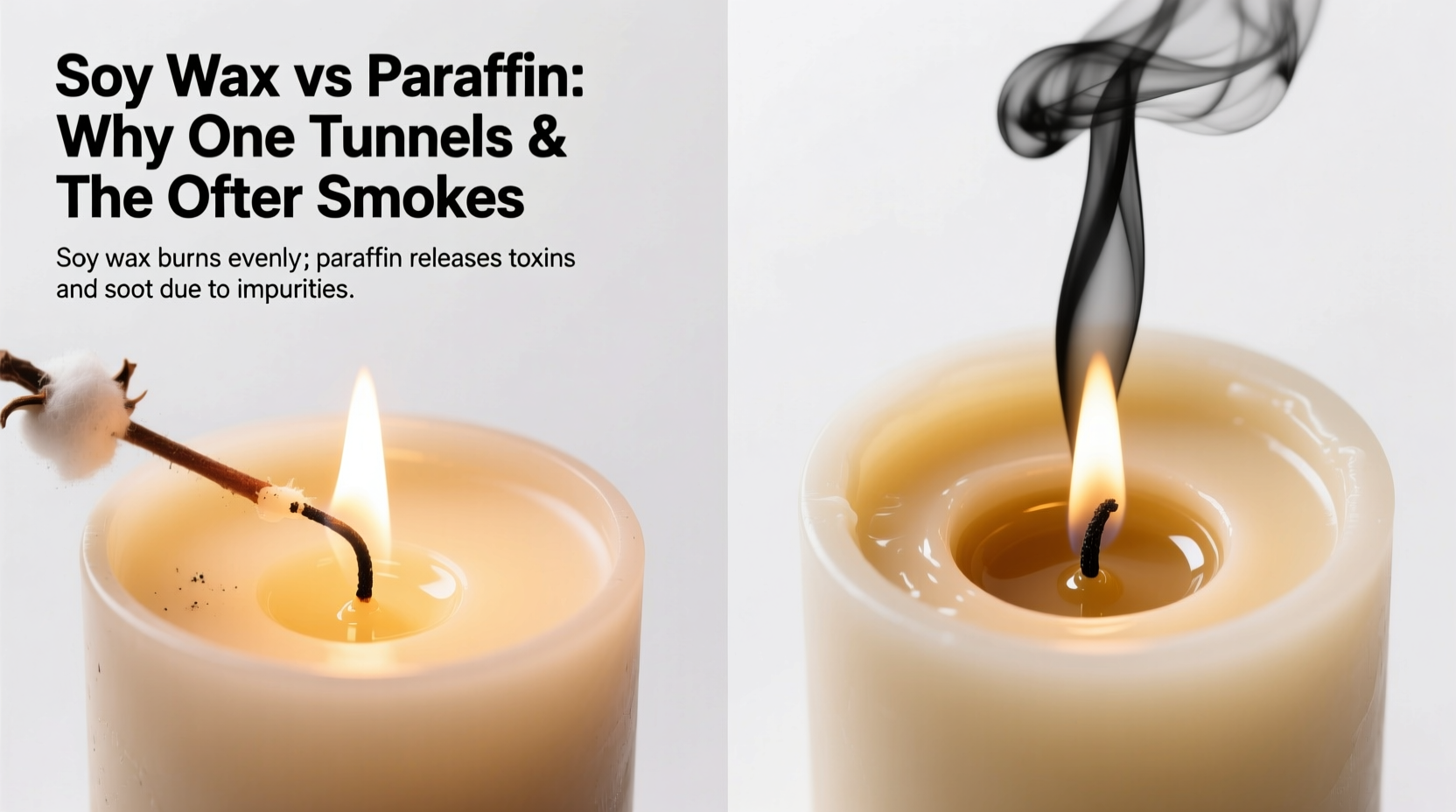
Tunneling occurs when a candle burns straight down the center, leaving thick walls of un-melted wax around the edges. This is especially common with soy wax candles. The reason lies in its low melting point and crystalline structure.
Soy wax typically melts between 120°F and 140°F, significantly lower than paraffin (130°F–160°F). While this sounds like an advantage, it means soy wax solidifies quickly once the flame is extinguished. If the first burn doesn't create a full melt pool across the entire surface diameter, the wax “remembers” that edge and continues to burn only within that smaller circle in subsequent uses.
This phenomenon is known as the \"memory ring effect.\" Once established, it's nearly impossible to correct without external intervention. Unlike paraffin, which tends to re-adhere better during re-melting, soy wax contracts more upon cooling and pulls away from glass containers, making even heat distribution harder to achieve later.
Tip: Always burn your soy candle for at least one hour per inch of its diameter during the first use to establish a full melt pool and prevent tunneling.Why Paraffin Candles Smoke: The Soot Problem
Smoking—visible black soot rising from the flame—is more commonly associated with paraffin candles. This happens because paraffin, being a fossil-fuel-derived hydrocarbon, contains impurities and complex molecules that don’t fully combust under typical indoor conditions.
When the flame draws up molten wax, not all of it vaporizes cleanly. Some compounds crack into carbon particles before burning completely, especially if airflow is restricted or the wick is too long. These microscopic carbon particles escape as smoke, coating nearby surfaces and potentially affecting indoor air quality.
A study published in the Journal of Air & Waste Management Association found that burning paraffin candles indoors can release trace amounts of benzene and toluene—known carcinogens—though at levels considered low for occasional use. Still, frequent exposure in poorly ventilated spaces may pose health concerns over time.
“Paraffin wax emits more particulate matter than natural waxes. For people sensitive to indoor air pollutants, switching to soy or beeswax can reduce respiratory irritation.” — Dr. Lena Patel, Indoor Air Quality Researcher, University of Colorado
Comparative Analysis: Soy vs Paraffin Performance
| Feature | Soy Wax | Paraffin Wax |
|---|---|---|
| Source | Plant-based (soybeans) | Petroleum-based |
| Melting Point | 120–140°F | 130–160°F |
| Burn Time | Longer (slower burn rate) | Shorter (faster consumption) |
| Eco-Friendliness | Biodegradable, renewable | Non-renewable, non-biodegradable |
| Tendency to Tunnel | High (if first burn is inadequate) | Low (better adhesion to containers) |
| Tendency to Smoke | Low (cleaner burn) | High (especially with poor wicks or drafts) |
| Fragrance Retention | Moderate (can struggle with strong scent throw) | High (holds and releases fragrance well) |
| Indoor Air Impact | Minimal emissions | Potential soot and VOCs |
While soy wax wins in sustainability and clean-burning performance, it demands more attention during use. Paraffin offers reliability and strong scent projection but sacrifices environmental and health considerations.
Real-World Example: A Homeowner’s Candle Dilemma
Sarah, a wellness coach living in Portland, switched to soy candles after learning about indoor air pollution. She loved the earthy scents and eco-labels—but grew frustrated when her favorite lavender candle tunneled after just three uses. Despite relighting it weekly, the flame stayed small and never reached the edges.
After researching, she realized she’d been burning it for only 30 minutes at a time—less than half the recommended duration for its 3-inch diameter. Following best practices, she let it burn for four hours on her next attempt. The melt pool finally reached the edges, resetting the memory ring. From then on, the candle burned evenly and lasted over 50 hours—nearly double what she expected.
Meanwhile, her guest bedroom still had an old paraffin vanilla candle. During a power outage, she lit it for several hours. The next morning, she noticed dark streaks on the ceiling above the nightstand. A quick wipe revealed black soot residue. That was the final push she needed to phase out all paraffin candles in her home.
How to Prevent Tunneling and Smoking: A Step-by-Step Guide
Regardless of wax type, proper candle care prevents most issues. Follow this timeline to maximize performance and safety:
- Before First Burn: Trim the wick to ¼ inch. Excess length causes flickering and smoking.
- First Lighting: Allow the candle to burn until the melt pool reaches the container’s edge. For a 3-inch candle, this takes about 3–4 hours. Never exceed 4 hours per session.
- Between Burns: Let the wax cool completely. Re-center the wick if it drifted during burning.
- Subsequent Burns: Always trim the wick before lighting. Burn for enough time to maintain an even surface—usually 1 hour per inch of diameter.
- If Tunneling Occurs: Wrap aluminum foil around the top, leaving a hole for the flame. This traps heat and encourages side walls to melt. Use only with supervision.
- To Reduce Smoking: Keep candles away from drafts (fans, vents, open windows). Drafts destabilize the flame, increasing soot production.
- Final Burn: Stop using the candle when ½ inch of wax remains. This prevents overheating the container and potential cracking.
Checklist: Optimal Candle Care Routine
- ☑ Trim wick to ¼ inch before every burn
- ☑ Burn for 1 hour per inch of diameter on first use
- ☑ Avoid placing near fans, AC units, or open windows
- ☑ Use a wick dipper or snuffer instead of blowing out (reduces smoke and splatter)
- ☑ Store unused candles in a cool, dark place to prevent wax discoloration
- ☑ Clean container rims with a paper towel between uses to remove debris
- ☑ Replace candles showing deep tunneling or mushroomed wicks
Blended Waxes: The Emerging Middle Ground
Recognizing the trade-offs between soy and paraffin, many premium candle makers now use blended waxes. A common formula combines 70% soy wax with 30% paraffin or microcrystalline wax. This hybrid approach improves adhesion to containers, reduces tunneling, while still lowering soot output compared to pure paraffin.
Other blends incorporate coconut wax, beeswax, or apricot wax for enhanced scent throw and smoother finishes. These specialty blends often perform better than single-component waxes but come at a higher price point.
When shopping, check labels carefully. Terms like “natural,” “eco-friendly,” or “vegetable-based” aren’t regulated. Look for specific percentages or certifications like “100% soy wax” or “paraffin-free” to ensure transparency.
Frequently Asked Questions
Can I fix a tunneled soy candle?
Yes, but it requires patience. Use the foil method: wrap the top of the candle with aluminum foil, poke a hole for the flame, and burn for 2–3 hours. The trapped heat will melt the outer wax walls. Repeat if necessary. Alternatively, scoop out excess wax and repurpose it in a wax melter.
Are soy candles always smoke-free?
Not necessarily. While soy wax burns cleaner, smoking can still occur due to long wicks, drafts, or poor-quality wicks (like lead-core, though banned in the U.S.). Always use cotton or wood wicks and keep them trimmed.
Which wax lasts longer?
Soy wax generally lasts 30–50% longer than paraffin because it burns at a lower temperature and slower rate. A high-quality soy candle can last 50–80 hours, while a comparable paraffin candle may last only 30–50 hours.
Conclusion: Choose Wisely, Burn Smartly
The choice between soy and paraffin isn’t just about preference—it’s about understanding trade-offs. Soy wax candles offer a cleaner, longer burn but require disciplined first-time usage to avoid tunneling. Paraffin delivers strong fragrance and reliable performance but at the cost of increased soot and environmental impact.
Ultimately, how you treat your candle matters as much as what it’s made of. With proper wick maintenance, adequate burn times, and smart placement, you can enjoy clean flames and extended life from any candle. Whether you prioritize sustainability, scent strength, or ease of use, informed habits make all the difference.
🚀 Ready to upgrade your candle game? Audit your current collection: trim those wicks, reset tunnelled jars, and switch to cleaner alternatives where it counts. Share your best candle tip in the comments below—your insight could help someone else avoid a smoky evening or wasted wax.