Lighting a garden walkway is about more than aesthetics—it’s about safety, ambiance, and extending the usability of your outdoor space after sunset. Two popular options dominate homeowner choices: solar pathway lights and Christmas rope lights. While both can illuminate a path, they serve different purposes, require distinct maintenance, and deliver contrasting visual effects. Understanding their strengths, limitations, and ideal applications ensures you make an informed decision that aligns with your landscape goals, energy preferences, and seasonal plans.
Understanding the Basics: What Each Light Type Offers
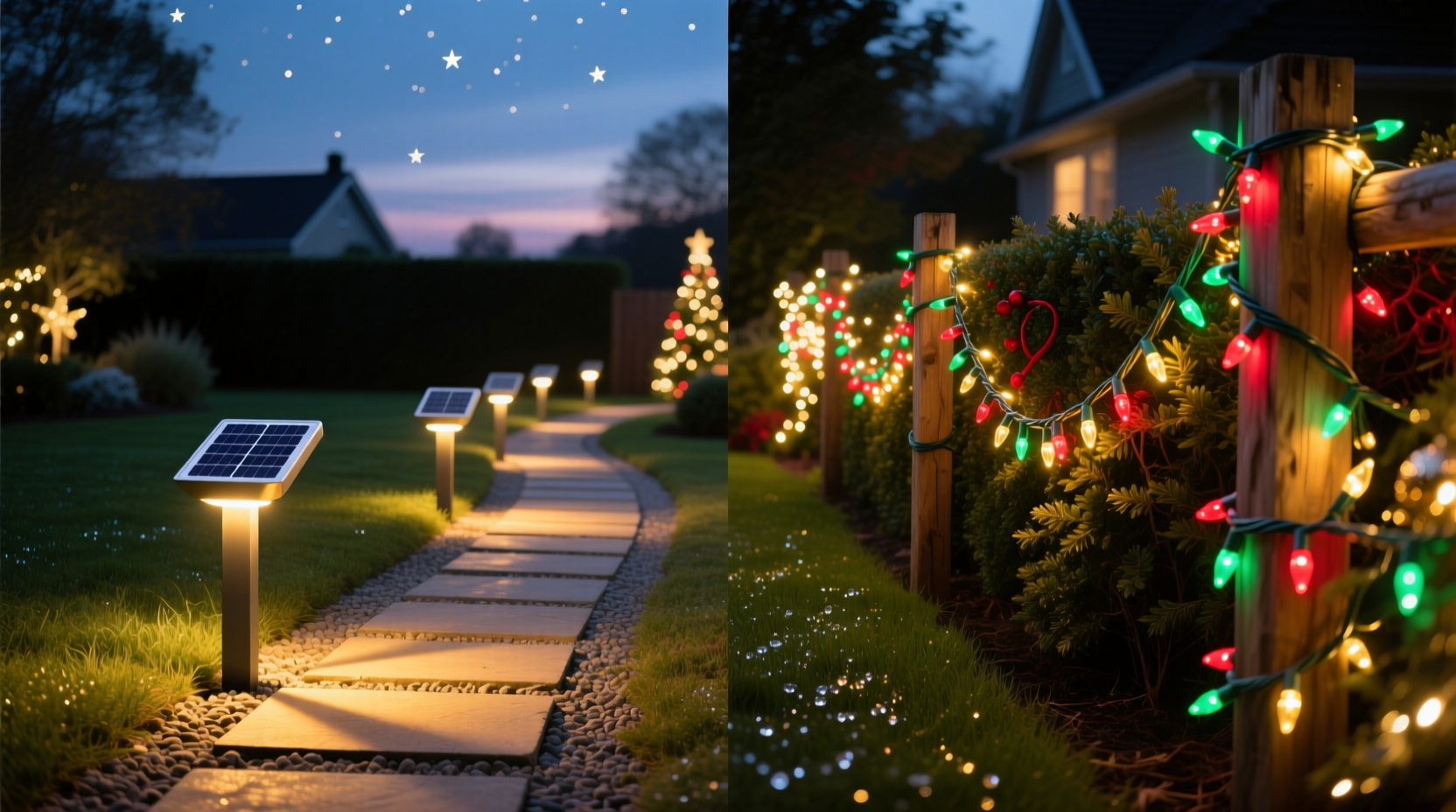
Solar pathway lights are standalone fixtures typically installed along walkways, driveways, or flower beds. They feature small photovoltaic panels that charge internal batteries during daylight, powering LED bulbs at night. Most are stake-mounted, requiring no wiring, and activate automatically at dusk. Their primary function is functional lighting—guiding footsteps safely while adding subtle decorative charm.
In contrast, Christmas rope lights consist of a continuous string of small bulbs encased in a flexible plastic tube. Traditionally used for holiday displays, these lights plug into electrical outlets and offer bright, uniform illumination. Though often associated with festive seasons, many homeowners now use them year-round for decorative garden lighting, especially along railings, pergolas, or winding paths where a soft glow or dramatic effect is desired.
The core difference lies in purpose: solar pathway lights emphasize utility and low maintenance, while rope lights prioritize visual impact and versatility. Choosing between them depends on whether you need reliable, hands-off illumination or expressive, customizable lighting design.
Tip: For permanent path guidance, solar lights are ideal. For seasonal flair or accent lighting, rope lights offer unmatched flexibility.Performance Comparison: Brightness, Durability, and Reliability
When evaluating outdoor lighting, performance metrics matter. These include brightness output (measured in lumens), battery or power reliability, weather resistance, and lifespan.
Solar pathway lights vary widely in quality. Entry-level models may emit only 10–30 lumens—barely enough to outline a step edge—while premium versions reach 80–100 lumens with motion sensors or multiple lighting modes. Their performance is heavily dependent on sunlight exposure; shaded areas result in weak charging and shorter runtime. Most operate 6–8 hours per night under optimal conditions but degrade over time as batteries lose capacity. High-quality units last 2–5 years with proper care.
Rope lights, powered by standard electricity, deliver consistent brightness regardless of weather or season. A typical 25-foot rope light string emits 300–600 lumens, creating a much brighter, more visible line of light. Since they don’t rely on batteries, their output remains stable over years. However, they are vulnerable to power outages and tripped GFCI outlets. When properly rated (UL-listed for outdoor use), they withstand rain, snow, and temperature fluctuations. With average lifespans of 3–7 years, some LED-based rope lights exceed 25,000 hours of operation.
“Consistency is key in landscape lighting. Solar lights are improving, but nothing beats the reliability of hardwired or plug-in systems for critical pathways.” — Daniel Reeves, Landscape Lighting Designer
Installation and Maintenance Requirements
One of the most significant factors in choosing outdoor lighting is ease of setup and long-term upkeep.
Solar pathway lights win in simplicity. Installation involves pushing stakes into soil or securing them to pavers—no tools, wiring, or electrician needed. This makes them perfect for renters, DIY beginners, or temporary layouts. However, maintenance isn’t zero-effort. Panels must be cleaned regularly from dust, pollen, or snow. Batteries typically need replacement every 1–3 years. Over time, individual units may fail or become dislodged by lawn activity.
Rope lights require more planning. You’ll need access to an outdoor outlet, possibly with a timer or smart plug for automation. Extension cords should be rated for outdoor use, and all connections must be elevated and protected from moisture. Installation often involves zip ties, clips, or adhesive mounts to secure the cord along curves or vertical surfaces. While initial setup takes longer, once in place, rope lights demand minimal daily attention beyond occasional inspection for fraying or water ingress.
Step-by-Step: Installing Rope Lights Along a Garden Path
- Measure the path length and purchase a rope light slightly longer to allow for slack and connections.
- Select an outdoor-rated extension cord if the outlet is distant; ensure it’s grounded (three-prong).
- Dry-fit the rope light along the intended route using removable tape to test spacing and visibility.
- Secure with UV-resistant zip ties or specialized clips, leaving gentle loops to prevent tension.
- Elevate connections using a weatherproof outlet cover or junction box.
- Test overnight and adjust placement if shadows or glare occur.
- Add a timer or smart plug to automate on/off cycles and reduce energy waste.
Design Flexibility and Aesthetic Impact
How your garden looks at night is just as important as how it functions. Both lighting types offer unique aesthetic advantages.
Solar pathway lights come in various styles—lanterns, spikes, stones, modern minimalist poles—allowing integration into formal gardens, rustic landscapes, or contemporary yards. Their spaced-out placement creates rhythm and guides the eye. However, their individual nature means gaps in illumination unless densely installed. Some models include colored lenses or motion activation, but overall color and pattern options are limited.
Rope lights excel in creative expression. Available in multiple colors, blinking patterns, and even programmable RGB variants, they transform ordinary paths into immersive experiences. Wrap them around trees, weave through shrubs, or outline steps for dramatic depth. Their continuous glow eliminates dark spots, making them excellent for defining borders or highlighting architectural features. While traditional designs look overtly “festive,” newer low-glare, warm-toned versions blend seamlessly into non-holiday settings.
| Feature | Solar Pathway Lights | Christmas Rope Lights |
|---|---|---|
| Brightness Consistency | Variable (sun-dependent) | Steady (plug-in) |
| Installation Effort | Low (stake-in) | Moderate (wiring/clipping) |
| Lifespan | 2–5 years (battery degradation) | 3–7+ years (LED models) |
| Weather Resistance | Good (if sealed properly) | Excellent (outdoor-rated) |
| Aesthetic Versatility | Limited (fixed styles) | High (colors, patterns, shapes) |
| Energy Source | Solar (free after purchase) | Electricity (adds to bill) |
| Best For | Safety, subtle elegance | Decorative flair, event lighting |
Real-World Example: Lighting a Curved Backyard Path
Consider Sarah, a homeowner in Portland, Oregon, with a gently curved stone path leading from her patio to a backyard shed. She wanted safe navigation at night without overwhelming her naturalistic garden design.
Initially, she tried budget solar pathway lights. After two winters of overcast skies, many units failed to charge fully, leaving stretches of the path dark. She replaced them with higher-end solar spikes featuring larger panels and lithium batteries. These performed better but still dimmed after heavy rain.
The following spring, she experimented with warm white rope lights. She routed a 30-foot strand along the outer edge of the path using ground clips, connecting it to a covered outdoor outlet via a smart plug. The result was transformative: consistent, inviting light that enhanced both safety and ambiance. By setting schedules and turning them off mid-night, she minimized energy use while maintaining usability.
Sarah now uses a hybrid approach: solar lights near the house entrance for everyday guidance, and rope lights activated only during evening gatherings or darker months. This combination balances efficiency with impact.
Checklist: Choosing the Right Option for Your Garden
- ✅ Assess sunlight exposure—will solar lights get 6+ hours of direct sun?
- ✅ Determine primary goal: safety vs. decoration?
- ✅ Check proximity to outdoor electrical outlets.
- ✅ Evaluate expected usage frequency—year-round or seasonal?
- ✅ Consider local climate—do you face long, dark winters?
- ✅ Decide on desired light color and intensity.
- ✅ Plan for maintenance access and long-term durability.
- ✅ Set a realistic budget including potential replacements.
Frequently Asked Questions
Can I leave Christmas rope lights outside all year?
Yes, but only if they are explicitly labeled “for outdoor use” and UL-listed. Look for waterproof seals and UV-resistant casing. Even then, inspect them seasonally for damage, especially after storms. Avoid leaving cheap or indoor-only strings outdoors—they degrade quickly and pose electrical hazards.
Why do my solar pathway lights stop working after a few months?
The most common causes are dirty solar panels, dead rechargeable batteries, or insufficient sunlight. Clean the panel monthly with a damp cloth. Replace NiMH or Li-ion batteries when runtime drops below 3–4 hours. Also, ensure no nearby foliage casts shade during peak sun hours (10 a.m.–3 p.m.).
Are rope lights more expensive to run than solar lights?
While solar lights cost nothing to operate post-purchase, rope lights do consume electricity—but the amount is minimal. A 25-foot LED rope light uses about 5–10 watts per hour. Running it for 6 hours nightly costs less than $2 per month on average. Compared to the replacement cost of failing solar units, rope lights can be more economical over time.
Final Recommendations and Long-Term Strategy
There is no universal winner in the solar pathway lights vs Christmas rope lights debate. The best choice depends on your specific context: climate, design goals, technical access, and willingness to maintain the system.
For homeowners in sunny regions seeking low-maintenance, eco-friendly path marking, high-quality solar lights remain a strong option. Invest in reputable brands with replaceable batteries and robust build quality. Space them closely (every 2–3 feet) for adequate coverage.
For those prioritizing ambiance, control, and reliability—especially in cloudy climates or for entertaining spaces—rope lights offer superior performance. Modern LED versions are energy-efficient, long-lasting, and increasingly subtle in appearance. Used strategically, they enhance both function and mood.
Many landscape professionals recommend a layered approach: combine solar pathway lights for general guidance with rope lights for accent zones like seating areas, steps, or focal points. This hybrid model maximizes safety, reduces dependency on a single system, and allows seasonal adjustments—such as switching to colorful rope lights during holidays while keeping neutral solar markers active year-round.
“The future of garden lighting isn’t one technology replacing another—it’s intelligent layering. Use each tool where it performs best.” — Lena Choi, Outdoor Design Consultant
Take Action: Illuminate Your Garden with Confidence
Your garden deserves lighting that works as hard as it looks beautiful. Whether you choose the self-sufficient charm of solar pathway lights or the vibrant consistency of Christmas rope lights, the key is intentionality. Audit your space, define your needs, and select solutions that align with your lifestyle. Start small, test placements, and refine over time. With thoughtful planning, your illuminated walkway won’t just guide the way—it will invite moments of peace, connection, and wonder under the night sky.
💬 Have experience with both lighting types? Share your insights, favorite products, or installation hacks in the comments—help fellow gardeners make smarter choices!








