Floor cleanliness plays a critical role in maintaining a healthy, comfortable home. As technology advances, more homeowners are turning to automated solutions like robot vacuums with mopping capabilities. At the same time, traditional cleaning tools—particularly standalone mops—remain widely used and trusted. But when it comes to actual cleaning performance, which option delivers superior results? This article dives deep into the practical differences between robot vacuums with mopping functions and standalone mops, examining cleaning effectiveness, efficiency, maintenance, and suitability for different floor types.
Cleaning Performance: Surface-Level vs Deep Cleaning
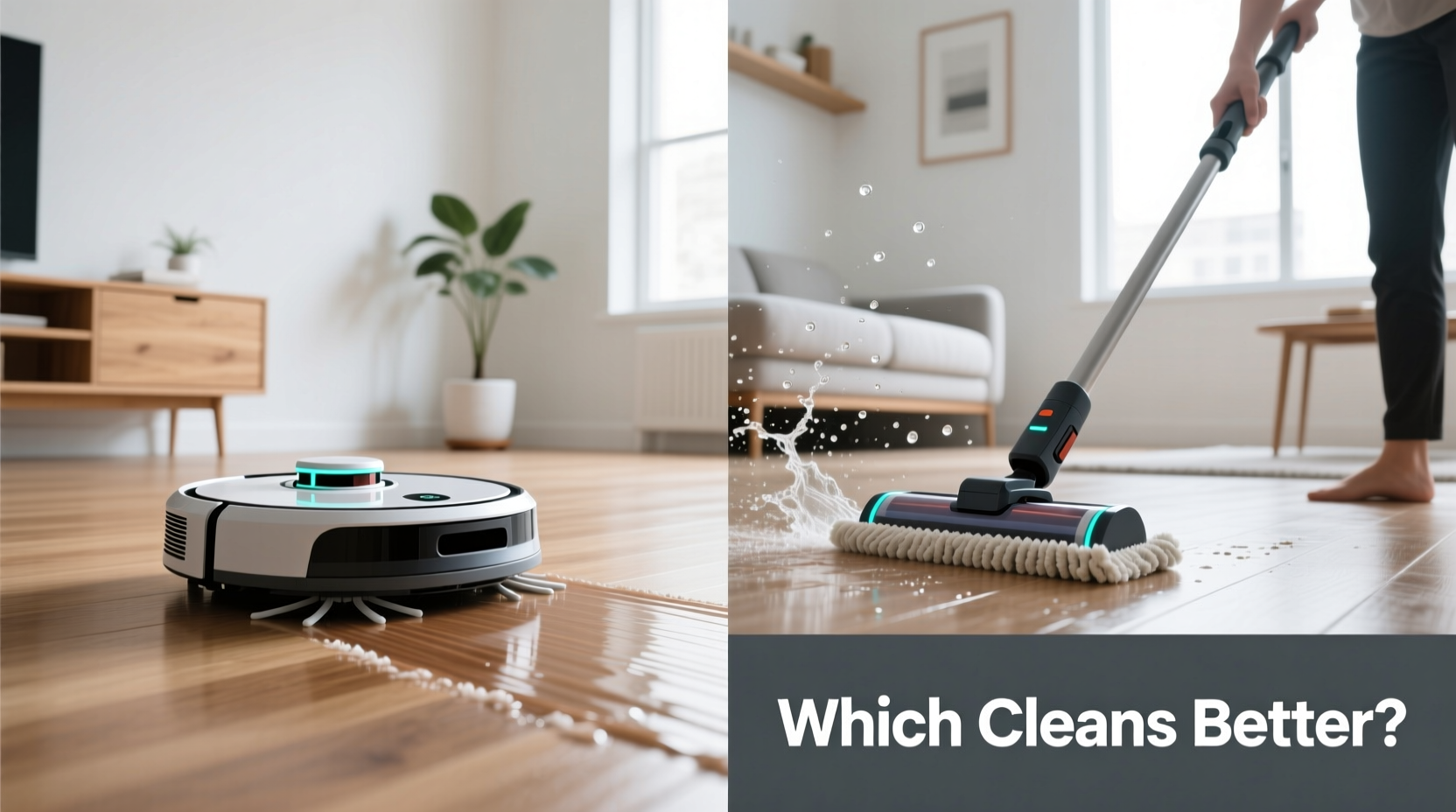
The primary difference between robot vacuums with mopping and standalone mops lies in their cleaning intensity and precision. Robot vacuums equipped with mopping features typically use microfiber pads that glide over hard floors, lightly scrubbing away dust, footprints, and light spills. These systems are designed for regular maintenance rather than deep cleaning. Most models offer either passive or active mopping: passive systems simply drag a damp pad across the floor, while active versions may vibrate or rotate the pad to enhance scrubbing.
In contrast, standalone mops—especially modern designs like spin mops, flat mops, or steam mops—deliver significantly more pressure and moisture control. A person using a mop can apply targeted effort on stained areas, adjust water saturation, and re-mop sections as needed. Steam mops, in particular, can sanitize surfaces by killing bacteria and loosening grime with high heat—something no consumer robot vacuum currently replicates.
“While robotic moppers are excellent for keeping floors tidy between deep cleanings, they don’t replace the thoroughness of manual mopping, especially in kitchens or entryways.” — Dr. Linda Tran, Home Hygiene Researcher at CleanLiving Labs
For homes with pets, kids, or frequent spills, standalone mops remain the gold standard for eliminating sticky residues, grease, and tracked-in dirt. Robot moppers excel at consistency but fall short in raw cleaning power.
Convenience and Time Efficiency
Where robot vacuums truly shine is in automation and scheduling. Once set up, these devices can clean daily with minimal human intervention. Many models integrate with smart home systems, allowing users to start a cleaning cycle via voice command or smartphone app. After mapping your home, robots navigate efficiently, avoiding obstacles and returning to their dock to recharge. For individuals with busy schedules or mobility limitations, this hands-free operation offers unmatched convenience.
Standalone mops require physical effort, setup time, and post-cleaning maintenance. You must fill buckets, wring out pads, and store equipment properly. However, this manual involvement allows for greater adaptability. If you notice a spill in the kitchen, you can address it immediately without waiting for a scheduled robot run.
Tip: Use your robot vacuum with mopping for daily maintenance and reserve your standalone mop for weekly deep cleaning sessions.Technology Comparison: Features and Limitations
Modern robot vacuums with mopping combine vacuuming and light wet mopping in one device. Key features include:
- Smart navigation (LIDAR or camera-based)
- Zoning and room-specific cleaning
- Dual-function tanks (water and waste)
- Scheduling and remote control via app
- Auto-empty docks (on premium models)
Despite these innovations, limitations persist. Most robot mops cannot regulate water flow precisely, leading to overly wet floors or dry patches. They also struggle with edges and corners, often leaving gaps near baseboards. Additionally, many models lack the ability to self-clean mop pads, requiring manual washing after each use—a drawback that reduces long-term convenience.
On the other hand, advanced standalone mops now come with ergonomic handles, washable microfiber heads, and even UV-C sanitization. Steam mops heat water to over 212°F (100°C), effectively disinfecting floors without chemicals. Some models feature telescopic handles and 360-degree swivel heads for easy maneuvering under furniture.
Key Differences at a Glance
| Feature | Robot Vacuum with Mopping | Standalone Mop |
|---|---|---|
| Cleaning Power | Light to moderate | Moderate to heavy |
| Automation Level | High (scheduled, hands-free) | None (manual only) |
| Sanitization | No (unless using disinfectant in tank) | Yes (with steam models) |
| Edge Cleaning | Poor to fair | Excellent (with proper technique) |
| Maintenance Effort | Medium (empty tank, clean pad) | Low to medium (rinse head, empty bucket) |
| Best For | Daily upkeep, pet hair, light debris | Spills, sticky messes, deep cleaning |
Real-World Scenario: A Family Home Evaluation
Consider the Thompson family: two adults, two young children, and a golden retriever. Their home has hardwood floors throughout, with area rugs in the living room and hallway. They initially relied solely on a robot vacuum with mopping (a mid-tier model with a reservoir tank and vibrating pad). While the robot kept the floors visually acceptable most days, they noticed persistent smudges near the dining table and lingering odors in the kitchen after mealtime.
After three months, they reintroduced a steam mop into their routine, using it every Sunday. The immediate difference was striking—grease spots vanished, footprints disappeared, and the floors felt genuinely clean. They adjusted their strategy: the robot runs every evening to handle crumbs and pet hair, while the steam mop handles weekly sanitation. This hybrid approach maximized both convenience and cleanliness.
This case illustrates a growing trend: rather than choosing one tool over the other, many households benefit from combining both. Robots maintain baseline cleanliness, while manual mops provide periodic deep cleaning.
Step-by-Step: Optimizing Your Floor Cleaning Routine
To get the best results regardless of your tools, follow this proven cleaning sequence:
- Clear the floor: Remove toys, laundry, and small furniture to allow full access.
- Vacuum or sweep first: Eliminate loose debris before mopping to prevent scratching.
- Pre-treat stains: Apply a mild cleaner to sticky spots or scuff marks.
- Choose your mop: Use a robot for light daily cleaning or a standalone mop for deep cleaning.
- Start from the farthest corner: Work backward toward the exit to avoid stepping on cleaned areas.
- Rinse and dry: Use clean water for a final pass if needed, and let floors air-dry.
- Maintain your tools: Wash mop pads, empty tanks, and store equipment properly.
Which Floors Benefit Most From Each Method?
Floor type significantly influences which cleaning method works best.
- Hardwood: Robot mops can be risky if they leak or oversaturate. Use only with caution and minimal water. A microfiber flat mop is safer and more effective.
- Tile and Stone: Both methods work well here. Robots handle everyday dust, while standalone mops remove soap scum and grout buildup.
- Laminate: Resistant to moisture, so robot mopping is generally safe. Avoid steam mops, which can warp edges over time.
- Vinyl (LVP): Durable and water-resistant. Ideal for both robot and manual mopping.
Always check manufacturer guidelines before using any wet cleaning method. Excessive moisture remains the top cause of damage in engineered and laminate flooring.
Checklist: Choosing the Right Tool for Your Needs
Use this checklist to determine whether a robot vacuum with mopping, a standalone mop, or both are right for your household:
- ✅ Do you want daily cleaning with zero effort? → Consider a robot.
- ✅ Do you have pets or kids who make frequent messes? → Prioritize a standalone mop.
- ✅ Are your floors prone to moisture damage? → Avoid robot mopping unless it has precise water control.
- ✅ Do you value germ-killing power? → Choose a steam mop.
- ✅ Are you willing to manually clean mop pads after each use? → Be realistic about maintenance.
- ✅ Do you already vacuum regularly? → A dedicated robot vacuum might be better than a combo model.
Frequently Asked Questions
Can robot vacuums with mopping replace traditional mopping?
No, not entirely. While they maintain surface cleanliness between deep cleanings, they lack the scrubbing power, water control, and sanitization of manual mopping. They’re best used as a supplement, not a replacement.
Are robot mops safe for all floor types?
Not always. They are generally safe for sealed tile, vinyl, and laminate but pose risks to hardwood and unsealed surfaces due to potential water leakage. Always verify compatibility with your flooring manufacturer.
How often should I use a standalone mop if I own a robot with mopping?
Weekly deep cleaning is recommended for most homes. High-traffic areas like kitchens and entryways may need spot-cleaning more frequently, even with daily robot runs.
Final Verdict: Which Cleans Better?
When judged purely on cleaning effectiveness, standalone mops win. They offer superior stain removal, edge-to-edge coverage, and sanitization—especially when steam or manual pressure is applied. No current robot vacuum can match the tactile feedback and adaptability of a human operator with a quality mop.
However, robot vacuums with mopping excel in consistency and convenience. They keep floors visibly tidy day after day, reducing the frequency and effort required for manual cleaning. For people seeking a “set it and forget it” solution, they provide measurable value.
The smartest approach isn’t choosing one over the other—it’s using both strategically. Let the robot handle routine maintenance, and rely on your standalone mop for thorough, hygienic cleanings. This combination leverages the strengths of automation and human control, delivering the cleanest possible floors with balanced effort.
💬 Ready to optimize your cleaning routine? Start by testing a robot mop for daily upkeep and schedule a weekly deep clean with your traditional mop. Share your experience or questions in the comments below!