For anyone who values their makeup collection—from everyday essentials to high-end palettes—how you store and transport your products matters. The wrong container can lead to broken compacts, melted formulas, or contamination. Two popular choices dominate the market: portable makeup bags and organizer boxes. While both serve the purpose of organization, they differ significantly in how well they protect your cosmetics. Understanding these differences helps you make a smarter decision based on safety, lifestyle, and product value.
Understanding the Core Differences
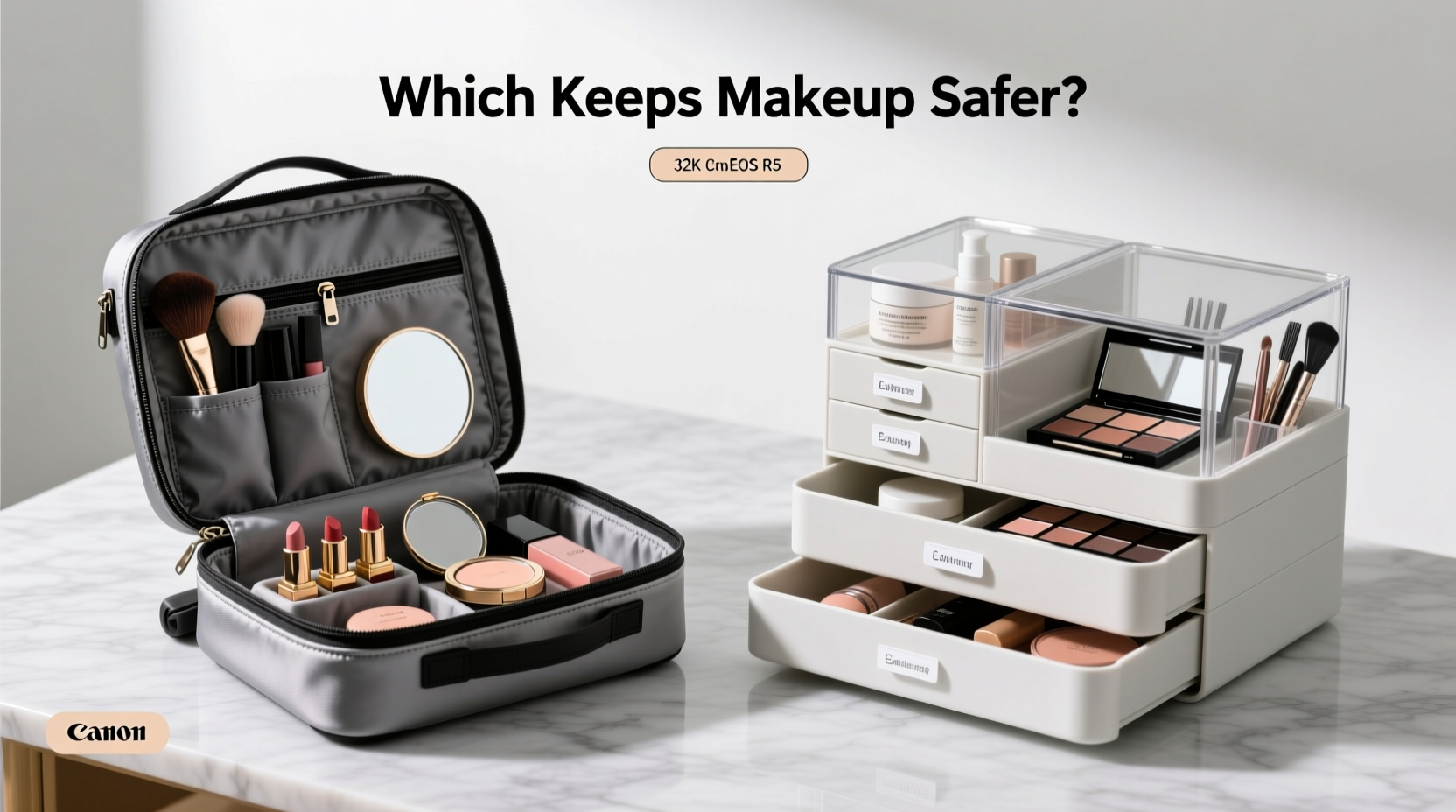
A portable makeup bag is typically soft-sided, made from fabric, nylon, or vegan leather, designed for travel or daily carry. It prioritizes mobility and compactness. In contrast, an organizer box is usually rigid, constructed from plastic, acrylic, or wood, and meant for stationary use—often on a vanity or bathroom counter.
The structural distinction alone influences protection. Soft bags compress under pressure; rigid boxes maintain shape. But beyond materials, the real question is: which option prevents damage, maintains hygiene, and extends the life of your makeup?
“Makeup isn’t just about application—it’s about preservation. Temperature, impact, and airflow all affect product integrity.” — Dr. Lena Patel, Cosmetic Formulation Scientist
Protection Against Physical Damage
Physical safety is the most immediate concern. Foundations crack, eyeshadows shatter, and lipsticks snap when subjected to pressure or drops. Let’s compare how each container performs:
- Portable Makeup Bags: Most are padded, but padding varies. Thin-lined bags offer minimal protection. Even with compartments, movement during transit causes items to shift and collide. Zippers can press against delicate surfaces if overfilled.
- Organizer Boxes: Rigid walls prevent crushing. Many models include removable trays with snug slots that hold items in place. When closed, they form a protective shell that resists external force—ideal for storing heavy bottles or glass-packaged serums.
Environmental Protection: Heat, Light, and Humidity
Makeup stability depends on environmental conditions. Exposure to heat melts creams, sunlight degrades pigments, and humidity fosters bacterial growth. Here’s where usage context becomes critical.
Organizer boxes, especially those made of opaque or tinted acrylic, provide better shielding from light. Some even come with lids that seal tightly, reducing moisture infiltration. However, if placed in a steamy bathroom, condensation can still accumulate.
Makeup bags, while often stored inside larger luggage or handbags, are more vulnerable. Fabric doesn’t insulate well, so leaving a bag in a hot car can turn liquid foundations into runny messes. Breathable materials also allow ambient humidity to penetrate unless stored in climate-controlled environments.
| Factor | Makeup Bag | Organizer Box |
|---|---|---|
| Impact Resistance | Low to Moderate (depends on padding) | High (rigid structure) |
| Light Blocking | Poor (unless fully enclosed in dark material) | Good to Excellent (especially with opaque lid) |
| Moisture Resistance | Poor (fabric absorbs humidity) | Moderate to High (plastic/acrylic resists moisture) |
| Portability | Excellent (lightweight, foldable options) | Poor (bulky, fragile if dropped) |
| Hygiene Control | Moderate (harder to clean interiors) | High (smooth surfaces easy to wipe down) |
Real-World Scenario: Traveling with Makeup
Sophia, a freelance photographer, travels monthly for shoots. She used a sleek velvet makeup bag to carry her full kit—including a $58 cream palette and a glass-bottled serum. After three trips, she noticed the palette had cracked from repeated jostling in her backpack, and the serum developed mold near the dropper due to residual dampness in her gym bag.
Switching to a hard-shell organizer with sealed compartments and storing it inside a protective pouch reduced damage dramatically. She now uses silicone caps on all droppers and includes silica gel packets. “I lost nearly $120 in ruined products,” she says. “Now I treat my organizer like a mini lab case.”
This illustrates a key insight: convenience shouldn’t override preservation. For frequent travelers, hybrid solutions—like rigid organizers placed within padded duffels—offer the best compromise.
Step-by-Step: Choosing the Right Option for Your Routine
Follow this decision-making timeline to determine which system aligns with your needs:
- Assess Your Usage Pattern: Do you apply makeup on the go, or only at home?
- Evaluate Product Types: Are you carrying liquids, powders, or delicate creams?
- Consider Storage Environment: Will items be exposed to heat, moisture, or direct sunlight?
- Determine Frequency of Movement: Daily transport favors durable, compact designs.
- Test for Fit and Function: Place your top 10 products in potential containers. Close them. Shake gently. Check for shifting or pressure points.
When to Choose a Portable Makeup Bag
Select a makeup bag if:
- You commute daily and need quick access.
- Your routine involves minimal products (e.g., concealer, lipstick, blotting papers).
- You prioritize discretion and lightweight design.
- You’re traveling by air and need TSA-compliant sizes.
Opt for high-quality versions with reinforced corners, water-resistant linings, and internal elastic loops. Look for dual-zipper closures to reduce strain on seams.
When an Organizer Box Is the Safer Choice
Choose an organizer box if:
- You have a large or high-value collection.
- You store makeup in humid areas (bathrooms) and want easier cleaning.
- You prefer visibility and categorization (e.g., separate trays for eyes, face, lips).
- You rarely move your setup and want a permanent vanity solution.
Acrylic organizers with stackable tiers maximize space and minimize clutter. Their non-porous surfaces resist bacteria buildup and can be sanitized weekly with alcohol wipes.
Frequently Asked Questions
Can I use both a makeup bag and an organizer box?
Absolutely. Many professionals use a desktop organizer for long-term storage and transfer select items into a travel bag each day. This reduces wear on both containers and ensures only necessary products are exposed to environmental stressors.
How do I prevent makeup from melting in a bag?
Avoid leaving your bag in hot environments like cars. Use insulated pouches for temperature-sensitive items. Store cream-based products upright and consider solid alternatives (e.g., stick foundations) for travel.
Are transparent organizers less safe than opaque ones?
Possibly. Clear containers expose contents to light, which can degrade light-sensitive ingredients like vitamin C or retinol. If using transparent boxes, keep them in a drawer or cover with a cloth when not in use.
Final Checklist Before You Decide
- ✅ Inventory your most-used and most-fragile products.
- ✅ Measure your typical storage or carry space (bag, suitcase, drawer).
- ✅ Prioritize either protection (box) or portability (bag).
- ✅ Check for features: padding, dividers, wipeable lining, secure closure.
- ✅ Read reviews focusing on durability and real-world performance.
Conclusion: Safety Over Style
Your makeup deserves more than just organization—it needs protection. While a stylish makeup bag might look great in your Instagram story, it won’t shield your blush from cracking during a bumpy train ride. Conversely, a sturdy organizer box may stay put on your dresser, but it won’t fit in your tote for touch-ups at work.
The truth is, neither option is universally superior. The safest choice depends on how you use your makeup. For maximum protection, combine both: store your collection in a rigid, hygienic organizer and carry a curated selection in a well-padded, compact bag. Treat your cosmetics like the investments they are—with care, intention, and smart systems.
💬 What’s your go-to makeup storage solution? Share your experience and help others protect their favorite products!








