In an era where smartphones, tablets, and wearable devices are essential to daily life, staying powered on the go has become non-negotiable. As a result, compact energy solutions like portable chargers and power banks have flooded the market. But what exactly is the difference— if any—between a portable charger and a power bank? Are they interchangeable terms, or do subtle distinctions affect performance, usability, and purchasing decisions?
This article clarifies the confusion by examining technical definitions, real-world usage, design variations, and consumer trends. Whether you're shopping for travel gear, preparing for emergencies, or simply tired of low-battery anxiety, understanding these devices will help you make smarter, more informed choices.
Defining the Terms: What Is a Portable Charger?
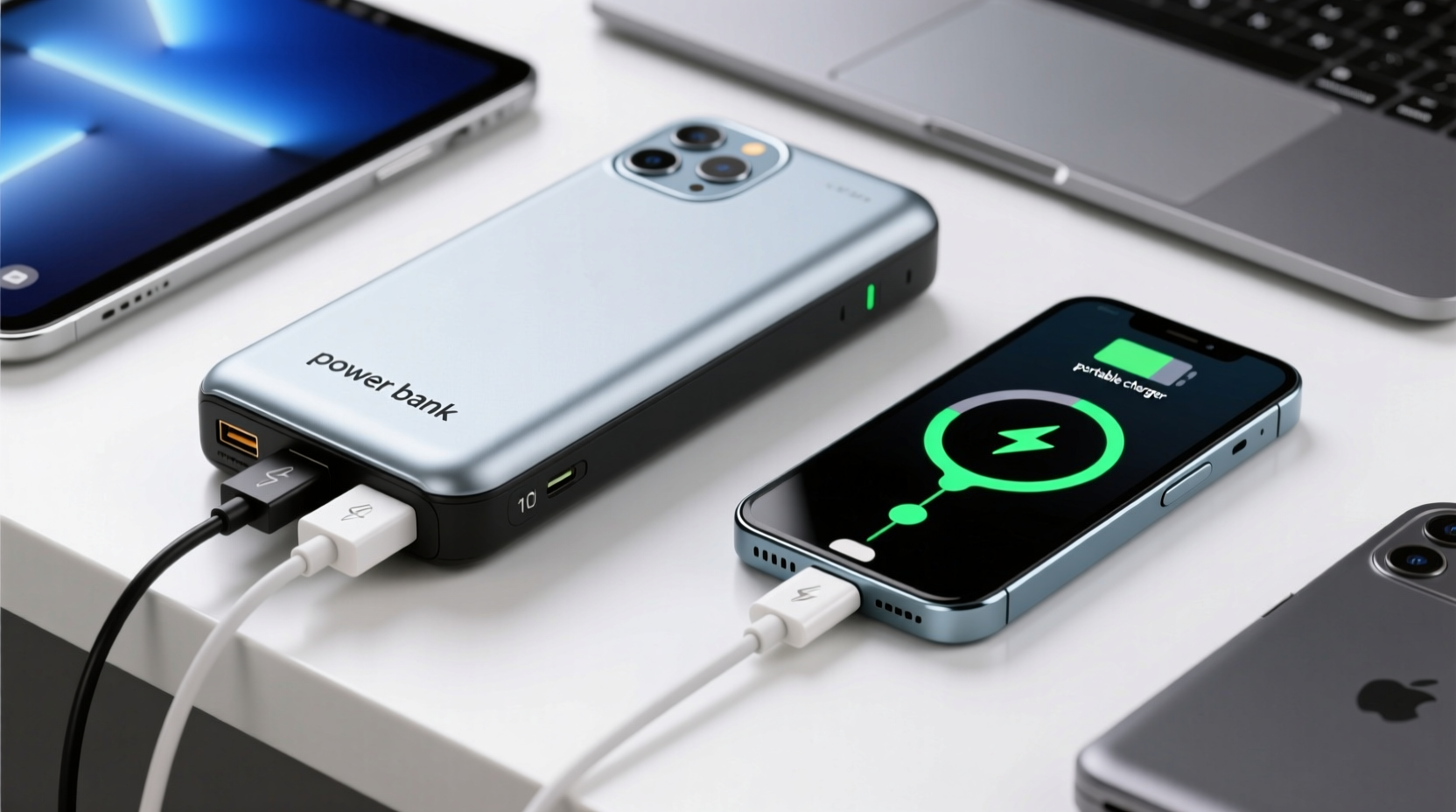
The term \"portable charger\" broadly refers to any mobile device capable of delivering electrical charge to another gadget outside a fixed power source. It emphasizes function over form—any battery-powered unit that charges your phone while you're away from an outlet could technically be called a portable charger.
Portable chargers come in various shapes and capacities. Some are built into phone cases, others resemble small bricks with USB ports, and some even integrate solar panels for off-grid use. The defining feature is mobility: they’re designed to move with you, providing backup energy wherever needed.
Because “portable charger” is a functional description rather than a technical specification, it often serves as a catch-all phrase used by marketers, retailers, and casual users alike. This broad usage contributes to the confusion when comparing it to “power bank.”
What Exactly Is a Power Bank?
A power bank is a specific type of portable charger—a rechargeable external battery pack that stores electrical energy and dispenses it through one or more output ports, typically USB-A or USB-C. Unlike built-in batteries inside phones or laptops, power banks are standalone units that must be charged separately before use.
Power banks vary widely in capacity, measured in milliampere-hours (mAh) or watt-hours (Wh). Common models range from 5,000 mAh (enough for one full smartphone charge) to 20,000 mAh or higher for multiple device charges. High-capacity variants may include additional features such as LED indicators, fast-charging protocols (like Qualcomm Quick Charge or USB Power Delivery), and multi-port outputs.
While all power banks are portable chargers, not all portable chargers are strictly power banks. For example, a hand-crank emergency radio with a charging port isn’t usually classified as a power bank, despite offering portable charging capability.
Tip: When traveling by air, ensure your power bank is under 100Wh (approximately 27,000 mAh) and carried in your carry-on luggage—most airlines prohibit larger units or those stored in checked baggage.Comparing Functionality: Key Similarities and Differences
At their core, both portable chargers and power banks serve the same primary purpose: extending device battery life when wall outlets aren't available. However, nuances in design, technology, and application reveal meaningful distinctions.
Similarities Between Portable Chargers and Power Banks
- Mobile Energy Source: Both provide electricity without requiring immediate access to AC power.
- Built-In Battery: They contain internal lithium-ion or lithium-polymer cells that store energy.
- USB Output: Most models deliver power via standard USB ports compatible with smartphones, earbuds, GPS devices, and more.
- Rechargeable: After depletion, both can be recharged using a wall adapter, computer, or car charger.
Differences Based on Design and Use Case
The main divergence lies in scope and specificity. “Portable charger” includes a wider array of products, while “power bank” refers narrowly to external battery packs optimized for direct device charging.
“Consumers often use 'portable charger' and 'power bank' interchangeably, but technically, power banks are a subset of portable charging solutions.” — Dr. Alan Reeves, Electrical Engineer & Consumer Tech Analyst
| Feature | Portable Charger (General Term) | Power Bank (Specific Device) |
|---|---|---|
| Definition | Any mobile device that provides temporary power to electronics | A dedicated external battery pack for charging devices via USB |
| Included Products | Power banks, solar chargers, crank generators, battery-case combos | Only standalone battery packs with USB output |
| Primary Use | Broad—emergency power, outdoor activities, general mobility | Narrow—recharging smartphones, tablets, and small gadgets |
| Charging Method | Varies: solar, kinetic, electrical input | Almost exclusively via electrical input (USB-C, Micro-USB) |
| Capacity Range | Highly variable; some very low due to alternative energy sources | Typically 2,000–30,000 mAh, standardized and labeled clearly |
| Market Labeling | Used loosely in advertising and retail | Precisely defined in product specs and regulatory contexts |
Real-World Example: Choosing the Right Option for Travel
Consider Sarah, a digital nomad who spends three months working remotely across Southeast Asia. She needs reliable power for her iPhone, iPad, and wireless headphones during long train rides and rural stays where electricity is spotty.
She initially buys a “portable charger” advertised online—only to discover it’s a solar-powered unit with a tiny 2,500 mAh capacity. Despite being eco-friendly, it takes eight hours of direct sunlight to fully charge and struggles to power her devices efficiently.
After returning home, she replaces it with a 10,000 mAh power bank featuring dual USB-C ports and PD fast charging. This time, she pre-charges it each night at her guesthouse, and it reliably powers her phone twice over during day trips. Her experience highlights a crucial lesson: not all portable chargers offer equal utility. Understanding whether you need a general-purpose portable charger or a high-performance power bank makes a significant difference in real-life scenarios.
Tip: Always check the output voltage and amperage (e.g., 5V/2.4A) to ensure compatibility with your devices. Mismatched specs can lead to slow charging or overheating.How to Choose the Right Device: A Step-by-Step Guide
Selecting between a portable charger and a power bank shouldn't be guesswork. Follow this practical sequence to match your needs with the ideal solution.
- Assess Your Charging Needs: How many devices do you regularly carry? Do you need to charge a tablet, phone, and smartwatch simultaneously?
- Determine Capacity Requirements: Estimate total battery capacity. For instance, an iPhone 15 (~3,200 mAh) might need a 6,000 mAh power bank for two full charges (accounting for efficiency loss).
- Evaluate Portability: Will you carry it daily in a pocket or backpack? Smaller units (5,000–10,000 mAh) are lighter and more compact.
- Check Input/Output Specs: Look for USB-C Power Delivery (PD) and support for fast charging if you own modern devices.
- Consider Special Features: Do you hike or camp? Solar integration or rugged designs may matter. Need emergency use? Built-in flashlights or SOS signals could be valuable.
- Review Safety Certifications: Ensure the device has overcharge protection, short-circuit prevention, and certifications like CE, FCC, or UL.
- Compare Brands and Warranties: Reputable brands like Anker, Jackery, Aukey, and RAVPower offer better reliability and customer service than no-name clones.
Common Misconceptions and Marketing Tricks
Retailers often exploit the ambiguity between “portable charger” and “power bank” to upsell lower-quality products. Be aware of these misleading practices:
- Inflated Capacity Claims: Some budget models advertise “20,000 mAh” but use inefficient circuits that deliver only half that in real-world use.
- Vague Descriptions: Labels like “universal portable charger” may hide poor build quality or incompatible voltages.
- Hidden Fees or Missing Cables: While the power bank itself might seem cheap, required cables or adapters aren’t always included.
To avoid disappointment, read user reviews, verify technical details, and purchase from trusted vendors. A slightly higher price often reflects better cell quality, thermal management, and longevity.
Frequently Asked Questions
Is a power bank safer than other types of portable chargers?
Not inherently—but most modern power banks from reputable brands include advanced safety mechanisms like temperature control, surge protection, and automatic shutoff. Cheaper or unconventional portable chargers (e.g., unbranded solar units) may lack these safeguards, increasing fire or damage risks.
Can I take a power bank on a plane?
Yes, but with restrictions. Most airlines allow power banks under 100 watt-hours (Wh) in carry-on luggage only. Larger ones (up to 160 Wh) may require airline approval. Never pack them in checked bags due to fire hazards. Always confirm with your carrier before flying.
Why does my power bank lose charge when not in use?
All lithium-based batteries self-discharge slowly over time—even when idle. Quality power banks lose about 1–5% per month. To minimize this, charge your unit to around 60% before storing it for extended periods, and top it up every few months.
Actionable Checklist Before Buying
📋 Before purchasing a portable charger or power bank, use this checklist:- ✅ Determine how many devices you’ll charge regularly
- ✅ Calculate minimum required capacity (add up device batteries × desired charges)
- ✅ Prefer USB-C PD and/or QC 3.0+ for faster charging
- ✅ Confirm inclusion of necessary cables (some don’t include any)
- ✅ Check dimensions and weight—will it fit comfortably in your bag?
- ✅ Verify safety certifications (CE, FCC, RoHS)
- ✅ Read recent customer reviews focusing on durability and actual performance
- ✅ Consider warranty length—2 years or more indicates confidence in quality
Conclusion: Clarity Leads to Better Choices
The distinction between a portable charger and a power bank is mostly semantic in everyday conversation—but technically important when making informed purchases. In practice, most consumers seeking a simple way to recharge their phones on the move are looking for a power bank, which is a reliable, high-capacity, USB-equipped external battery.
However, recognizing that “portable charger” encompasses broader options—including solar, kinetic, and hybrid systems—opens doors for niche applications like hiking, disaster preparedness, or sustainable living. Knowing the difference empowers you to select not just what's convenient, but what's truly suited to your lifestyle.
🚀 Ready to upgrade your on-the-go power setup? Review your current device, calculate your daily energy needs, and invest in a quality power bank that matches your routine. Share your favorite model or charging tip in the comments below—your insight could help someone avoid a dead-phone crisis!