Alcohol consumption is deeply woven into social life — from celebratory toasts to post-work decompression. Yet understanding your own blood alcohol concentration (BAC) in real time remains a persistent challenge. While law enforcement uses highly calibrated evidentiary devices, consumers increasingly turn to portable breathalyzers for personal awareness, safety planning, and responsible decision-making. But not all handheld units deliver reliable results. Accuracy varies widely based on sensor technology, user technique, environmental conditions, and maintenance habits. This article cuts through marketing claims to deliver actionable, science-informed guidance — grounded in clinical research, FDA-cleared device performance data, and real-world usage patterns. Whether you’re monitoring recovery after a night out, supporting a loved one’s sobriety journey, or simply seeking greater bodily autonomy, precise BAC insight matters. Misreading a result by even 0.02% can mean the difference between safe driving and impaired judgment — or between confidence and unnecessary anxiety.
How Portable Breathalyzers Work — And Why Accuracy Isn’t Guaranteed
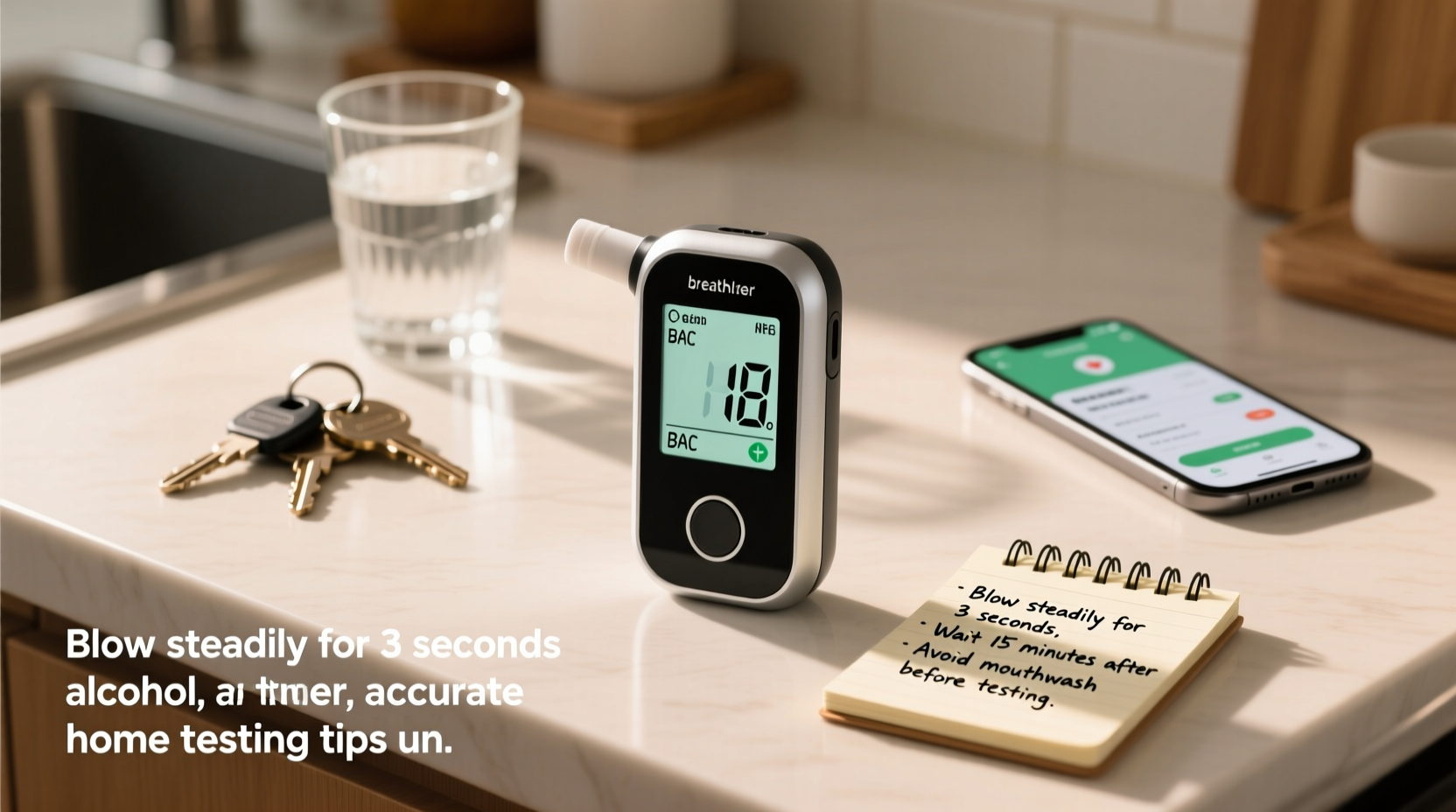
Portable breathalyzers estimate BAC by measuring ethanol concentration in exhaled air. When alcohol enters the bloodstream, a small portion diffuses into the alveolar air of the lungs and is expelled during exhalation. The device captures this sample and analyzes it using one of two primary sensor types: semiconductor oxide (SOX) or fuel cell (FC). Semiconductor sensors are common in budget models ($20–$60) and rely on changes in electrical resistance when ethanol interacts with a tin dioxide surface. They’re sensitive but prone to interference from acetone, cigarette smoke, mouthwash, or even certain foods like ripe fruit or protein bars. Fuel cell sensors — found in mid- to high-tier devices ($100–$300+) — use electrochemical oxidation of ethanol to generate a measurable current. They offer superior specificity, longer lifespan (2–5 years), and stability across temperature and humidity shifts. According to the National Highway Traffic Safety Administration (NHTSA), only fuel cell devices meet minimum standards for screening-level accuracy when properly calibrated and used correctly.
Tip: Never rely on a semiconductor breathalyzer for safety-critical decisions like driving. Its readings may be inflated by 0.01–0.04% BAC due to non-alcohol interferents — enough to falsely suggest impairment or dangerously mask rising levels.7 Critical Steps for Accurate Home Testing
Even a top-tier fuel cell breathalyzer delivers misleading results if used incorrectly. Human factors account for over 70% of inaccurate consumer readings, according to a 2023 validation study published in Journal of Forensic Sciences. Follow this sequence precisely — no shortcuts — every time:
- Wait at least 15 minutes after your last sip, cigarette, gum, or mouthwash. Residual alcohol in the mouth (not blood) creates “mouth alcohol” artifacts that inflate readings.
- Use deep lung air. Breathe in fully, hold for 2 seconds, then exhale steadily and forcefully for at least 5 seconds into the mouthpiece. Shallow breathing yields underestimates.
- Ensure the device is warmed up. Most fuel cell units require 20–30 seconds of warm-up time after power-on to stabilize internal temperature and sensor response.
- Hold the unit upright during sampling. Tilting can cause condensation or saliva to contact the sensor — damaging it over time and skewing immediate results.
- Perform a second test 2–3 minutes after the first. If results differ by more than ±0.01%, wait another 2 minutes and run a third. Consistency across repeated tests signals reliability; wide variance suggests user error or device drift.
- Log ambient conditions. Note room temperature and humidity. Readings taken below 50°F (10°C) or above 90°F (32°C) often deviate by up to 0.015% BAC due to sensor thermal lag.
- Confirm calibration status. If your device requires manual calibration (typically every 6–12 months), check its log or indicator. An uncalibrated fuel cell may drift ±0.02% — clinically significant for legal or medical thresholds.
What to Look for (and Avoid) When Buying
Purchasing decisions should be guided by objective specifications — not flashy packaging or app integrations. Below is a comparison of key features tied directly to measurement integrity:
| Feature | Acceptable / Recommended | Avoid / Red Flag |
|---|---|---|
| Sensor Type | Fuel cell (electrochemical) | Semiconductor oxide (MOS), photometric, or unspecified |
| FDA Clearance | Explicit 510(k) clearance listed on product page or FDA database | Vague language like “FDA registered” (all medical devices must register — no clearance implied) |
| Calibration Interval | Manufacturer specifies 6–12 month intervals with traceable service options | No calibration requirement stated, or “lifetime calibration” claim |
| Accuracy Statement | ±0.01% BAC at 0.08% level (per ASTM E2912-22 standard) | “Up to 95% accurate” or “lab-grade” without context or testing methodology |
| Sample Capture | Dedicated mouthpiece with anti-saliva filter and replaceable design | Fixed mouthpiece, no filter, or shared-use design without sanitation guidance |
Also verify independent validation. Devices like the BACtrack S80 Pro and AlcoMate Premium have been tested by the University of California San Diego’s Clinical Toxicology Lab and shown to maintain ±0.008% BAC accuracy across 200+ samples — provided users followed standardized protocols. In contrast, a 2022 Consumer Reports evaluation found 6 of 12 sub-$80 models failed basic repeatability tests, producing variances exceeding ±0.03% BAC across identical samples.
Real-World Example: Sarah’s Sober Living Routine
Sarah, 34, entered outpatient recovery after a DUI conviction. Her treatment plan required weekly BAC self-monitoring to reinforce accountability and identify early relapse cues. She initially used a $35 semiconductor breathalyzer recommended by a well-meaning friend. For three weeks, her readings fluctuated wildly — 0.00% one morning, 0.02% the next — despite consistent abstinence. Frustrated, she consulted her counselor, who suggested switching to an FDA-cleared fuel cell device and implementing strict pre-test hygiene: no coffee, toothpaste, or breath mints for 20 minutes prior; always testing after her morning shower (stable room temp); and logging each result with time, food intake, and stress level. Within five days, her readings stabilized at 0.00% consistently. More importantly, she noticed a pattern: elevated readings (0.01–0.02%) appeared only after high-sugar meals — later confirmed as acetone elevation from mild ketosis. That insight helped her adjust nutrition and avoid unnecessary panic. “It wasn’t the device that changed,” she shared in a peer support group, “it was learning how to listen to my body *with* the tool — not just stare at the number.”
Expert Insight: The Limits of Self-Monitoring
“Breathalyzers are excellent tools for trend awareness — not diagnostic instruments. A single reading tells you little about metabolism rate, individual tolerance, or neurocognitive impairment. What matters most is consistency in method and humility in interpretation. I advise patients to treat their first reading as a ‘baseline check,’ not a verdict. If it’s above 0.02%, pause, retest in 15 minutes, hydrate, and wait — never drive, operate machinery, or make major decisions until two consecutive readings are stable and low.” — Dr. Lena Torres, MD, Addiction Medicine Specialist, Stanford Division of Substance Use Disorders
Do’s and Don’ts Checklist
- DO store your breathalyzer in its protective case, away from direct sunlight and extreme temperatures (ideal range: 40–85°F / 4–29°C).
- DO replace disposable mouthpieces after every 5–10 uses — saliva buildup degrades sensor response and invites cross-contamination.
- DO perform a “known sample test” monthly using an FDA-approved alcohol standard (e.g., Alco-Sensor Test Solution) to verify calibration drift.
- DON’T share mouthpieces between users without thorough disinfection (70% isopropyl alcohol wipe, air-dry 5 min) — bacteria and residual mucus affect airflow and sensor contact.
- DON’T test immediately after exercise, sauna use, or fever — elevated body temperature artificially raises breath alcohol concentration by up to 0.015%.
- DON’T assume zero reading = zero impairment. Medications, fatigue, and dehydration significantly impair reaction time and judgment at BAC levels far below 0.00%.
FAQ: Your Top Questions Answered
Can I trust breathalyzer apps that use my smartphone’s microphone?
No. These apps lack physical ethanol sensors. They analyze voice tremor, speech slurring, or breath sound frequency — indirect proxies with no validated correlation to BAC. A 2021 NIH study found such apps misclassified impairment in 68% of cases. They are entertainment tools, not measurement devices.
How often does my breathalyzer need professional calibration?
Fuel cell devices require recalibration every 6–12 months — sooner if used daily or exposed to extreme conditions. Semiconductor units degrade faster and should be replaced every 12–18 months regardless of calibration attempts. Check your manual: reputable brands provide serial-number-tracked calibration services with certificates of traceability to NIST standards.
Why did my reading drop from 0.08% to 0.00% in 20 minutes?
This almost certainly indicates mouth alcohol — not rapid metabolism. Common causes include recent use of alcohol-based hand sanitizer near the face, swallowing mouthwash, or burping after drinking. Wait 20 minutes, rinse with water (no alcohol rinse), and retest. True metabolic elimination averages 0.015% per hour — so a 0.08% BAC requires ~5 hours to reach 0.00%.
Conclusion: Precision Starts With Intention
A portable breathalyzer isn’t magic — it’s a mirror. It reflects back what you give it: careful preparation, disciplined routine, and respectful attention to its limits. Accuracy isn’t embedded in the hardware alone; it emerges from the partnership between device and user. When you calibrate regularly, control variables, interpret trends over time, and pair readings with bodily awareness, you transform a simple number into meaningful self-knowledge. That knowledge empowers safer choices — whether declining a ride home, adjusting medication timing, supporting a family member’s recovery, or simply honoring your own commitment to wellness. Don’t wait for urgency to learn how to use this tool well. Start today: pull out your breathalyzer, review its manual, clean the mouthpiece, and run a controlled test in ideal conditions. Then share what you learn — not just the numbers, but the discipline behind them. Real responsibility begins not with certainty, but with curiosity, consistency, and care.
💬 Your experience matters. Have you uncovered a surprising pattern in your BAC trends? Discovered a calibration hack that works? Share your insight in the comments — help others move beyond guesswork toward grounded, repeatable self-awareness.