Every year, millions of people purchase portable alcohol testers—often for personal safety checks before driving, workplace compliance, or social reassurance. Yet few users understand the critical gap between marketing claims and real-world reliability. Accuracy isn’t binary: it’s a function of sensor technology, calibration discipline, environmental conditions, user technique, and regulatory oversight. This article cuts through the hype with evidence-based analysis, practical testing insights, and actionable guidance—not just about whether these devices “work,” but under what precise conditions they deliver trustworthy results.
How Breathalyzers Actually Work (and Why That Matters)
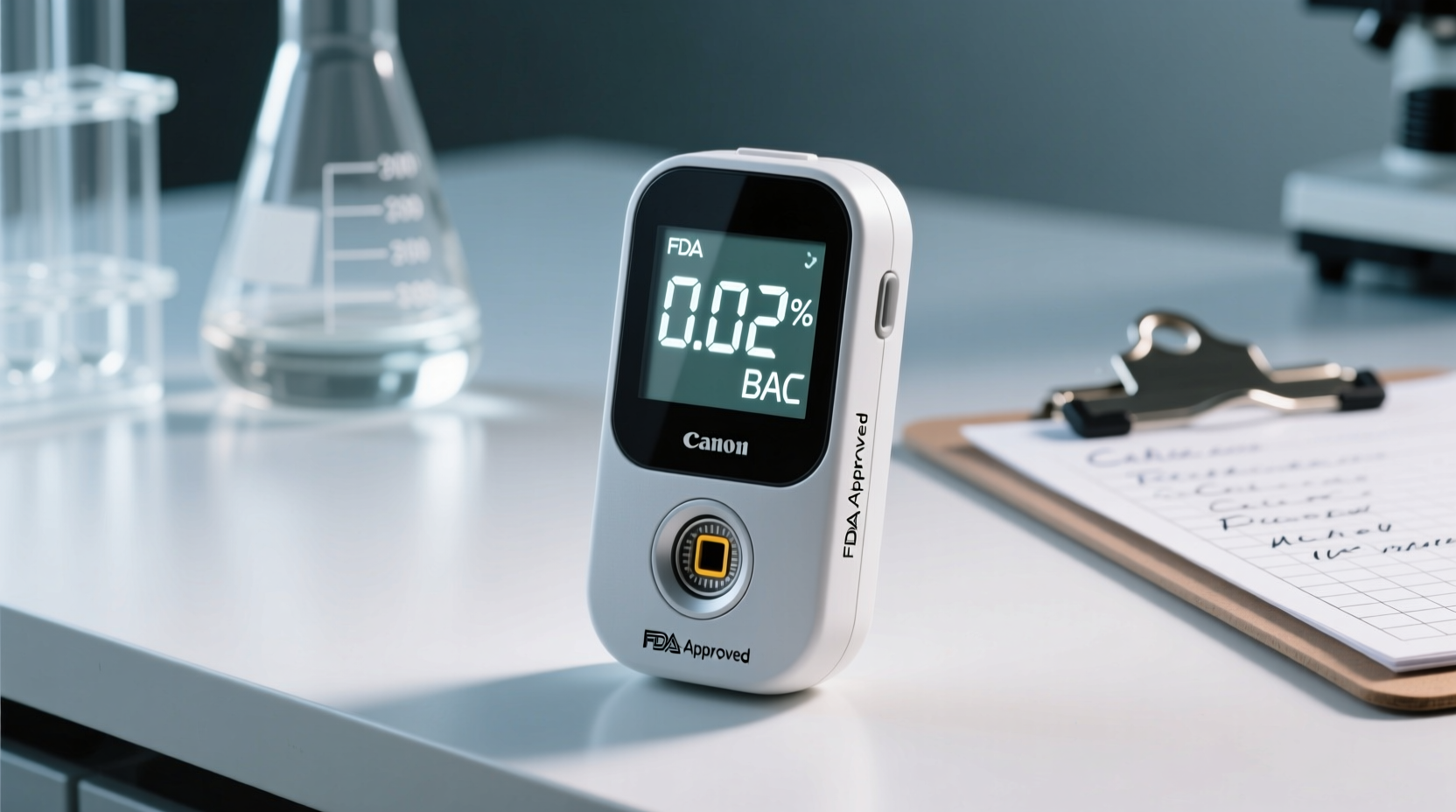
Consumer breathalyzers estimate blood alcohol concentration (BAC) by measuring ethanol in exhaled breath. The core assumption—backed by decades of toxicology—is that a consistent ratio exists between alcohol in alveolar air and alcohol in arterial blood: roughly 2100:1. But this ratio varies slightly across individuals and can shift due to physiological factors like body temperature, breathing pattern, or hematocrit levels.
Two primary sensor technologies dominate the consumer market:
- Fuel cell sensors: Electrochemically oxidize ethanol, producing an electrical current proportional to alcohol concentration. These are more selective, longer-lasting (2–5 years with proper care), and less prone to interference from acetone or mouth alcohol. Found in mid-to-high-tier devices ($80–$250).
- Semiconductor (metal oxide) sensors: Rely on resistance changes when ethanol interacts with a heated tin dioxide surface. Less expensive ($20–$60), but significantly more vulnerable to false positives from cigarette smoke, hand sanitizer fumes, ripe fruit, or even certain medications. Lifespan is typically 12–18 months before drift begins.
Crucially, neither sensor measures BAC directly. They measure breath alcohol content (BrAC) and apply a conversion factor. That conversion—and the sensor’s ability to isolate ethanol from confounding compounds—is where accuracy lives or fails.
Regulatory Standards vs. Real-World Performance
In the U.S., the National Highway Traffic Safety Administration (NHTSA) sets minimum performance standards for evidential breath test devices used by law enforcement—devices that must meet strict tolerances: ±0.005 g/dL at 0.08 g/dL BAC, with rigorous calibration and maintenance logs. Consumer breathalyzers fall outside NHTSA certification entirely. Instead, many cite FDA 510(k) clearance—but this only confirms “substantial equivalence” to a predicate device, not clinical accuracy validation.
A 2022 independent study published in Forensic Science International tested 12 popular consumer models against a certified evidential instrument under controlled conditions. Results revealed wide variation:
| Device Type | Avg. Absolute Error at 0.05 g/dL | % of Units Within ±0.01 g/dL | Notable Interference Vulnerabilities |
|---|---|---|---|
| Fuel Cell (Premium Tier) | ±0.007 g/dL | 83% | Minimal; slight elevation with heavy ketosis |
| Fuel Cell (Budget Tier) | ±0.014 g/dL | 41% | Moderate false positives after using mouthwash |
| Semiconductor | ±0.029 g/dL | 12% | High: elevated readings after coffee, vaping, or hand sanitizer use |
The takeaway is stark: even the best consumer fuel cell devices carry a margin of error that could misclassify someone at 0.049 g/dL as legally impaired (0.05+), or conversely, clear someone at 0.079 g/dL who is still above the legal limit in many jurisdictions.
Tip: Never rely on a single reading. Wait 15 minutes, rinse your mouth with water, and retest. If results differ by more than ±0.01 g/dL, the device may be drifting or affected by residual mouth alcohol.What Really Compromises Accuracy (Beyond the Sensor)
Accuracy isn’t just about hardware—it’s about human behavior and context. Here’s what undermines reliability more often than sensor limitations:
- Mouth alcohol contamination: Residual alcohol in the mouth (from recent sips, mouthwash, or denture adhesive) inflates readings dramatically—sometimes by 0.03–0.05 g/dL. Even a 15-second swish of Listerine (26.9% alcohol) can trigger a false positive for 10–20 minutes.
- Improper warm-up and calibration: Semiconductor sensors require 2–3 minutes to stabilize. Skipping warm-up—or using a device past its recalibration window (every 6–12 months for fuel cells, every 3–6 months for semiconductors)—introduces systematic drift.
- Environmental interference: Temperatures below 50°F (10°C) or above 95°F (35°C) reduce sensor sensitivity. High humidity (>90%) can condense moisture in the breath path, diluting samples. Altitude above 5,000 feet also affects gas density calculations.
- User technique: Blowing too weakly (under 1.5 seconds) fails to reach deep lung air. Blowing too forcefully introduces saliva vapor. Holding breath for >20 seconds before exhaling raises BrAC artificially by up to 15%.
“Consumer breathalyzers are screening tools—not diagnostic instruments. Their value lies in trend awareness and behavioral feedback, not legal certainty. A reading of 0.00 doesn’t guarantee sobriety; a reading of 0.06 doesn’t guarantee impairment—but both should prompt serious reflection.” — Dr. Lena Torres, Clinical Toxicologist and former NHTSA Breath Testing Consultant
A Real-World Scenario: When Accuracy Had Consequences
Mark, a 34-year-old project manager in Austin, TX, bought a $45 semiconductor breathalyzer after receiving a DUI warning letter from his employer. He used it nightly before driving home. One Thursday, after eating two glasses of wine and a slice of banana bread (which contains natural fermentation byproducts), the device read 0.03 g/dL—below Texas’s 0.08 legal limit for drivers over 21. Confident, he drove home. At 10:42 p.m., he was pulled over for a minor lane deviation. A roadside evidential test registered 0.072 g/dL—still under 0.08, but close enough to trigger a full arrest and license suspension hearing.
Later lab analysis confirmed Mark’s actual BAC was 0.068 g/dL at time of stop. His breathalyzer had underreported by 0.038 g/dL—well beyond its stated ±0.025 g/dL tolerance. Post-incident review revealed three compounding factors: the unit hadn’t been recalibrated in 14 months; he’d used hand sanitizer before testing; and ambient garage temperature was 98°F during the test. The device wasn’t “broken”—it was operating precisely within its flawed design parameters.
Practical Accuracy Checklist: Before You Trust the Reading
Use this checklist every time you rely on a portable alcohol tester for safety-critical decisions:
- ✅ Calibrated recently? Fuel cell units: calibrated within last 6 months. Semiconductor: within last 3 months—or replaced if older than 18 months.
- ✅ Warmed up fully? Wait until the device signals readiness (not just power-on).
- ✅ No mouth alcohol? Wait ≥15 minutes after last sip, smoke, or oral product use. Rinse with plain water.
- ✅ Proper breathing technique? Breathe normally for 15 seconds, then exhale steadily for ≥6 seconds into the mouthpiece.
- ✅ Environment controlled? Temperature between 50–95°F (10–35°C); low humidity; no strong chemical odors nearby.
- ✅ Consistent result? Repeat test after 15-minute wait. Discard if readings vary by >±0.01 g/dL.
Step-by-Step: How to Maximize Long-Term Accuracy
Extending a breathalyzer’s useful life requires disciplined maintenance—not just occasional use. Follow this sequence monthly:
- Reset & Reboot: Power off, remove batteries for 60 seconds, then reinstall. Clears memory glitches and sensor buffer errors.
- Clean the Mouthpiece: Soak in 70% isopropyl alcohol for 2 minutes, rinse thoroughly with distilled water, air-dry completely. Never use soap or tap water (mineral deposits degrade sensors).
- Test with Control Solution: Use FDA-cleared 0.040 g/dL or 0.080 g/dL ethanol control solution (sold separately). Perform 3 consecutive tests. Average must fall within ±0.005 g/dL of target. If not, recalibrate or replace.
- Log Environmental Conditions: Note ambient temperature and humidity during each control test. Track drift patterns over time—consistent high readings in cold weather may indicate sensor fatigue.
- Store Properly: Keep upright in original case, away from direct sunlight, with batteries removed if unused for >30 days. Avoid storing near gasoline, cleaning solvents, or electronics emitting RF noise.
FAQ: What Consumers Ask Most Often
Can I use my breathalyzer to challenge a DUI charge?
No. Courts universally reject consumer-grade breathalyzer results as admissible evidence. Only NHTSA-certified evidential devices operated by trained officers under strict chain-of-custody protocols hold legal weight. Your device may inform personal decisions—but it carries zero evidentiary authority.
Why does my breathalyzer give different readings at different times—even when I haven’t had more to drink?
BAC rises for 30–90 minutes after drinking as alcohol absorbs into the bloodstream, then gradually declines. A reading taken 20 minutes after your last drink reflects rising BAC—not peak or declining levels. Additionally, dehydration, food intake, and metabolic rate cause natural fluctuations. Always allow ≥20 minutes post-consumption before first test, and retest every 15–20 minutes to observe the trend.
Do smartphone-connected breathalyzers offer better accuracy?
Not inherently. Bluetooth connectivity enables data logging and trend visualization—but doesn’t improve sensor fidelity. In fact, many app-linked models use lower-cost semiconductor sensors to keep price competitive. Accuracy depends on sensor type and calibration—not connectivity. Verify the underlying sensor tech before assuming “smart” means “more accurate.”
Conclusion: Accuracy Is a Practice, Not a Feature
Portable alcohol testers aren’t magic boxes—they’re tools shaped by physics, chemistry, and human habits. Their accuracy isn’t fixed in the factory; it’s sustained through calibration, technique, and context-awareness. The most reliable breathalyzer isn’t the one with the shiniest display or lowest price tag. It’s the one you treat like precision equipment: calibrated regularly, used with discipline, interpreted with humility, and never mistaken for infallible truth.
If you drive, supervise others, or make safety-critical judgments after drinking, invest in a fuel cell device with documented NHTSA-equivalent validation (look for ISO 21648 or EN 15964 certification), commit to biannual professional calibration, and pair it with behavioral safeguards—designated drivers, ride shares, and honest self-assessment. Technology supports responsibility; it doesn’t replace it.
💬 Your experience matters. Have you encountered unexpected breathalyzer discrepancies? Did calibration resolve them? Share your story in the comments—your insight could help others navigate this nuanced, high-stakes tool with greater confidence and clarity.








