When setting up holiday displays, garden lighting, or temporary outdoor fixtures, many people reach for any available extension cord—often pulling one from the garage or closet without considering its intended use. But using an indoor-rated cord outdoors, especially for lighting, can lead to dangerous consequences. The differences between outdoor and indoor extension cords go beyond simple labeling—they involve insulation, materials, safety ratings, and electrical performance under environmental stress. Understanding these distinctions ensures not only the longevity of your lighting setup but also protects your home and family from fire hazards, electric shocks, and equipment failure.
Core Differences in Construction and Materials
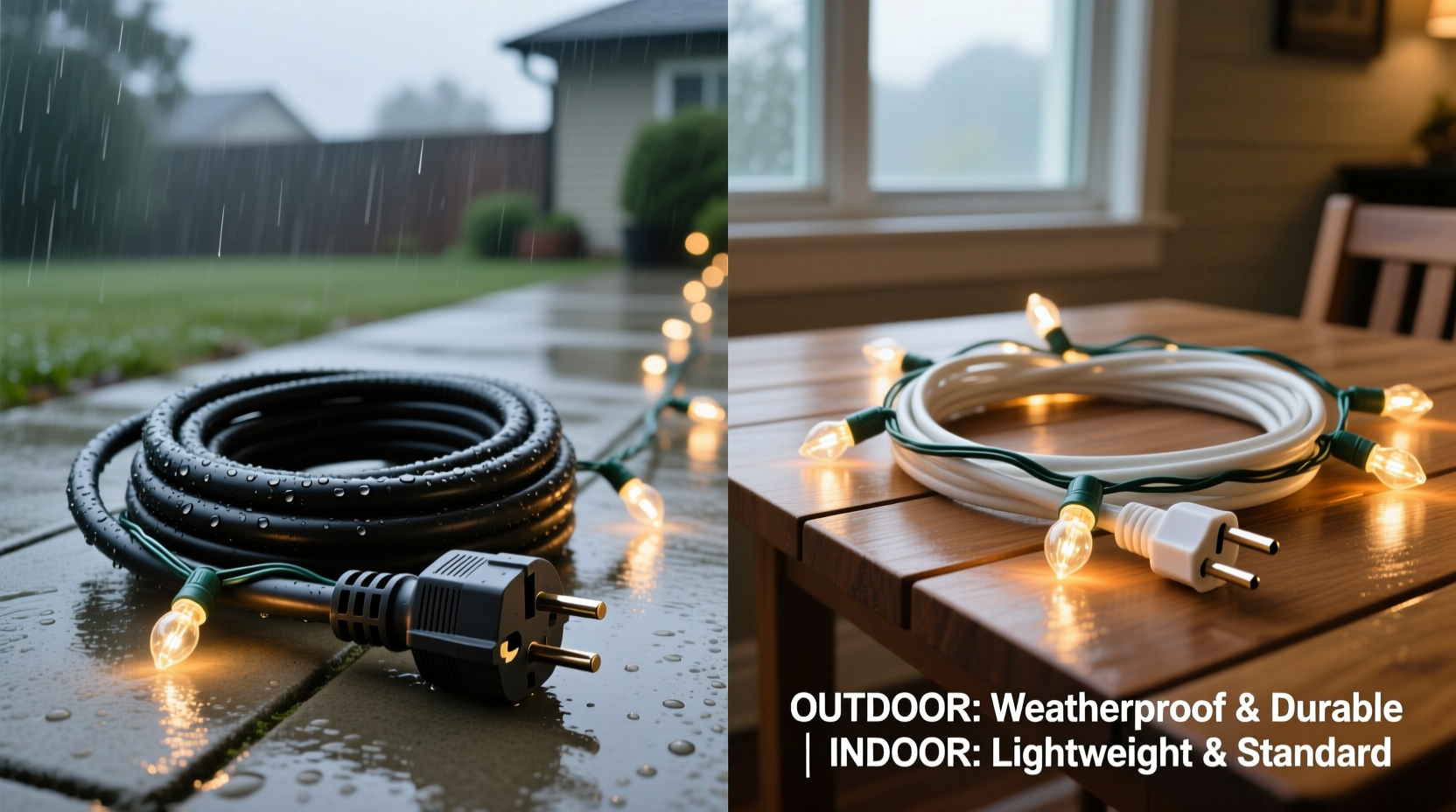
The most significant distinction between indoor and outdoor extension cords lies in their physical construction. Indoor cords are designed for stable, dry environments with minimal exposure to temperature fluctuations, moisture, or UV radiation. Their outer jackets are typically made from thinner, less durable plastics like PVC (polyvinyl chloride), which degrade quickly when exposed to sunlight or damp conditions.
In contrast, outdoor extension cords feature a robust, weather-resistant jacket often labeled as “SOOW,” “SJOOW,” or “W-A” rated. These designations indicate resistance to oil, abrasion, extreme temperatures, and ultraviolet light. For example, SJOOW-rated cords are built with thermoplastic elastomer sheathing that remains flexible even in freezing conditions and resists cracking in summer heat.
The conductors inside both types may be similar—usually copper—but outdoor cords often have thicker insulation around each wire and additional shielding to prevent short circuits caused by moisture ingress. This layered protection is critical when powering string lights along patios, driveways, or trees where rain, sprinklers, or condensation could compromise an indoor cord’s integrity.
Tip: Always check the jacket for markings like “UL Listed,” “W” rating, or phrases such as “Suitable for Outdoor Use.” If it doesn’t say so explicitly, assume it’s meant for indoor use only.Safety Standards and Electrical Ratings
Extension cords are subject to rigorous safety standards set by organizations like Underwriters Laboratories (UL) and the National Electrical Code (NEC). These standards classify cords based on their environment, load capacity, and risk factors.
Indoor extension cords generally carry lower amperage and wattage ratings because they're expected to power small appliances or lamps over short durations. They’re not built to handle sustained loads or high-wattage lighting arrays. Using them beyond their limits—even briefly—can cause overheating, melting, or fire.
Outdoor cords, however, must meet stricter requirements. They are commonly rated for 15 amps at 125 volts (1,875 watts), making them suitable for multiple strands of LED or incandescent lights. Many also include ground fault circuit interrupter (GFCI) compatibility or built-in surge protection, essential features when dealing with wet surfaces or unpredictable weather.
“Using an indoor extension cord outside isn’t just inefficient—it’s a violation of basic electrical safety codes. Moisture penetration can create a direct path to electrocution.” — James Ralston, Licensed Electrician and NEC Compliance Officer
Comparative Performance in Real Conditions
To illustrate how these differences play out in practice, consider two scenarios involving identical string lights powered by different cords.
Mini Case Study: Front Yard Lighting Gone Wrong
A homeowner in Portland, Oregon installed 100 feet of LED fairy lights along their porch railing using a standard indoor extension cord stored in the basement. The display looked perfect during installation on a dry afternoon. However, within three days, overnight drizzle soaked the cord’s connection point near the ground. By morning, the outlet tripped repeatedly, and inspection revealed frayed insulation and rust-colored residue around the plug.
An electrician diagnosed the issue: the indoor cord absorbed moisture through microscopic cracks in its jacket, creating a partial short. While no fire occurred, the homeowner risked electrocution simply by touching the wet railing. Replacing the setup with a 100-foot SJOOW-rated outdoor cord solved the problem immediately, with no further issues over six months of seasonal use.
This case underscores a crucial reality: even brief exposure to dampness can compromise indoor cords. Outdoor-rated versions are engineered to shed water, resist mold growth, and maintain dielectric strength—their ability to insulate electricity—even when wet.
Choosing the Right Cord for Your Lighting Needs
Selecting the correct extension cord depends on several factors: distance, wattage, duration of use, and environmental exposure. Below is a comparison table summarizing key differences.
| Feature | Indoor Extension Cord | Outdoor Extension Cord |
|---|---|---|
| Jacket Material | Thin PVC | Rubberized or UV-stabilized thermoplastic |
| Weather Resistance | None – degrades in sun/moisture | High – resistant to rain, snow, UV rays |
| Temperature Range | Room temperature (60–80°F) | -40°F to 194°F (-40°C to 90°C) |
| Gauge Options | Typically 16–18 AWG | 12–16 AWG (lower gauge = higher capacity) |
| Grounding | May be ungrounded (2-prong) | Always grounded (3-prong) if rated for outdoor use |
| Lifespan (with regular use) | 1–2 seasons before brittleness sets in | 3–5+ years with proper storage |
| Typical Use Case | Powering lamps, TVs, indoor decorations | String lights, landscape lighting, holiday displays |
Note that gauge (AWG) matters significantly when running longer lengths. A 16-gauge cord might suffice for 25 feet of low-wattage LEDs indoors, but for 50+ feet outdoors, a 14- or 12-gauge cord is necessary to prevent voltage drop and overheating.
Step-by-Step Guide to Safely Power Outdoor Lights
Follow this practical sequence to ensure safe, reliable operation of your outdoor lighting:
- Evaluate Total Wattage: Add up the wattage of all light strings you plan to connect. Most LED string lights consume 5–10 watts per strand; incandescents can use 40–100 watts.
- Determine Required Length: Measure the distance from your power source to the farthest light. Add 10–15% extra for slack and elevation changes.
- Select Correct Gauge: Use 16 AWG for runs under 50 ft with ≤ 200 watts. Choose 14 AWG for 50–100 ft or 200–500 watts. Opt for 12 AWG for heavy-duty or permanent setups.
- Verify Outdoor Rating: Ensure the cord has “W” in its rating (e.g., SJOOW) and is labeled “For Outdoor Use.” Avoid splicing indoor cords to extend length.
- Use GFCI Protection: Plug into a GFCI-protected outlet or use a GFCI adapter. Test monthly to confirm functionality.
- Elevate Connections: Keep plugs and junctions off the ground. Use cord clips or hooks instead of nails/screws to avoid damaging insulation.
- Inspect Regularly: Check every few weeks for cuts, swelling, discoloration, or loose prongs. Replace immediately if signs of wear appear.
- Store Properly Off-Season: Clean dust and debris, coil loosely, and store in a dry, shaded container away from rodents.
Common Misconceptions About Outdoor Lighting Cords
Several myths persist about extension cord usage, particularly regarding lighting:
- Myth: “If it works now, it’s safe.” Reality: Functionality does not equal safety. A degraded cord may still conduct electricity while posing serious fire or shock risks.
- Myth: “All green or thick cords are outdoor-safe.” Not true—color and thickness aren't reliable indicators. Always read the label.
- Myth: “I can use duct tape to seal a damaged indoor cord.” Temporary fixes fail under weather stress. Damaged cords should be replaced, not repaired.
- Myth: “LEDs use so little power, any cord will do.” While LEDs reduce load, long cord runs still require proper gauge and insulation to prevent voltage drop and hotspots.
Frequently Asked Questions
Can I use an indoor extension cord outside if it’s only for a few hours?
No. Even short-term exposure to dew, humidity, or incidental rain can allow moisture into the conductor pathways. Once compromised, the cord becomes unsafe regardless of duration. Always use a properly rated outdoor cord.
What happens if I plug outdoor lights into an indoor cord accidentally?
Initially, the lights may work normally. However, over time, the insulation can crack due to UV exposure or temperature swings. If moisture enters the wire, it increases resistance, generates heat, and may trip breakers—or worse, ignite nearby materials. Immediate replacement is advised upon discovery.
Are there cords rated for both indoor and outdoor use?
Yes. Many outdoor-rated cords (like those marked SJOOW or SOOW) can safely be used indoors. They are more durable than standard indoor cords and offer added protection. However, the reverse is not true—indoor cords should never be used outdoors.
Checklist: Selecting and Using Extension Cords for Outdoor Lighting
- ☑ Calculate total wattage of connected lights
- ☑ Measure required cord length plus extra for routing
- ☑ Choose appropriate AWG based on length and load
- ☑ Confirm cord is labeled “For Outdoor Use” with UL listing
- ☑ Verify 3-prong grounding plug (if applicable)
- ☑ Use GFCI-protected outlet or adapter
- ☑ Elevate all connections above ground level
- ☑ Inspect cord monthly for damage or wear
- ☑ Store coiled and dry when not in use
- ☑ Replace frayed, stiff, or discolored cords immediately
Conclusion: Safety Starts With the Right Cord
The choice between an outdoor and indoor extension cord isn’t merely about convenience—it’s a fundamental decision impacting safety, efficiency, and compliance with electrical best practices. When illuminating your home’s exterior, garden paths, or festive displays, cutting corners on cord quality invites avoidable risks. Modern outdoor-rated cords are affordable, widely available, and engineered to withstand real-world challenges. By investing in the right product and following proven guidelines, you protect not only your property but also the people who enjoy your illuminated spaces.
💬 Have a lighting project coming up? Take a moment to inspect your cords before plugging in. Share your setup tips or lessons learned in the comments—your experience could help others light up safely!