Back pain affects millions of people worldwide, and one often-overlooked contributor is the quality and type of mattress used. While memory foam mattresses have long been praised for their pressure-relieving properties, hybrid models—featuring both memory foam and innerspring coils—are increasingly recommended for those with chronic back issues. But is the inclusion of coils truly necessary for effective back pain relief? This article dives into the mechanics of spinal alignment, material responsiveness, and real-world user experiences to provide a clear answer.
Understanding Back Pain and Sleep Support
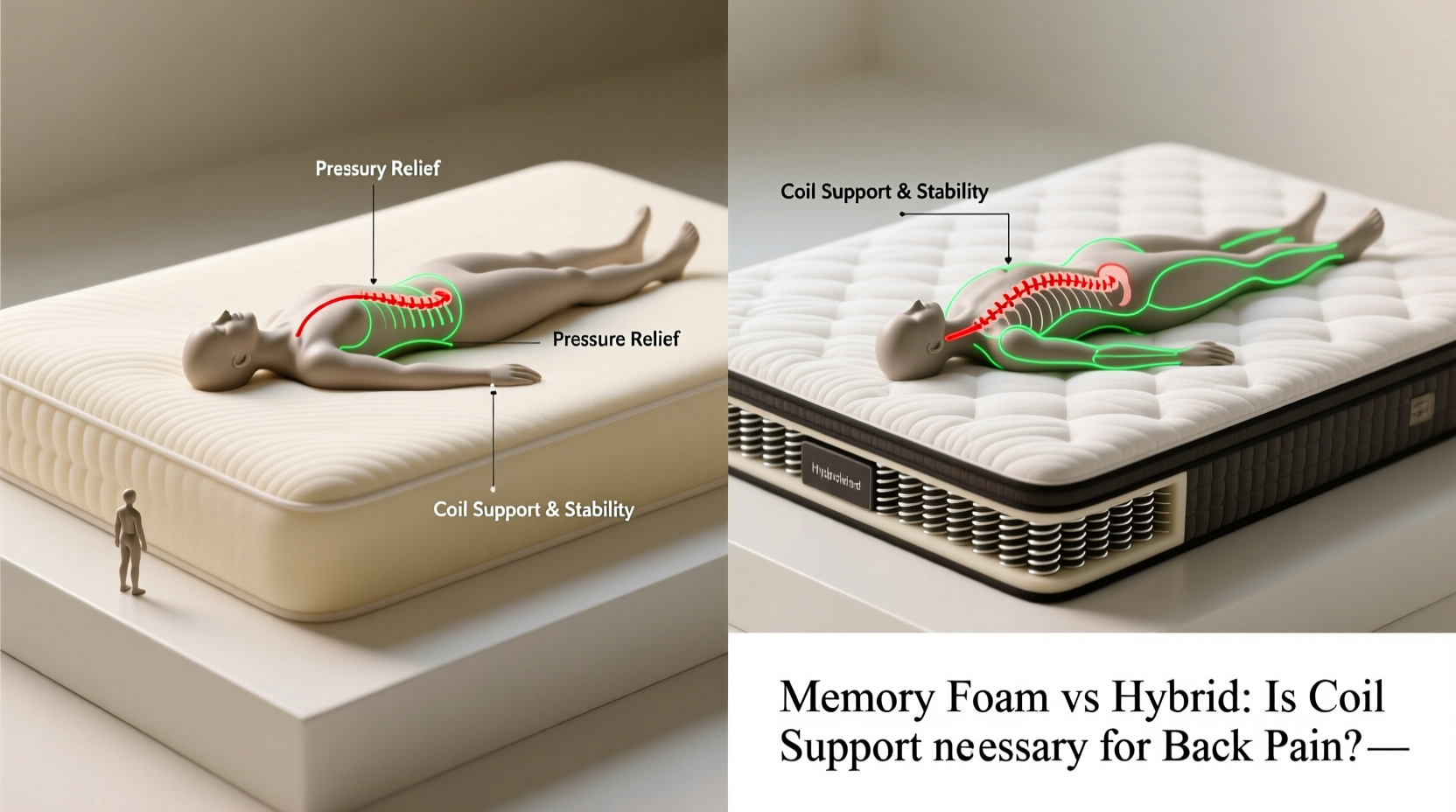
Chronic back pain often stems from poor posture, muscle strain, or spinal misalignment during daily activities—but sleep can either exacerbate or alleviate these conditions. A mattress that fails to support the natural curvature of the spine may lead to increased stiffness, nerve compression, or joint discomfort upon waking.
The lumbar region (lower back) requires consistent support to prevent sinking too deeply, which can tilt the pelvis and strain the lower spine. At the same time, pressure points at the shoulders and hips need cushioning to avoid restricted blood flow and tossing during the night. The ideal mattress balances contouring with structural reinforcement.
“Spinal alignment during sleep is just as important as posture while standing or sitting. A supportive sleep surface helps maintain neutral alignment, reducing morning pain.” — Dr. Lena Peterson, Chiropractic Specialist
How Memory Foam Mattresses Work for Back Pain
Traditional memory foam mattresses are constructed entirely from viscoelastic foam layers. These materials respond to body heat and weight, slowly conforming to the sleeper’s shape. This deep contouring can be highly beneficial for side sleepers or individuals with joint pain, as it cushions pressure points effectively.
However, all-foam designs have limitations. Some users report excessive sinkage, particularly around the hips, which can cause the spine to dip out of alignment. Additionally, older or low-density foams may lose resilience over time, leading to permanent body impressions that compromise support.
Tip: If using a memory foam mattress, opt for high-density base layers and a medium-firm feel (around 6–7 on the firmness scale) to reduce excessive sagging.Modern memory foam models often include gel infusions or open-cell structures to improve breathability and response time. Still, they generally lack the dynamic push-back that coils provide, especially under heavier body zones like the midsection.
The Role of Coils in Hybrid Mattresses
Hybrid mattresses combine the best features of foam and innerspring systems. Typically, they feature 2–4 inches of memory or poly-foam comfort layers atop a core of individually wrapped coils (also called pocketed coils). This design delivers both contouring and responsive support.
The coil system serves several critical functions:
- Edge support: Reinforced perimeter coils prevent roll-off and make sitting on the edge more stable.
- Responsive push-back: Unlike slow-reacting foam, coils react instantly to movement, helping reposition during the night without getting “stuck.”
- Targeted support: Pocketed coils move independently, allowing them to compress only where needed—supporting the hips while staying firm under the waist.
- Airflow: Open coil structures promote better ventilation than solid foam cores, reducing heat retention.
For back pain sufferers, this combination means the spine stays aligned throughout the night. The memory foam cradles sensitive areas, while the coils prevent excessive sinking in the torso—a common complaint among back and stomach sleepers on all-foam beds.
Real Example: A Case Study in Pain Relief
Consider Mark, a 48-year-old office worker with moderate lower back pain due to prolonged sitting and mild disc degeneration. He initially used a soft memory foam mattress, believing it would “cushion” his pain. After six months, he reported increased stiffness and difficulty getting out of bed.
Upon switching to a medium-firm hybrid with zoned support coils (firmer under the lumbar region), Mark noticed improvement within two weeks. His chiropractor noted better pelvic alignment during adjustments, and Mark reported deeper sleep with less nighttime shifting. The added responsiveness allowed him to turn easily, while the reinforced center third prevented hip drop.
This case illustrates how coil support isn’t just about firmness—it’s about biomechanical synergy between comfort and structure.
Comparing Memory Foam and Hybrid: Key Differences
| Feature | Memory Foam Mattress | Hybrid Mattress |
|---|---|---|
| Support Type | Contouring, adaptive foam | Foam + responsive coils |
| Spinal Alignment | Good for side sleepers; may sag under hips for back/stomach sleepers | Superior alignment due to targeted coil support |
| Pressure Relief | Excellent—deep conforming reduces joint stress | Very good—foam layer provides cushioning |
| Motion Isolation | Excellent—minimal transfer between partners | Good—pocketed coils reduce but don’t eliminate motion |
| Cooling Performance | Poor to moderate—heat retention common | Better airflow due to coil layer |
| Durability | 5–7 years (depends on foam density) | 7–10 years (coils resist sagging longer) |
| Best For | Side sleepers, couples, those who like sinking into bed | Back/stomach sleepers, back pain sufferers, hot sleepers |
The data shows that hybrids offer a broader range of benefits, especially when back pain is a primary concern. While memory foam excels in pressure relief, its lack of dynamic support can undermine long-term spinal health.
When Coil Support Becomes Essential
Not every back pain sufferer needs a hybrid, but certain conditions make coil integration highly advisable:
- Lower back pain related to poor alignment: If your pain worsens in the morning or after lying down, your mattress may not be supporting your lumbar curve.
- Higher body weight (over 230 lbs): Heavier individuals are more likely to sink too deeply into all-foam beds, increasing spinal strain.
- Combination or back sleeping: These positions place more weight on the pelvis and require firmer, more responsive support.
- Need for ease of movement: Arthritis, mobility issues, or frequent repositioning benefit from the lift provided by coils.
In contrast, strict side sleepers—especially those with shoulder or hip pain—may find sufficient relief in a high-quality memory foam mattress with adequate thickness and density.
Tip: Test your current mattress by lying on your back and sliding a hand under your lower back. If there’s too much space, the bed is too firm; if your hand doesn’t fit, it’s too soft. Ideal support allows a flat hand to slide in with slight resistance.Actionable Checklist: Choosing the Right Mattress for Back Pain
Use this checklist to evaluate whether a memory foam or hybrid mattress is right for your condition:
- ✅ Identify your primary sleeping position (side, back, stomach, or combination).
- ✅ Assess your current pain patterns—do you wake up stiff or achy?
- ✅ Determine your weight and body type—higher weight often favors hybrid support.
- ✅ Look for medium-firm firmness (6–7/10) for balanced support and comfort.
- ✅ Prioritize zoned coil systems if available—extra lumbar reinforcement helps alignment.
- ✅ Check foam density: 3+ lb/ft³ for memory foam layers ensures durability.
- ✅ Try before you buy—or ensure a sleep trial of at least 100 nights.
- ✅ Consider edge support if you sit on the bed frequently or share it with a partner.
Frequently Asked Questions
Can a memory foam mattress cause back pain?
Yes, if it’s too soft or made with low-density foam. Over time, excessive sinkage can misalign the spine, especially for back and stomach sleepers. A mattress that doesn’t support the hips adequately may tilt the pelvis forward, straining the lower back.
Do hybrid mattresses last longer than memory foam?
Generally, yes. The coil system in hybrids resists sagging better than foam alone, especially when high-gauge steel and strong encasements are used. With proper care, hybrids often maintain support for 2–3 years longer than all-foam counterparts.
Is a firmer mattress always better for back pain?
No. Firmness is personal and depends on body type and sleep position. A mattress that’s too firm can create pressure on the lower back and hips, reducing circulation and causing discomfort. The goal is balanced support—not maximum hardness.
Final Recommendation: When to Choose Hybrid Over Memory Foam
While memory foam remains an excellent choice for pressure relief and motion isolation, the addition of coil support in hybrid mattresses offers distinct advantages for back pain sufferers. The structured foundation provided by pocketed coils promotes proper spinal alignment, prevents excessive sinkage, and enhances longevity—all critical factors in managing chronic discomfort.
If you’re dealing with persistent lower back pain, sleep hot, or weigh over 200 pounds, a hybrid model is likely the better investment. For lighter side sleepers seeking plush comfort, a high-density memory foam bed may suffice—provided it maintains a medium-firm feel and doesn’t develop sags within the first few years.
“The right mattress doesn’t just make you comfortable—it actively supports healing. For many patients, upgrading to a supportive hybrid was a turning point in their pain management journey.” — Dr. Rajiv Mehta, Physical Therapist and Sleep Consultant
Take Action Today for Better Sleep and Less Pain
Your mattress should work for your body, not against it. If you’ve been waking up with stiffness or relying on pain relievers to start your day, it may be time to reassess your sleep surface. Don’t assume that softness equals comfort—true comfort includes support, alignment, and sustainability over time.
Start by evaluating your current setup using the hand test and checklist above. Then, explore reputable hybrid models with proven zoned support and generous trial periods. Your spine—and your mornings—will thank you.
💬 Have you switched from memory foam to hybrid for back pain? Share your experience below and help others make informed decisions.








