Learning to speak Spanish begins with one essential foundation: mastering the alphabet. Unlike English, Spanish has a highly phonetic system—each letter consistently represents a specific sound. This makes pronunciation more predictable once you understand the rules. For beginners, getting the alphabet right from the start prevents bad habits and builds confidence in reading, speaking, and listening. This guide breaks down every letter, highlights tricky sounds, and provides practical steps to ensure your pronunciation is clear and accurate.
The Modern Spanish Alphabet: 27 Letters
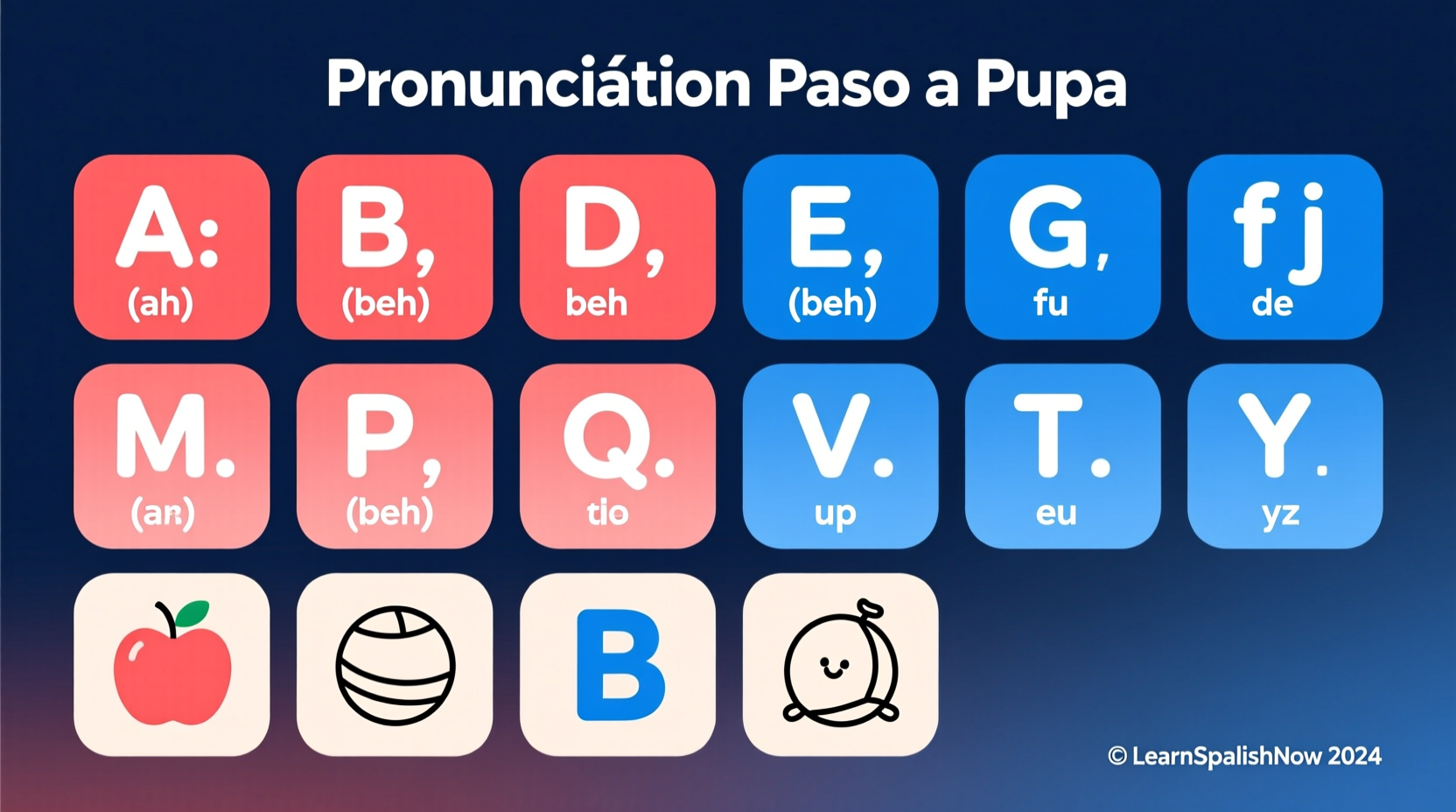
The Spanish alphabet, or el abecedario, officially consists of 27 letters. In 2010, the Royal Spanish Academy (RAE) simplified the alphabet by removing ch, ll, and rr as standalone letters, though they remain important digraphs (letter combinations that produce unique sounds).
Here is the full list of letters with their standard names:
| Letter | Name in Spanish | Pronunciation (IPA) | Closest English Sound |
|---|---|---|---|
| A | a | /a/ | “ah” as in “father” |
| B | be | /b/ | soft “b”, like “v” between vowels |
| C | ce | /k/, /θ/, /s/ | “k” before a, o, u; “th” (Spain) or “s” (Latin America) before e, i |
| D | de | /d/ | soft “d”, almost like “th” in “this” |
| E | e | /e/ | “eh” as in “bed” |
| F | efe | /f/ | same as English “f” |
| G | ge | /ɡ/, /x/, /h/ | hard “g” before a, o, u; soft “h” before e, i |
| H | hache | /h/ | silent |
| I | i | /i/ | “ee” as in “see” |
| J | jota | /x/ | strong “h” or raspy “kh” |
| K | ka | /k/ | like “k” in “kangaroo” |
| L | ele | /l/ | same as English “l” |
| M | eme | /m/ | same as English “m” |
| N | ene | /n/ | same as English “n” |
| Ñ | eñe | /ɲ/ | like “ny” in “canyon” |
| O | o | /o/ | “oh” as in “go” |
| P | pe | /p/ | same as English “p” |
| Q | cu | /k/ | always followed by “u” |
| R | ere | /ɾ/, /r/ | single tap or strong roll |
| S | ese | /s/ | same as English “s” |
| T | te | /t/ | same as English “t” |
| U | u | /u/ | “oo” as in “food” |
| V | uve | /b/ | pronounced like “b” |
| W | doble uve | /w/ | used in loanwords |
| X | equis | /ks/, /x/, /s/ | varies by word |
| Y | ye | /ʝ/, /i/ | “y” as in “yes” or vowel “ee” |
| Z | zeta | /θ/, /s/ | “th” in Spain, “s” in Latin America |
Step-by-Step Pronunciation Guide
Follow this structured approach to master each sound correctly.
- Listen First: Use native audio resources (such as Forvo or SpanishDict) to hear how each letter is pronounced. Focus on minimal pairs—words that differ by only one sound—to train your ear.
- Practice Vowels Daily: Spanish vowels are pure and short. Say them clearly without diphthongizing (adding a glide): A (/a/), E (/e/), I (/i/), O (/o/), U (/u/).
- Master the B/V Merge: In Spanish, B and V are pronounced identically—a soft bilabial approximant. It’s not a hard “b” but closer to a light “v” between vowels.
- Work on the “R” Trill: Start with single taps (as in pero) before attempting the rolled “rr” (as in perro). Place the tip of your tongue just behind the upper teeth and blow air gently.
- Learn Regional Differences: Be aware that “c” (before e/i) and “z” are pronounced as /θ/ (like “think”) in Spain, but as /s/ in Latin America. Neither is wrong—choose based on your learning goal.
- Repeat Aloud: Read simple texts aloud daily. Children's books or graded readers are excellent tools for building fluency.
Common Challenges and How to Overcome Them
Even motivated learners stumble on certain sounds. Here’s how to tackle the most frequent issues:
- The Silent H: Unlike English, H is never pronounced. Words like hola and hacer start with the vowel sound.
- Ñ – The Unique Letter: This letter doesn’t exist in English. Practice words like niño, señor, and mañana until the “ny” sound becomes natural.
- J and G (before e/i): These produce a guttural /x/ sound, similar to the “ch” in Scottish “loch.” Avoid making it too harsh—think of clearing your throat lightly.
- Digraphs Matter: Though no longer official letters, “ch” (chico), “ll” (llave), and “rr” (carro) still represent distinct sounds. Pay attention to these combinations.
“Pronunciation accuracy starts with muscle memory. Consistent repetition trains the mouth to form new sounds effortlessly.” — Dr. Luisa Fernández, Linguist and Spanish Phonetics Instructor
Essential Tips for Rapid Improvement
Tip: Practice the alphabet forwards and backwards daily. This reinforces letter names and boosts recall during spelling exercises.- Use mnemonic phrases: For example, “La gente va a la jefa” helps distinguish the soft G and J sounds.
- Label household items with their Spanish names and say them aloud when passing by.
- Pair up with a language exchange partner to practice real-time spelling and pronunciation.
- Focus on syllable stress—Spanish words usually stress the second-to-last syllable unless marked with an accent.
Mini Case Study: Ana’s Breakthrough
Ana, a beginner from Canada, struggled with the rolled “r” for months. She avoided words like puerta and perro, substituting them with simpler alternatives. After watching YouTube tutorials and practicing the “tt” sound in American English “butter” (which mimics the single tap), she gradually built up to the full trill. Within six weeks of daily five-minute drills, she could confidently pronounce “arroz” and even introduced herself as “Ana, de Canadá.” Her persistence transformed a weakness into a strength.
Checklist: Master the Spanish Alphabet in 7 Days
Follow this daily plan to build a solid foundation:
- Day 1: Learn all 27 letter names and write them aloud three times.
- Day 2: Focus on vowels—practice saying them in isolation and in simple words (e.g., sol, pie, mes).
- Day 3: Tackle consonants B, V, D, and L—note their soft articulation.
- Day 4: Work on C, Z, and the regional /s/ vs /θ/ distinction.
- Day 5: Master Ñ and practice words with “ll” and “y”.
- Day 6: Drill R and RR with tongue twisters: “Rápido, rueda el carro rojo.”
- Day 7: Review all letters, spell your name, city, and five common objects. Record and evaluate.
Frequently Asked Questions
Is the Spanish alphabet harder than English?
No—Spanish is actually easier because it’s phonetic. Once you learn the sound of a letter, it stays consistent. English has many irregularities (e.g., “ough” in “though,” “through,” “cough”), while Spanish avoids such inconsistencies.
Why do some people say “beta” and “delta” for B and D?
In formal linguistic contexts, especially in Latin America, some teachers use “beta” and “delta” to emphasize the softer, fricative pronunciation of B and D between vowels. However, the official names remain “be” and “de.”
Do I need to learn both “th” and “s” for C and Z?
You don’t need to master both unless you plan to live in or interact deeply with both regions. Pick one accent model early (Spain or Latin America) and stick with it for consistency.
Final Thoughts and Call to Action
Mastering the Spanish alphabet is not about perfection—it’s about progress. Each correctly pronounced letter brings you closer to fluent communication. The key is consistent, mindful practice. Don’t rush ahead before securing the basics. Revisit the alphabet weekly, challenge yourself with spelling games, and celebrate small wins.
🚀 Start today: Spend 10 minutes practicing the alphabet out loud. Then, teach it to someone else—teaching reinforces learning. Share your progress in the comments below and inspire others on the same journey!