
As holiday seasons roll around, one of the most common decorating challenges is hanging Christmas lights safely and securely—without damaging walls, paint, or trim. Magnetic and adhesive hooks have both gained popularity as damage-free solutions, but they serve very different purposes. Choosing between them depends on more than just convenience; it’s about understanding material compatibility, load capacity, environmental exposure, and long-term reliability. This guide compares magnetic and adhesive hooks in depth, using real-world data and expert insights to help you decide which option holds better for your specific setup.
How Magnetic Hooks Work
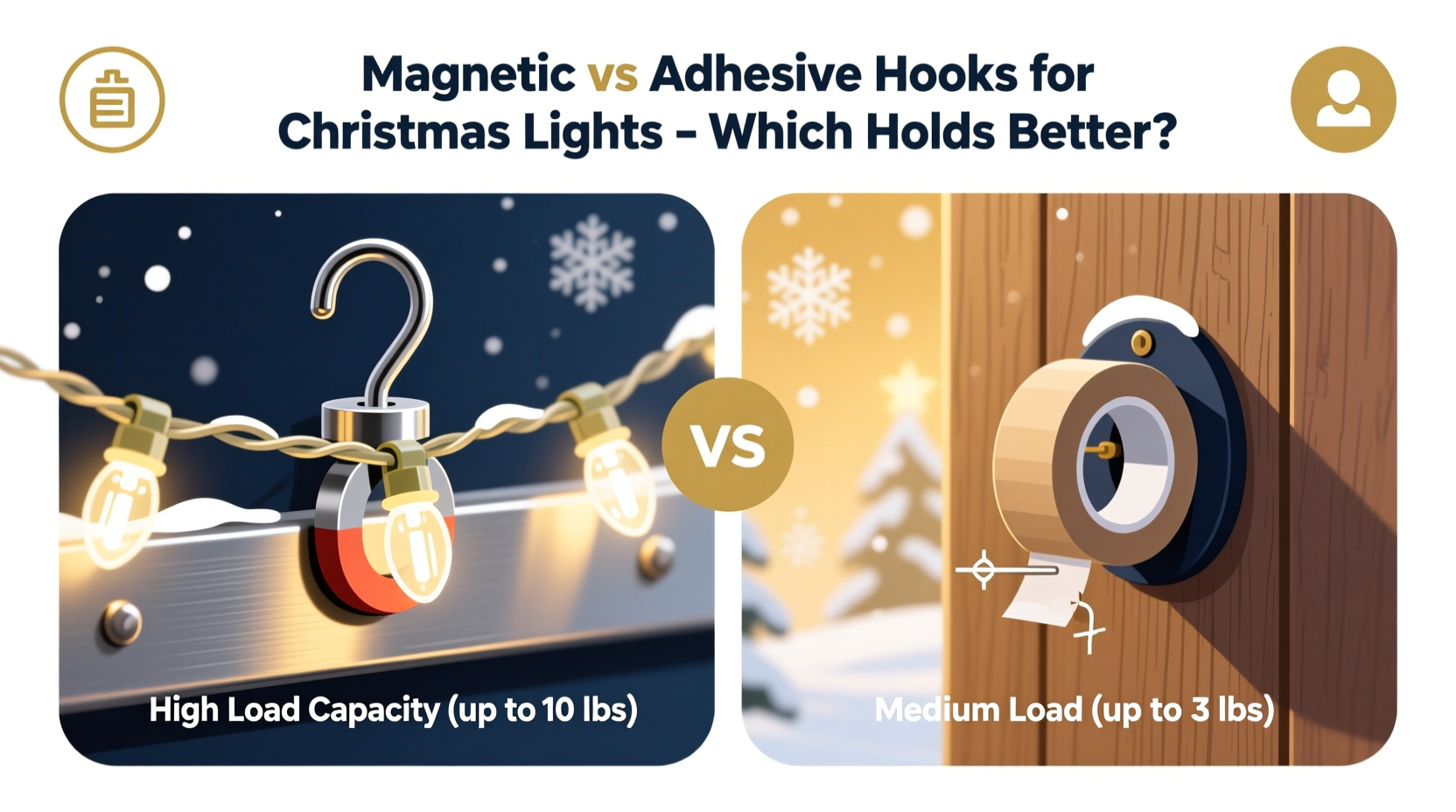
Magnetic hooks rely on the attraction between a magnet and a ferromagnetic surface—typically steel or iron. Most models use strong neodymium magnets encased in plastic or rubber housings to protect surfaces and improve grip. These hooks are ideal when attaching to metal gutters, downspouts, garage doors, or metal railings. Their holding power comes from magnetic flux density and surface contact area.
The strength of a magnetic hook is measured in pounds of pull force—the amount of vertical weight required to detach it from a smooth steel surface under ideal conditions. High-quality magnetic hooks can support 5 to 10 pounds each, making them suitable for heavier light strings, especially commercial-grade LED or incandescent sets.
Tip: Always test the magnetic strength on your intended surface before loading it with lights. Not all “metal” surfaces are magnetic—aluminum siding, copper gutters, and stainless steel fixtures often won’t work.How Adhesive Hooks Work
Adhesive hooks use pressure-sensitive backing—usually a foam-based acrylic or silicone adhesive—to bond temporarily to non-porous surfaces like painted drywall, glass, tile, vinyl siding, or window frames. Brands like Command™ popularized this type of hook, emphasizing clean removal without residue.
The effectiveness of an adhesive hook depends on three factors: surface preparation, temperature during application, and duration of use. The adhesive needs at least one hour to form an initial bond and up to 48 hours to reach full strength. Once set, many premium adhesive hooks can hold 3–5 pounds per unit, depending on size and design.
Unlike magnetic options, adhesive hooks expand the range of usable surfaces. They’re especially useful for renters or homeowners who want to avoid any kind of puncture or mark. However, their long-term durability in cold, wet, or windy conditions is limited compared to mechanical fasteners or magnetic alternatives.
Direct Comparison: Magnetic vs Adhesive Hooks
To determine which holds better, several variables must be weighed. Below is a detailed comparison table summarizing key performance indicators.
| Feature | Magnetic Hooks | Adhesive Hooks |
|---|---|---|
| Max Holding Strength (per hook) | Up to 10 lbs (on steel) | Up to 5 lbs (ideal conditions) |
| Surface Compatibility | Ferrous metals only | Painted walls, glass, vinyl, tile |
| Weather Resistance | Excellent (cold strengthens magnetism) | Moderate (fails in extreme cold/humidity) |
| Installation Time | Instant | 48 hours for full bond |
| Removal & Reusability | Reusable indefinitely | Single-use; adhesive degrades after removal |
| Risk of Surface Damage | Low (if used correctly) | Very low (designed for clean removal) |
The data shows that magnetic hooks outperform adhesive ones in raw strength and weather resilience. However, adhesive hooks offer unmatched versatility in where they can be installed—provided the surface is compatible and properly prepared.
Real-World Performance: A Case Study
In December 2023, a homeowner in Minneapolis tested both types of hooks on identical strands of heavy-duty C9 Christmas lights along their two-story colonial home. One side used magnetic hooks attached to steel gutters; the other used large adhesive hooks on vinyl siding.
Over four weeks, temperatures fluctuated between -10°F and 35°F, with multiple snowstorms and wind gusts exceeding 25 mph. By mid-January, three adhesive hooks had failed due to moisture infiltration beneath the adhesive pad, causing the entire strand on that side to sag and partially detach. In contrast, all magnetic hooks remained fully secure, with no slippage or degradation in performance.
The homeowner reported that while the adhesive side was easier to initially install (no need to align with metal), it required monitoring and reinforcement. The magnetic side, though limited to gutter access points, proved far more reliable under winter stress.
“We’ve seen a consistent pattern: adhesive hooks perform well in mild climates with stable humidity, but fail prematurely in freezing or wet conditions. Magnets, when applied correctly, are simply more dependable.” — Dr. Alan Zhou, Materials Engineer at Northern Climate Testing Lab
When to Choose Magnetic Hooks
Magnetic hooks excel in scenarios involving outdoor metal infrastructure. They’re particularly effective for:
- Hanging lights on metal gutters, downspouts, or flashing
- Attaching decorations to steel garage doors or railings
- Commercial displays on corrugated metal panels
- Situations requiring frequent repositioning or reuse
Because neodymium magnets actually gain slight holding strength in cold temperatures, they’re inherently suited for winter use. Just ensure the surface is clean and free of rust or debris, which can reduce contact and weaken adhesion.
When to Choose Adhesive Hooks
Adhesive hooks shine when no magnetic surfaces are available and minimal visual impact is desired. Best applications include:
- Renters who cannot drill or attach hardware
- Indoor displays on windows, mirrors, or cabinets
- Short-term seasonal decor (under 60 days)
- Surfaces like glass, glazed tile, or smooth painted walls
For maximum performance, follow the manufacturer’s instructions precisely. Clean the surface with isopropyl alcohol, apply in temperatures above 50°F, and allow 48 hours before loading. Avoid using adhesive hooks on textured, porous, or freshly painted surfaces (less than 30 days old).
Step-by-Step Guide: Installing Each Type Safely
Installing Magnetic Hooks
- Identify ferromagnetic surfaces using a small test magnet.
- Clean the surface with a dry cloth to remove dirt, ice, or moisture.
- Align the hook so the curved end faces downward for optimal load distribution.
- Press firmly to maximize contact area.
- Test by gently tugging before adding lights.
- Space hooks every 12–18 inches depending on light string weight.
Installing Adhesive Hooks
- Choose a smooth, clean, dry surface free of dust or grease.
- Wipe the area with rubbing alcohol and let dry completely.
- Peel off the adhesive liner and press the hook firmly onto the surface.
- Apply even pressure for 30 seconds to activate the bond.
- Wait at least 48 hours before hanging any weight.
- Attach lights gradually, checking for early signs of peeling.
Common Mistakes That Lead to Failure
Even high-quality hooks fail when misused. Common errors include:
- Assuming all metal is magnetic (e.g., aluminum, brass, some stainless steels aren’t)
- Applying adhesive hooks in cold or humid weather
- Overloading a single hook beyond its rated capacity
- Using adhesive hooks on dirty or porous surfaces like stucco or brick
- Not allowing sufficient cure time before loading
- Ignoring wind load—long light strands act like sails in strong gusts
A 2022 consumer survey by Holiday Safety Watch found that 68% of failed hook incidents were due to improper surface selection, not product defects. Always match the hook type to both the surface and environmental conditions.
Expert Recommendations and Longevity Tips
“People focus too much on ‘holding power’ in static tests. What matters more is dynamic performance—how the hook handles vibration, thermal cycling, and moisture over time. Magnets win hands-down for durability.” — Rebecca Lang, Product Safety Consultant, Consumer Decor Institute
To extend the life and reliability of either hook type:
- Inspect weekly during active use for signs of loosening
- Use thicker gauge wire light strings—they distribute weight more evenly
- Secure end points first, then work inward to prevent sagging
- Store hooks in a dry place; keep adhesive liners intact for reuse
- For magnetic hooks, wipe off salt residue after winter storms to prevent corrosion
FAQ
Can I use magnetic hooks on my roof shingles?
No. Roof shingles are not magnetic, and attempting to place magnetic hooks there will not work. Use adhesive hooks only if the underlying decking or flashing isn’t accessible. Even then, adhesives may not adhere well to asphalt or composite materials.
Do adhesive hooks work on brick or stone?
Generally, no. Most brick, stone, and stucco surfaces are too porous for adhesive hooks to form a lasting bond. Consider removable clip systems or soft ties anchored around structural elements instead.
Are magnetic hooks safe near electronics or pacemakers?
Strong neodymium magnets can interfere with pacemakers and sensitive devices. Keep them at least 6 inches away from medical implants. As for electronics, brief exposure is usually safe, but avoid placing magnets directly on phones, laptops, or credit cards.
Checklist: Choosing the Right Hook for Your Home
- Walk around your house and identify potential mounting surfaces.
- Test each surface with a small magnet—does it stick firmly?
- If yes, magnetic hooks are a strong candidate.
- If no, assess whether the surface is smooth, non-porous, and cleanable.
- Determine expected weather exposure: wind, snow, freeze-thaw cycles.
- Estimate total weight of light strings per hanging point.
- Select hook type based on surface, load, and environment.
- Buy a few test units before committing to a full installation.
Conclusion: Which Holds Better?
When it comes to raw holding power, durability in harsh weather, and reusability, magnetic hooks are superior—provided you have a compatible metal surface. They resist cold, handle heavier loads, and can be used year after year. Adhesive hooks, while convenient and versatile, are best reserved for temporary, lightweight applications on smooth, indoor-friendly surfaces or in milder climates.
The decision ultimately hinges on your home’s architecture and local weather patterns. If you're installing lights on metal gutters or railings in a snowy region, magnetic hooks are the clear winner. If you're decorating rental windows or delicate interiors, adhesive hooks remain a smart, damage-free alternative.
🚀 Ready to hang your lights with confidence? Start by testing your surfaces today—knowing what’s magnetic versus what’s adhesive-ready could save you time, money, and a tangled mess come December.








