
As the holiday season approaches, homes across the world light up with festive cheer. Twinkling Christmas lights draped over trees, rooftops, and porches are a beloved tradition—but they also raise an important question: Is it safe to leave them on overnight? With concerns about electrical fires and energy use, many families hesitate before going to bed with the lights still glowing. The answer isn’t a simple yes or no—it depends on the type of lights, their condition, installation, and adherence to safety practices. This article dives deep into the real fire risks associated with leaving Christmas lights on overnight, backed by data, expert insights, and practical guidance.
The Real Fire Risk: What the Data Says
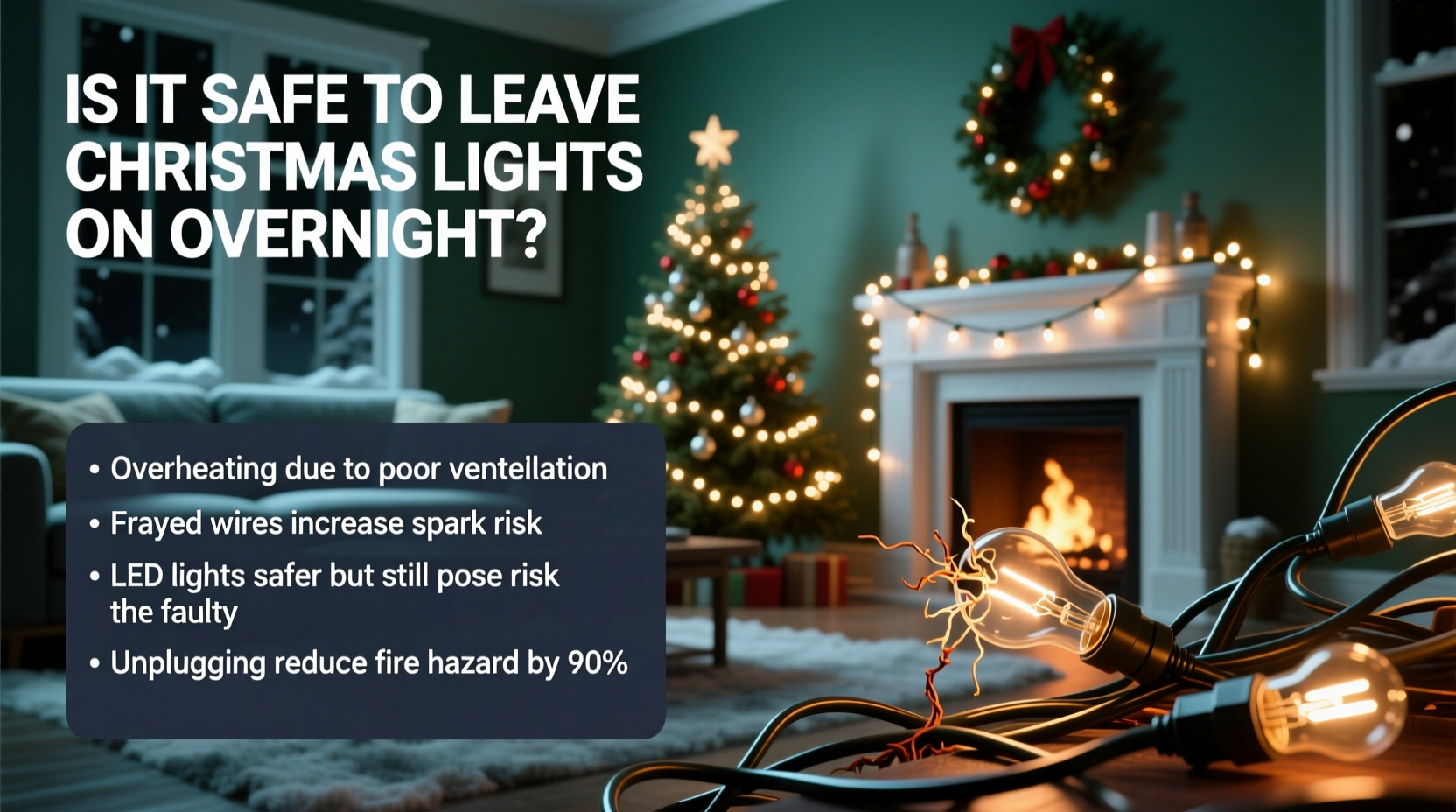
The U.S. Fire Administration (USFA) reports that between 2017 and 2019, an estimated 160 home fires per year were caused by decorative holiday lighting. These fires resulted in an average of four deaths, 13 injuries, and $10 million in direct property damage annually. While this number may seem small relative to total house fires, the timing—during a season when homes are filled with family and combustible materials like dry Christmas trees—makes prevention critical.
Most incidents occur due to one or more of the following factors:
- Overloaded electrical circuits
- Frayed or damaged cords
- Improper outdoor use of indoor-rated lights
- Use of outdated or non-certified lighting products
- Poor ventilation around light fixtures
Older incandescent lights pose a higher risk because they generate significant heat—sometimes reaching surface temperatures above 150°F (65°C). When placed near flammable materials like dried-out Christmas trees, curtains, or paper decorations, even a brief malfunction can ignite a fire. In contrast, modern LED Christmas lights operate at much lower temperatures, often staying below 85°F (30°C), making them inherently safer for extended use.
“While decorative lights are involved in relatively few fires each year, the consequences can be devastating when safety protocols are ignored. A single faulty string can compromise an entire household.” — Dr. Linda Harper, Electrical Safety Researcher at the National Fire Protection Association (NFPA)
LED vs. Incandescent: A Safety Comparison
The shift from traditional incandescent bulbs to LEDs has dramatically improved the safety profile of holiday lighting. Below is a comparison of key safety and performance factors:
| Feature | Incandescent Lights | LED Lights |
|---|---|---|
| Operating Temperature | High (150–200°F) | Low (80–90°F) |
| Energy Consumption | High (40–100 watts per string) | Low (2–7 watts per string) |
| Lifespan | ~1,000–2,000 hours | ~25,000–50,000 hours |
| Fire Risk Potential | Moderate to High | Low |
| Cost Over Time | Higher (energy + replacement) | Lower |
The reduced heat output and energy efficiency of LEDs make them the preferred choice for overnight use. Additionally, LED strings are less likely to short-circuit due to their solid-state construction and built-in resistors. However, even LED lights are not risk-free if used improperly—damaged wires, daisy-chaining too many strands, or using indoor lights outdoors can still create hazards.
Tip: Always look for the UL (Underwriters Laboratories) certification mark when purchasing Christmas lights. This indicates the product has passed rigorous safety testing for both electrical and fire performance.When Leaving Lights On Overnight Might Be Acceptable
Under certain conditions, leaving Christmas lights on overnight can be considered low-risk. The key is ensuring every aspect of the setup meets current safety standards.
Situation 1: Indoor LED Lights on a Well-Maintained Tree
If you're using UL-listed LED lights on a fresh, well-watered Christmas tree, and the wiring is intact with no signs of wear, the risk of fire is minimal. Ensure the tree is not blocking heaters or vents and is kept away from high-traffic areas where cords could be damaged.
Situation 2: Outdoor Lights on Eaves or Fences (Timed)
Many homeowners use timers to control outdoor displays. Setting lights to turn off after midnight reduces exposure time and conserves energy. If the lights are rated for outdoor use, properly grounded, and connected via GFCI (Ground Fault Circuit Interrupter) outlets, overnight operation—even for several hours—is generally safe.
Situation 3: Permanent Architectural Lighting
Some homes feature professionally installed, permanent holiday lighting systems designed for continuous operation. These systems use commercial-grade components, weatherproof enclosures, and circuit protection that far exceed consumer-grade setups.
In all cases, supervision and maintenance are essential. No lighting system should be “set and forgotten” for weeks on end without inspection.
Step-by-Step Guide to Safe Holiday Lighting
To minimize fire risk while enjoying your holiday display, follow this practical sequence of actions before turning on your lights:
- Inspect all light strings – Check for cracked bulbs, frayed wires, loose connections, or discoloration. Discard any damaged sets.
- Verify certification – Only use lights labeled UL, ETL, or another recognized testing laboratory. Avoid counterfeit or unbranded products.
- Determine location rating – Use only outdoor-rated lights outside. Indoor lights lack moisture resistance and insulation needed for exterior use.
- Limit daisy-chaining – Most manufacturers recommend connecting no more than three strings together. Exceeding this can overload circuits.
- Plug into surge protectors or timers – Never plug directly into wall outlets if avoidable. Use a power strip with overload protection or a programmable timer to shut off lights automatically.
- Test the setup – Run lights for at least 30 minutes before final placement to detect overheating or flickering.
- Keep flammables away – Maintain at least a 3-foot clearance between lights and combustible materials like trees, drapes, or wrapping paper.
- Check weekly – Re-inspect cords and connections throughout the season, especially after storms or extreme temperature shifts.
Real Example: A Close Call in Ohio
In December 2022, a family in Columbus, Ohio, returned home late one night to find smoke pouring from their living room. Their artificial Christmas tree—decorated with older incandescent lights—had caught fire after a loose wire sparked against the trunk. Fortunately, the home’s smoke detectors activated early, allowing everyone to escape safely. Investigation revealed that the light string had been reused for over a decade, with visible wear on the cord insulation.
No one was injured, but the incident destroyed the living room and prompted the local fire department to issue a public advisory: “Holiday lights are meant to bring joy, not danger. Inspect them like you would a space heater or hair straightener—because under the wrong conditions, they can behave just like one.”
This case underscores how easily oversight can lead to disaster—even in homes with working smoke alarms. It also highlights the importance of replacing aging light sets and avoiding complacency with long-term decorations.
Expert-Backed Safety Checklist
Before leaving your Christmas lights on overnight—or even for a few evening hours—run through this checklist to ensure maximum safety:
- ✅ All light strings are UL or ETL certified
- ✅ No exposed wires, broken sockets, or bent prongs
- ✅ Using LED lights whenever possible
- ✅ Indoor lights are not being used outdoors (and vice versa)
- ✅ Not exceeding manufacturer-recommended string limits
- ✅ Plugged into a surge protector or GFCI outlet
- ✅ Connected to a timer that turns lights off during sleeping hours
- ✅ Christmas tree (real or artificial) is stable and away from heat sources
- ✅ Smoke detectors are functional and tested monthly
- ✅ Emergency exit paths remain unobstructed
Frequently Asked Questions
Can I leave LED Christmas lights on all night?
Yes, modern LED Christmas lights are generally safe to leave on overnight—provided they are in good condition, certified for use, and not overloaded. Their low heat output and energy efficiency reduce fire risk significantly compared to incandescent bulbs. For added safety, use a timer to limit runtime to 8–12 hours per day.
How many Christmas light strings can I connect together?
Most manufacturers recommend connecting no more than three light strings end-to-end. Exceeding this limit increases amperage beyond what the wiring can safely handle, raising the risk of overheating. Always check the label on your specific product for exact guidelines.
Should I unplug Christmas lights when I go on vacation?
Yes. If you plan to be away from home for an extended period during the holidays, it’s safest to unplug all decorative lighting. Even low-risk setups can fail unexpectedly. Without anyone present to respond to a fire, the potential for damage increases dramatically.
Conclusion: Balance Tradition with Responsibility
Christmas lights symbolize warmth, celebration, and connection. But like any electrical device, they require respect and care. Leaving them on overnight isn’t inherently dangerous—but doing so without proper precautions is a gamble few should take. By choosing LED lights, inspecting cords regularly, using timers, and unplugging when away, you can enjoy your display with peace of mind.
Safety doesn’t mean sacrificing beauty. In fact, it enhances it—because the true spirit of the season shines brightest in homes where families gather safely, free from preventable risks. As you decorate this year, take a moment to evaluate your setup not just for sparkle, but for security.
💬 Have a holiday lighting tip or experience to share? Join the conversation—your insight could help keep another home safe this season.