For decades, mowing the lawn has been a weekend ritual for homeowners—time-consuming, physically demanding, and often dreaded. Enter the robot lawn mower: a sleek, autonomous machine promising to eliminate the chore entirely. But with prices ranging from $600 to over $3,000, many ask whether this modern convenience justifies its steep cost. Is it truly worth the investment, or is it a luxury gadget disguised as a necessity?
The answer isn’t universal. For some, a robot mower transforms yard care from a burden into a hands-off process. For others, it may be an expensive solution to a manageable problem. To make an informed decision, it’s essential to weigh the long-term value against the upfront cost, lifestyle needs, yard characteristics, and ongoing maintenance.
How Robot Lawn Mowers Work
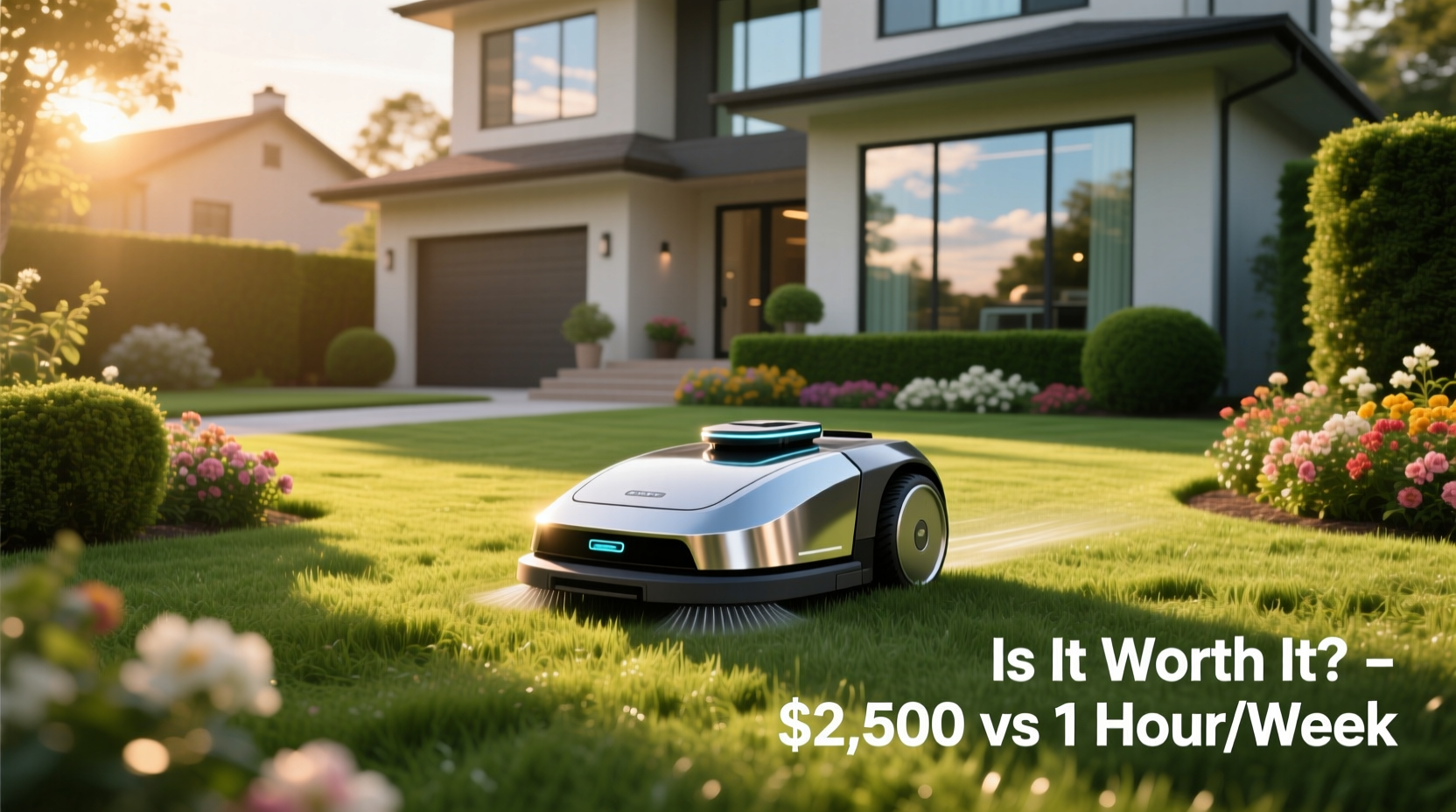
Unlike traditional mowers that cut grass in wide swaths once a week, robot mowers operate on a different principle: frequent, light trimming. Most models follow a random or guided pattern within a boundary defined by a perimeter wire installed around your yard. They use rotating blades to clip small amounts of grass daily or every few days, returning to their charging station when power runs low.
This “little and often” approach results in even coverage and healthier turf. Grass clippings are tiny and decompose quickly, acting as a natural fertilizer. Because they’re electric, robot mowers are quiet, eco-friendly, and require no gas or oil changes.
Modern units come equipped with Wi-Fi connectivity, smartphone apps, scheduling features, theft protection (PIN codes, alarms), rain sensors, and even slope-handling capabilities up to 45% grade. Some integrate with smart home systems like Alexa or Google Assistant, allowing voice control.
Tip: Measure your yard’s total square footage and note any slopes, obstacles, or multiple zones before selecting a model—this ensures compatibility.Breaking Down the Costs
The initial price tag is the most significant barrier. Entry-level models start around $600 for small yards (up to 0.25 acres), while premium models capable of handling 1+ acre with complex layouts can exceed $2,500. Installation, if done professionally, may add $300–$800, though many homeowners install the perimeter wire themselves.
Compare this to a high-end push mower ($300–$600) or a riding mower ($2,000+). While the robot mower appears more expensive upfront, the comparison should extend beyond purchase price to include time, labor, and long-term upkeep.
Consider these recurring costs of traditional mowing:
- Gasoline or electricity for electric mowers
- Oil changes and blade sharpening (annually)
- Storage space and seasonal maintenance
- Time investment: 30 minutes to 2 hours per week, depending on yard size
In contrast, robot mowers consume minimal electricity (typically less than $10/year), require only occasional blade replacements (every 1–2 seasons), and operate unattended. Over five years, the cumulative savings in time and effort can outweigh the initial investment—especially for those who outsource mowing.
“Homeowners who pay for lawn services often recoup the cost of a mid-range robot mower within two to three seasons.” — David Lang, Smart Yard Technology Analyst
When a Robot Mower Makes Financial Sense
A robot mower isn’t universally economical, but certain scenarios dramatically improve its return on investment.
Scenario: Hiring a Lawn Service
If you currently pay a landscaper $50–$100 per visit, twice a month during peak season, annual costs range from $600 to $2,400. A $1,500 robot mower pays for itself in as little as one year. After that, it’s pure savings.
Scenario: Physical Limitations
For older adults or individuals with mobility issues, pushing a heavy mower can be painful or unsafe. A robot mower eliminates physical strain, offering independence and safety. The value here extends beyond money—it’s about quality of life.
Scenario: Time-Poor Households
Busy professionals, parents, or remote workers often struggle to find time for yard work. Reclaiming 1–2 hours every weekend adds up to 50–100 hours saved annually. At even $20/hour in opportunity cost, that’s $1,000–$2,000 in recovered time.
| Factor | Traditional Mower | Robot Mower |
|---|---|---|
| Upfront Cost | $300–$2,500 | $600–$3,000 |
| Annual Operating Cost | $100–$300 (fuel, oil, maintenance) | $10–$30 (electricity, blade replacement) |
| Time Required Per Year | 50–100 hours | 1–5 hours (setup, cleaning) |
| Lifespan | 7–10 years | 6–10 years |
| Noise Level | 85–95 dB | 55–65 dB |
Real-World Example: The Peterson Family
The Petersons, a family of four in suburban Ohio, had a 0.4-acre yard with flower beds, a swing set, and a modest slope. Both parents worked full-time jobs, and weekends were reserved for family outings. For years, they hired a service at $75 per cut, totaling $1,500 annually.
In spring 2022, they invested $1,800 in a mid-tier robot mower and spent one Saturday installing the perimeter wire. Setup took six hours with basic tools. Since then, the mower operates Monday through Saturday on a custom schedule, avoiding wet conditions and cutting only when needed.
They’ve saved $1,500 in the first year alone, eliminated weekly coordination with contractors, and enjoy a consistently neat lawn. Their only maintenance was replacing the blades in fall and winterizing the unit. “It’s like having a silent gardener,” says Mark Peterson. “We barely think about the lawn anymore.”
Limitations and Considerations
Despite their advantages, robot mowers aren’t ideal for every property or preference.
Yard Complexity: Yards with numerous tight corners, narrow passages, or multiple isolated sections may challenge navigation. Some models handle complex layouts better than others—check for advanced GPS or mapping features.
Slope and Terrain: While many robots manage inclines up to 20–45%, extremely uneven ground or loose gravel can cause traction issues. Always verify slope compatibility.
Security Concerns: High-value units can be targets for theft. Choose models with PIN locks, alarm systems, and GPS tracking. Store indoors when away for extended periods.
Initial Setup: Installing the perimeter wire requires digging shallow trenches or securing it with stakes. This can take several hours, especially for large or irregular yards. However, it’s a one-time task.
Grass Type and Growth Rate: In regions with rapid grass growth (e.g., the Southeast U.S.), daily mowing may be necessary during spring. Ensure the model’s cutting capacity matches your climate.
“The key to success isn’t just buying any robot mower—it’s matching the right model to your specific yard and expectations.” — Lena Torres, Landscape Automation Consultant
Step-by-Step Guide to Evaluating Your Need
Follow this timeline to determine if a robot mower fits your situation:
- Week 1: Assess Your Yard
Measure total area, note slopes, obstacles, and access points. Sketch a rough layout. - Week 2: Track Lawn Care Costs & Time
Record how much you spend on mowing (service fees or supplies) and log hours spent maintaining the lawn over a month. - Week 3: Research Models
Filter options by yard size, slope rating, smart features, and customer reviews. Compare warranties (typically 2–3 years). - Week 4: Calculate Break-Even Point
Divide the total robot mower cost (including installation) by your annual mowing expenses. If it’s under 3 years, it’s likely a sound investment. - Decision Week: Test or Buy
Some retailers offer trial periods. Otherwise, purchase with a return window. Schedule installation during mild weather.
Frequently Asked Questions
Can a robot mower handle leaves and debris?
No. Most robot mowers are designed solely for grass cutting. Leaves, twigs, or toys must be cleared before operation to prevent damage or clogging. Some models have sensors to detect obstacles and stop blades, but they don’t clear debris.
Do I still need a traditional mower?
In most cases, no—but there are exceptions. If you prefer a perfectly striped lawn or need to mulch thick patches after overseeding, a traditional mower may still be useful occasionally. However, day-to-day maintenance is fully handled by the robot.
Are robot mowers safe around pets and children?
Yes, when used properly. All major models have safety features: automatic blade shutoff when lifted or tilted, obstacle detection, and low-speed movement. Still, supervise young children and pets during operation. Avoid running the mower in high-traffic play areas.
Checklist: Is a Robot Lawn Mower Right for You?
- ✅ Yard size is between 0.1 and 1.25 acres (most models cover this range)
- ✅ You spend 30+ minutes mowing weekly or pay for lawn service
- ✅ You value time and convenience over manual control
- ✅ Your yard has manageable slopes (under 45%) and defined boundaries
- ✅ You’re comfortable with technology setup and troubleshooting
- ✅ You can secure the mower against theft (garage storage, PIN lock)
Conclusion: Rethinking Value Beyond Price
The question isn’t just whether a robot lawn mower is worth the high price tag—but what that price buys you. It’s not merely a tool; it’s a reclaiming of time, energy, and peace of mind. For those who dread yard work, lack physical ability, or simply want to optimize their weekends, the investment pays dividends in lifestyle quality.
While the sticker shock is real, the long-term equation often favors automation—especially when factoring in avoided service fees and regained hours. As battery tech improves and prices stabilize, robot mowers are shifting from luxury items to practical household appliances.
🚀 Ready to transform your yard experience? Start by measuring your lawn and calculating your current mowing costs. The numbers might surprise you—and your future self will thank you for making the switch.