As the holiday season approaches, many people seek ways to bring the authentic aroma of a fresh pine forest into their homes. The scent of a real Christmas tree is often described as nostalgic, calming, and deeply festive. But not everyone has space or access to a live tree — and even those who do might find that its natural fragrance fades over time. This has led to a surge in alternative scenting methods, most notably between traditional sprays and newer innovations like scent-infused Christmas tree oil diffusers. But which option truly delivers a better experience? When comparing longevity, safety, air quality, ease of use, and overall sensory impact, the evidence increasingly favors oil diffusers as the superior choice.
The Problem with Traditional Christmas Tree Sprays
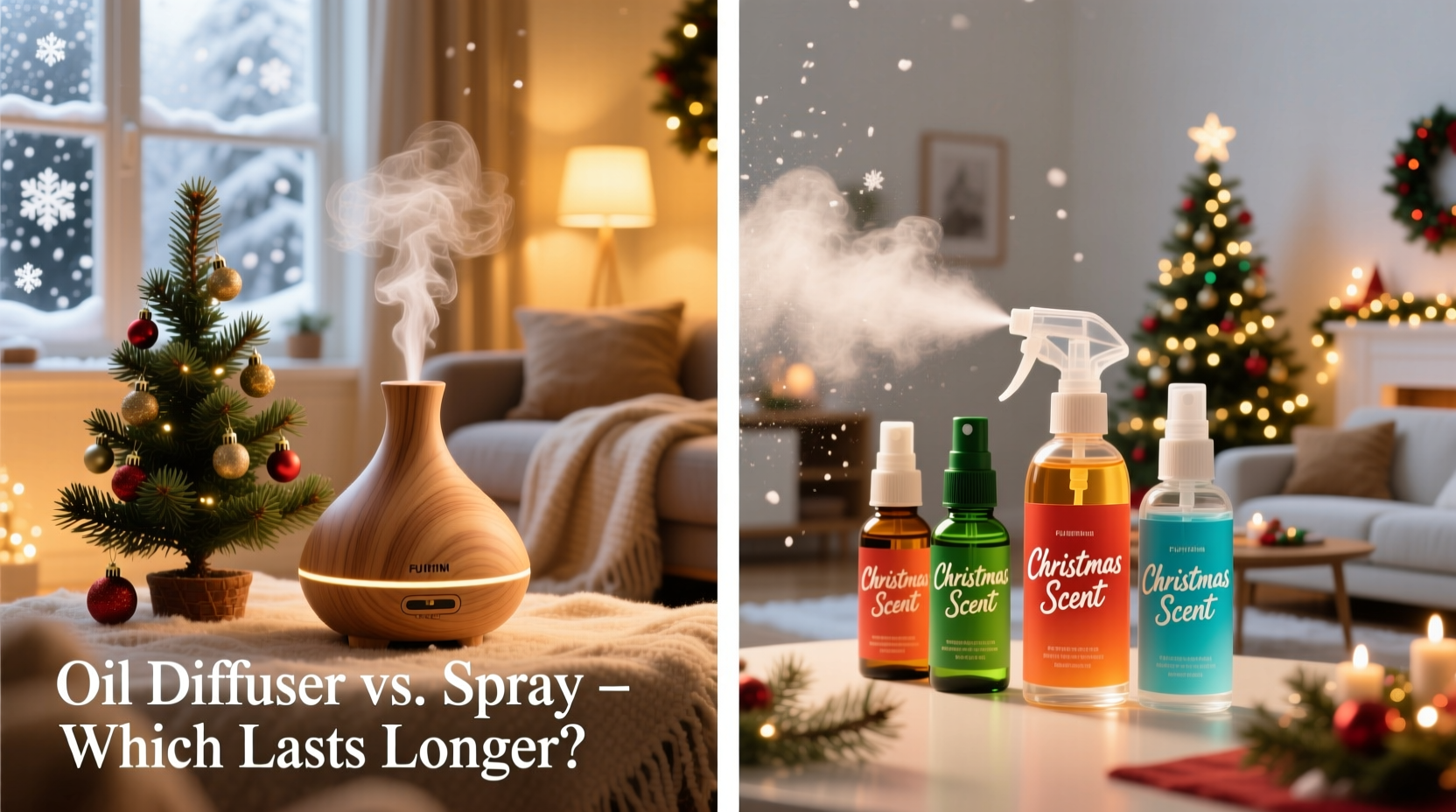
Sprays have long been the go-to method for boosting a tree’s fragrance or mimicking it entirely. These aerosol-based products are convenient, widely available, and often inexpensive. However, they come with several drawbacks that affect both health and effectiveness.
Most Christmas tree sprays rely on synthetic fragrances and propellants to disperse scent quickly. While this gives an immediate burst of pine or evergreen aroma, the effect is short-lived — often dissipating within hours. Users frequently need to reapply multiple times a day to maintain any noticeable presence, increasing exposure to airborne chemicals.
More concerning are the potential health implications. Many commercial sprays contain volatile organic compounds (VOCs), such as ethanol, formaldehyde releasers, and phthalates, which can irritate the respiratory system, especially in children, pets, or individuals with asthma or allergies. A 2021 study by the Environmental Working Group found that nearly 70% of household fragrance sprays contained at least one ingredient linked to hormone disruption or respiratory issues.
“Frequent use of aerosolized fragrances indoors can degrade indoor air quality significantly, especially during winter when ventilation is limited.” — Dr. Lena Pruitt, Indoor Air Quality Researcher, Harvard T.H. Chan School of Public HealthTip: If using sprays, apply only in well-ventilated areas and avoid spraying directly onto ornaments or electronics.
How Scent-Infused Oil Diffusers Work for Christmas Trees
A scent-infused Christmas tree oil diffuser operates on a different principle altogether. Instead of masking odors or briefly saturating the air, these devices slowly release essential oils or high-quality fragrance oils into the environment through evaporation or ultrasonic diffusion. Some models are designed specifically to resemble ornaments or tree stands, blending seamlessly into holiday decor while functioning as passive or active scent emitters.
These diffusers typically use a carrier base — such as water in ultrasonic models or reed sticks in passive versions — combined with a few drops of pine, fir, cedar, or balsam fragrance oil. The result is a steady, subtle stream of naturalistic aroma that mimics the slow off-gassing of a real tree. Unlike sprays, there’s no sudden chemical punch; instead, the scent builds gradually and remains consistent for days or even weeks depending on usage.
One of the key advantages lies in control. Most oil diffusers allow users to adjust intensity — whether by diluting the oil concentration, modifying run times (in electric models), or rotating reeds (in passive types). This customization ensures the fragrance enhances rather than overwhelms a space.
Types of Tree-Themed Oil Diffusers
- Ultrasonic Diffusers: Use water and vibrations to create a fine mist infused with essential oils. Often shaped like mini trees or snowmen.
- Reed Diffusers: Placed near the tree or mantel, these use porous reeds to draw up oil and diffuse it passively.
- Decorative Pendant Diffusers: Ornament-shaped clay or lava stone pendants hung on the tree that absorb a few drops of oil and emit scent over time.
- Electric Plug-In Diffusers: Wall outlets with timed dispersal settings, some offering seasonal scent cartridges including “forest pine” or “holiday evergreen.”
Comparative Analysis: Diffusers vs. Sprays
| Feature | Oil Diffuser | Traditional Spray |
|---|---|---|
| Scent Longevity | Lasts continuously for 24–72 hours per fill (longer with passive models) | Immediate but short-lived (2–6 hours) |
| Fragrance Control | Adjustable intensity and timing | Fixed burst per spray; no modulation |
| Health Impact | Low risk if using pure essential oils; minimal VOCs | Higher VOC content; potential respiratory irritants |
| Coverage Area | Consistent dispersion across medium to large rooms | Localized, uneven distribution |
| Maintenance | Refill every few days; clean occasionally | Repeated daily applications needed |
| Eco-Friendliness | Reusable device; biodegradable oils available | Aerosol cans contribute to waste; non-recyclable components |
| Cost Over Time | Higher upfront cost, lower long-term expense | Cheap initially, costly with frequent use |
The data shows a clear trend: while sprays offer quick fixes, diffusers provide sustained performance with fewer downsides. For households aiming for a safer, more immersive, and eco-conscious holiday atmosphere, oil diffusers represent a smarter investment.
Real-World Example: The Miller Family’s Holiday Upgrade
The Millers, a family of four in Vermont, used artificial Christmas tree sprays for over a decade. Each year, they’d buy two or three cans of “fresh pine” aerosol spray, applying them heavily during tree setup and then again every few days. By mid-December, the youngest child began experiencing nighttime coughing fits. After consulting their pediatrician, they learned that indoor aerosols were likely aggravating her mild asthma.
In response, they switched to a small ultrasonic diffuser shaped like a wooden cabin, placing it on a side table near the tree. They filled it with water and five drops each of Douglas fir and cypress essential oil. Within minutes, a soft mist began circulating, releasing a gentle evergreen scent. There was no sharp smell, no coughing — just a gradual immersion in holiday ambiance.
By Christmas Eve, the tree still smelled fresh. Their daughter slept soundly. And the total cost for the month — including the initial $35 diffuser and $12 for a 10ml oil blend — came out to less than their previous spray habit. “It feels more authentic,” said Sarah Miller. “Like we’re actually in a forest, not just spraying one on.”
Step-by-Step Guide to Using a Scent-Infused Oil Diffuser for Your Christmas Tree
- Choose the Right Diffuser Type: Decide between ultrasonic (active mist), reed (passive), or pendant (ornamental). Consider room size and desired visibility.
- Select High-Quality Oils: Opt for essential oils labeled as 100% pure — such as Siberian fir, blue spruce, or balsam fir. Avoid fragrance oils with unknown additives if sensitivity is a concern.
- Position Strategically: Place the diffuser near the base of the tree or on a nearby surface where airflow will help distribute the scent. Avoid direct contact with lights or electrical cords.
- Set Intervals (for Electric Models): Use intermittent mode (e.g., 30 seconds on, 30 seconds off) to extend oil life and prevent olfactory fatigue.
- Maintain Cleanliness: Empty and rinse ultrasonic tanks every 3–4 days to prevent mold. Replace reeds monthly or when scent weakens.
- Enhance Realism: Combine with other sensory elements — soft lighting, crackling fire sounds, textured blankets — to deepen the immersive effect.
FAQ: Common Questions About Christmas Tree Scenting
Can I use regular essential oils in a Christmas tree diffuser?
Yes — in fact, that’s recommended. Look for conifer-based oils like pine, spruce, or cedarwood. Always dilute according to manufacturer instructions, especially in ultrasonic models, to prevent residue buildup.
Are oil diffusers safe around pets?
Generally, yes — but with caution. Cats, in particular, are sensitive to certain terpenes found in essential oils. Avoid diffusing near enclosed pet spaces and never allow direct ingestion. Consult your vet if your pet has respiratory conditions.
Do scent diffusers dry out real Christmas trees?
No. Ultrasonic diffusers add moisture to the air, which can actually help slow needle drop by maintaining ambient humidity. Just ensure the water tank isn’t placed under the tree stand where leaks could cause damage.
Final Verdict: Why Diffusers Outperform Sprays
When weighed across critical factors — health, sustainability, cost efficiency, and sensory authenticity — scent-infused oil diffusers clearly surpass traditional sprays as the preferred method for enhancing Christmas tree fragrance. They eliminate the need for repeated chemical exposure, reduce plastic waste, and deliver a richer, longer-lasting aromatic experience.
Sprays still have a place for quick touch-ups or temporary setups, such as office decorations or photo shoots. But for everyday home use, particularly in households with children, elderly members, or pets, diffusers offer a safer, more elegant solution. Their ability to create a continuous, customizable atmosphere aligns perfectly with the spirit of the season: warmth, comfort, and enduring joy.
“The shift from spray to diffuser is part of a broader move toward intentional, health-aware home rituals — especially during emotionally significant times like the holidays.” — Naomi Reed, Wellness Lifestyle Editor at *Home & Hearth Magazine*
Take Action This Holiday Season
This year, consider upgrading from disposable sprays to a reusable, thoughtfully designed oil diffuser. Whether you choose a whimsical tabletop model or a minimalist reed vase, you’re investing in more than just a scent — you’re cultivating an environment that feels genuinely festive, naturally inviting, and sustainably joyful. Start with a single diffuser and a small bottle of fir essential oil. Experience how a slow, steady aroma can transform your space without overpowering it. Share your results, experiment with blends, and discover how modern scent technology can honor tradition in a healthier, more meaningful way.
💬 Have you made the switch from sprays to diffusers? Share your favorite holiday scent blend or tip in the comments below!








