As holiday traditions evolve, so do the ways we display our Christmas trees. One of the more modern innovations is the rotating Christmas tree — a motorized base that slowly turns your tree 360 degrees, showcasing all sides without requiring guests to walk around it. While the idea sounds festive and convenient, many homeowners pause before investing: Is it really worth the extra cost and floor space? The answer depends on your lifestyle, decor preferences, and long-term plans. Let’s explore the practical benefits, drawbacks, and hidden considerations to determine whether this seasonal upgrade makes sense for your home.
The Appeal of a Rotating Tree: More Than Just a Gimmick?
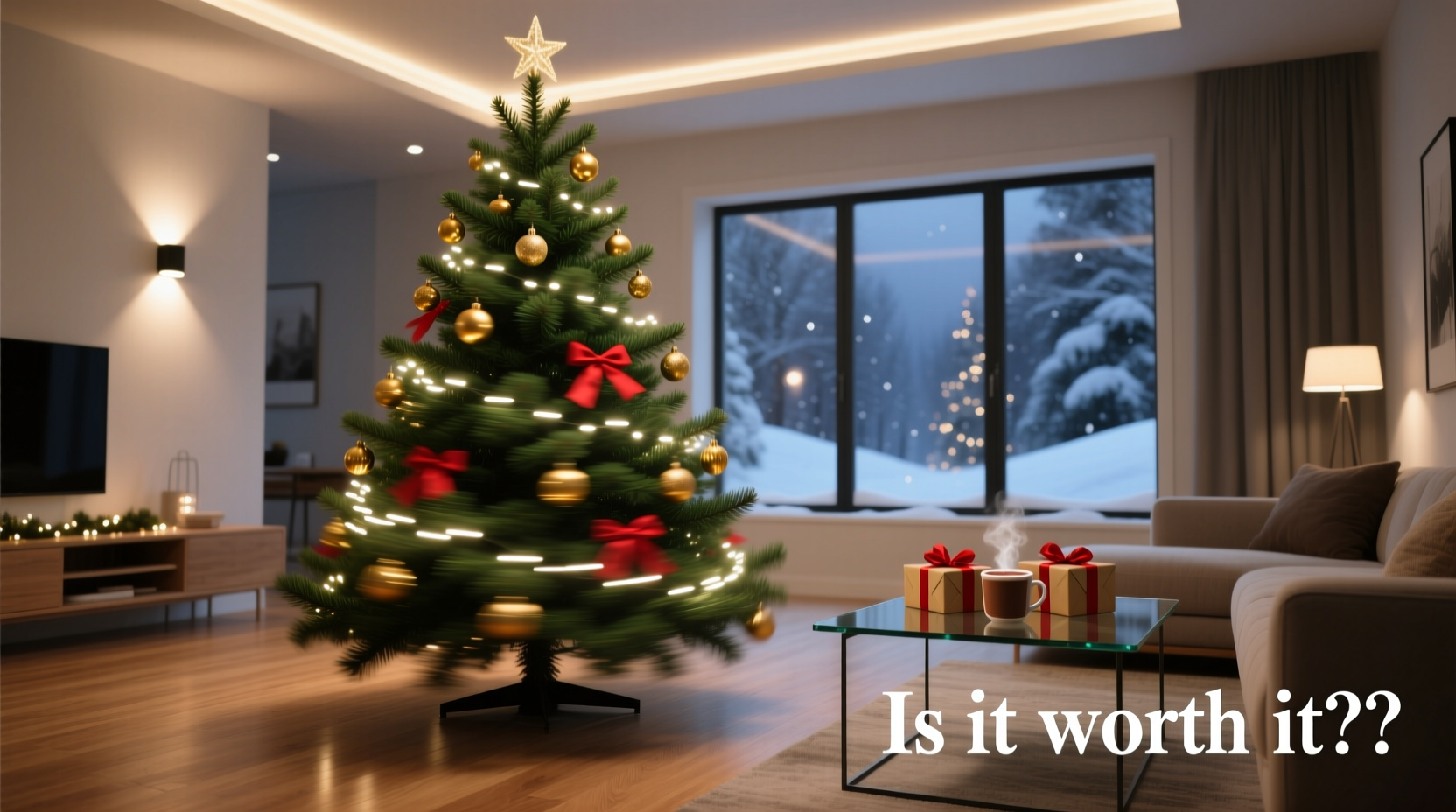
A rotating Christmas tree isn’t just a novelty. For many, it transforms the centerpiece of holiday decor into a dynamic focal point. Instead of manually adjusting branches or repositioning ornaments throughout the season, a rotating base ensures every angle gets its moment in the spotlight. This is especially useful in homes with limited space where viewing angles are restricted by furniture or room layout.
The rotation is typically slow and smooth, completing a full turn every 60 to 90 seconds. Most models use quiet electric motors, making them suitable even for quiet living rooms or near bedrooms. Some high-end versions include remote controls, variable speed settings, and built-in lighting synchronization.
Beyond convenience, there’s a psychological effect at play. A gently spinning tree creates a sense of motion and magic, particularly captivating for children and guests. Retail displays have used this principle for decades — movement draws attention. In a home setting, it can elevate the entire ambiance of the holidays.
Tip: If you frequently host gatherings, a rotating tree can serve as an automatic conversation starter and visual anchor.Cost Analysis: What You’re Really Paying For
The upfront cost of a rotating tree base ranges from $80 to over $300, depending on weight capacity, build quality, and additional features like app control or music integration. Pre-assembled rotating trees (artificial models with built-in bases) often start at $200 and go up to $600 for larger sizes with premium materials.
Compare that to a standard artificial tree, which averages $100–$250, and the price difference becomes clear. But cost isn’t just about purchase price — consider longevity. A well-maintained rotating base can last 10+ years, spreading the annual cost to as little as $8–$30 per season. That’s comparable to upgrading your lights or buying new ornaments every few years.
However, repairability is a concern. If the motor fails after the warranty period, replacement parts may be unavailable or costly. Unlike a traditional tree stand, which is simple to replace, a rotating mechanism involves proprietary components. Some users report issues with gears wearing down after repeated use, especially under heavier loads.
“Rotating bases add elegance but introduce mechanical complexity. We see more service calls related to motor burnout than any other issue.” — Daniel Reeves, Holiday Lighting & Decor Technician with 18 years of experience
Spatial Considerations: Does It Fit Your Home?
Space is one of the most overlooked factors when considering a rotating tree. Because the tree spins, it requires clearance on all sides. As a rule of thumb, allow at least 6–12 inches of open space around the entire circumference. In smaller rooms or tight corners, this can be impractical.
For example, a 7-foot tree with a 4-foot diameter needs roughly 5 feet of unobstructed radius to rotate safely. That means positioning it away from walls, furniture, curtains, and fragile decorations. In studio apartments or shared living spaces, this requirement might mean sacrificing valuable floor area during the most crowded time of year.
Additionally, rotating trees should never be placed on slippery surfaces like hardwood or tile without anchoring. Even slight vibrations can cause gradual drifting, leading to collisions or tipping. Many models come with non-slip pads, but these aren't always sufficient on polished floors.
| Room Type | Suitable for Rotating Tree? | Key Constraints |
|---|---|---|
| Large Living Room | Yes | Ensure clearance from traffic paths |
| Small Apartment | Limited | Requires central placement; may disrupt flow |
| Corner Setup | No | Lacks full rotation clearance |
| Open-Concept Home | Yes | Ideal for multi-room visibility |
Real-Life Example: The Thompson Family’s Holiday Upgrade
The Thompsons, a family of four in suburban Ohio, decided to try a rotating tree after seeing one at a friend’s house. They purchased a 7.5-foot pre-lit artificial tree with a built-in rotating base for $340. Their living room measures 16x20 feet, with a central layout that allowed for proper clearance.
Initially thrilled, they appreciated how evenly the lights were displayed and how their young daughter loved watching the ornaments glide past. However, within two weeks, they noticed the tree had shifted slightly toward the sofa due to subtle vibrations on their hardwood floor. They solved it by placing a rubber mat underneath, but it required weekly readjustment.
After three seasons, the motor began making a grinding noise. The manufacturer no longer sold replacement parts, and local repair shops declined service. They now use the tree with the rotation turned off — essentially treating it as a standard model. In hindsight, they estimated they would have preferred spending the same amount on higher-quality materials or additional decor rather than the rotating function.
Their takeaway? “It was fun while it lasted, but not essential. We’d only recommend it if you’re certain you’ll use it long-term and have the space to support it.”
Practical Tips Before You Buy
Before committing to a rotating Christmas tree, consider these key points to avoid disappointment:
Tip: Test the rotation in-store or via video demo to ensure the speed feels natural — too fast looks chaotic, too slow defeats the purpose.- Weigh your tree carefully: Exceeding the base’s weight limit is the top cause of motor failure.
- Check noise levels: Run a sample model if possible; some emit low hums that become annoying over time.
- Look for warranties: At minimum, seek a 2-year warranty covering motor defects.
- Measure your space: Use painter’s tape to mark the full sweep of the tree before setup.
- Consider future flexibility: Will you still want this feature in five years? Can it work with different trees?
Step-by-Step: How to Decide If It’s Right for You
Follow this decision-making process to evaluate whether a rotating Christmas tree aligns with your needs:
- Assess your available space. Mark the intended location and simulate the tree’s rotation path using string or tape.
- Determine your budget. Decide how much you’re willing to spend and compare rotating vs. non-rotating options of similar size and quality.
- Evaluate your decor habits. Do you meticulously decorate all sides of the tree, or do you focus on the front? Full decoration increases the value of rotation.
- Think about usage frequency. If you only put up a tree once every few years, investing in a rotating model may not make financial sense.
- Research brands and reviews. Focus on durability, customer service, and ease of repair. Avoid unknown brands with poor return policies.
- Test alternatives. Consider a swivel stand for your existing tree — some third-party rotating platforms support up to 50 lbs and cost under $100.
- Make your choice. If the benefits outweigh the constraints, proceed. Otherwise, enjoy a beautifully styled stationary tree.
Do’s and Don’ts of Owning a Rotating Tree
| Do | Don’t |
|---|---|
| Use a surge protector for the motor | Overload the base with heavy ornaments near the bottom |
| Clean the base mechanism annually | Place on uneven or slick flooring without grip enhancement |
| Turn off rotation when unattended for long periods | Expect silent operation — some noise is normal |
| Pair with LED lights to reduce heat and energy load | Ignore unusual sounds — address grinding or stuttering early |
Frequently Asked Questions
Can I convert my existing tree into a rotating one?
Yes, many third-party rotating tree stands are available that fit standard tree trunks. Ensure the stand matches your tree’s height and weight. Most support trees up to 8 feet and 50 pounds. Installation is usually straightforward: assemble the base, insert the trunk, and plug in.
Do rotating trees use a lot of electricity?
No. Most rotating bases consume less than 5 watts — comparable to a nightlight. Running it 12 hours a day for a month would cost less than $0.50 in electricity. When paired with LED lights, the total energy footprint remains minimal.
Are rotating trees safe around pets and kids?
Generally yes, but supervision is recommended. The rotation is slow, but dangling cords or low-hanging ornaments can tempt curious hands or paws. Keep electrical cords taped down and out of reach. Avoid placing fragile or small decorative items within grabbing distance.
Final Verdict: Worth It — With Conditions
A rotating Christmas tree can enhance your holiday experience, offering effortless visibility and a touch of elegance. It shines in homes with ample space, consistent decorating traditions, and a love for modern conveniences. For hosts who value presentation and enjoy wowing guests, the investment often pays off in seasonal joy.
But it’s not for everyone. The added cost, spatial demands, and potential for mechanical issues mean it should be approached thoughtfully. If you live in a small apartment, decorate minimally, or prefer rustic charm over tech-enhanced displays, a traditional tree will serve you better.
The real value lies not in the rotation itself, but in how it supports your personal celebration. A tree should reflect warmth, memory, and meaning — whether it spins or stands still.
💬 Have you tried a rotating Christmas tree? Share your experience — what worked, what didn’t — and help others decide if this festive upgrade is right for them.








