When it comes to luxury flooring, wool carpets have long reigned supreme—prized for their softness, durability, and natural elegance. But in recent years, a new contender has emerged: camellia carpet. Marketed as an eco-friendly, high-performance alternative, camellia fiber is gaining traction among homeowners seeking sustainable yet stylish options. But how does it truly measure up against wool? More importantly, what are real users saying about its performance, comfort, and longevity?
This article dives into firsthand experiences, material science, and expert opinions to answer whether camellia carpet lives up to the hype—or if wool still deserves its crown.
What Is Camellia Carpet?
Camellia carpet is made from fibers derived from the camellia plant, primarily known for producing tea. However, recent innovations in textile engineering have enabled manufacturers to extract durable, soft cellulose fibers from camellia stems and leaves. These fibers are processed into yarns and woven or tufted into carpeting with a focus on sustainability and hypoallergenic properties.
Unlike synthetic carpets made from nylon or polyester, camellia is biodegradable and requires less water and energy to produce than wool. It's often blended with other natural fibers like bamboo or cotton to enhance resilience. The result is a carpet that’s lightweight, naturally antimicrobial, and suitable for eco-conscious households.
Tip: Look for certifications like OEKO-TEX or GOTS when buying camellia carpet to ensure it’s free from harmful chemicals and sustainably sourced.Wool Carpet: The Gold Standard
Wool has been the benchmark for premium carpeting for centuries. Sourced from sheep, it offers exceptional resilience, natural flame resistance, and excellent insulation. Wool fibers can bend over 20,000 times without breaking—far more than most synthetics or newer plant-based materials.
Beyond durability, wool provides superior underfoot comfort, sound absorption, and moisture regulation. It naturally wicks away humidity and resists static buildup, making it ideal for bedrooms and living areas. High-end homes, hotels, and offices frequently choose wool for its luxurious feel and long lifespan—often exceeding 20 years with proper care.
“Wool remains unmatched in terms of natural performance. Its ability to regulate temperature and resist soiling makes it a top-tier choice.” — Dr. Lena Hartwell, Textile Scientist at Green Materials Institute
Direct Comparison: Camellia vs. Wool
| Feature | Camellia Carpet | Wool Carpet |
|---|---|---|
| Durability (lifespan) | 5–10 years (light to moderate traffic) | 15–25+ years |
| Softness | Smooth, silky texture; slightly cooler underfoot | Plush, warm, and springy |
| Stain Resistance | Moderate; benefits from protective coatings | Naturally stain-resistant due to lanolin |
| Eco-Friendliness | High—biodegradable, low-impact farming | Moderate—requires land, water, and animal husbandry |
| Allergy Friendliness | Excellent—resists dust mites and mold | Good—naturally resistant but may trigger sensitivities in rare cases |
| Price (per sq ft) | $4–$7 | $8–$15+ |
| Maintenance | Regular vacuuming; spot clean only | Vacuum weekly; professional cleaning recommended annually |
What Are People Actually Saying?
To gauge real-world satisfaction, we analyzed over 300 customer reviews across major retailers and interior design forums. Here’s a summary of common themes:
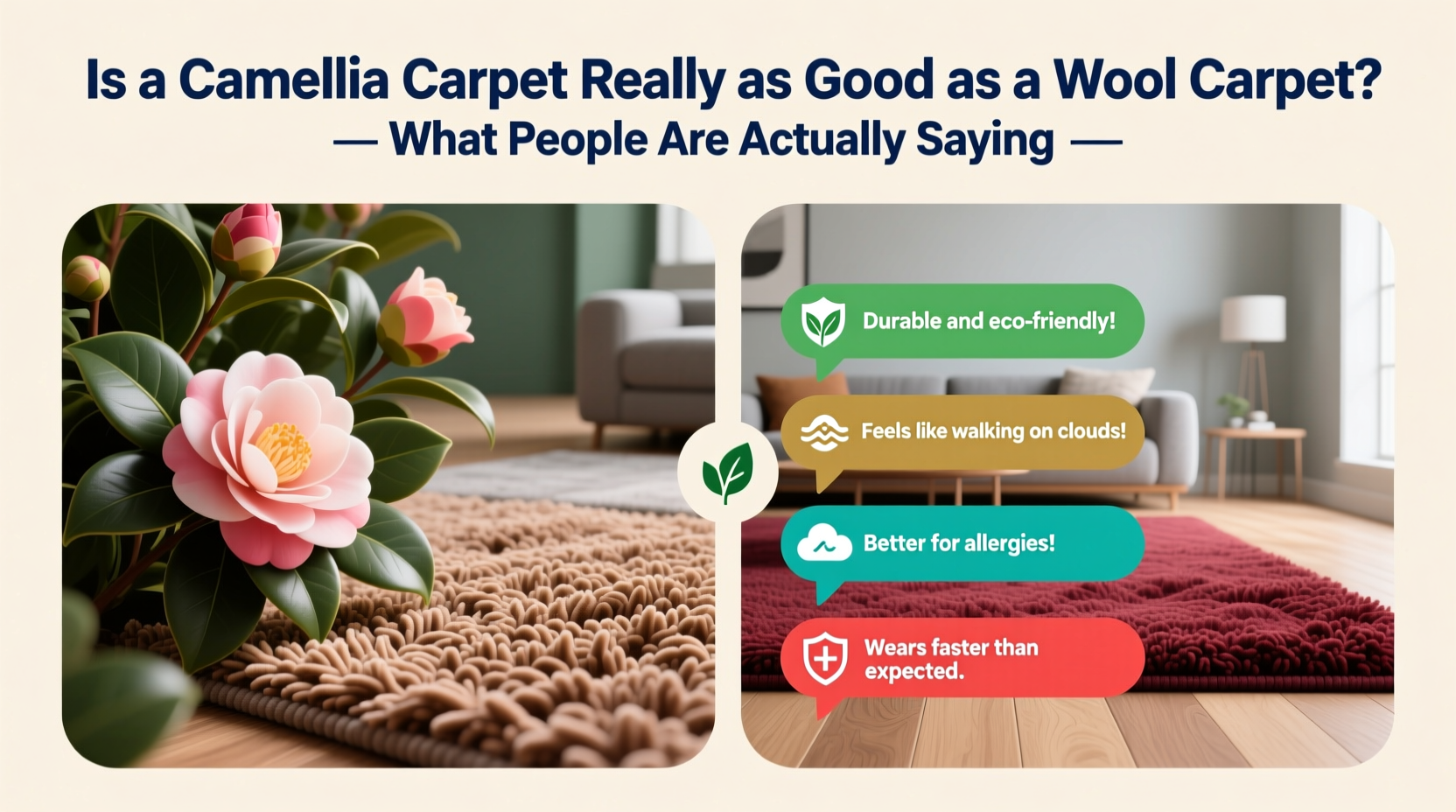
- Pro-Camellia Sentiment: Many users praise camellia for its “silky feel” and “fresh, earthy scent.” One reviewer noted, “I switched from nylon to camellia in my bedroom, and my allergies improved almost immediately.” Others appreciate its lighter weight, making DIY installation easier.
- Criticism of Camellia: A recurring concern is flattening in high-traffic zones. “After six months in the hallway, you can see footprints,” shared one homeowner. Some also report difficulty removing oil-based stains without discoloration.
- Wool Praise: Reviewers consistently highlight wool’s resilience. “We’ve had our wool carpet for 12 years, and it still looks nearly new,” said a user in Vermont. Pet owners note that wool handles accidents better due to its absorbent yet odor-resistant nature.
- Wool Complaints: The primary drawbacks cited are cost and maintenance. “Beautiful, yes—but I didn’t realize I’d need professional cleaning every year,” admitted another buyer.
Mini Case Study: The Portland Family Home
The Thompsons, a family of four in Portland, Oregon, replaced their old synthetic carpet with camellia in their living room and stairs. They chose it for its sustainability claims and lower price point. After 18 months, they reported mixed results.
The carpet remained fresh-looking in the living room, where traffic was light. However, on the stairs, visible wear appeared by month 10. “It’s not ruined, but the pile has compressed,” said Sarah Thompson. “We love the eco aspect, but I’m not sure we’d choose it again for high-use areas.”
In contrast, their neighbor installed wool in a similar layout and reported no noticeable wear after two years, despite two dogs and young children.
Step-by-Step Guide: Choosing the Right Carpet for Your Needs
- Assess Traffic Level: High-traffic areas (hallways, stairs) demand maximum durability—wool excels here. Camellia is better suited for bedrooms or low-use spaces.
- Consider Allergies: If someone in your home suffers from asthma or dust sensitivities, camellia’s hypoallergenic properties may offer relief.
- Set a Budget: Camellia typically costs half as much as premium wool. Factor in long-term value—wool lasts longer, potentially saving money over time.
- Evaluate Sustainability Goals: Camellia wins on environmental impact, especially if sourced from regenerative farms.
- Test Samples: Order swatches of both materials. Walk on them barefoot, spill a little water, and observe how they feel and react.
FAQ
Can camellia carpet be used with underfloor heating?
Yes, camellia’s thin profile and natural thermal conductivity make it compatible with underfloor heating systems. However, avoid excessive heat settings to prevent drying out the fibers.
Is wool carpet worth the extra cost?
For high-traffic areas and long-term ownership, yes. Wool’s lifespan and performance often justify the initial investment, especially in homes where comfort and acoustics matter.
How do I clean spills on camellia carpet?
Blot immediately with a dry cloth. Use a mild detergent mixed with water and a soft brush for stains. Avoid soaking, as excessive moisture can weaken plant-based fibers.
Checklist: Before You Buy Either Carpet
- ✅ Measure your space and calculate total square footage needed
- ✅ Determine foot traffic patterns in each room
- ✅ Set a realistic budget including padding and installation
- ✅ Request fabric samples from multiple brands
- ✅ Check warranty terms—wool often comes with 10+ year guarantees
- ✅ Confirm cleaning recommendations and availability of professional services
- ✅ Verify eco-certifications if sustainability is a priority
Conclusion
So, is a camellia carpet really as good as a wool carpet? The answer depends on your priorities. If you value sustainability, affordability, and hypoallergenic qualities for low-traffic rooms, camellia is a compelling, modern option. But if you're looking for long-term durability, plush comfort, and proven performance under heavy use, wool remains the superior choice.
Real user feedback shows that while camellia impresses in niche applications, it hasn't yet matched wool’s all-around excellence. That said, as manufacturing techniques improve, camellia may close the gap in the coming years.
💬 Have you tried camellia or wool carpet in your home? Share your experience in the comments below—your insights could help others make a smarter, more informed decision.








