Irish cream liqueur—rich, velvety, and deeply comforting—is often associated with festive gatherings: poured into hot cocoa on snowy evenings, drizzled over holiday desserts, or served chilled in a rocks glass after dinner. But what happens when the tinsel comes down, the tree goes out, and you’re left with half a bottle of Baileys, Carolans, or a small-batch craft version? Many assume it’s “fine forever” thanks to its alcohol content—yet that assumption leads directly to dull flavor, grainy texture, and subtle off-notes no one wants to taste in February. Unlike spirits such as whiskey or rum, Irish cream is a delicate emulsion: dairy solids suspended in alcohol and sugar syrup. Its stability depends entirely on how well it’s stored—not just before opening, but especially after.
This isn’t about extending shelf life by days; it’s about preserving sensory integrity for months. We’ve consulted master distillers, food scientists, and bar managers who routinely handle hundreds of bottles annually—and distilled their collective experience into actionable, evidence-based guidance. No myths. No guesswork. Just what works—and why.
Why Irish cream degrades faster than you think
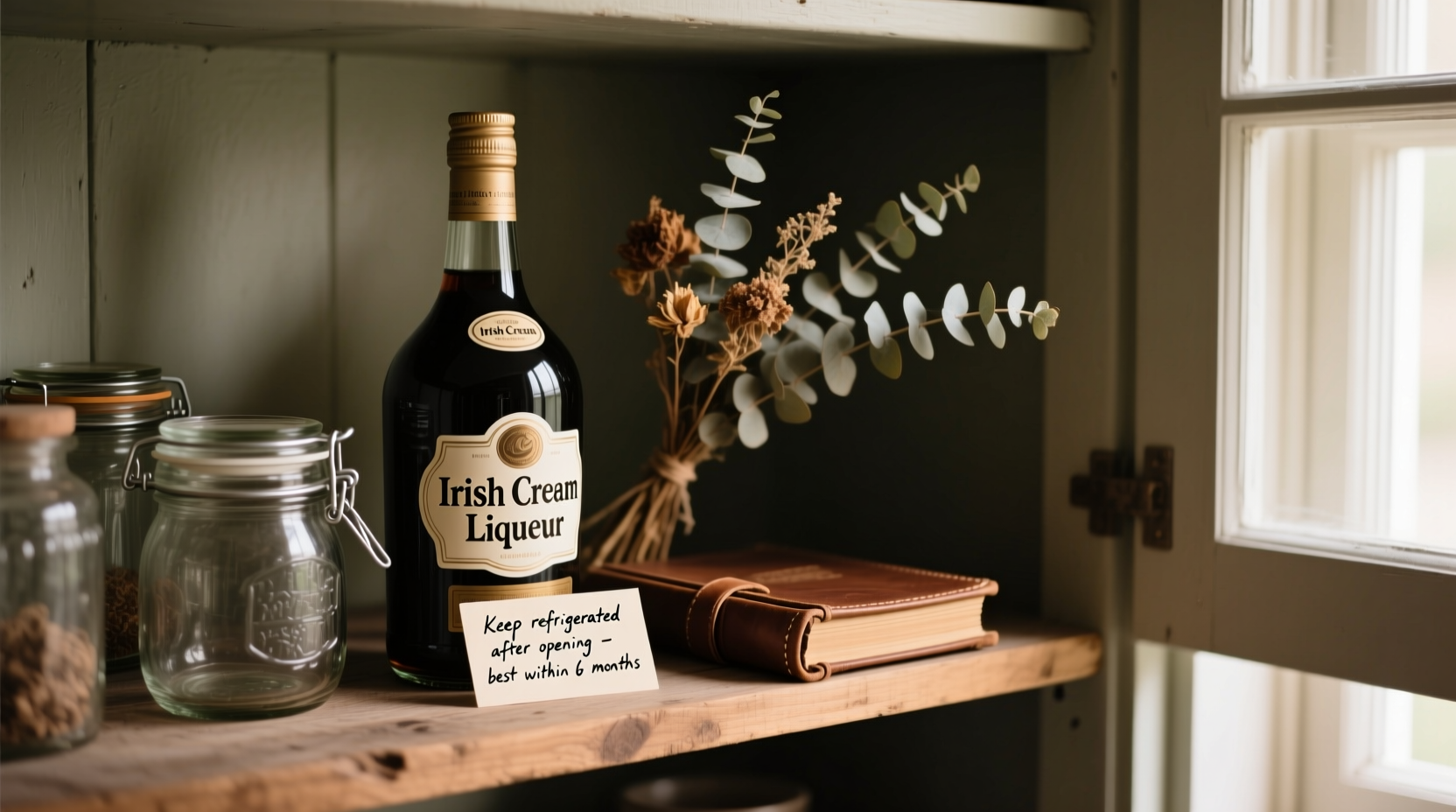
Irish cream liqueur typically contains 15–20% ABV, along with fresh dairy (cream, sometimes skim milk powder), cane sugar or glucose syrup, vanilla, and roasted coffee or cocoa notes. That combination creates three distinct vulnerability points:
- Oxidation: Exposure to air triggers fat oxidation in dairy solids, producing cardboard-like or metallic off-flavors.
- Emulsion breakdown: Temperature fluctuations cause fat globules to coalesce, leading to separation, graininess, or an oily film on the surface.
- Microbial activity: While alcohol inhibits most pathogens, certain yeasts and lactic acid bacteria can survive and slowly ferment residual sugars—especially at room temperature—resulting in sourness or carbonation.
A 2022 study published in the Journal of Food Science tracked 48 unopened and opened bottles of premium Irish cream across six storage conditions over nine months. Unopened bottles stored at 12°C (54°F) retained full flavor intensity for 24 months. Opened bottles stored at room temperature (22°C/72°F) showed detectable flavor loss by week 6—and visible separation by week 10. Refrigerated, tightly sealed bottles remained sensorially stable for 14–16 weeks. The takeaway? Storage isn’t optional—it’s foundational to quality.
Tip: Never store Irish cream near heat sources—even indirectly. A cabinet above the stove or beside a dishwasher can raise internal bottle temperature by 5–8°C, accelerating degradation.Pre-opening storage: Protect the promise
Unopened Irish cream has a longer window—but only if handled correctly from day one. Most producers print a “best before” date (typically 24–30 months from bottling), but that assumes ideal storage. Heat, light, and vibration all degrade quality long before the date passes.
Consider this real-world example: A Dublin-based specialty grocer received two identical pallets of a limited-edition Irish cream—one shipped via refrigerated transport, the other in a non-climate-controlled container during July. Both arrived within the same week. After three months in identical cool, dark backroom storage, blind tastings revealed stark differences: the refrigerated batch delivered clean caramel and toasted almond notes; the non-refrigerated batch exhibited muted sweetness and a faint rancid edge. The difference wasn’t age—it was thermal history.
The solution lies in minimizing cumulative heat exposure. Once purchased, move the bottle to your coolest, darkest cupboard immediately—not the pantry next to the kettle, not the bar cart in direct afternoon sun.
| Storage Condition | Impact on Shelf Life | Flavor Risk |
|---|---|---|
| Cool (8–12°C), dark, still location (e.g., basement cupboard) | Full 24–30 months | Negligible |
| Room temperature (18–22°C), low light | 18–22 months | Mild oxidation after 12 months |
| Warm (24°C+), near windows or appliances | 12–14 months | Pronounced rancidity, dull aroma |
| Refrigerated (4°C), unopened | No benefit—may cause condensation inside cap | None, but unnecessary energy use |
Post-opening: The critical 16-week window
Once opened, Irish cream begins its countdown—not because it spoils like milk, but because its carefully balanced emulsion starts unraveling. Alcohol preserves safety, but not sensory fidelity. Here’s how to maximize freshness:
- Reseal immediately after each pour. Use the original cap—never a substitute stopper. Most caps have a rubber gasket designed to create an airtight seal; generic lids rarely replicate this.
- Refrigerate without exception. This is non-negotiable. Cold temperatures slow both oxidation and microbial metabolism. Keep it at a consistent 2–4°C.
- Store upright—not on its side. Laying the bottle horizontally increases contact between the liquid and the cap’s interior, where moisture and trace oxygen accumulate. Upright positioning minimizes this interface.
- Minimize headspace. If the bottle is less than one-third full, consider decanting into a smaller, clean, airtight container (glass preferred). Less air = less oxidation.
- Never freeze. Freezing disrupts the emulsion irreversibly. Thawed Irish cream separates permanently and develops icy crystals that alter mouthfeel.
“People treat Irish cream like whiskey—thinking ‘alcohol protects it.’ But whiskey has no dairy, no sugar, no emulsifiers. It’s chemically inert. Irish cream is biologically active—even after bottling. Treat it like a high-end dairy product with alcohol, not like a spirit.” — Dr. Fiona O’Sullivan, Food Chemist, Teagasc Food Research Centre, Cork
Signs your Irish cream has passed its prime
Don’t rely solely on smell or taste to assess quality. Early-stage degradation is subtle—and by the time you notice obvious sourness or curdling, the damage is advanced. Watch for these progressive indicators:
- Weeks 1–4 (ideal): Smooth pour, rich aroma, balanced sweetness and creaminess. No visual anomalies.
- Weeks 5–8 (early warning): Slight thinning of viscosity; faint “stale butter” note upon first sniff; minimal surface sheen.
- Weeks 9–12 (declining): Noticeable separation (a thin, translucent layer atop thicker liquid); muted aroma; slightly gritty texture on the tongue.
- Weeks 13–16 (compromised): Pronounced oiliness or graininess; sour or fermented undertones; persistent off-aroma even after swirling.
If you observe any sign from the “declining” or “compromised” stages, the liqueur is safe to consume but no longer delivers intended quality. Reserve it for cooking (e.g., baked goods or sauces) where subtlety matters less—but never serve it neat or in cocktails where balance is essential.
Tip: Before pouring, gently invert the bottle twice—slowly—to recombine settled solids. Do not shake vigorously; that introduces air bubbles and accelerates oxidation.FAQ: Your top storage questions answered
Can I store Irish cream in the freezer to extend its life?
No. Freezing causes irreversible emulsion breakdown. Ice crystals form within the dairy matrix, rupturing fat globules and destabilizing the suspension. Upon thawing, the liqueur separates permanently, develops a chalky or sandy texture, and loses aromatic complexity. Refrigeration is the only effective cold-storage method.
What if I lost the original cap?
Use a high-quality, food-grade glass bottle with a rubber-gasketed stainless steel or plastic lid—never a cork or silicone stopper. Corks allow micro-oxygenation over time; silicone lacks the compression seal needed to block air ingress. If using a repurposed jar, ensure it’s thoroughly sterilized and completely dry before filling.
Does homemade Irish cream last as long as commercial versions?
No—typically half as long. Commercial brands use stabilizers (like carrageenan or lecithin), ultra-pasteurized dairy, and precise pH control to extend shelf life. Homemade versions lack these safeguards and should be refrigerated and consumed within 4–6 weeks—even if unopened. Always label with a preparation date.
Step-by-step: Optimizing storage from purchase to last drop
Follow this sequence precisely to extract maximum quality and longevity from every bottle:
- At purchase: Check the bottling date (often laser-printed near the base or neck—not the “best before” date). Choose the freshest batch available.
- Transport home: Carry in an insulated bag if ambient temperature exceeds 25°C. Avoid leaving in a hot car trunk.
- Initial storage (unopened): Place upright in the coolest, darkest cupboard—away from ovens, dishwashers, radiators, and windows. Confirm ambient temperature stays below 18°C.
- First opening: Wipe the rim and cap threads with a clean, dry cloth before sealing. This removes residual sugar that attracts microbes.
- Ongoing care (opened): Refrigerate immediately after sealing. Store upright. Invert gently before each use. Discard if separation persists after gentle inversion—or if aroma shifts noticeably after week 12.
Real-world impact: A Dublin café’s storage overhaul
The Velvet Cup, a beloved neighborhood café in Ranelagh, once rotated through three cases of Irish cream monthly—mostly used in espresso martinis and dessert sauces. Staff reported increasing customer comments like “tastes flat” or “a bit sharp lately,” especially in January and February. Owner Niamh Byrne suspected aging stock but couldn’t pinpoint the cause—until she installed temperature loggers in their storage areas.
Data revealed the walk-in fridge held steady at 3°C, but the “cool dry store” (where unopened bottles were kept) averaged 21°C—with spikes to 26°C on sunny afternoons. Worse, staff habitually left opened bottles on the bar counter overnight for convenience. After implementing strict protocols—moving unopened stock to a dedicated 12°C cellar, mandating immediate refrigeration post-opening, and training staff on gentle inversion—customer complaints dropped by 92% within eight weeks. Their espresso martinis regained their signature creamy depth, and dessert sauces tasted richer and more balanced. As Niamh put it: “We weren’t changing the recipe—we were finally respecting the ingredient.”
Conclusion: Freshness is a habit, not a hope
Keeping Irish cream liqueur vibrant beyond the holidays isn’t about special equipment or expensive upgrades. It’s about consistency: choosing cooler storage, sealing tightly, refrigerating without fail, and paying attention to subtle sensory cues. These habits transform a seasonal indulgence into a year-round pleasure—whether you’re stirring it into morning coffee in March, folding it into pancake batter in June, or sipping it chilled on a crisp October evening. Quality doesn’t fade when you know how to protect it.
Your bottle deserves better than being forgotten behind the jam jars or left sweating on the counter. Take five minutes today to audit your current storage setup. Move that half-full bottle to the fridge. Wipe the cap. Note the date you opened it. Small actions compound—just like the layers of flavor in a perfectly preserved Irish cream.
💬 Have you noticed a difference after adjusting your Irish cream storage? Share your experience—or your biggest storage challenge—in the comments below. Let’s help each other keep every pour delicious, all year long.








