In the modern kitchen, counter space is a premium commodity. With smart homes getting smarter and appliances multiplying, choosing which gadgets truly earn their place has never been more critical. Two of the most popular countertop appliances over the past decade—Instant Pots and air fryers—have revolutionized home cooking. But as we approach 2025, a pressing question emerges: which one delivers better long-term value, efficiency, and culinary flexibility? Is it time to retire one for the other, or can they coexist? This isn’t just about convenience; it’s about return on investment, lifestyle alignment, and actual daily use.
Cooking Technology: How They Work Differently
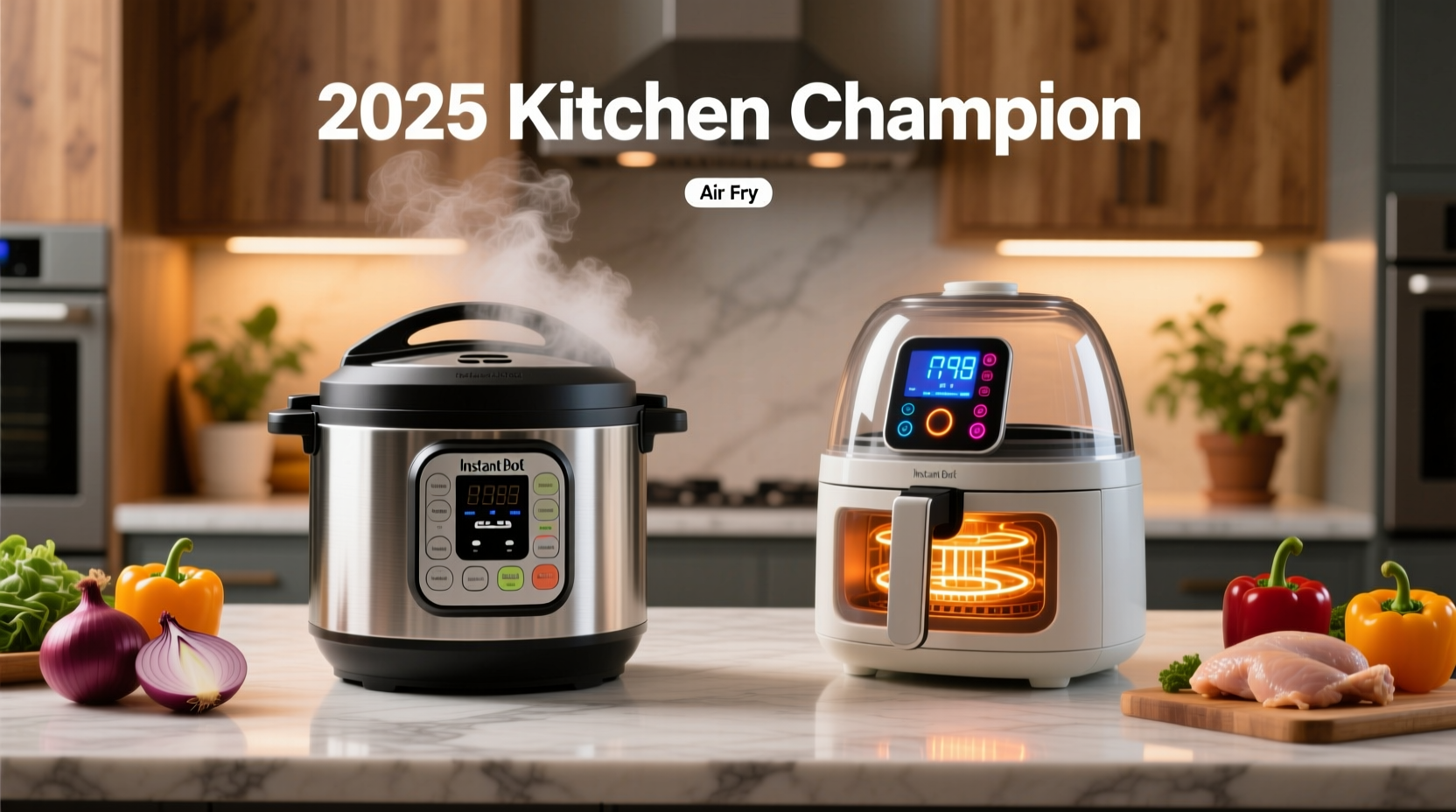
The core difference between an Instant Pot and an air fryer lies in their fundamental cooking methods. The Instant Pot is a multi-functional electric pressure cooker that uses steam and high pressure to cook food quickly. It excels at braising, stewing, steaming, and slow cooking, with additional modes like sauté, yogurt-making, and rice cooking in many models. Its strength is transforming tough cuts of meat into tender meals in under an hour and automating processes that once required constant supervision.
In contrast, an air fryer uses rapid convection heating—circulating superheated air around food—to mimic deep frying with minimal oil. It produces crispy textures on wings, fries, roasted vegetables, and even baked goods, all while reducing fat content by up to 75% compared to traditional frying. While some newer air fryers include dehydrating, baking, and roasting functions, they don’t replicate the moist-heat environments needed for stews or beans.
Tip: If you regularly cook dried beans, bone broth, or one-pot meals from scratch, the Instant Pot saves hours. For crispy snacks and reheating leftovers without sogginess, the air fryer wins.Versatility and Daily Use: What Can Each Appliance Actually Do?
When evaluating which appliance earns its spot, consider how often it gets used and for what. A 2024 consumer survey by KitchenTech Insights found that 68% of Instant Pot owners use it at least three times per week, primarily for soups, grains, and meal prep. Meanwhile, 74% of air fryer users reported using theirs four or more times weekly, mostly for quick snacks, proteins, and reviving takeout leftovers.
The Instant Pot shines in batch cooking. Preparing a week’s worth of shredded chicken, cooking dry lentils in 25 minutes, or making homemade bone broth without babysitting a stockpot are game-changers for busy households. It also integrates well with clean-eating and plant-based diets, where legumes and whole grains form the backbone of meals.
Air fryers, on the other hand, cater to texture-driven cravings. Crispy tofu, golden sweet potato fries, or perfectly seared salmon skin—these are difficult to achieve consistently in a microwave or conventional oven. Their speed (often ready in 10–20 minutes) makes them ideal for after-work cooking when hunger strikes fast.
“Air fryers have become the go-to for ‘crisp revival’—reheating pizza so the crust crackles, or giving yesterday’s fried chicken a second life without the grease.” — Chef Marcus Tran, Culinary Innovation Consultant
Health and Nutrition: Cooking Methods That Matter
Nutritionally, both appliances support healthier eating, but in different ways. The Instant Pot preserves nutrients through shorter cooking times and reduced water usage (versus boiling). For example, pressure-cooked vegetables retain more vitamin C than boiled ones. It also allows control over sodium and additives since meals are made from scratch.
Air fryers reduce reliance on oil. Where deep-fried foods absorb significant amounts of oil, air-fried versions use just a light spray. Studies published in the Journal of Food Science and Technology (2023) show air-fried potatoes have up to 50% less fat than deep-fried counterparts, with similar sensory satisfaction.
However, neither appliance is inherently “healthy.” You can make greasy pulled pork in an Instant Pot or burn frozen fries in an air fryer. The real benefit lies in enabling better habits: faster access to nutritious meals and reduced temptation to order takeout.
Space, Cost, and Practicality Comparison
Let’s break down the practical considerations that determine whether an appliance earns permanent counter space.
| Feature | Instant Pot | Air Fryer |
|---|---|---|
| Footprint | Medium to large (6–8 quarts common) | Small to medium (varies by model) |
| Average Price | $70–$150 (multi-function models) | $60–$200 (premium combos cost more) |
| Cooking Time (avg.) | 15–60 min (includes pressurizing) | 10–25 min (no preheating needed) |
| Dish Count | 1–2 (inner pot + lid) | 1–2 (basket + tray) |
| Best For | One-pot meals, meal prep, grains, beans | Crispy foods, reheating, small portions |
| Lifespan (avg.) | 5–7 years | 3–5 years (fan motor wear) |
While air fryers tend to be smaller, many newer models integrate air frying with pressure cooking, slow cooking, and even dehydrating. These combo units—like the Instant Pot Vortex or Ninja Foodi series—blur the line between the two appliances, offering hybrid functionality. However, experts caution that dual-use devices may compromise performance in one mode to accommodate another.
“Combo units are great for small kitchens, but if you rely heavily on one function—say, pressure cooking for meal prep—a dedicated Instant Pot will deliver more consistent results.” — Dr. Lena Patel, Home Appliance Research Institute
Real-World Example: One Kitchen, Two Priorities
Sarah Kim, a working parent of two in Austin, Texas, owned both appliances but recently downsized her kitchen layout. She used her Instant Pot twice weekly to prepare chili, quinoa bowls, and hard-boiled eggs for lunches. Her air fryer, however, was used almost daily—for chicken nuggets, roasted broccoli, and reheating school leftovers.
After moving to a smaller apartment, she kept the air fryer and stored the Instant Pot in a cabinet. “I realized I could boil eggs on the stove and use my oven for stews,” she said. “But nothing crisps veggies like the air fryer, and my kids actually eat them now.”
Her experience reflects a broader trend: appliances that enable immediate, satisfying results often win out over those requiring longer setup or cleanup—even if the latter offers deeper utility.
Step-by-Step: Choosing the Right Appliance for Your 2025 Kitchen
Follow this decision framework to determine which appliance deserves your counter space—or whether you need both.
- Assess your cooking habits: Track what you cook most in a week. Are you making soups, beans, and large batches? Instant Pot. Craving crispy textures or reheating frequently? Air fryer.
- Evaluate kitchen space: Measure available counter area. If limited, prioritize the appliance you’d use most daily.
- Consider household size: Larger families benefit from Instant Pot’s batch capabilities. Singles or couples may prefer the air fryer’s speed and portion control.
- Review health goals: Need low-fat options? Air fryer. Focus on whole foods and plant-based proteins? Instant Pot helps with legumes and grains.
- Test before committing: Try borrowing or renting each appliance for a week to gauge real-world usage before deciding.
Can You Replace One with the Other?
No single appliance fully replaces the other. While air fryer lids exist for Instant Pot models (like the Duo Crisp), they require switching attachments and don’t match standalone air fryer performance. Similarly, you can't pressure-cook in an air fryer.
Some tasks overlap—baking potatoes, roasting chicken—but with different outcomes. An Instant Pot cooks a whole chicken in 20 minutes but leaves the skin steamed, not crispy. An air fryer takes 35–40 minutes but delivers golden, crunchy skin. The choice depends on whether speed or texture matters more to you.
Frequently Asked Questions
Can I cook frozen meat in both appliances?
Yes, both handle frozen meats safely. The Instant Pot can pressure-cook frozen chicken breasts in 20 minutes (with 10 minutes natural release). Air fryers can cook frozen items like chicken tenders in 15–20 minutes, though results vary by thickness.
Which is safer for families with kids?
Both are generally safe with modern safety features. However, the Instant Pot has internal pressure mechanisms that prevent opening under pressure, while air fryers have hot exteriors during use. Supervision is key with either, but the air fryer’s simpler interface may be easier for teens to operate independently.
Do these appliances really save time?
Yes, but differently. The Instant Pot reduces active cooking time for long-simmered dishes (e.g., beef stew goes from 3 hours to 45 minutes). The air fryer eliminates preheating and shortens cook times for small meals. Both reduce reliance on the main oven, saving energy and cooling the kitchen.
Checklist: Which Appliance Fits Your Lifestyle?
- ✅ Do you cook dried beans, lentils, or bone broth often? → Instant Pot
- ✅ Do you reheat leftovers multiple times a week? → Air fryer
- ✅ Is counter space extremely limited? → Choose based on daily use frequency
- ✅ Do you want crispier textures without oil? → Air fryer
- ✅ Do you meal-prep large batches on weekends? → Instant Pot
- ✅ Do you cook for one or two people most days? → Air fryer
- ✅ Do you already have a slow cooker or pressure cooker? → Air fryer fills a bigger gap
Final Verdict: Who Wins Counter Space in 2025?
As we move into 2025, the air fryer edges slightly ahead in terms of daily usability and broad appeal. Its ability to deliver fast, craveable results aligns with evolving lifestyles centered on convenience, speed, and visual satisfaction. It’s particularly effective in smaller households and urban kitchens where oven use is impractical.
That said, the Instant Pot remains indispensable for specific needs: cooking from dry ingredients, making large volumes of food, and supporting health-focused diets reliant on legumes and whole grains. It’s not obsolete—it’s specialized.
The ultimate answer depends on your kitchen rhythm. If you must choose one, let frequency of use guide you. Most home cooks reach for the air fryer more often. But if you value depth over speed, the Instant Pot still holds its ground.
For many, the future isn’t about choosing one over the other—it’s about smart integration. Keep the air fryer on the counter for daily wins, store the Instant Pot nearby for weekly prep, and consider a combo unit only if space is non-negotiable and performance trade-offs are acceptable.
🚀 Ready to optimize your kitchen? Try a 7-day challenge: use only one appliance for a week, then switch. See which one you miss more. Share your results online and help others decide what truly earns its place in the modern kitchen.