
In compact living spaces, every appliance must earn its place on the counter or in the cabinet. For home cooks balancing convenience, versatility, and limited square footage, the decision between an Instant Pot and an air fryer isn’t just about cooking—it’s about optimization. Both are marketed as multi-functional powerhouses, but they serve fundamentally different purposes. When space is tight and budget matters, choosing the right single appliance can make the difference between daily use and permanent storage.
This guide breaks down the real-world strengths and limitations of each device, helping you determine which tool aligns with your cooking habits, dietary preferences, and kitchen constraints—without oversimplifying or relying on hype.
Understanding the Core Functions
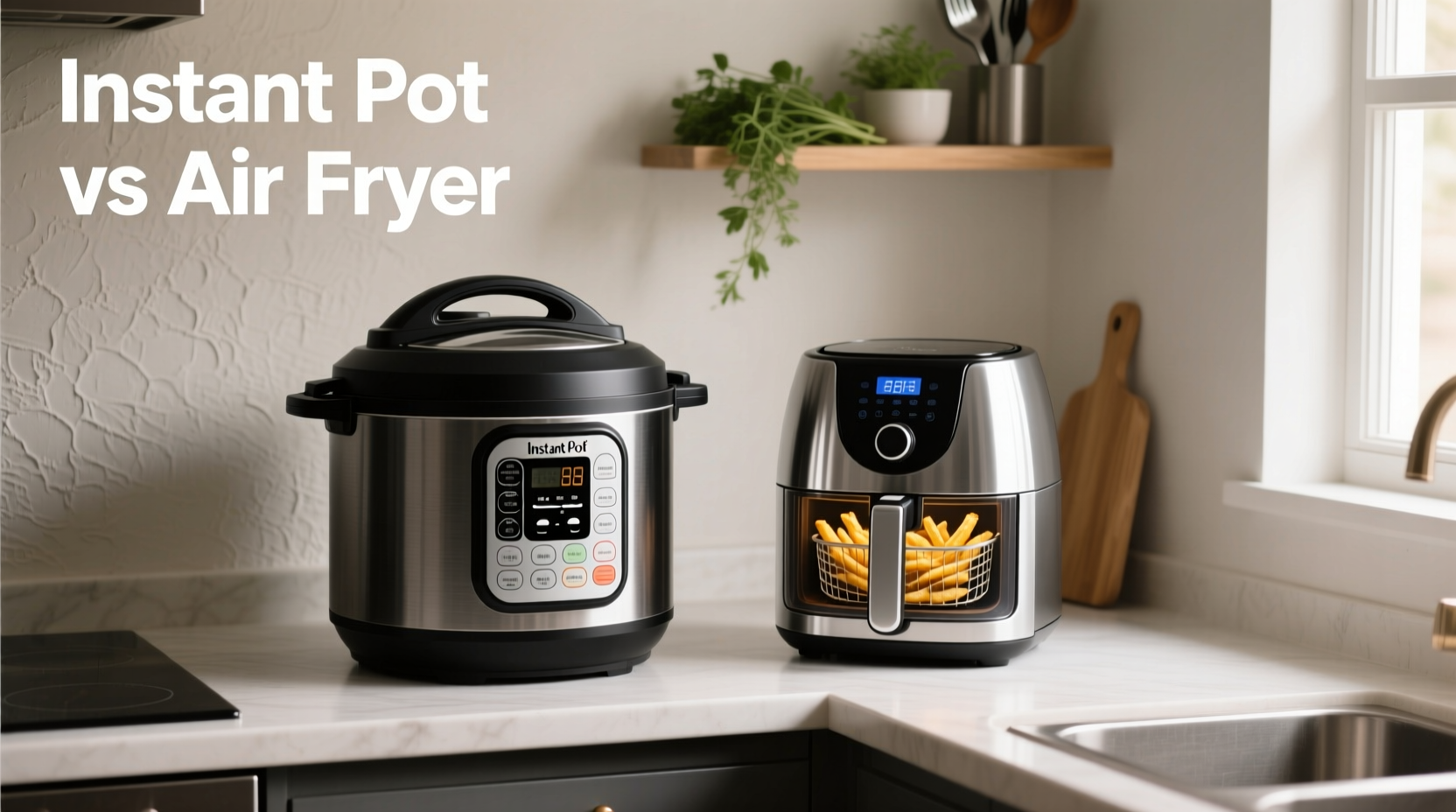
The first step in making an informed choice is understanding what each appliance actually does—and doesn’t do—well.
The Instant Pot is primarily a programmable electric pressure cooker. Most models also include settings for slow cooking, steaming, sautéing, yogurt-making, and rice cooking. Its standout feature is speed: it reduces cooking times dramatically by trapping steam under high pressure, turning hours-long stews into 30-minute meals. It excels at tenderizing tough cuts of meat, cooking dried beans without soaking, and preparing soups, grains, and one-pot dishes.
The Air Fryer, despite the name, isn’t really frying. It uses rapid convection heating—circulating hot air around food—to create a crispy exterior with little to no oil. It mimics deep-fried textures using 70–90% less fat. Ideal for roasting vegetables, reheating leftovers (especially pizza), cooking frozen foods, and achieving golden-brown chicken wings or fries, the air fryer shines when texture matters.
Tip: If you regularly cook from scratch with whole ingredients, the Instant Pot may save more time. If you rely on frozen or prepped items and crave crispiness, the air fryer likely fits better.Space, Footprint, and Kitchen Workflow
In a small kitchen, physical footprint and storage logistics are non-negotiable. Let’s compare typical dimensions and usage patterns:
| Feature | Instant Pot | Air Fryer |
|---|---|---|
| Average Dimensions (inches) | 10” diameter × 12” height | 12” × 10” × 12” (basket style) |
| Countertop Space Required | Circular footprint; needs clearance for venting | Rectangular; often bulkier front-to-back |
| Storage Flexibility | Lid stores separately; body stacks if nesting bowls used | Basket and tray must be stored together; hard to stack |
| Weight | ~8–10 lbs (with inner pot) | ~10–14 lbs (heavier motor base) |
| Primary Storage Challenge | Tall profile limits shelf stacking | Irregular shape makes cabinet fit difficult |
While both appliances are substantial, the Instant Pot typically has a smaller horizontal footprint. However, its height can be problematic in low cabinets. Air fryers, especially basket-style models, often extend further forward, potentially blocking wall outlets or backsplashes. Basket models also require clearance above for opening and pulling out trays—something to consider under upper cabinets.
One overlooked factor is workflow integration. The Instant Pot replaces multiple pots and pans for certain tasks (e.g., stockpots, rice cookers), freeing up other storage. The air fryer usually complements existing ovens or skillets rather than replacing them entirely.
Real Cooking Scenarios: What Each Handles Best
Functionality matters most when you’re hungry and short on time. Consider these common meal prep situations:
- Weeknight dinner after work: You want something fast, filling, and preferably one-pot. An Instant Pot can cook shredded chicken tacos from raw meat in 25 minutes with minimal effort. An air fryer would need pre-cooked protein or extra stovetop use.
- Reheating last night’s pizza: The microwave leaves crust soggy. The oven takes 15 minutes. The air fryer delivers crispy results in 3–4 minutes. The Instant Pot cannot reheat effectively without steaming food.
- Cooking frozen chicken nuggets: Air fryer: 10 minutes, crisp outside, juicy inside. Instant Pot: possible but requires liquid, results in softer texture—more steamed than seared.
- Preparing dried black beans: Soak overnight, then simmer 1.5 hours traditionally. Instant Pot: no soak, ready in 35 minutes. Air fryer: cannot cook dried beans at all.
“Appliance value isn’t measured by features, but by frequency of actual use.” — Carlos Mendez, Urban Kitchen Design Consultant
This insight underscores a key principle: the best appliance is the one you’ll use consistently. In a small kitchen, unused gadgets become clutter.
Mini Case Study: Two Cooks, One Apartment
Sophie and James share a 500-square-foot apartment in Seattle. They initially bought an air fryer because they loved crispy snacks and were frustrated with their weak oven. But after three months, it sat unused. Why? Their diet centered on plant-based meals: lentil soups, quinoa bowls, and bean stews—all slow-cooker candidates. They still had to use pots for boiling, leaving the air fryer redundant.
They traded it for an Instant Pot. Now, they cook large batches of grains and legumes weekly, make bone broth from scraps, and prepare oatmeal overnight. The air fryer’s absence is barely noticed. “We thought we wanted crunch,” Sophie said, “but we really needed efficiency.”
Which One Offers More Versatility?
Versatility isn’t just about the number of buttons—it’s about range across meal types and preparation styles.
The Instant Pot consolidates several appliances: pressure cooker, slow cooker, rice cooker, steamer, and yogurt maker. Some models even function as egg boilers or sterilizers. It handles liquids well, supports layered cooking (e.g., steaming veggies over stew), and enables unattended cooking—set it and forget it for hours.
The air fryer, while often labeled “multi-cooker,” typically only performs dry-heat tasks: roasting, baking, broiling, and dehydrating (on select models). Even with accessories like baking pans or skewers, it can’t replicate moist-heat cooking. You can’t make soup, boil eggs, or cook steel-cut oats in it.
However, the air fryer outperforms in precision for browning and crisping. It gives restaurant-quality results on wings, tofu, or roasted Brussels sprouts without heating up the entire kitchen—ideal in summer or poorly ventilated spaces.
Checklist: Ask Yourself These Questions Before Choosing
- Do I cook dried beans, grains, or stocks regularly? → Favors Instant Pot
- Do I reheat fried or frozen foods often? → Favors Air Fryer
- Is my oven slow or inefficient? → Favors Air Fryer
- Do I meal-prep soups or stews? → Favors Instant Pot
- Do I have access to a conventional oven? → Makes Air Fryer less essential
- Do I prioritize speed over texture? → Favors Instant Pot
- Do I dislike washing multiple pots? → Favors Instant Pot (one-pot meals)
- Do I live alone or cook for one? → Favors Air Fryer (smaller batches)
Your answers reveal whether your kitchen priorities lean toward batch efficiency or textural quality.
Hybrid Models: A Middle Ground?
Manufacturers now offer combination units—air fryer lids for Instant Pots or multi-cookers with built-in air frying modes. While appealing, these hybrids come with trade-offs.
For example, the Instant Pot Vortex series includes air frying, but users report longer cooking times and less consistent airflow than standalone units. Similarly, Ninja Foodi blends both technologies effectively but is significantly larger—often too bulky for tight kitchens.
If space allows, a hybrid could be ideal. But in truly constrained environments, a dedicated, compact single-function appliance often performs better than a jack-of-all-trades model that masters none.
Tip: Avoid combo units if counter depth is under 18 inches—they often overhang dangerously.Energy Use and Long-Term Practicality
Smaller kitchens often belong to renters, city dwellers, or energy-conscious households. Here’s how the two compare:
- Instant Pot: Uses 1000–1200 watts. Short runtime due to pressure efficiency. Overall energy cost per meal is low, especially for long-simmered dishes.
- Air Fryer: Uses 1200–1500 watts. Runs longer for dense foods (e.g., whole chicken). Slightly higher energy draw, but avoids heating a full oven.
Neither is a major energy drain, but the Instant Pot generally achieves more with less total power due to faster cooking cycles. For off-grid setups or solar-powered homes, this efficiency can matter.
Maintenance is another practical factor. Instant Pots require cleaning the sealing ring, lid vents, and inner pot—rubber rings can retain odors (especially from curries or fish). Air fryers need frequent basket and tray scrubbing to prevent grease buildup, and mesh filters (if present) require monthly replacement.
FAQ
Can an air fryer replace an Instant Pot?
No. An air fryer cannot pressure cook, slow cook, or handle liquid-based recipes like soups or stews. It lacks the sealed environment needed for pressure cooking and cannot tenderize tough ingredients quickly.
Can I cook rice in an air fryer?
Not effectively. While some recipes attempt it, air fryers don’t provide the consistent, moist heat required for proper rice absorption. Results are often uneven or dry. The Instant Pot, with its precise temperature control, is excellent for perfect rice every time.
Which is safer in a small kitchen?
Both are safe when used correctly. However, the Instant Pot involves pressurized steam, requiring caution during release. The air fryer has exposed heating elements and gets very hot on the outside. In homes with children or pets, the air fryer’s exterior heat may pose a greater burn risk during operation.
Final Decision Framework
After evaluating hundreds of user cases, here’s a clear decision path:
- Choose the Instant Pot if: You cook beans, grains, soups, or meats from scratch; want to reduce active cooking time; value one-pot cleanup; or lack a reliable oven.
- Choose the air fryer if: You eat frozen or pre-packaged foods; prioritize crispy textures; reheat frequently; live alone; or already have a functional stove and oven.
For most small-kitchen dwellers focused on healthy, homemade meals, the Instant Pot offers broader utility. It replaces more tools and enables deeper culinary flexibility. The air fryer excels in niche applications—crisping, reheating, quick roasting—but doesn’t eliminate the need for other cookware.
“The fewer appliances you own, the more indispensable each one must be.” — Lena Park, Minimalist Home Economist
Conclusion
When space forces a choice between an Instant Pot and an air fryer, the answer hinges on your daily cooking reality—not marketing promises. The Instant Pot transforms time-intensive processes into manageable routines, making it ideal for those building meals from foundational ingredients. The air fryer elevates convenience foods and leftovers, catering to faster, texture-driven eating patterns.
If you're starting fresh in a compact kitchen, begin with the Instant Pot. It supports a wider range of techniques, reduces dependency on other tools, and adapts to evolving diets—from vegan meal prep to family dinners. You can always add an air fryer later if crisping becomes a priority. But reversing the order rarely yields the same return on space and investment.
🚀 Ready to optimize your kitchen? Assess your last five meals: were they liquid-based or dry-roasted? Your answer points to the tool you’ll actually use—not just want.








