Every December, someone pulls an old string of lights from the attic, glances at the faded label, and wonders: “This says ‘indoor only’ — but the porch needs decorating *now*. Can I just hang it outside for two weeks?” The answer isn’t yes or no — it’s layered with physics, safety standards, and real-world consequences. Understanding the difference between indoor and outdoor-rated Christmas lights isn’t about marketing labels; it’s about insulation integrity, moisture ingress thresholds, temperature tolerance, and how electricity behaves when exposed to rain, snow, wind-driven sleet, or even condensation forming inside a socket overnight. This isn’t theoretical. A single compromised connection on an indoor-rated string hung outdoors can energize metal railings, drip water onto grounded surfaces, or ignite damp mulch beneath a deck. Yet, many households do swap them — sometimes without incident, sometimes with costly or dangerous outcomes. Let’s go beyond the packaging and examine what actually happens when you cross that line.
What the Labels Really Mean: UL Ratings Aren’t Suggestions
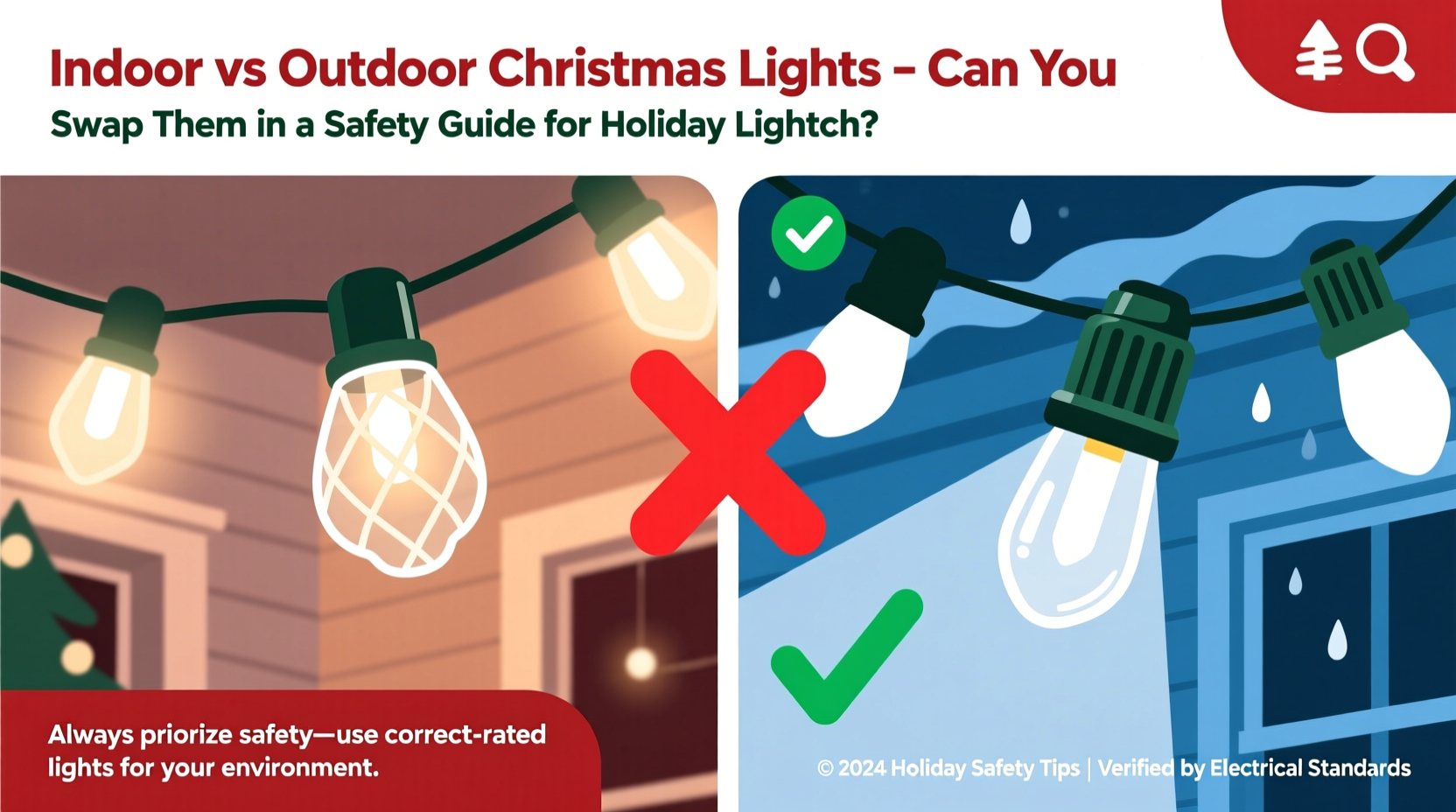
The distinction between “indoor” and “outdoor” isn’t arbitrary. It’s defined by Underwriters Laboratories (UL), a globally recognized safety certification organization. UL 588 is the standard governing seasonal decorative lighting. Indoor-rated lights carry a UL listing marked “Indoor Use Only” and are tested under controlled conditions: dry environments, stable room temperatures (typically 10°C to 35°C), and no exposure to UV radiation, precipitation, or physical abrasion. Outdoor-rated lights, certified to UL 588 Section 26, undergo rigorous stress testing: immersion in water for 48 hours, exposure to UV light for 2,000 hours (simulating three years of sun), temperature cycling from –20°C to 60°C, and repeated flexing of wires to simulate wind-induced movement. Crucially, outdoor lights use thicker, UV-stabilized PVC or rubberized insulation; their sockets feature tighter seals, often with silicone gaskets; and their internal wiring includes corrosion-resistant copper plating or tinned conductors.
This isn’t over-engineering — it’s risk mitigation. Consider the physics: moisture doesn’t need to flood a socket to cause failure. Capillary action draws microscopic amounts of water into micro-gaps in plastic housing. Once inside, humidity condenses on cold copper terminals overnight. That thin film of water lowers electrical resistance, enabling current leakage — enough to trip a GFCI, degrade insulation over time, or, in worst cases, create a path to ground through a person touching a wet fixture. Indoor lights lack the dielectric strength and sealing to resist this slow degradation.
“UL certification reflects real-world failure modes we’ve observed in field investigations — not lab ideals. An indoor string surviving one dry weekend outdoors doesn’t validate its safety. It validates luck.” — Dr. Lena Torres, Senior Electrical Safety Engineer, UL Solutions
The Hidden Risks of a ‘One-Time Swap’
Many assume a short-term swap — say, using indoor lights on a covered porch for a holiday party — poses minimal risk. But coverage doesn’t equal protection. A covered porch still experiences high humidity, dew accumulation, wind-blown mist, and temperature swings that induce condensation inside non-sealed sockets. Here’s what commonly goes wrong:
- Insulation cracking: Indoor PVC becomes brittle after UV exposure — even indirect, reflected sunlight off white siding or snow can initiate microfractures within 48 hours. These cracks become entry points for moisture.
- Socket corrosion: Uncoated brass or copper contacts in indoor sockets oxidize rapidly in humid air, increasing resistance and generating heat at connection points — a leading cause of localized melting and fire ignition.
- Ground-fault vulnerability: Indoor lights lack the enhanced ground-fault sensitivity required for outdoor circuits. A minor leak may not trip a standard breaker but can energize a wet wooden post or metal gutter, creating shock hazards for anyone nearby.
- Voltage drop amplification: Outdoor circuits often run longer distances from the outlet. Indoor wires typically use thinner gauges (e.g., 22–24 AWG). When extended across a patio or wrapped around a tree, resistance increases, causing dimming, overheating at the plug end, and premature LED driver failure.
When Swapping *Might* Be Acceptable — And What You Must Verify
There are narrow, highly conditional scenarios where experienced users have successfully used indoor lights outdoors — but only with deliberate safeguards and full awareness of residual risk. These are exceptions, not recommendations. They require verification *before* hanging:
- Confirm complete weather shielding: The lights must be installed in a location with zero exposure to rain, snow, mist, or direct dew — such as inside a fully enclosed, ventilated sunroom with climate control, or under a permanently sealed, overhanging roof with >1.5 m of vertical clearance from any open edge.
- Check for GFCI protection: The circuit must be protected by a functional, testable GFCI outlet or breaker. Test it immediately before plugging in.
- Inspect every connection: Look for cracked, discolored, or swollen insulation. Discard any string with even one compromised section — don’t assume “only one bulb is bad.”
- Limit duration strictly: Never exceed 12 consecutive hours of operation. Unplug, let cool completely, and wipe sockets with a dry microfiber cloth before re-use.
- Never use near flammable materials: Keep minimum 1.2 m clearance from dried pine boughs, straw decorations, or fabric drapery — heat buildup accelerates in confined spaces.
This approach is not suitable for novices, renters (who may not control circuit protection), or locations with unpredictable weather. It also voids any manufacturer warranty and UL liability coverage.
Outdoor vs Indoor Lights: A Practical Comparison
The table below summarizes critical technical and operational differences — not just marketing claims — between typical LED mini-light strings rated for each environment. Data reflects industry averages from UL-certified products tested in 2023–2024.
| Feature | Indoor-Rated Lights | Outdoor-Rated Lights |
|---|---|---|
| Wire Gauge | 22–24 AWG (thinner, higher resistance) | 20–22 AWG (thicker, lower voltage drop over distance) |
| Insulation Material | Standard PVC (degrades under UV in <72 hrs) | UV-stabilized PVC or EPDM rubber (rated for 3+ years sun exposure) |
| Socket Sealing | No gasket; press-fit only; gaps visible under magnification | Silicone or thermoplastic elastomer gasket; IP44 rating (splash resistant) |
| Operating Temp Range | 10°C to 35°C (50°F to 95°F) | –20°C to 60°C (–4°F to 140°F) |
| Connector Type | Basic plug-and-socket; no locking mechanism | Locking, waterproof connectors with O-rings; often shrouded |
| Ground-Fault Sensitivity | Not designed for GFCI compatibility; may nuisance-trip | Engineered for stable GFCI operation; low-leakage design |
| Average Lifespan (Proper Use) | 2–3 seasons indoors | 5–7 seasons outdoors |
Real-World Consequence: A Mini Case Study from Portland, OR
In December 2022, a homeowner in Portland used a box of indoor-rated C7 bulbs — purchased in 2019 and stored in a garage — to outline her front porch railing. The porch had a deep overhang, but the city experienced persistent drizzle and nighttime fog. After five days, the lights began flickering intermittently. On day six, her teenage son touched the metal railing while stepping off the porch and received a noticeable tingle — not severe, but enough to make him recoil. She unplugged the lights and contacted an electrician. Inspection revealed water intrusion in three sockets, visible green corrosion on copper leads, and a 0.8 mA ground leakage (well above the 0.5 mA threshold for human perception). The electrician confirmed the GFCI was functional but noted the indoor lights’ inconsistent impedance caused delayed tripping. The family replaced all lights with UL-listed outdoor-rated sets and added a dedicated outdoor GFCI outlet. Total cost: $217 for labor, parts, and inspection — far exceeding the $12 they’d saved by reusing old indoor stock.
Your Safety Checklist Before Hanging Any Lights
Whether pulling new outdoor sets from storage or considering a last-minute indoor substitution, follow this verified checklist:
- ✅ Verify UL certification: Look for the UL holographic mark or “UL Listed” text on the cord or packaging — not just “UL Recognized” or “Meets UL Standards.”
- ✅ Test GFCI outlets: Press the “TEST” button — it must cut power instantly. Then press “RESET.” Repeat before each use.
- ✅ Inspect for damage: Run fingers along the entire cord. Feel for stiffness, cracks, swelling, or tackiness — signs of insulation breakdown.
- ✅ Examine sockets: Check for discoloration, white powder (copper oxide), melted plastic, or loose bulb fit.
- ✅ Confirm circuit load: Add up wattage of all devices on the same circuit. Do not exceed 80% of breaker capacity (e.g., max 1,440W on a 15A/120V circuit).
- ✅ Use outdoor-rated extension cords: Indoor cords lack UV resistance and proper jacket thickness. Look for “SJTW” or “W” rating on the cord jacket.
FAQ: Addressing Common Misconceptions
Can I cover indoor lights with plastic wrap or tape to make them ‘waterproof’?
No. Plastic wrap traps heat and moisture, accelerating insulation degradation and creating condensation micro-environments. Electrical tape lacks UV stability and will crack or peel within hours outdoors. Neither meets UL requirements for dielectric strength or flame resistance.
If my indoor lights worked fine on the patio last year, why shouldn’t I reuse them?
Insulation degrades cumulatively. Each exposure to humidity, temperature swing, or UV light weakens molecular bonds. What survived one season may fail catastrophically the next — often without visible warning. There is no safe “grace period” for repeated misuse.
Are LED indoor lights safer than incandescent ones for outdoor swaps?
LEDs run cooler, reducing fire risk — but they do not eliminate electrical hazards. Their low-voltage drivers are highly sensitive to moisture-induced short circuits, and many LED strings still use the same non-sealed sockets and thin-gauge wiring as older incandescent models. Safety depends on construction, not bulb type.
Conclusion: Prioritize Resilience Over Convenience
Christmas lighting is meant to evoke warmth, tradition, and shared joy — not anxiety over tripped breakers or emergency calls to electricians. The marginal time or money saved by swapping indoor lights outdoors is never worth the compromise in safety, reliability, or peace of mind. Outdoor-rated lights cost slightly more upfront, but their robust construction means fewer mid-season failures, longer usable life, and — most importantly — predictable, certified performance under winter conditions. Treat your lights like the engineered electrical systems they are: respect their design limits, verify their certifications, and invest in solutions built for where they’ll actually operate. Your home, your family, and your insurance provider will thank you when the first frost arrives — and your lights shine steadily, safely, and exactly as intended.
💬 Have you faced a lighting dilemma this season? Share your experience — what worked, what didn’t, and what you learned — in the comments. Real stories help others navigate these decisions with confidence.








