Cats are naturally curious, agile, and instinct-driven animals. When confined indoors without sufficient stimulation, they often develop behavioral issues—most commonly, destructive scratching of furniture. While scratching is a natural behavior used for marking territory, stretching muscles, and shedding claw sheaths, it becomes problematic when directed toward sofas, carpets, or walls. The root cause is rarely malice; it's usually boredom, stress, or lack of appropriate outlets. Addressing this requires more than just deterrents—it demands proactive environmental enrichment. By understanding feline psychology and providing engaging alternatives, you can redirect your cat’s energy positively while strengthening your bond.
Understanding Feline Behavior and the Need for Enrichment
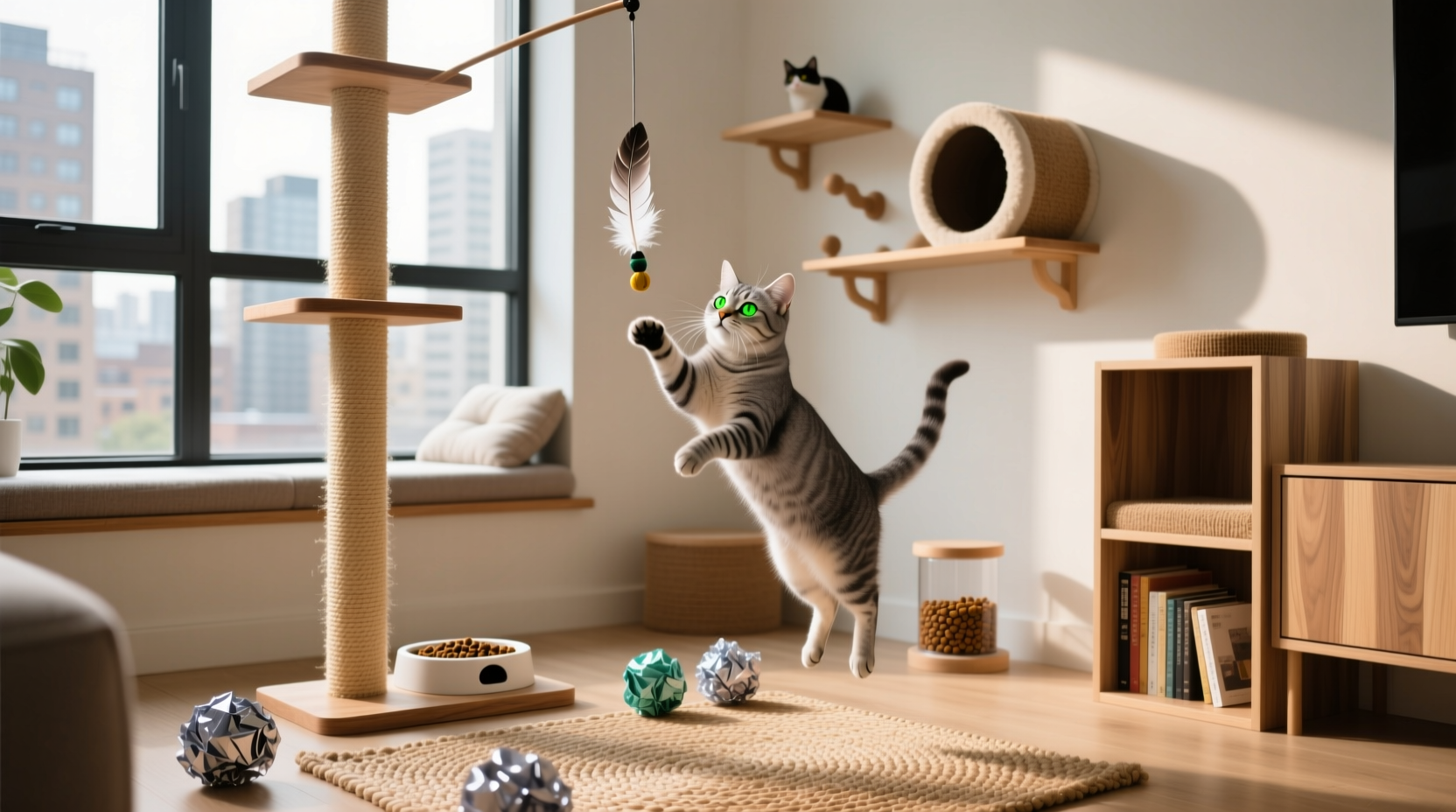
Indoor cats live in environments that are safe but often under-stimulating. Unlike their outdoor counterparts, they don’t experience hunting, climbing trees, exploring new scents, or navigating dynamic spaces. This sensory deprivation leads to frustration and pent-up energy, manifesting as over-grooming, aggression, or furniture destruction.
Scratching isn't misbehavior—it's communication. Cats have scent glands in their paws, so when they scratch, they leave both visual and olfactory markers. They also stretch their back, shoulder, and leg muscles with each swipe. A lack of suitable scratching surfaces forces them to use what's available: your couch.
True enrichment goes beyond toys. It involves creating a habitat that satisfies core feline needs: safety, exploration, hunting simulation, and control over their environment. According to Dr. Mikel Delgado, a certified cat behavior consultant,
“Enrichment isn’t about entertaining your cat—it’s about giving them opportunities to express natural behaviors in a healthy way.” — Dr. Mikel Delgado, Cat Behavior Specialist
This principle should guide every decision you make when designing your cat-friendly home.
Effective Indoor Cat Enrichment Strategies
Creating an enriched environment doesn’t require expensive gear or major renovations. Small, consistent changes can dramatically improve your cat’s quality of life. Below are proven strategies organized by category.
1. Vertical Space and Climbing Structures
Cats feel safest when elevated. Being off the ground allows them to observe their surroundings, avoid perceived threats, and rest undisturbed. Installing vertical spaces encourages movement and reduces territorial anxiety.
- Wall-mounted shelves or “catwalks” arranged in zigzag patterns promote climbing and exploration.
- Cat trees with multiple levels, hiding spots, and scratching posts combine play and rest areas.
- Purchase or DIY window perches so your cat can watch birds, squirrels, or passing cars—a form of passive mental stimulation.
2. Interactive and Puzzle Feeding Toys
Feeding shouldn’t be limited to mealtimes in a bowl. In the wild, cats spend hours stalking and capturing prey. Puzzle feeders replicate this process, turning eating into an active challenge.
Types of puzzle feeders include:
- Rolling balls that dispense kibble as your cat bats them around.
- Slide-and-find trays where food is hidden under movable panels.
- Maze boards requiring paw manipulation to access treats.
Start simple and gradually increase difficulty to avoid frustration. Use wet food smeared inside for added scent motivation during early training.
3. Scent and Novel Object Rotation
Cats rely heavily on their sense of smell. Introducing new scents—even non-toxic herbs like catnip, silver vine, or valerian root—can spark curiosity and playfulness.
Rotate toys weekly to maintain novelty. A toy ignored for weeks may become exciting again after a break. You don’t need dozens—just four or five high-quality items rotated every 5–7 days.
“Cats habituate quickly. What excites them today might be ignored tomorrow unless rotated or repurposed.” — Jackson Galaxy, Animal Behaviorist
4. Targeted Scratching Solutions
Instead of trying to eliminate scratching, channel it appropriately. Not all scratching posts work equally well. Many commercial options fail because they’re too short, unstable, or made from unappealing materials.
| Scratching Surface | Appeal to Cats | Tips for Success |
|---|---|---|
| Cardboard (angled or horizontal) | High – easy to shred and mark | Replace every few months; place near targeted furniture |
| Sisal rope (vertical) | Very high – mimics tree bark | Ensure post is tall enough (at least 30 inches) and anchored firmly |
| Carpet-covered | Low – encourages carpet scratching elsewhere | Avoid if possible; transition to sisal instead |
| Wood or upholstery | Negligible | Do not offer; these mimic forbidden surfaces |
Position acceptable scratching posts directly beside problem furniture. Once your cat uses the correct surface consistently, slowly move it a few inches per day toward a more convenient location.
Tip: Rub the post with catnip or attach dangling toys to draw attention.Step-by-Step Guide to Reducing Furniture Scratching
Changing scratching behavior takes time and consistency. Follow this six-week timeline to retrain your cat humanely and effectively.
- Week 1: Assess & Document – Identify which furniture pieces are targeted and note the time of day scratching occurs. Look for patterns (e.g., after waking, before meals).
- Week 2: Block & Redirect – Use temporary barriers like double-sided tape, aluminum foil, or plastic covers on damaged areas. Simultaneously introduce two new scratching posts—one near the problem zone, one near a resting area.
- Week 3: Encourage Use – Gently place your cat’s paws on the post and mimic scratching motions. Reward with praise or treats when they engage. Use interactive wand toys nearby to create positive associations.
- Week 4: Reinforce Habits – Praise and reward every instance of correct scratching. Avoid punishment—this increases stress and worsens the issue.
- Week 5: Gradual Relocation – If needed, begin shifting the post away from furniture by no more than 3–4 inches every three days. Monitor usage closely.
- Week 6: Evaluate & Maintain – Assess progress. If scratching has shifted successfully, remove deterrents. Continue rotating toys and inspecting posts for wear.
Patience is essential. Some cats adapt within days; others take several months. Consistency ensures long-term success.
Real-Life Example: Transforming Luna’s Living Room Habits
Luna, a 3-year-old domestic shorthair, lived in a downtown apartment with her owner, Mark. Over six months, she destroyed two sofas, a chair arm, and part of a wooden doorframe. Despite using sprays and trimming her nails, the behavior persisted.
After consulting a feline behavior coach, Mark implemented several changes:
- Installed a floor-to-ceiling cat tree in the living room corner.
- Added a cardboard scratcher next to the sofa, treated with silver vine.
- Began using a treat-dispensing mouse toy for 10 minutes daily.
- Placed a window perch overlooking a bird feeder.
Within three weeks, Luna began using the scratcher regularly. By week eight, she had stopped damaging furniture entirely. Mark noted she was sleeping better and seemed less reactive to noises. The key wasn’t restriction—it was redirection through engagement.
Essential Checklist for Cat Enrichment Success
Use this checklist monthly to ensure your cat’s environment remains stimulating and supportive:
- Environment Setup
- ✅ At least one vertical climbing structure
- ✅ Multiple scratching options (sisal, cardboard)
- ✅ Safe, sunny resting spots
- ✅ Window access or bird-watching station
- Toys & Interaction
- ✅ At least 5 rotating toys
- ✅ Daily interactive play (minimum 10–15 minutes)
- ✅ Puzzle feeder used 3+ times per week
- ✅ Scent enrichment (catnip, silver vine) available
- Behavior Management
- ✅ Deterrents on off-limit furniture (temporary)
- ✅ Positive reinforcement for good behavior
- ✅ Scratching posts cleaned and inspected monthly
- ✅ Nail trims every 2–3 weeks
Frequently Asked Questions
Can I completely stop my cat from scratching?
No—and you shouldn’t try. Scratching is a natural, necessary behavior. Instead, focus on guiding your cat to appropriate surfaces. Eliminating the behavior entirely leads to frustration and potential litter box avoidance or aggression.
How many scratching posts does my cat need?
Veterinarians and behaviorists recommend at least one scratching post per cat, plus an additional one. For multi-cat households, provide multiple types (vertical, horizontal) in different locations to reduce competition. High-traffic areas and near resting zones are ideal placements.
Are there alternatives to traditional scratching posts?
Yes. Consider:
- Scratching pads mounted on walls
- Cardboard loungers that double as napping spots
- Hanging sisal logs from doorknobs (for door frame scratchers)
- DIY solutions like wrapped PVC pipes with sisal
The key is stability and material preference—observe what your cat gravitates toward and replicate it.
Final Thoughts: Building a Thriving Indoor Life
Preventing boredom and furniture damage isn’t about controlling your cat—it’s about understanding them. An enriched indoor environment respects their instincts while keeping your home intact. The most effective solutions aren’t quick fixes but thoughtful adaptations that align with feline nature.
Start small. Add one puzzle toy. Install a single shelf. Observe how your cat responds. Over time, layer in more elements until their world feels expansive, even within four walls. When cats have meaningful ways to play, climb, hunt, and mark, they lose interest in destructive habits. Their confidence grows, their stress drops, and their relationship with you deepens.
💬 Ready to transform your cat’s indoor experience? Pick one enrichment idea from this article and implement it today. Share your progress, challenges, or favorite tips in the comments—your journey could inspire another cat lover to make a positive change.








