The post-holiday slump is real. As festive decorations come down and winter drags on, many people feel a dip in energy and mood—a phenomenon often called the \"January blues.\" Shorter days, gray skies, and limited sunlight can affect circadian rhythms and serotonin levels, making workspaces feel dull and uninspiring. But what if the solution was already tucked away in your attic or closet? Leftover Christmas lights, typically packed up after December 26th, can be repurposed into warm, ambient desk lighting that not only brightens your workspace but also lifts your spirits.
This isn’t just about recycling holiday decor—it’s about intentional design. With thoughtful placement and minor modifications, string lights can become a legitimate source of functional illumination. They offer soft, diffused light that reduces eye strain, creates a cozy atmosphere, and subtly signals to your brain that this space is both productive and comforting. More importantly, they’re accessible, affordable, and environmentally responsible—turning seasonal clutter into year-round utility.
Why ambient lighting matters for mental well-being
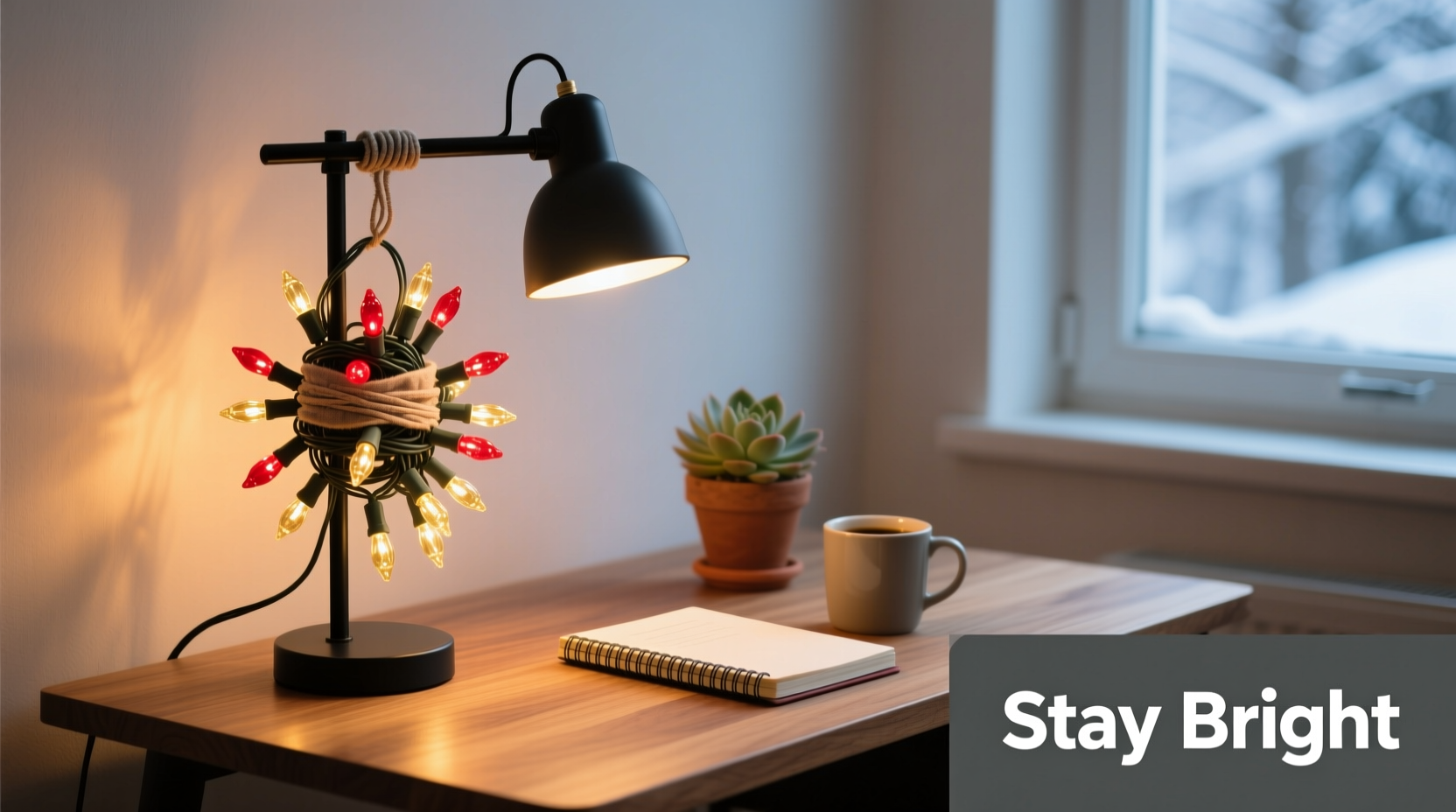
Light plays a critical role in regulating our internal clock. During winter months, reduced daylight exposure disrupts melatonin and cortisol production, which can lead to fatigue, low motivation, and even symptoms of Seasonal Affective Disorder (SAD). While full-spectrum light therapy lamps are clinically recommended for SAD, they aren't always practical for every desk or budget.
Ambient lighting fills the gap. Unlike harsh overhead fluorescents, which can cause glare and tension, soft, indirect light mimics natural dawn and dusk conditions. It supports sustained focus without overstimulating the nervous system. When used strategically, LED string lights emit a gentle glow that warms the visual field, reduces contrast between screen and surroundings, and minimizes digital eye strain.
“Lighting quality directly impacts cognitive performance and emotional regulation. Even small changes in ambient brightness can influence how alert or relaxed we feel.” — Dr. Lena Tran, Environmental Psychologist
Christmas lights, especially newer LED versions, consume minimal energy and produce little heat, making them safe for prolonged use around desks, books, and electronics. Their flexibility allows creative integration into any workspace—behind monitors, along shelves, or framing bulletin boards—transforming sterile surfaces into personalized zones of calm productivity.
Step-by-step guide: Converting Christmas lights into desk lighting
Repurposing holiday lights doesn’t require technical expertise—just attention to safety, positioning, and aesthetics. Follow this sequence to create an effective lighting setup that lasts through winter and beyond.
- Assess your string lights: Check for frayed wires, broken bulbs, or loose connections. Discard any strands with visible damage. If using older incandescent bulbs, consider replacing them with cooler, more efficient LEDs for longer daily use.
- Determine power source and length: Most string lights plug into standard outlets. Measure the distance from your desk to the nearest outlet. Use extension cords rated for indoor use if needed, but avoid daisy-chaining multiple strands unless specified as safe by the manufacturer.
- Choose the right location: Ideal spots include behind your monitor (to reduce screen glare), along the back edge of your desk, or wrapped around a floating shelf above your workspace. Avoid placing lights where they reflect directly on your screen. <4> Secure with adhesive clips or tape: Use reusable mounting clips, Velcro strips, or clear adhesive hooks to keep wires tidy and prevent tripping hazards. Never staple or nail into cords.
- Layer with task lighting: String lights should complement—not replace—your primary desk lamp. Use them as background illumination while reserving focused light for reading or detailed work.
- Test and adjust: Turn off room lights to evaluate brightness and color temperature. Warm white (2700K–3000K) tends to feel cozier; cool white may feel too clinical for evening use.
Do’s and Don’ts: Best practices for safe, effective use
While string lights are generally low-risk, improper use can lead to overheating, electrical faults, or distraction. The table below outlines key guidelines to follow.
| Do | Don’t |
|---|---|
| Use UL-certified lights designed for indoor use | Use outdoor-rated lights indoors unless labeled safe for both |
| Unplug when leaving the house or sleeping | Leave lights unattended for extended periods |
| Keep cords away from water sources and high-traffic areas | Run cords under rugs or furniture that could crush them |
| Pair warm-white lights with wood or neutral-toned desks | Use multicolored or blinking lights if they cause visual distraction |
| Clean dust buildup monthly with a dry microfiber cloth | Use water or cleaning sprays directly on bulbs or wiring |
Real-world example: Transforming a home office in Manchester
Sophie Reed, a freelance copyeditor in Manchester, UK, struggled each January with low energy and difficulty concentrating. Her basement workspace had poor natural light and relied on a single fluorescent ceiling fixture. After storing her Christmas lights one January, she noticed how much brighter and more inviting her living room felt during the holidays.
She decided to experiment. She installed two strands of warm-white LED fairy lights along the top of her bookshelf and one behind her dual monitors. Using adhesive clips, she routed the cords safely along the wall to an outlet. She paired the setup with a simple wooden desk lamp for focused tasks.
Within days, Sophie reported improved mood and better focus during late afternoon hours. “It’s not just about being able to see,” she said. “It’s about feeling like my workspace wants me there. The lights make it feel human, not like a cubicle.”
She now leaves the lights on from 4 PM to 9 PM during winter months and plans to install battery-powered versions in portable work bags for co-working spaces.
Maximizing functionality: Beyond decoration
To elevate string lights from decorative accent to functional tool, integrate them into your daily workflow. Consider these advanced uses:
- Mood zoning: Use timers to simulate sunrise in the morning—gradually increasing light exposure helps regulate circadian rhythm.
- Focus cues: Program smart plugs to turn lights on at the start of your workday, signaling mental transition into productivity mode.
- Color psychology: Stick to warm white (not blue or rainbow modes) to promote relaxation without drowsiness. Blue-enriched light may interfere with sleep if used late.
- Energy efficiency: Modern LED strings use as little as 4–6 watts per 100 bulbs—less than a phone charger. This makes them ideal for all-day background use.
Checklist: Setting up your January desk lighting system
Follow this concise checklist to ensure a smooth, safe installation:
- ☐ Inspect lights for damage or wear
- ☐ Confirm compatibility with indoor, long-term use
- ☐ Measure desk area and plan layout
- ☐ Gather mounting supplies (clips, tape, cord organizers)
- ☐ Position lights to avoid screen glare
- ☐ Secure cords safely and neatly
- ☐ Test brightness and adjust placement
- ☐ Add timer or dimmer for automation
- ☐ Clean and inspect monthly
- ☐ Store instructions and spare bulbs nearby
Frequently asked questions
Can Christmas lights really help with the January blues?
While they are not a substitute for medical treatment or light therapy boxes, Christmas lights can contribute to improved mood by enhancing ambient brightness and creating a psychologically comforting environment. The warmth and consistency of soft lighting help counteract the gloom of short winter days, supporting better emotional regulation.
Are blinking or colored lights suitable for a work desk?
Generally, no. Blinking or rapidly changing colors can be visually distracting and may trigger headaches or concentration issues, especially during screen-based work. Opt for steady warm-white or soft-yellow tones to maintain a calm, professional atmosphere conducive to focus.
How long can I leave Christmas lights on safely?
Modern LED string lights can typically run for 24–48 hours continuously without overheating. However, for safety and longevity, limit usage to 8–12 hours per day and unplug when not in use or during sleep. Always follow manufacturer guidelines and never cover lights with fabric or paper.
Conclusion: Light as a form of self-care
The end of the holiday season doesn’t have to mean packing away warmth and cheer. By reimagining leftover Christmas lights as tools for well-being, you reclaim a small but meaningful part of winter joy. Functional desk lighting built from familiar materials bridges practicality and emotion—offering not just visibility, but comfort.
In a world that often prioritizes efficiency over humanity, choosing to illuminate your workspace with intention is an act of care. It acknowledges that productivity thrives not in sterile brightness, but in environments that honor our biological and emotional needs. This January, let your desk be a sanctuary shaped by light, memory, and mindfulness.
💬 Have you repurposed holiday lights for your workspace? Share your setup, tips, or photos in the comments—let’s inspire smarter, warmer winters together.








