A black Christmas tree is no longer a rebellious twist on tradition—it’s a bold design statement embraced by modern interiors. When paired with vibrant, saturated lights, the contrast creates a dramatic yet sophisticated centerpiece for the holidays. The key lies in restraint: minimalism demands precision, balance, and intentionality. This guide walks through how to elevate a black tree using bold-colored lights without overwhelming the space. From color theory to ornament selection and lighting techniques, every detail contributes to a cohesive, eye-catching display.
Why Choose a Black Tree?
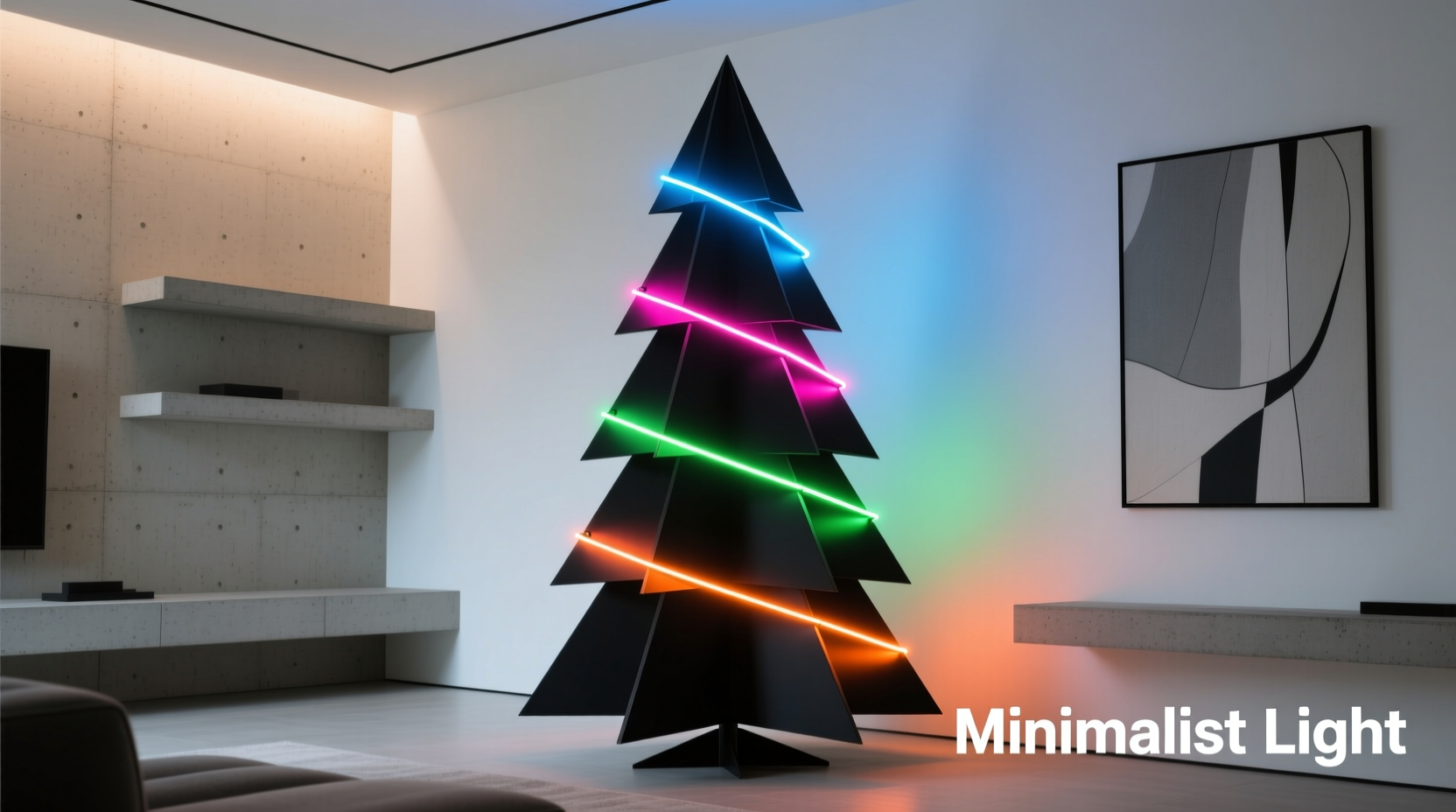
A black Christmas tree subverts expectations while offering a unique canvas for creative expression. Unlike green trees that blend into seasonal decor, a black tree stands apart—literally and aesthetically. It absorbs light rather than reflecting it, which means illumination becomes the primary source of visual interest. This makes lighting not just functional but central to the design.
The minimalist approach amplifies this effect. With fewer ornaments and clean lines, attention shifts to the interplay between shadow and color. A black backdrop intensifies the brightness of bold lights, making hues appear richer and more vivid. Designers increasingly favor this look for urban lofts, contemporary homes, and anyone seeking a refined alternative to traditional red-and-green themes.
“Black doesn’t mean absence—it means focus. On a dark tree, every light and accent becomes intentional.” — Lena Torres, Interior Stylist & Holiday Design Consultant
Selecting the Right Bold Colors
Bold doesn’t mean random. Choosing the right colors ensures visual harmony rather than chaos. While red, cobalt blue, emerald green, or fuchsia can all work, their impact depends on context: room palette, furniture tone, and existing lighting.
Consider these principles:
- Monochromatic intensity: Use varying shades of one bold color (e.g., magenta, crimson, and burgundy) for depth without clutter.
- Complementary contrast: Pair opposites on the color wheel—like electric blue and hot pink—for maximum vibrancy.
- Tonal grouping: Combine two bold colors with a neutral bridge (e.g., gold or silver wire-wrapped bulbs) to soften transitions.
Color Pairing Guide for Bold Lights
| Primary Light Color | Best Paired With | Avoid Pairing With |
|---|---|---|
| Crimson Red | Gold accents, matte black ornaments | Orange or neon yellow (clashes tonally) |
| Electric Blue | Silver wires, clear crystal picks | Warm white lights (creates imbalance) |
| Fuchsia Pink | Deep plum ribbons, chrome spheres | Lime green (overly jarring) |
| Emerald Green | Brass details, velvet bows | Forest green (too similar, lacks contrast) |
| Purple (Violet) | Lavender tinsel, iridescent glass | Red unless intentionally royal-themed |
Step-by-Step: Wiring the Lights for Maximum Impact
How you apply the lights determines whether the tree feels chaotic or curated. Even distribution is essential—especially with bold colors that draw immediate attention. Follow this sequence for professional-level results:
- Start from the inside out: Begin at the trunk and wrap lights inward toward the center, then outward to tips. This prevents dark spots and gives a glowing core effect.
- Layer by section: Divide the tree into quadrants. Complete one fully before moving to the next. This ensures even coverage.
- Vary bulb size and finish: Mix matte, frosted, and faceted bulbs in the same color family. Larger bulbs act as anchors; smaller ones fill gaps.
- Use warm-toned wiring: If possible, choose brown or dark green wire bases instead of white. They disappear against black branches.
- Test before finalizing: Step back every few minutes. View from multiple angles, including seated positions and adjacent rooms.
For added drama, consider staggered lengths: place brighter clusters near the top and midsection, tapering off toward the base. This mimics natural light fall and draws the eye upward.
Tip: Use clip-on lights instead of string wraps if your tree has delicate or sparse branches—they offer better placement control.Ornament Strategy: Less Is More
With bold lights dominating the visual field, ornaments should enhance—not compete. Minimalism thrives on negative space, so limit decorations to 10–15 total pieces for a standard 6-foot tree.
Choose forms that reflect light subtly: metallic spheres, mirrored cubes, or textured glass. Avoid figurative ornaments (elves, snowmen) unless they’re monochrome or abstract. Matte black bulbs interspersed among lit areas create rhythm and prevent visual fatigue.
Positioning matters. Place larger ornaments at eye level and let smaller ones peek through lower branches. Hang nothing directly over a lit section—this causes glare and diminishes both elements.
“On a black tree with bold lights, an ornament isn’t decoration—it’s punctuation.” — Marcus Reed, Lighting Designer & Installation Artist
Mini Case Study: The Brooklyn Loft Transformation
Jamila Carter, a graphic designer in Brooklyn, wanted a holiday centerpiece that matched her industrial-chic apartment. Her living space features exposed brick, steel beams, and a mostly neutral palette. She opted for a slim-profile black artificial tree placed in the corner of her open-plan living area.
She chose **fuchsia and cobalt blue LED lights**, wired in alternating concentric spirals starting from the base. To avoid overwhelming the space, she used only eight ornaments: four matte black geometric shapes and four mirrored orbs. She added a single black velvet ribbon at the base as a grounding element.
The result? A dynamic focal point that felt festive without being kitschy. Neighbors and guests consistently remarked on how “modern” and “unexpected” it looked. Crucially, she reported spending less time decorating—precisely because she edited aggressively.
Jamila’s takeaway: “I thought bold colors meant more stuff. But the opposite was true. The fewer things I added, the stronger the impact.”
Do’s and Don’ts of Styling Bold Lights on Black Trees
| Do | Don't |
|---|---|
| Use warm dimmers to adjust light intensity in the evenings | Overload with multicolored strands (feels carnival-like) |
| Anchor the base with a black or metal tree collar | Place near brightly colored walls (distracts from tree) |
| Add subtle scent via hidden pine-sprig bundles | Use reflective tinsel (creates visual noise) |
| Pair with ambient room lighting (floor lamps, candles) | Install in poorly lit corners (reduces contrast effect) |
| Take photos at night to evaluate balance | Hang heirloom ornaments unless recolored in theme |
Checklist: Pre-Lighting Preparation
Before installing any lights, ensure your setup supports a polished outcome:
- ✅ Fluff all branches thoroughly—flat branches kill dimension
- ✅ Rotate the tree stand so full sides face main viewing angles
- ✅ Test all light strings for flickering or dead bulbs
- ✅ Measure branch depth to estimate light quantity (approx. 100 bulbs per foot of height)
- ✅ Clear surrounding space for easy access during installation
- ✅ Have zip ties or floral wire ready for securing strands
- ✅ Turn off overhead lights to simulate nighttime ambiance
Frequently Asked Questions
Can I mix bold colored lights with white lights on a black tree?
Yes, but sparingly. A few warm white bulbs can add depth, especially near the trunk. However, too many will dilute the bold color effect. If mixing, keep the ratio at least 4:1 in favor of the dominant bold hue.
Are LED lights better than incandescent for this look?
LEDs are generally superior for bold-colored displays. They offer truer color saturation, run cooler (safer on synthetic trees), and last longer. Many also allow dimming or color temperature adjustment, giving greater control over mood.
How do I store the tree and lights without tangling or damage?
After removal, coil lights around a piece of cardboard or use a specialized light keeper. Wrap gently—never yank. Store the tree in a padded bag designed for black trees (standard bags may scratch the finish). Keep both in a dry, temperature-stable location.
Final Thoughts: Embrace Contrast with Confidence
Styling a minimalist black Christmas tree with bold colored lights is an exercise in controlled contrast. It challenges conventional holiday aesthetics, replacing familiarity with intention. Success lies not in adding more, but in editing relentlessly—choosing each bulb, each ornament, each angle with purpose.
This isn’t a tree for blending in. It’s a declaration of personal style, a celebration of modernity within tradition. Whether you live in a high-rise apartment or a renovated farmhouse, this look can adapt—so long as the core principles hold: simplicity, saturation, and symmetry.
By focusing on lighting technique, thoughtful color pairing, and disciplined ornamentation, you create not just a holiday decoration, but a lasting interior moment. One that guests remember, photograph, and quietly envy.
💬 Ready to redefine your holiday aesthetic? Try this bold minimalist look this season and share your results—whether it’s a full transformation or a daring first step. Your tree, your statement.








