Every year, the joy of decorating begins with a familiar ritual: opening the storage box, only to find tangled lights coiled like serpent nests, fragile ornaments chipped at the edges, and garlands knotted beyond recognition. The frustration isn’t just logistical—it’s emotional. That handmade ornament from your child’s first grade, the heirloom glass bauble passed down three generations, the vintage string of warm-white bulbs you’ve used since college—they all deserve more than haphazard packing in a cardboard box buried under winter coats.
Yet most households rely on outdated methods: stuffing everything into plastic tubs with no internal organization, wrapping lights around soda cans (which warp the wire), or stacking delicate items without cushioning. These habits don’t just invite damage—they erode the sentimental value of the season. The good news? You don’t need custom-built shelving, vacuum-sealed bags, or $200 organizational systems. With everyday household items and intentional, low-effort techniques, you can protect every decoration—lights, ornaments, garlands, tree skirts, and even fragile nativity pieces—while eliminating tangles, scratches, and seasonal panic.
Why Standard Storage Fails (and What Actually Works)
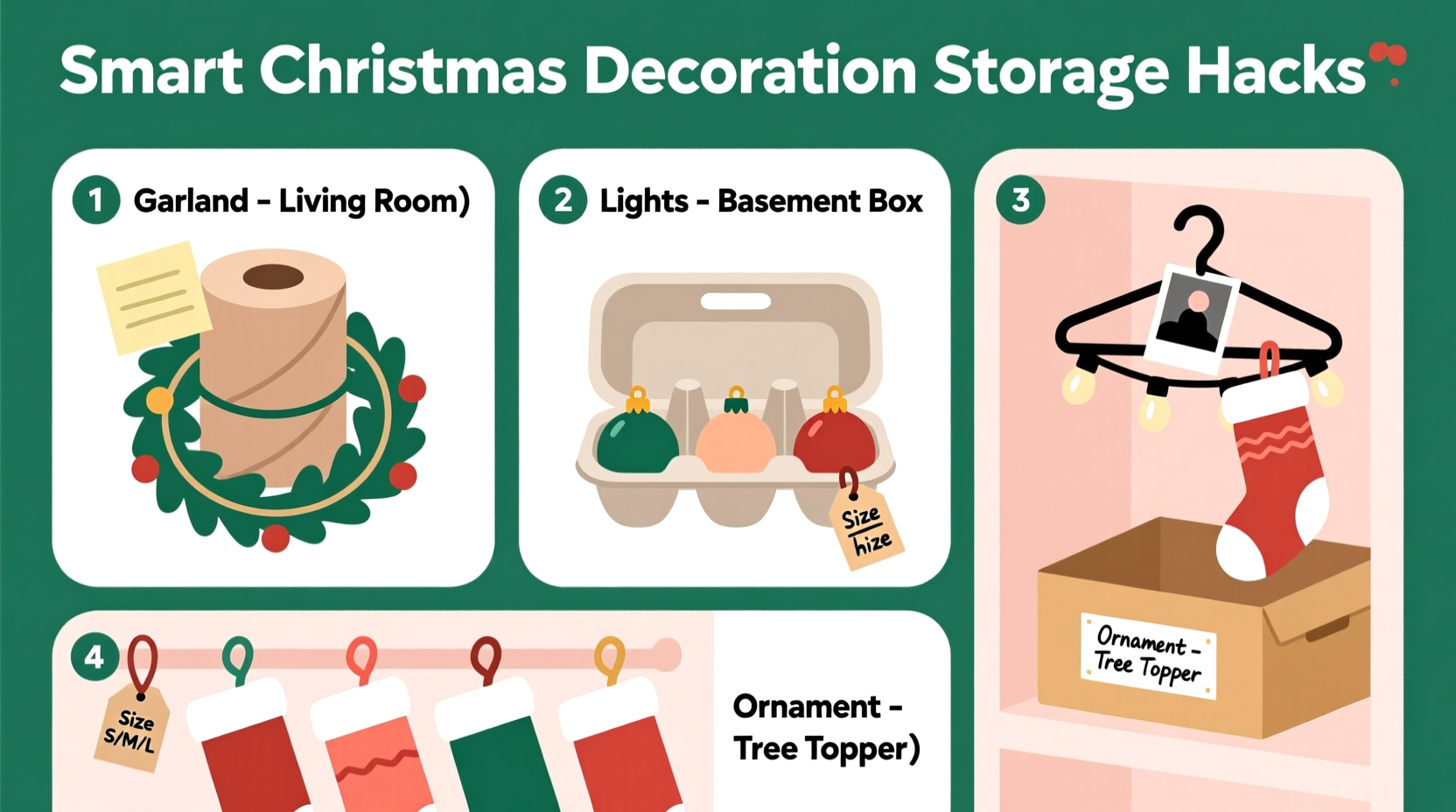
Most holiday storage failures stem from three universal missteps: compression over protection, mixing incompatible materials, and neglecting airflow and weight distribution. Plastic tubs with snap-on lids seem ideal—but they trap moisture, especially in basements or garages where temperature swings cause condensation. Cardboard boxes deteriorate after one damp season and offer zero crush resistance. And tossing everything in loosely? That’s how hand-blown glass meets a bent metal hook.
What works instead is *layered intentionality*: separating by fragility and function, using breathable buffers, and designing retrieval paths—not just storage endpoints. As Sarah Lin, a certified home organization specialist with 14 years of seasonal storage consulting, explains:
“People treat holiday storage as an afterthought, but it’s really preservation infrastructure. A single layer of bubble wrap won’t save a porcelain angel if it’s stacked under 30 pounds of artificial branches. Real protection means matching the method to the object’s physics—not just its size.” — Sarah Lin, Certified Home Organization Specialist, Seasonal Space Lab
This principle guides every hack below—not as clever tricks, but as physics-informed solutions anyone can replicate with what’s already in their pantry, garage, or linen closet.
5 Simple Home Hacks That Prevent Tangles & Damage
1. Wrap Lights Around Toilet Paper Rolls (Not Cardboard Tubes)
The classic “wrap around a shoebox” method fails because sharp corners stress wire insulation and create memory kinks. Toilet paper rolls are the ideal diameter (about 4 inches) for standard mini-light strands: gentle curvature prevents coil memory, and the cardboard is rigid enough to hold shape but soft enough to avoid abrasion. For longer strands, tape two rolls together side-by-side with masking tape before winding.
Tip: Label each roll with a permanent marker before wrapping—include bulb count, voltage (e.g., “100 LED, 120V”), and location used last (e.g., “Front Porch Eaves”). This saves 3–5 minutes per strand during setup.2. Store Ornaments in Egg Cartons—But Not Just Any Kind
Standard foam egg cartons compress and shed particles that scratch glass. Instead, use recycled cardboard egg cartons—the kind with deep, individual wells and sturdy dividers. Place one ornament per well, nestle a small square of tissue paper beneath each, then close the lid. Stack up to three layers inside a shallow plastic bin (never cardboard). For larger ornaments, repurpose muffin tins: line each cup with felt scraps or flannel fabric squares, then set ornaments in place. The metal rim prevents rolling; the fabric absorbs vibration.
3. Hang Garlands Vertically Using Shower Curtain Rings
Coiling garlands invites crushing and leaf separation. Instead, drape them over shower curtain rings clipped to a tension rod installed inside a closet or garage wall. Each ring holds 1–2 feet of garland—enough to prevent sagging but loose enough to avoid stem strain. For pine or eucalyptus garlands, mist lightly before hanging and leave the closet door slightly ajar for airflow. Synthetic garlands benefit from this method too: no friction points, no weight-bearing bends, and instant visual inventory.
4. Protect Fragile Figurines in Pill Bottles (Clean & Empty)
Small ceramic or resin pieces—Nativity figures, miniature houses, or vintage Santas—get lost and crushed in bulk storage. Clean, dry prescription bottles (with childproof caps) provide perfect micro-containers: opaque walls block UV light, screw-top lids seal out dust, and the cylindrical shape prevents tipping. Fill the bottom ¼ inch with cotton balls or shredded paper for cushioning, then place one figurine upright inside. Label the cap with a fine-tip label maker or waterproof pen. A single 60-count bottle holds 8–10 tiny pieces securely.
5. Store Tree Skirts & Table Runners Flat—With Strategic Folding
Folding heavy velvet or embroidered textiles into tight squares creates permanent creases and stresses seams. Instead, fold lengthwise once, then roll tightly from one short end. Slip the roll into a clean, unused poster tube (or a cut-to-size PVC pipe capped at both ends). For extra protection, slide a sheet of acid-free tissue between layers before rolling. This preserves drape, prevents edge fraying, and eliminates the “unfurling battle” come December.
Step-by-Step: Your 45-Minute Post-Holiday Storage Session
Don’t wait until New Year’s Day. Begin right after take-down—ideally within 48 hours—to capitalize on momentum and catch debris before it sets. Follow this timed sequence:
- Minute 0–5: Sort decorations into four labeled bins: Fragile (glass, ceramic, thin metal), Flexible (lights, garlands, ribbons), Textiles (skirts, stockings, tablecloths), Sturdy (wooden signs, plastic figurines, wreath frames).
- Minute 6–15: Clean and dry. Wipe ornaments with microfiber cloth dampened with 1:1 water/vinegar solution (skip vinegar for antique silver—use distilled water only). Let lights air-dry fully—never store while damp.
- Minute 16–30: Apply hacks. Wrap lights on TP rolls, nest ornaments in egg cartons, hang garlands on tension rods, secure figurines in pill bottles, roll textiles into tubes.
- Minute 31–40: Box and label. Use clear, stackable plastic totes (18\"x12\"x10\" is ideal). On each lid, write contents, year stored, and fragility level (e.g., “Ornaments – 2024 – FRAGILE”). Avoid writing on sides—labels get obscured when stacked.
- Minute 41–45: Audit and discard. Toss broken bulbs, frayed wires, or stained fabrics. Note replacements needed on a sticky note taped to the tote lid (“Buy 2x red glass balls, 2025”).
This process takes less time than rewatching It’s a Wonderful Life—and pays dividends every November.
Do’s and Don’ts: A Quick-Reference Table
| Action | Do | Don’t |
|---|---|---|
| Lights | Wrap on TP rolls; store in ventilated bins; label voltage & length | Wrap around books or broom handles; store in sealed plastic bags; mix AC/DC strands |
| Glass Ornaments | Store upright in egg cartons with tissue; keep in climate-stable space (not attic/garage) | Nest in crumpled newspaper; stack flat in piles; store near heat sources (water heaters, furnaces) |
| Garlands | Hang vertically on tension rods; mist natural ones before storing; avoid direct sun exposure | Coil tightly in boxes; store compressed under heavy items; leave outdoors overnight pre-storage |
| Tree Skirts | Roll (don’t fold); use acid-free tissue; store in vertical tubes away from humidity | Crease into triangles; hang on nails (stretches fabric); store in damp basements |
| General Storage | Use consistent tote sizes; rotate stock yearly; inspect mid-summer for pests/moisture | Mix fragile & sturdy items; overfill containers; store cardboard boxes in unheated spaces |
Real Example: How the Chen Family Cut Setup Time by 70%
The Chen family of Portland, Oregon, had stored decorations in six mismatched plastic tubs and two flattened cardboard boxes for 12 years. Their setup took nearly 5 hours—mostly untangling lights and searching for matching ornament hooks. In December 2023, they implemented three core hacks: toilet paper roll light storage, egg carton ornament nesting, and vertical garland hanging. They also added a simple labeling system using color-coded duct tape (red = lights, green = ornaments, gold = textiles).
Result? Setup time dropped to 87 minutes. More importantly, they discovered two previously “lost” ornaments—a hand-painted wooden star and a Czech glass ball—both intact and easily located. “We didn’t just save time,” says Mei Chen. “We reclaimed the feeling of anticipation. Now, opening the bins feels like unwrapping gifts—not solving puzzles.”
FAQ: Practical Questions Answered
Can I store decorations in the attic or garage?
Only if temperature remains consistently between 40°F and 75°F and relative humidity stays below 55%. Attics often exceed 100°F in summer, warping plastics and drying adhesives. Garages fluctuate wildly unless insulated and climate-buffered. If you must use these spaces, elevate totes on pallets (not floor), add silica gel packs to each container, and inspect biannually for mold or pest activity.
How do I store vintage lights with cloth-wrapped wires?
Treat them as archival items. Wrap each strand individually in unbleached muslin cloth (not tissue—acidic), then coil loosely around a 6-inch-diameter embroidery hoop. Secure with cotton twill tape (not rubber bands, which degrade). Store upright in a shallow, lidded wooden box lined with cedar shavings—natural moth deterrent that won’t off-gas onto delicate insulation.
What’s the best way to store artificial trees?
Disassemble completely. Store trunk sections nested inside each other. Branches should be bundled in groups of 5–7 using soft fabric strips (old t-shirts work perfectly), not twist ties. Place bundles upright in a tall, narrow tote—never stack horizontally. Include a desiccant pack and check annually for brittle branch tips, which indicate early material fatigue.
Conclusion: Your Decorations Deserve Ritual, Not Rush
Storing Christmas decorations isn’t about boxing up clutter—it’s about honoring continuity. Each ornament, light, and ribbon carries memory: a child’s first tree, a milestone year, a loved one’s absence made tangible through tradition. When we store carelessly, we fracture that continuity. When we store intentionally—with toilet paper rolls, egg cartons, and tension rods—we reinforce it. These aren’t “hacks” in the disposable sense. They’re quiet acts of stewardship: practical, repeatable, and deeply human.
You don’t need perfection. Start with one category this season—lights, perhaps. Wrap 10 strands on TP rolls. Label them. Feel the difference when you open that box next year: no tangle, no sigh, just the smooth, satisfying unspool of light. Then expand. One bin, one hack, one season at a time. Your future self—and your family’s future memories—will thank you.
💬 Which hack will you try first? Share your storage win—or your biggest tangle disaster—in the comments. Let’s build a smarter, calmer, more joyful holiday rhythm—together.








